Have any questions? Contact us!
Join our team!
Request a free quote or consultation

If you’ve worked with BIM before, you probably know how useful a well-built 3D model can be. But when you’re deep into project planning and costs keep shifting, the need for something more than visuals becomes obvious. That’s where 5D BIM steps in.
At its core, 5D BIM brings cost data directly into the modeling environment. Instead of tracking budgets in spreadsheets and managing models in separate tools, you get a single, connected workflow. You see what’s being built, when it’s being built, and how much it’ll cost, without constantly jumping between files or chasing updates.
In this guide, we’ll unpack how 5D BIM actually works, what sets it apart from other BIM dimensions, and why more project teams are starting to rely on it – not just for design, but for better decisions, fewer surprises, and smarter builds.
From 2D to 5D: A Quick Jump Through the Dimensions
Before diving into what makes 5D special, it helps to understand where it fits in the BIM landscape. Think of BIM dimensions as layers of added insight:
- 2D CAD: Traditional flat drawings, still used on site and for detailing.
- 3D BIM: Geometry with intelligence – walls are not just lines, they’re objects with metadata.
- 4D BIM: Adds time to the mix, allowing scheduling and sequencing simulations.
- 5D BIM: Introduces cost data, connecting every component to its financial impact.
Some talk about even more dimensions (6D for sustainability, 7D for facility management), but in most real-world cases, it’s 4D and 5D that teams actually use in day-to-day work.
So What Is 5D BIM, Really?
In plain terms, 5D BIM is the integration of cost estimation into the 3D model. Each object in the model, walls, slabs, beams, finishes, you name it, can be linked with its corresponding cost. That includes material quantities, labor, fabrication, and even equipment use if needed.
It’s like combining your estimating software with your BIM model and letting them talk to each other. This gives you a real-time, visual way to track how design decisions affect the budget.
Instead of updating estimates manually after every change, 5D BIM tools recalculate automatically as the model evolves. You don’t have to guess how a thicker slab or a longer hallway will affect cost, because the answer is already there, baked into the model.
Powerkh’s 5D BIM Services: Smarter Planning, Real Results

We are Powerkh, a UK-based company with offices in Ukraine and the USA, specializing in 5D Building Information Modeling (BIM) services. By integrating cost and scheduling data into 3D models, we enable clients to better manage project timelines, budgets, and construction workflows.
Our 5D BIM solutions provide detailed digital models that connect construction schedules with cost projections, allowing teams to track progress, anticipate issues, and make data-driven decisions that help control both time and costs throughout the project lifecycle.
We serve a broad range of industries, including residential, commercial, and infrastructure projects. With locations in the UK, Ukraine, and the USA, we deliver precise and efficient BIM solutions that enhance collaboration and project management, ensuring timely, on-budget project delivery.
Key Highlights:
- UK-based company with offices in Ukraine and the USA
- Specializes in 5D BIM services integrating cost and schedule data with 3D models
- Focus on improving project management, budget control, and timeline accuracy
- Experienced across residential, commercial, and infrastructure projects
- Advanced BIM solutions for better collaboration and decision-making
- Reliable, data-driven approach to project delivery
Services:
- 5D BIM Modeling
- Construction Schedule
- Real-time Project Tracking and Monitoring
- Risk Mitigation and Issue Detection
- BIM Implementation
- Collaboration Tools
Why 5D BIM Makes Sense (Even If You’re Skeptical)

Let’s be honest: not every innovation in construction makes your job easier. Some just mean more software, more training, and more room for things to break.
But 5D BIM actually solves a few problems that everyone on a project has run into:
- Budgets that drift because changes weren’t reflected in time.
- Quantity takeoffs that get out of sync with the actual model.
- Estimating delays that slow down procurement or scheduling.
- Poor visibility across teams when it comes to what’s being spent.
With 5D BIM, these issues start to fade, because the cost data is always connected to the latest model. That brings consistency and transparency into an area that’s usually a bit of a mess.
Key Advantages of 5D BIM That Actually Matter
While every 5D BIM platform comes with its own list of features and tools, not all of them make a real difference once you’re in the thick of a project. These are the benefits that tend to move the needle when deadlines are tight, budgets are firm, and decisions can’t wait.
1. Real-Time Cost Tracking
One of the most valuable shifts with 5D BIM is how immediate everything becomes. When the design team updates the model, the cost impact shows up right away. That means project managers don’t have to request a new estimate, wait days for it to be processed, and then find out it’s already out of date. You get live feedback on the financial consequences of each design choice, which helps you course-correct early, before those choices snowball into major cost overruns.
2. Automated Quantity Takeoffs
Ask any estimator what eats up their time, and manual quantity takeoffs will probably top the list. It’s tedious, it’s prone to errors, and if anything in the design shifts, you’re back to square one. 5D BIM changes that. Takeoffs are generated straight from the model using rules you define, and the quantities are always linked to the latest version of the design. That means less time on repetitive work and more time on meaningful cost analysis.
3. Faster, Smarter Procurement
When the model itself holds the specs, quantities, and costs, procurement becomes a lot more straightforward. You don’t need to hunt for data across five different systems or wait for separate teams to align. You already know what’s needed, when it’s needed, and how much it’s going to cost. That makes it easier to line up vendors early, avoid rush orders, and lock in prices while they’re still favorable. It also opens the door to more strategic buying, like bundling materials across phases or projects.
4. Better Collaboration
One of the low-key frustrations in construction is how often people are working off slightly different versions of the truth. The architect has one file, the estimator another, the scheduler something else entirely. With 5D BIM, you centralize the model and make it the shared source of information for everyone involved. That cuts down on miscommunication, prevents duplicated effort, and gives each team the context they need to make smarter decisions. When everyone’s speaking the same data language, things just flow better.
5. Scenario Planning
Projects change. They always do. But what if you could see the financial and scheduling ripple effects of a change before you commit to it? That’s where 5D BIM really shines. It lets you model different options – materials, methods, sequencing – and compare them not just in terms of structure, but in terms of cost and timing. Whether you’re trying to decide between cast-in-place or prefab elements, or weighing whether a late change is worth it, you can see the trade-offs clearly. That makes conversations with clients, subcontractors, and internal teams a whole lot more productive.
What 5D BIM Looks Like in Practice
If you’ve never used 5D BIM before, you might picture it as a fancy dashboard or just another tab in your BIM software. But it’s more than that – it’s a shift in how your team works.
Let’s say your structural team decides to change the beam spacing. In a 5D workflow, that change not only updates the geometry but also adjusts the quantities of steel and labor, recalculates the budget, and flags any shifts in scheduling that come with it. Procurement gets notified earlier. Budget forecasts are instantly adjusted. And the project manager can see the financial ripple effects without even leaving the platform.
That kind of integration is a big step forward from siloed workflows, where one team finishes their job and throws it over the wall to the next.
Who Uses 5D BIM (And What They Get Out of It)

Different roles benefit from 5D BIM in different ways. Here’s how it tends to play out across the team.
Quantity Surveyors & Estimators:
- Generate takeoffs faster and with fewer errors.
- Run comparisons across design options without starting from scratch.
- Update cost models automatically as the design changes.
Project Managers:
- Monitor budget and cash flow in near real-time.
- Simulate timelines and spending curves before committing to a plan.
- Catch scope changes before they wreck the budget.
BIM Coordinators:
- Ensure model integrity across multiple trades and disciplines.
- Use version tracking to manage change and compare design options.
- Help teams visualize cost and time impacts directly in the model.
Procurement Leads:
- Get early access to accurate quantities and specs.
- Plan orders more precisely, reducing overstock or delays.
- Align purchase timelines with the actual construction sequence.
C-Level Decision Makers:
- Access dashboards with real-time project health data.
- Compare budget forecasts across multiple projects.
- Make more confident investment decisions based on live data.
What It Takes to Get Started with 5D BIM
Now, here’s the part that trips up a lot of companies: implementation. 5D BIM doesn’t work right out of the box just because you installed some software.
To actually make it part of your workflow, you’ll need:
- A clean, well-built 3D model with accurate metadata.
- A reliable cost database, whether internal or from suppliers.
- Team alignment around using the model as the single source of truth.
- Training for estimators, designers, and PMs so they’re all speaking the same language.
If you’ve already worked with 3D and 4D BIM, you’re halfway there. But even if you haven’t, it’s possible to start small, using 5D on one discipline or phase, and expanding as you go.
Common Challenges (And How to Handle Them)
No technology shift comes without friction. Here are a few roadblocks and how teams usually get past them:
- Lack of standardization: Define naming conventions and modeling standards early. A clean model saves time later.
- Resistance to change: Start with a pilot project and involve key stakeholders from day one.
- Software complexity: Invest in training and internal champions who can help others adopt the tools.
- Incomplete models: Work with what you have. Even partial models can be linked to cost data for early estimates.
Why 5D BIM Isn’t Just for Large-Scale Projects
There’s a myth that 5D BIM is only worth the trouble on huge infrastructure builds. Not true. Even smaller commercial or residential projects can benefit from tighter cost tracking and faster estimating cycles.
If you’re dealing with multiple design changes, strict budgets, or aggressive timelines, then 5D BIM is worth exploring, regardless of project size.
Final Thoughts: From Estimating to Strategy
At the end of the day, 5D BIM isn’t just about estimating. It’s about building smarter.
It turns the model into a living, financial map of the project – one that updates as you go, reacts to change, and helps you make decisions based on actual data, not outdated spreadsheets or gut feel.
For companies that want to stay competitive, especially as digital construction becomes the norm, 5D BIM offers a more transparent, efficient, and strategic way to work.
And once you’ve seen how much time and stress it can save your team, it’s hard to imagine going back.
FAQ
Is 5D BIM just another fancy tool for designers?
Not really. While it does start with the model, 5D BIM is actually more about connecting teams, especially the folks handling budgets and timelines. It helps decision-makers, estimators, planners, and even procurement leads work from the same source of truth. So no, it’s not just a “design” thing. It’s a project-wide shift in how cost and time are managed.
What makes 5D BIM different from regular BIM?
Think of traditional BIM as giving you the “what” and “where” of a building – walls, windows, systems, layouts. 5D adds the “how much” and “when.” It links every component to a price and a timeline, so instead of seeing just the structure, you can see its financial and scheduling footprint too. That extra context changes how you plan and react.
Do I need a perfect model to start using 5D BIM?
Not at all. Even a partial or evolving model can support 5D workflows. Many teams start with key building elements or just one phase of the project. The idea is to start where it makes the most sense for your workflow and expand from there. Waiting until everything is 100% modeled might actually delay the benefits.
Can 5D BIM actually help keep projects on budget?
Yes, if it’s used the right way. Because costs are tied directly to model elements, you can see how design changes impact the budget in real time. That gives teams the chance to adjust early, rather than dealing with expensive surprises halfway through construction. It’s not magic, but it’s definitely a smarter way to stay in control.
Is 5D BIM only useful for big projects?
Nope. While it’s definitely popular on large-scale jobs, even mid-size and smaller projects can benefit, especially when changes happen often or margins are tight. If your team needs better coordination between design, estimation, and scheduling, 5D BIM can make a noticeable difference, no matter the project size.
Our Case Studies
We have handled 200+ BIM & VDC projects for commercial, industrial, and residential sectors.
Our work includes:
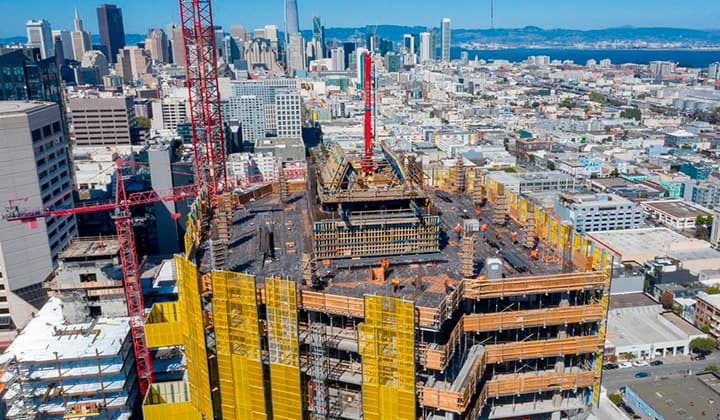
Formwork design automation
Our client from
California, USA
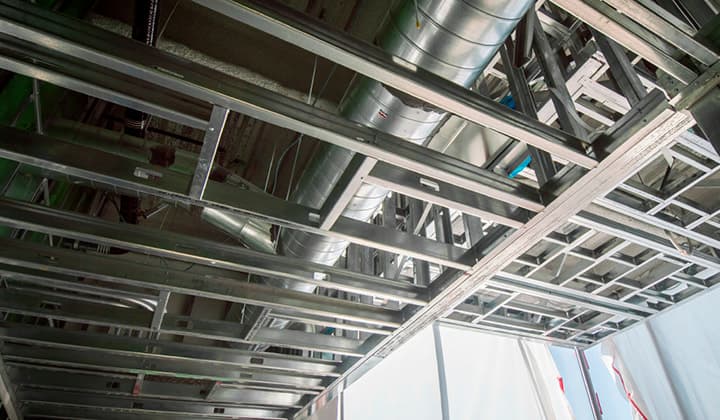
Suspended ceiling design automation
Our client from
New York, USA
Wall framing design automation
Our client from
California, USA