Have any questions? Contact us!
Join our team!
Request a free quote or consultation

How Much Does Architectural Outsourcing Cost? Full Breakdown by Service and Region Copy
Outsourcing architectural work can help reduce project costs, speed up timelines, and give access to a global pool of specialists. But prices vary widely depending on the type of service, the complexity of the project, and the region of the provider. Whether you’re outsourcing drafting, 3D modeling, or full design support, it helps to know what typical rates look like and what goes into those numbers. Here’s a breakdown of how pricing works and what to expect when budgeting for outsourced architectural services.
What Affects the Cost of Architectural Outsourcing?
The cost of architectural outsourcing isn’t fixed; it depends on several key factors that shape how much you’ll pay for external support. Understanding these cost drivers can help you set realistic expectations and choose the right outsourcing strategy for your project.
1. Type of Service
Not all architectural tasks carry the same cost. Basic drafting or CAD support is typically more affordable than detailed BIM modeling, 3D rendering, or construction documentation. Services like schematic design, scan-to-BIM, or code-compliant detailing require higher expertise and usually command higher hourly rates.
2. Project Complexity and Scope
Larger projects with multi-phase development, strict local code compliance, or custom design requirements will naturally cost more than small, one-off drafting assignments. The more detail, coordination, or revisions required, the more time and budget the outsourcing partner will need.
3. Region of the Outsourcing Partner
Where your outsourcing provider is based plays a major role in pricing. Offshore regions like Southeast Asia or parts of Eastern Europe offer lower hourly rates, often between $20 and $50 per hour. Nearshore providers in Latin America or Eastern Europe may cost more, but they often provide better time zone alignment and communication.
4. Experience and Skill Level of the Team
More experienced architects and drafters typically charge higher rates. Teams with expertise in U.S. or U.K. construction standards, fluent English communication, and familiarity with tools like Revit, ArchiCAD, or Rhino will come at a premium compared to generalist freelancers.
5. Software Requirements
Projects requiring licensed use of advanced tools (e.g., Revit, 3DS Max, or Lumion) may increase costs, especially if high-quality rendering or parametric modeling is involved. Outsourcing teams often include software fees in their pricing.
6. Delivery Speed and Timeline
If a project needs to be completed quickly, providers may charge rush fees or allocate more senior staff, increasing the overall price. Flexible timelines can reduce cost if the work can be slotted into the team’s existing schedule.
7. Billing Structure
Hourly, fixed-price, and milestone-based contracts each come with different pricing implications. Hourly billing gives flexibility but can be unpredictable; fixed pricing requires clearly defined scope and may be higher to account for risk.
Powerkh: Outsourced Architectural Support for Building Projects

Powerkh is a UK-based company specializing in architectural outsourcing through Building Information Modeling (BIM) and Virtual Design & Construction (VDC). We offer services to architects, engineers, contractors, and other professionals to improve design and construction management. With offices in the UK, Ukraine, and the USA, we provide flexible and efficient solutions for projects across various regions.
Our services include Architectural drafting, BIM modeling, BIM coordination, Scan to BIM, BIM automation, prefabrication, fabrication, and structural detailing. These services help streamline workflows, reduce errors, and improve the accuracy of project execution, from design through to construction.
We work across a range of sectors, including residential, commercial, and industrial projects. Our goal is to offer tailored BIM solutions that support our clients in moving from traditional methods to digital processes, providing skilled professionals and tools to enhance project efficiency and accuracy.
Typical Architectural Outsourcing Rates
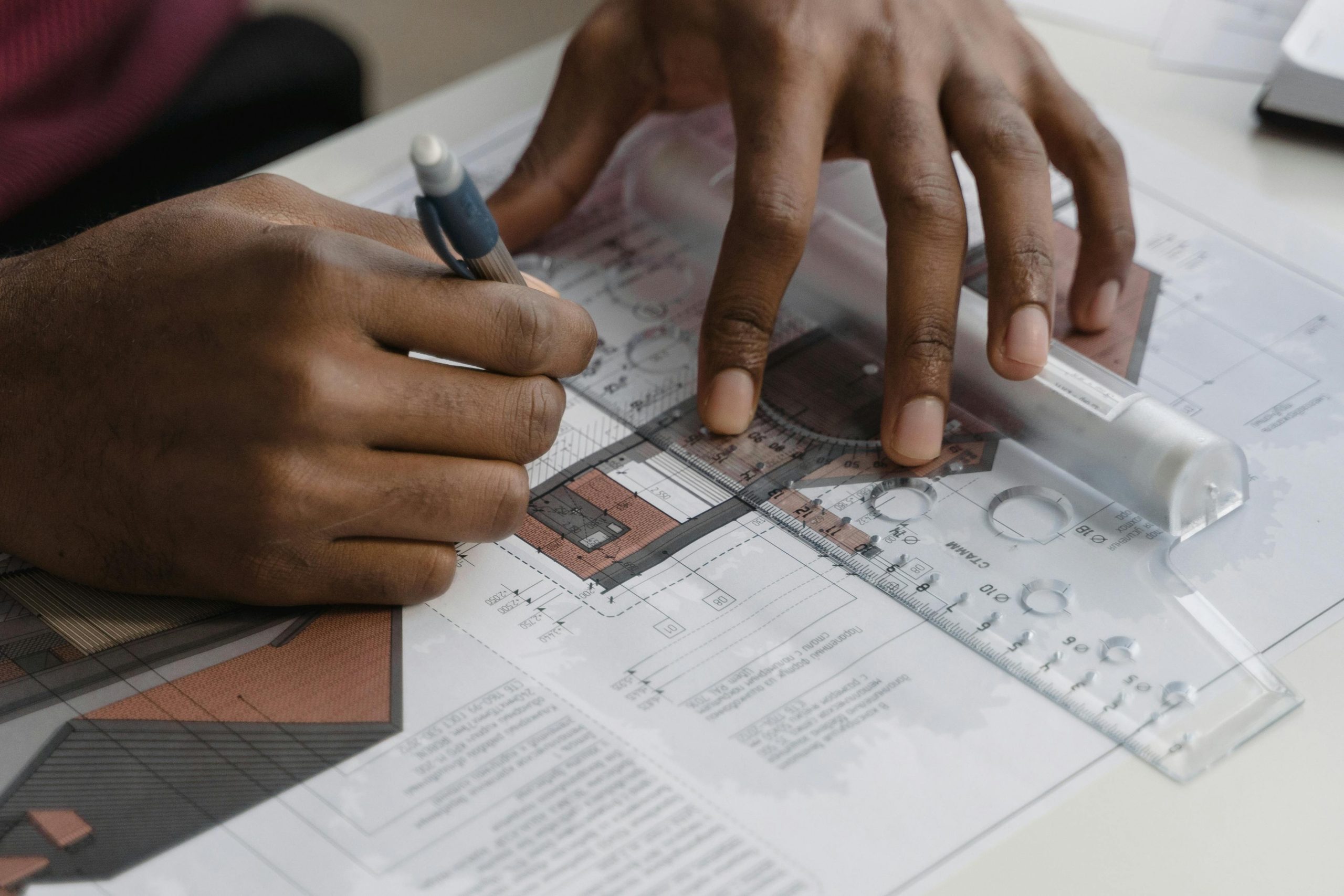
Architectural outsourcing can reduce direct labor expenses by 30% to 70% compared to maintaining in-house design teams especially for firms based in North America, the UK, or Western Europe. However, pricing is not universal and depends on several practical factors: the type of service, tools used, team expertise, and how smoothly collaboration can be organized.
General Rate Overview
Most architectural outsourcing services fall within a $20 to $75 per hour range. This covers a wide spectrum from basic drafting to detailed BIM work and visualizations.
Service Type and Complexity:
- 2D Drafting and CAD Work: Basic drafting tasks such as floor plans, elevations, or redlines are typically priced between $20-$40/hour. These services are often handled by junior or mid-level drafters and require less creative input.
- BIM Modeling and Documentation: Projects requiring Revit-based modeling, construction documentation, or LOD-specific outputs fall into the $30-$60/hour range. The more coordination or detail required (e.g., BIM Level 300-400), the higher the cost.
- 3D Visualization and Rendering: High-end renderings, animation fly-throughs, or parametric design work may be billed at $40-$100/hour, or priced per asset depending on resolution, software used, and revision cycles.
Software and Technical Stack
The choice of platforms also influences pricing. Outsourced teams working in Revit, ArchiCAD, Rhino, Lumion, or Enscape often charge more especially if they offer licensed environments and bundled outputs like full drawing sets or visual presentations.
Project Scope and Compliance Requirements
Larger or multi-phase projects naturally increase the total cost. If a project requires strict adherence to local building codes, LEED certification, or regulatory submissions, experienced professionals will be assigned, which may push pricing to the upper end of the scale.
Communication and Collaboration Efficiency
Firms often balance cost savings with operational convenience. Outsourcing partners in nearby or overlapping time zones may charge more, but reduce back-and-forth delays. Projects requiring daily syncs, real-time revisions, or specialized architectural platforms (e.g., BIM 360) and general collaboration tools (e.g., Trello or Slack) may also add coordination overhead.
Experience with International Standards
Teams with a strong portfolio in U.S., Canadian, or EU-based projects often price higher not just for modeling, but for their knowledge of zoning laws, ADA compliance, title block conventions, and industry expectations.
How It Compares to In-House Staffing
Hiring a full-time in-house architect or BIM specialist in North America or Europe can cost between $90,000 and $150,000+ per year, which translates to roughly $60-$120/hour when factoring in:
- Salary and bonuses
- Taxes, benefits, and insurance
- Office space, software licenses, and hardware
- Recruitment, training, and HR overhead
By contrast, outsourcing offers the flexibility to pay only for what you use whether that’s 20 hours a week during early design or full support during deadline peaks without the long-term commitments and fixed costs of staffing.
What Architectural Tasks Are Most Commonly Outsourced - and Why
Not all architectural services are equally suited for outsourcing. Some tasks are too dependent on local codes, in-person collaboration, or ongoing design changes. Others, especially those with clear input-output workflows, can be handed off to external teams with minimal disruption. Understanding which types of tasks are typically outsourced helps firms streamline operations without compromising quality.
1. Routine Drafting and Production Work
Standard tasks like producing plans, sections, and elevations are among the easiest to outsource. These deliverables follow predefined styles and can be assigned based on clear markups, sketches, or redlines. This frees up internal teams to focus on design and client interaction, while external drafters handle documentation at scale.
2. 3D Visualization and Presentations
Renderings, animations, and other visual content are often produced externally. Since they’re usually needed at key milestones (like client approval or marketing), and follow clear briefs, they’re ideal for handoff. Many firms find that external visualization teams deliver faster and at a higher quality than what’s feasible with in-house tools alone.
3. Design Option Studies
When clients request multiple layout or massing options, outsourcing early-phase schematic studies can reduce internal design hours. These tasks are low-risk in terms of project control, but time-consuming making them well-suited for external support.
4. Code-Constrained Documentation (Less Often Outsourced)
Construction documents requiring detailed code compliance (e.g., fire safety, accessibility) are sometimes outsourced but only to teams familiar with the local regulatory framework. If code knowledge is lacking, this part of the work is often kept in-house or requires close collaboration.
5. Project Coordination (Only for High-Trust Vendors)
Outsourcing coordination roles like BIM management or cross-discipline scheduling is possible, but only works when the vendor is deeply integrated into the workflow. It requires experience, consistency, and direct communication access so firms usually do this only with long-term outsourcing partners.
Billing Models and How They Affect Pricing
Architectural outsourcing providers may offer different billing models depending on the type of service, project scope, and client preferences. Understanding how each model works can help you manage costs and choose the right approach for your workload.
Hourly Billing
This is the most common model for ongoing or open-ended tasks like drafting, BIM updates, or coordination. You pay only for the time spent on a task, typically tracked in time-logging software. It’s flexible but can lead to variable costs if the scope isn’t clearly defined.
Fixed-Price Per Deliverable
A set price is agreed upon for a specific output, such as a rendering, drawing set, or BIM model. This model is useful for well-scoped projects with clear expectations and defined milestones. It offers predictability but leaves less room for changes once work begins.
Retainer or Monthly Contract
In this setup, a fixed monthly fee is paid for a predefined number of hours or full-time availability. This model suits firms with recurring tasks or a steady volume of work. It ensures priority access to a dedicated resource and simplifies budgeting.
Per Sheet or Per Drawing
Often used for drafting or documentation services, this model charges a set amount per completed sheet or drawing. It’s easy to calculate and monitor but may not reflect the time required for more complex revisions.
Per Project with Milestones
Suitable for multi-phase developments or larger packages, this model involves breaking the work into stages with separate payments tied to completion points. It allows for cost control over time and provides structure, especially when working with unfamiliar teams.
Hidden Costs and Risk Factors
Architectural outsourcing often looks cheaper upfront, but there are risks and added costs that can affect the final budget and timeline. Here’s what to watch for:
- Rework: Poor communication or vague briefs can lead to mistakes. Fixing those mistakes costs extra time and money.
- Time Zone Delays: If the team works in a different time zone, small questions can take a full day to resolve. This slows progress, especially on fast-moving projects.
- Scope Creep: When tasks are added after the project starts, it increases hours and cost. Without a detailed scope, this happens often.
- Inexperienced Providers: Low-cost vendors may lack the skills needed. That can lead to errors, non-compliant drawings, or missed deadlines forcing you to redo work elsewhere.
- Data and Compliance Risks: If you’re outsourcing regulated projects (e.g. healthcare, schools), make sure the vendor handles data securely and understands local codes. Otherwise, it can lead to legal or approval issues.
- Lack of Accountability: Some freelancers or teams won’t take full responsibility for the result. Without clear agreements, you may end up managing problems yourself.
- Slow Onboarding: Even experienced teams need time to learn your standards, tools, and workflow. That startup time can add unexpected costs if not factored in.
These risks don’t cancel out the benefits of outsourcing, but they should be planned for. A clear scope, proper vendor screening, and regular check-ins help keep costs controlled.
How to Estimate Your Project Budget

Estimating the cost of an outsourced architectural project depends on understanding the scope, service type, and timeline. Most providers charge by the hour or per deliverable, so breaking the work into measurable components is key.
Start by identifying what you need:
- Type of service: Drafting, BIM, rendering, or full design support all have different rates.
- Project size: A single-family house will cost far less than a multi-use commercial building.
- Level of detail: Basic layouts take less time than code-compliant construction sets or high-quality visualizations.
- Timeline: Rush projects may include additional fees.
Here’s a rough range to guide early planning:
- Small drafting task: $300-$600
- Full residential plans (basic): $2,000-$4,000
- 3D renderings (per image): $200-$1,000
- Commercial BIM modeling (mid-size project): $8,000-$20,000
- Monthly retainer for full-time outsourced architect: $2,500-$5,500/month
To get a more accurate number, create a basic project brief. Include square footage, desired outputs (drawings, models, renderings), and your deadline. Most vendors will provide a quote based on that info. If the scope is still changing, hourly billing may be the better option to keep things flexible.
Set aside extra budget (10-20%) for revisions, coordination time, or any missed details in the initial scope. Even well-planned projects usually require minor adjustments.
Conclusion
Outsourcing architectural work can cut costs significantly often by 30% to 70% compared to hiring in-house. Most services fall between $20 and $75 per hour, depending on the type of task and the provider’s location. Drafting and documentation are usually on the lower end; BIM modeling, 3D rendering, and project coordination cost more.
That said, the total project budget depends on more than just the hourly rate. Scope clarity, delivery timelines, communication, and quality control all affect final costs. Choosing a reliable vendor and defining your needs clearly will help you avoid scope creep, rework, and hidden expenses.
Outsourcing can be a cost-effective tool, especially for firms handling fluctuating workloads or needing support on technical or time-consuming tasks. But it’s only cost-effective when managed well.
FAQ
1. How much does it cost to outsource architectural drafting?
Most 2D drafting services range from $20 to $40 per hour, or around $300 to $600 for a small project.
2. What is the hourly rate for BIM modeling?
BIM services are typically priced between $30 and $60 per hour, depending on detail level and software requirements.
3. Is outsourcing cheaper than hiring in-house staff?
Yes. Outsourcing avoids costs like benefits, office space, and recruitment. Firms often save 30-70% overall.
4. How are outsourced architectural services billed?
Common billing models include hourly rates, per sheet/deliverable pricing, fixed project fees, and monthly retainers.
5. What regions offer the best cost-quality balance?
Latin America and Eastern Europe tend to offer a strong mix of affordability, communication, and time zone alignment. Southeast Asia offers lower rates but may require closer supervision.
6. Are there hidden costs in outsourcing?
Yes. Common issues include rework, unclear scope, onboarding time, and communication delays. These can add 10-20% to the original budget if not managed.
Our Case Studies
We have handled 200+ BIM & VDC projects for commercial, industrial, and residential sectors.
Our work includes:
Formwork design automation
Our client from
California, USA
Suspended ceiling design automation
Our client from
New York, USA
Wall framing design automation
Our client from
California, USA