Herhangi bir sorunuz var mı? Bize ulaşın!
Ekibimize katılın!
Ücretsiz fiyat teklifi veya danışmanlık talep edin

Quick Summary: An RFP (Request for Proposal) in construction is a formal document issued by project owners inviting contractors to submit detailed proposals for a specific project. It outlines the project scope, technical requirements, budget expectations, timelines, and evaluation criteria. The RFP process allows owners to compare contractor qualifications, approaches, and pricing to select the best fit for their construction needs.
If you’re involved in construction, chances are you’ve encountered the term RFP. But what exactly does it mean, and why does it matter so much in the industry?
A construction RFP is more than just paperwork. It’s the foundation of how project owners find the right contractor for their needs, and how contractors compete for work that matches their expertise.
Understanding the RFP process can make or break your success in construction, whether you’re issuing one or responding to one. Let’s break down everything you need to know.
Understanding RFP: The Basics
An RFP, or Request for Proposal, is a formal document that project owners use to invite contractors and vendors to submit proposals for a specific construction project. According to the GSA, an RFP is used when the government or organization needs to evaluate both capability and cost alongside other factors.
The construction RFP differs from a simple price quote because it asks for comprehensive information. Contractors must detail their approach to the project, qualifications, experience, safety protocols, schedule, and pricing structure.
This highly formal process is sometimes required by law for public projects. According to the University of North Carolina, for informal bids or construction costing less than $30,000, local governments may use simpler request processes.
When Are RFPs Used in Construction?
RFPs are typically issued when:
- The project is complex and requires detailed planning
- The owner needs to evaluate multiple factors beyond just price
- Technical approach and contractor experience are critical
- The project involves significant budget investment
- Regulatory compliance and safety standards must be verified
- The scope requires innovation or specialized expertise
According to the University of West Florida, sealed bidding procedures are required on procurements of $150,000 or more.
Key Elements of a Construction RFP
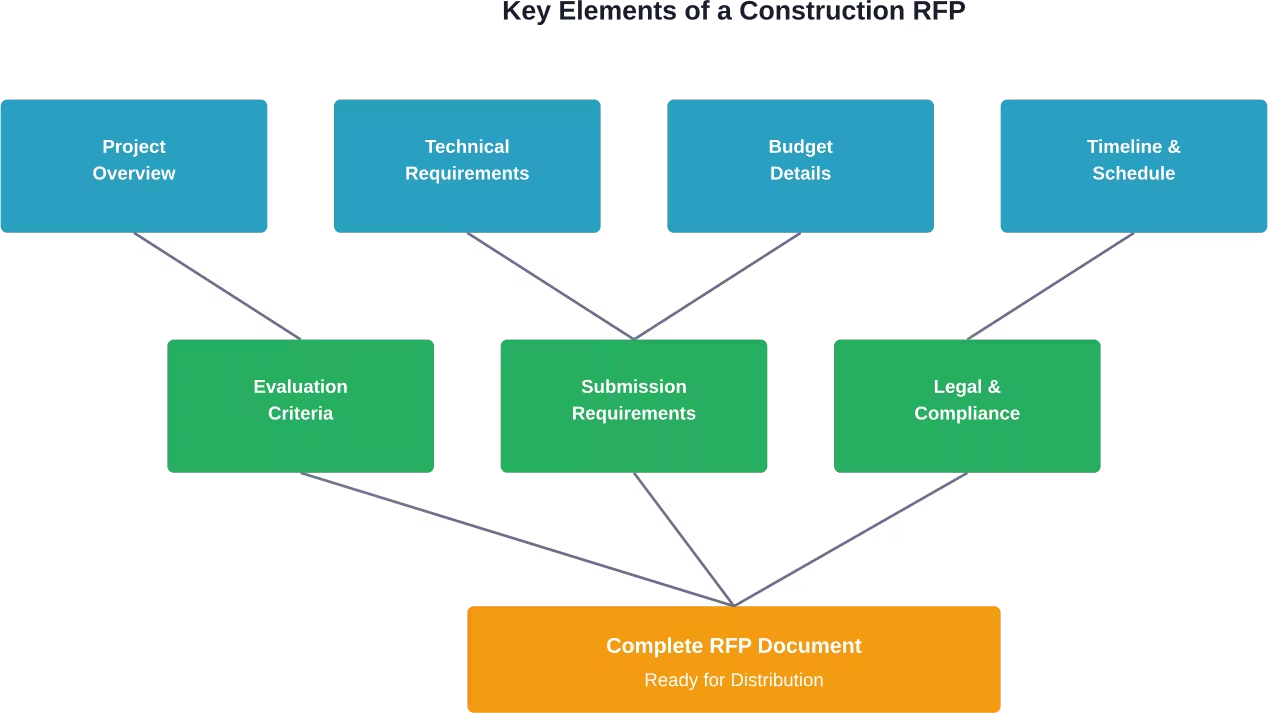
A well-crafted construction RFP contains specific components that help both parties understand expectations. Here’s what every construction RFP should include:
Project Overview and Scope
The project overview provides context about the construction work. This section describes what needs to be built, renovated, or repaired. It includes background information about the project location, existing conditions, and the overall vision.
The scope of work details exactly what contractors will be responsible for. It should be specific enough to prevent misunderstandings but flexible enough to allow for contractor expertise and recommendations.
Technical Requirements and Specifications
Technical requirements spell out the standards, materials, methods, and quality expectations for the project. This section might reference building codes, industry standards, or specific product specifications.
Construction documents often accompany this section, including architectural drawings, engineering plans, and site surveys. According to AIA guidance on defining architect’s basic services, if the CD set is not 100 percent complete, this is noted on the CD set when it is sent out for bid.
Budget and Financial Details
Most RFPs include budget parameters, though some owners choose to keep budget information confidential until proposal review. Transparent budget communication helps contractors submit realistic proposals.
This section might outline payment terms, milestone billing structure, retention requirements, and bonding expectations.
Timeline and Schedule
The RFP specifies the project timeline, including the expected start date, completion deadline, and any critical milestones. It also includes the RFP schedule itself—when proposals are due, when contractor selection will occur, and when the contract will be awarded.
Clear timeline expectations help contractors determine if they have the capacity and resources to take on the work.
Evaluation Criteria
This critical section tells contractors exactly how their proposals will be judged. Common evaluation factors include:
- Technical approach and methodology
- Relevant experience and past performance
- Qualifications of key personnel
- Safety record and protocols
- Schedule feasibility
- Price competitiveness
According to McCownGordon Construction, qualifications should represent approximately 75 percent of the decision and fee proposal about 25 percent for best results.
Submission Requirements
The RFP outlines exactly what contractors must include in their proposals and how to format them. This might specify page limits, required sections, number of copies, file formats for digital submissions, and any supporting documentation like licenses or insurance certificates.
Legal and Compliance Information
This section covers contract terms, insurance requirements, bonding needs, licensing requirements, safety standards, and any relevant regulations. It might include indemnification clauses, warranty expectations, and dispute resolution procedures.
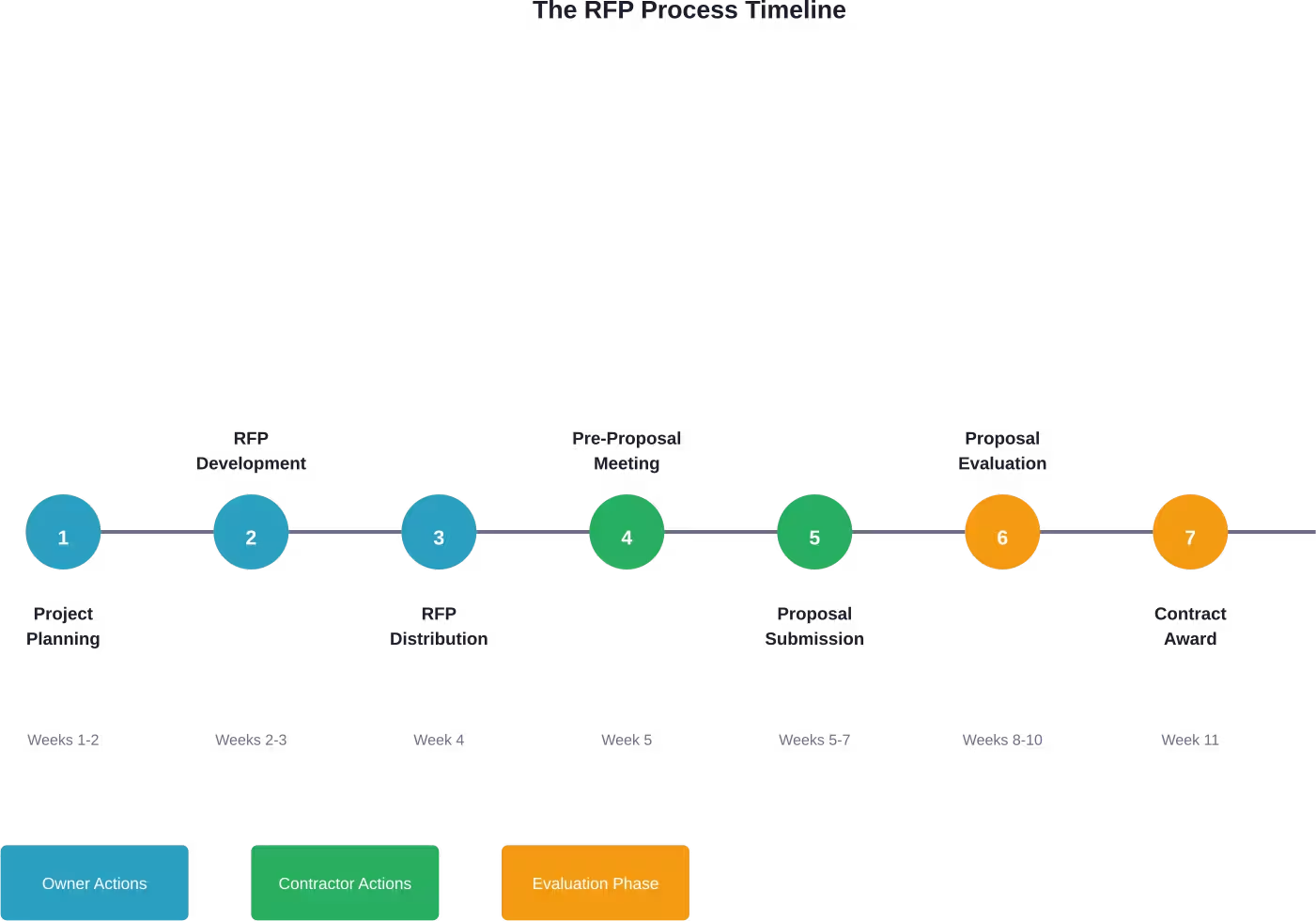
The RFP Process: Step by Step
Understanding how the RFP process unfolds helps both owners and contractors navigate it successfully.
Step 1: Project Definition and Planning
Before issuing an RFP, the project owner must clearly define the project scope, objectives, budget, and timeline. This planning phase often involves architects, engineers, and stakeholders who contribute to the project vision.
According to sources focused on construction RFP processes, this stage includes finalizing the scope and ensuring all requirements are well-documented.
Step 2: RFP Development
The owner or procurement team drafts the RFP document, incorporating all necessary elements. This document must be comprehensive yet clear, providing enough detail for accurate proposals without overwhelming contractors.
Step 3: Contractor Identification and Distribution
The owner identifies qualified contractors to receive the RFP. For public projects, RFPs are often posted on platforms like SAM.gov, where contractors can research active solicitations. Private projects might distribute RFPs to pre-qualified contractors or advertise them through industry channels.
Step 4: Pre-Proposal Meeting (Optional)
Some projects include a pre-proposal conference where contractors can ask questions, tour the site, and clarify requirements. This helps ensure all bidders have the same information and understanding.
Step 5: Proposal Development and Submission
Contractors develop their proposals according to the RFP requirements. This involves assembling project teams, creating detailed work plans, estimating costs, and preparing all required documentation.
According to GSA guidance, contractors should read the solicitation thoroughly before responding to ensure they understand both the requirements and the evaluation factors.
The proposal deadline is strict. Late submissions are typically rejected regardless of content quality.
Step 6: Proposal Evaluation
The owner’s evaluation team reviews all submitted proposals according to the predetermined criteria. This might involve scoring systems, comparison matrices, and multiple rounds of review.
Evaluation teams assess technical approach, qualifications, safety plans, schedules, and pricing. Some processes involve shortlisting finalists for interviews or presentations.
Step 7: Contractor Selection and Award
After thorough evaluation, the owner selects the contractor that offers the best value—not necessarily the lowest price. The selected contractor receives the contract award, and unsuccessful bidders are notified.
Step 8: Contract Negotiation and Execution
Before work begins, the owner and selected contractor finalize contract terms, clarify any remaining details, and execute the formal agreement. This might involve negotiating specific terms, adjusting schedules, or refining scope elements.
Strengthen Your RFP Now

Weak RFPs don’t fail on paper, they fail when design moves into coordination and construction. Powerkh supports teams at the design stage, making sure intent is clear, coordinated, and ready for delivery before it gets priced or issued.
Submit Designs That Hold Up
Here’s how Powerkh helps you avoid problems later:
- Prepare models that are ready for coordination, not rework
- Identify high-risk zones and unresolved interfaces early
- Run constructability and design checks before issue
- Align design outputs with real site conditions and constraints
- Reduce the risk of clarifications, ASIs, and PCOs during delivery
Bring Powerkh in at the design stage and move forward with a design you won’t have to fix later.
RFP vs. RFQ vs. RFI: Understanding the Differences
Construction procurement involves several types of request documents. Understanding the differences helps both owners and contractors use the right process for the right situation.
Request for Information (RFI)
An RFI is used early in the procurement process to gather general information about available solutions, vendors, or approaches. It’s not a solicitation for bids but rather a research tool.
Project owners use RFIs when they’re still defining their needs or exploring what options exist in the market. Contractors respond with information about their capabilities, but not formal proposals or pricing.
Request for Qualifications (RFQ)
An RFQ asks contractors to submit their qualifications, experience, and credentials without detailed pricing. The owner evaluates contractors based on their ability to perform the work, then creates a shortlist of qualified candidates.
After qualification, the owner might issue an RFP to the shortlisted contractors or negotiate directly with the most qualified firm.
Request for Proposal (RFP)
As we’ve discussed, an RFP requests comprehensive proposals that include technical approach, qualifications, and pricing. According to the GSA, the government uses the RFP structure to compare judgment and assess risk before pricing becomes decisive.
Invitation to Bid (ITB) / Invitation for Bid (IFB)
Unlike an RFP, an ITB or IFB is used for straightforward projects where the scope is clearly defined and price is the primary selection factor. Contractors submit sealed bids, and the lowest responsive, responsible bidder typically wins the contract.
| Document Type | Amaç | Selection Criteria | When to Use |
|---|---|---|---|
| RFI | Gather market information | Not applicable | Early research phase |
| RFQ | Pre-qualify contractors | Qualifications and experience | Complex projects requiring proven expertise |
| RFP | Solicit comprehensive proposals | Multiple factors including approach and price | Projects requiring evaluation beyond cost |
| ITB/IFB | Solicit price bids | Lowest price from qualified bidder | Well-defined scope with minimal variables |
Best Practices for Creating an Effective RFP
If you’re a project owner developing an RFP, these best practices will help ensure better responses and smoother project execution.
Be Clear and Specific
Ambiguity leads to confusion, inconsistent proposals, and potential disputes later. Clearly define the scope, requirements, expectations, and evaluation criteria. But don’t over-specify to the point where contractors can’t apply their expertise.
Provide Adequate Response Time
Complex projects require time for thorough proposal development. Contractors typically need three to four weeks minimum for significant projects. Rushed timelines often result in incomplete or lower-quality responses.
Include Realistic Budget Information
While some owners prefer to keep budgets confidential, providing budget parameters helps contractors determine if the project fits their capacity and prevents wasted effort on unrealistic proposals.
Make Evaluation Criteria Transparent
Contractors deserve to know how their proposals will be judged. Clear evaluation criteria lead to proposals that address what actually matters to the owner.
Allow Questions and Issue Addenda
Establish a process for contractors to ask questions, then distribute answers to all bidders through formal addenda. This ensures fairness and clarity.
Consider Site Visits
For renovation or site-specific work, allowing contractors to visit the location helps them understand conditions and prepare accurate proposals.
Best Practices for Responding to an RFP
Contractors face different challenges when responding to RFPs. Here’s how to improve acceptance rates.
Read Everything Thoroughly
This sounds obvious, but many proposal failures stem from missing requirements or misunderstanding instructions. Read the entire RFP at least twice before starting the response.
Follow Instructions Exactly
If the RFP asks for specific sections in a specific order, follow that structure. If it specifies page limits or formatting requirements, adhere to them. Evaluation teams often disqualify proposals that don’t follow instructions.
Address Evaluation Criteria Directly
Structure the proposal to directly address each evaluation criterion. Make it easy for reviewers to find where each requirement is met.
Showcase Relevant Experience
Include case studies and examples of similar projects. Be specific about what was accomplished, challenges overcome, and results achieved.
Be Realistic About Schedule and Budget
Overpromising to win the bid can lead to problems during execution. Provide realistic timelines and pricing based on thorough analysis.
Highlight Safety and Compliance
Construction safety is critical. Detail safety programs, training, incident rates, and compliance protocols. This demonstrates professionalism and reduces owner risk.
Proofread and Quality Check
Typos, formatting errors, and inconsistencies suggest carelessness. Have multiple people review the proposal before submission.
Common RFP Mistakes to Avoid
Both owners and contractors make predictable mistakes in the RFP process.
For Project Owners
Vague scope definitions lead to inconsistent proposals that are difficult to compare. Unrealistic timelines pressure contractors to submit rushed proposals. Changing requirements after distribution creates confusion and unfairness.
Unclear evaluation criteria leave contractors guessing what matters most. Failing to communicate with bidders during the process can result in missed opportunities to clarify requirements.
For Contractors
Missing the deadline, even by minutes, typically means automatic disqualification. Failing to answer all questions or address all requirements creates gaps that hurt evaluation scores.
Generic proposals that don’t address the specific project suggest lack of attention or interest. Unrealistic pricing—either too high or too low—raises red flags about understanding or capability.
Not highlighting unique qualifications means missing opportunities to differentiate from competitors.
The Role of Technology in Modern RFPs
Construction technology has transformed how RFPs are created, distributed, and responded to.
Digital Distribution and Submission
Online platforms now host RFPs and collect proposals electronically. For government projects, platforms like SAM.gov centralize federal contracting opportunities. Private project owners use procurement software and project management platforms.
Digital submission eliminates physical delivery concerns and allows for larger file sizes including detailed drawings and specifications.
İşbirliği Araçları
Cloud-based collaboration tools allow proposal teams to work together efficiently, even when geographically distributed. Multiple team members can contribute to different sections simultaneously.
Data and Analytics
By harnessing historical project data and performance metrics, owners are able to effectively evaluate bidder qualifications, anticipate risks and optimize the selection process for improved outcomes.
Yapay Zeka ve Otomasyon
Emerging technologies assist with both RFP creation and response. AI tools can help identify missing requirements, suggest relevant experience examples, and even draft certain sections based on templates and past proposals.
However, technology should support—not replace—the human judgment essential for construction project success.
Legal and Regulatory Considerations
Construction RFPs operate within legal and regulatory frameworks that vary by jurisdiction and project type.
Public vs. Private Projects
Public projects often have strict legal requirements governing procurement. These might include competitive bidding laws, prevailing wage requirements, minority business participation goals, and transparency rules.
Private projects have more flexibility but still must comply with contract law, insurance requirements, and industry regulations.
Licensing and Bonding
RFPs typically require contractors to hold appropriate licenses and provide bid bonds, performance bonds, and payment bonds. These protect owners from contractor default and ensure subcontractors get paid.
Insurance Requirements
Construction projects carry significant risk. RFPs specify minimum insurance coverage including general liability, workers’ compensation, and sometimes professional liability insurance.
Contract Terms and Conditions
The RFP usually includes standard contract terms that will govern the project. Contractors should review these carefully before deciding whether to bid, as some terms might be unacceptable or require negotiation.
Why RFPs Matter in Construction
The formal RFP process serves important purposes for the construction industry.
For Project Owners
RFPs help owners make informed decisions based on comprehensive information rather than just price. They create a structured comparison of contractors’ capabilities, approaches, and value propositions.
The process also establishes clear expectations from the beginning, reducing misunderstandings and disputes during construction. It documents requirements and agreements, providing legal protection if problems arise.
For Contractors
RFPs provide detailed information about project requirements, allowing contractors to make informed decisions about whether to pursue the work. They create a level playing field where contractors compete on qualifications and approach, not just price.
Well-structured RFPs also protect contractors by clearly defining scope and expectations, reducing the risk of scope creep or unreasonable owner demands.
For the Industry
The RFP process promotes professionalism, transparency, and accountability in construction. It encourages contractors to maintain strong safety records, develop expertise, and deliver quality work—factors that matter when qualifications are evaluated alongside price.
Sıkça Sorulan Sorular
What’s the difference between an RFP and a bid in construction?
An RFP (Request for Proposal) evaluates contractors based on multiple factors such as technical approach, experience, and price. A bid (Invitation to Bid) focuses primarily on price, with the lowest qualified bidder typically winning.
How long should contractors have to respond to a construction RFP?
Most projects require at least 3–4 weeks for responses. Complex projects may need 6–8 weeks to allow contractors to prepare detailed and competitive proposals.
Can RFP requirements be negotiated after contractor selection?
Yes, some negotiation may occur after selection, especially for contract details and scheduling. However, major changes to scope or evaluation criteria should be avoided to maintain fairness.
Do all construction projects require an RFP?
No. Smaller or simpler projects may use informal quotes or bidding processes. RFPs are typically used for complex projects where qualifications and approach are important.
What happens if no contractors respond to an RFP?
The owner may revise the RFP, adjust budget or scope, improve outreach, or change procurement methods. Lack of responses often indicates issues with project conditions or requirements.
Should pricing be included in the initial RFP response?
It depends on the RFP structure. Some require pricing upfront, while others use a two-stage process with pricing submitted later. Contractors should follow the instructions in the RFP document.
How are RFP evaluation scores typically weighted in construction?
Evaluation often prioritizes qualifications (around 75%) over price (around 25%). Criteria may include experience, technical approach, team qualifications, schedule, safety record, and cost.
Sonuç
Understanding what an RFP is in construction—and how to navigate the process effectively—can significantly impact project success for both owners and contractors.
For owners, a well-crafted RFP attracts qualified contractors, facilitates meaningful comparisons, and sets the foundation for successful project delivery. For contractors, responding strategically to RFPs means winning the right work at the right terms.
The RFP process isn’t just bureaucracy. It’s a structured approach to matching construction projects with the contractors best suited to deliver them. When done well, everyone benefits—owners get better results, contractors get appropriate opportunities, and projects succeed.
Whether you’re issuing or responding to construction RFPs in 2026, following the principles and best practices outlined here will improve outcomes and help build stronger industry relationships.
Ready to tackle your next construction RFP with confidence? Apply these insights to create or respond to RFPs that stand out and deliver real value.

Vaka Çalışmalarımız
Ticari, endüstriyel ve konut sektörleri için 200'den fazla BIM ve VDC projesi gerçekleştirdik.
Çalışmalarımız şunları içermektedir:
Kalıp tasarım otomasyonu
Our client from
California, USA
Asma tavan tasarım otomasyonu
Our client from
New York, USA
Duvar çerçeveleme tasarım otomasyonu
Our client from
California, USA