Herhangi bir sorunuz var mı? Bize ulaşın!
Ekibimize katılın!
Ücretsiz fiyat teklifi veya danışmanlık talep edin

Construction projects rarely fail because of one big mistake. More often, they unravel because of small gaps between teams. A beam placed a few centimeters too low. A duct routed through a structural column. A ceiling packed so tightly that nothing can be maintained later. These are not dramatic errors. They are coordination problems.
Design coordination and critical zone resolution exist to prevent exactly that. They bring structure to how disciplines work together and focus attention on the areas where conflicts are most likely to happen. This article explains what design coordination really means, how critical zones are identified and resolved, and why both are essential for delivering projects on time and within budget.
What Design Coordination Really Means in Practice
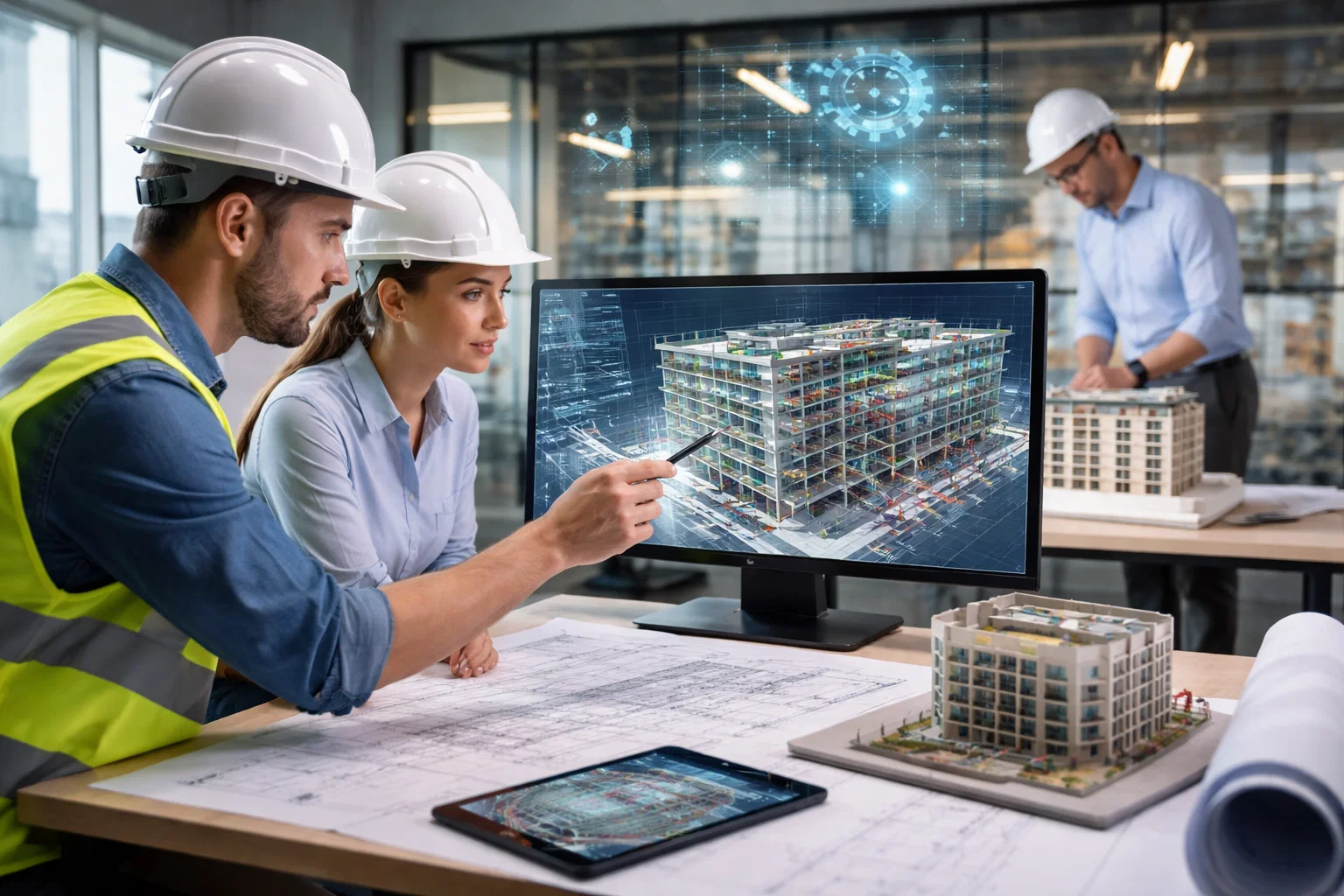
Design coordination is the structured alignment of architectural, structural, MEP, and other design inputs into a single, buildable solution. It goes beyond sharing drawings. It is about making sure that all systems can physically coexist and function as intended.
In modern projects, each discipline develops its own model or set of drawings. Without coordination, these models sit next to each other, not together. The problems only become visible when construction starts, and by then, it is already expensive.
Effective design coordination focuses on:
- Integrating models into a federated environment.
- Detecting clashes early, both hard and soft.
- Assigning issues clearly to responsible teams.
- Tracking resolutions in a transparent way.
- Updating documentation so everyone works from the same version.
It is a continuous process, not a one-time review. As the design develops, coordination must evolve with it.
Why Design Coordination Is Not Optional Anymore
There was a time when overlaying 2D drawings was enough. That approach worked for simpler buildings. It does not work for modern construction.
Projects today involve:
- Dense MEP systems.
- Complex structural layouts.
- Tight floor-to-floor heights.
- Advanced facade systems.
- Strict energy and performance standards.
All of this increases the risk of conflicts between systems. And when those conflicts reach the construction site, the impact is immediate.
Common consequences of poor coordination include:
- Budget overruns due to redesign.
- Delays caused by site rework.
- Material waste.
- Compromised building performance.
- Frustration across teams.
Design coordination reduces these risks by shifting problem-solving to the digital stage. Fixing a clash in a model takes hours. Fixing it on site can take weeks.
The Role of BIM in Coordinated Workflows
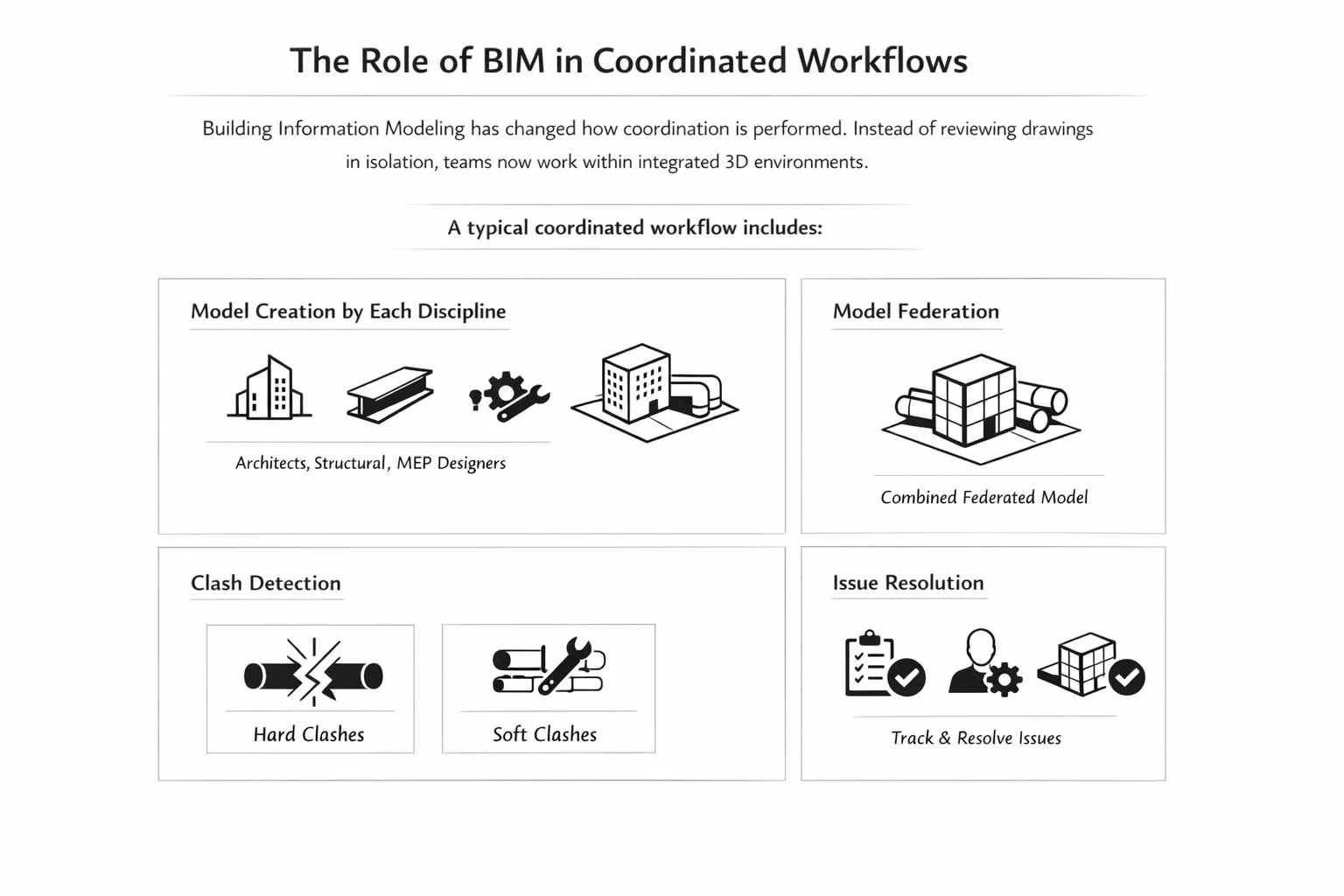
Building Information Modeling has changed how coordination is performed. Instead of reviewing drawings in isolation, teams now work within integrated 3D environments.
A typical coordinated workflow includes:
Model Creation by Each Discipline
Architects, structural engineers, and MEP designers create their respective models according to agreed standards and levels of detail.
Model Federation
The discipline models are combined into a single federated model. This does not merge them into one file but places them into a shared environment where they can be reviewed together.
Çatışma Tespiti
Automated tools analyze spatial relationships between systems. Two types of clashes are usually identified:
- Hard clashes: Physical overlaps between elements.
- Soft clashes: Clearance or tolerance violations.
Both matter. A pipe passing through a beam is obvious. A duct that leaves no maintenance space is less obvious but equally problematic.
Issue Resolution
Clashes are documented, assigned, and tracked. Teams adjust their designs and update the model. The process repeats until the model reaches the required level of coordination.
This structured approach brings discipline to what used to be informal coordination conversations.
What Is Critical Zone Resolution?
While general coordination looks at the entire model, critical zone resolution focuses on the most sensitive areas of the building.
A critical zone is a space where multiple systems converge within limited geometry. Examples include plant rooms, service risers, suspended ceiling voids, structural transfer levels, and basement service corridors.
These zones carry higher coordination risk. Even small deviations can cause significant redesign.
Critical zone resolution means identifying these areas early and applying focused coordination effort before they become construction bottlenecks.
How Critical Zones Are Identified
Critical zones are not random. They are predictable.
They often appear where:
- Structural depth is limited.
- MEP density is high.
- Equipment access is required.
- Architectural finishes restrict space.
- Fire safety systems intersect.
A practical approach to identifying them includes:
- Reviewing areas with heavy system concentration.
- Analyzing sections and vertical clearances.
- Mapping maintenance access requirements.
- Assessing structural constraints.
- Consulting construction teams about known risk areas.
The earlier these zones are flagged, the easier they are to resolve.
The Process of Resolving Critical Zones
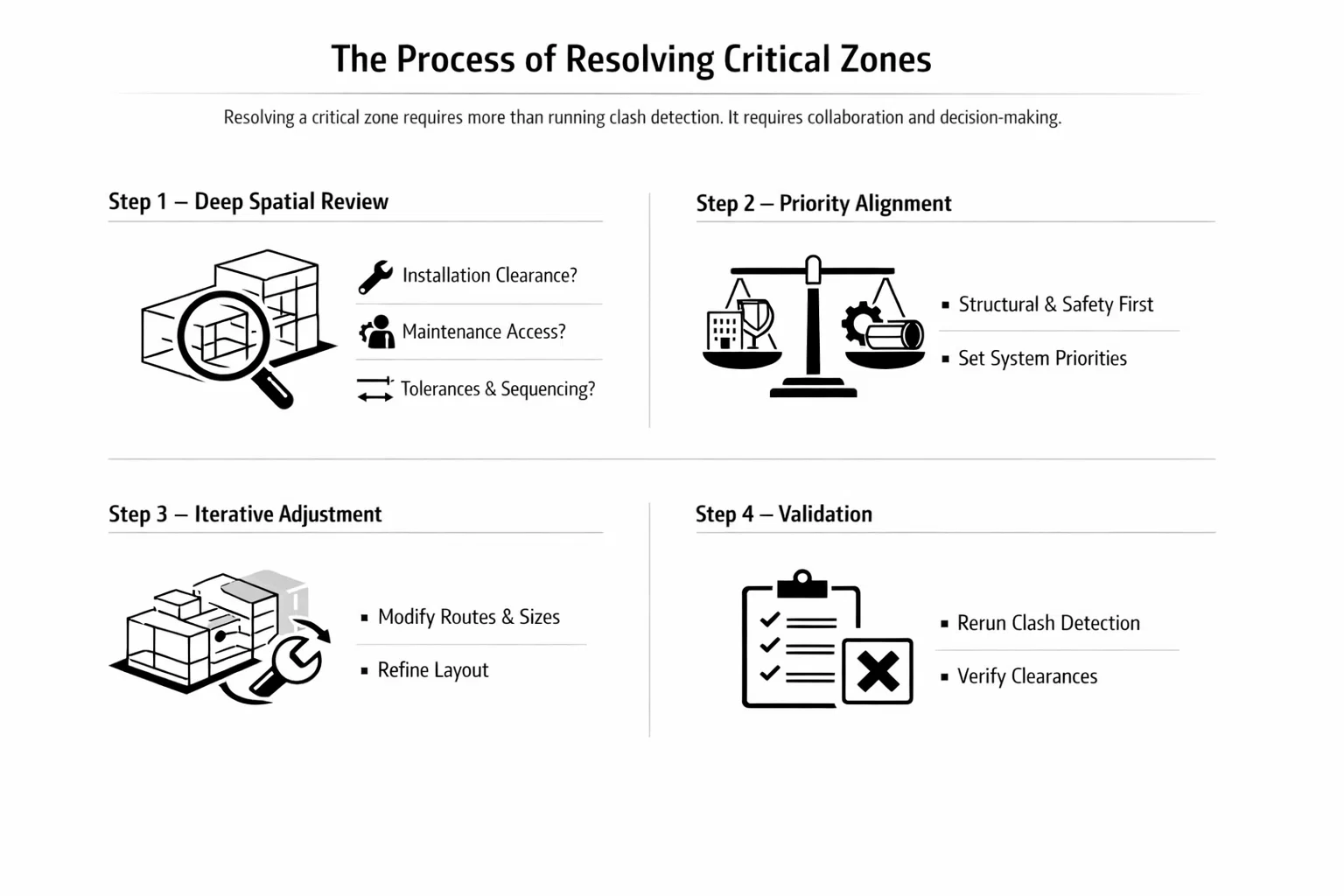
Resolving a critical zone requires more than running clash detection. It requires collaboration and decision-making.
Step 1 – Deep Spatial Review
Instead of scanning the entire model broadly, teams zoom into the zone. Sections and 3D views are studied in detail.
The following questions are asked. Is there sufficient clearance for installation? Is maintenance access realistic? Are tolerances accounted for? Is sequencing feasible?
Step 2 – Priority Alignment
Not all systems carry equal weight. Structural integrity comes first. Life safety systems follow. Then mechanical and architectural elements are adjusted accordingly.
Clear prioritization prevents endless negotiation.
Step 3 – Iterative Adjustment
Design teams adjust routing, levels, or equipment sizes. Sometimes minor modifications solve the issue. In other cases, layout changes are required.
This stage often reveals deeper design assumptions that need reconsideration.
Step 4 – Validation
Once adjusted, the zone is reviewed again. Clash detection is rerun. Clearances are checked manually. Only when all systems fit realistically can the zone be considered resolved.
Critical zone resolution is slower than standard coordination, but it prevents serious downstream problems.
Protecting Design Intent Through Coordination at Powerkh

At Powerkh, we approach design coordination and critical zone resolution as part of a wider commitment to design continuity. As a UK-based, engineering-led digital construction consultancy, we support project teams from design through construction. The aim is straightforward – help ensure that what is designed is what ultimately gets built.
During developed and technical design stages, coordination pressure increases. Structure, MEP, and architecture begin competing for limited space, especially in plant rooms, risers, and other constrained zones. We focus our coordination effort on these high-risk interfaces. That includes spatial coordination, risk-based clash resolution, and model health reviews to confirm that tolerances and clearances make sense in real-world conditions.
Our role does not stop at model coordination. We also provide engineering-led constructability reviews before issue for construction and support teams during the transition to site. By combining coordination, technical review, and verification, we help reduce the loss of design intent under schedule pressure. Across more than 400 BIM and VDC projects, this continuity-led approach has remained consistent – resolve risk early, protect key decisions, and strengthen the link between model and reality.
The Human Element in Coordination
Software can detect clashes. It cannot decide what matters most.
Design coordination relies heavily on:
- Clear communication.
- Defined responsibilities.
- Regular coordination meetings.
- Agreed modeling standards.
- Strong leadership.
A dedicated design coordinator often manages this process. This role involves:
- Running clash detection sessions.
- Preparing coordination reports.
- Leading review meetings.
- Tracking issue resolution.
- Ensuring compliance with project standards.
Without structured leadership, coordination quickly becomes fragmented.
Why Coordination Still Breaks Down
Digital tools have improved coordination a lot. That part is true. But even with advanced models and automated clash detection, projects still run into friction. The software is rarely the real issue.
More often, the breakdown happens in how teams organize their work.
Inconsistent Modeling Standards
When each discipline models differently, problems appear quickly. One team models to a high level of detail, another keeps it conceptual. Some include tolerances, others do not. The result is a federated model that looks complete but behaves unpredictably during review.
Without agreed standards, coordination becomes guesswork.
Poor Naming Conventions
It sounds minor, but file names and element naming matter. If models are uploaded with unclear titles or inconsistent structure, version confusion follows. Teams waste time confirming which file is current instead of resolving actual design issues.
Clarity at this level saves more time than most expect.
Delayed Model Uploads
Coordination relies on current information. When teams delay model uploads, meetings are based on outdated data. Decisions are made on assumptions. Then someone updates their model later, and the clash reappears.
Regular and disciplined updates keep the process reliable.
Unclear Issue Ownership
Clash detection may identify dozens of conflicts. But if it is not clear who is responsible for resolving each issue, progress stalls. Everyone assumes someone else will handle it.
Clear assignment and tracking prevent that silence that slows everything down.
Resistance to Design Changes
Sometimes the model shows that a design decision needs adjustment. Not everyone welcomes that. Designers may hesitate to modify layouts they have already refined.
Coordination works only when teams accept that change is part of refinement, not a criticism.
Design Coordination Beyond Clash Detection
It is tempting to reduce coordination to clash detection. That is only part of it.
True coordination also involves:
- Aligning design intent.
- Managing information flow.
- Ensuring consistent data across teams.
- Supporting cost and schedule planning.
- Preparing models for downstream uses like fabrication.
Critical zone resolution strengthens this broader coordination by targeting areas of highest risk.
In many ways, these two processes work together. General coordination keeps the overall model stable. Critical zone resolution protects the most sensitive spaces.
Sonuç
Design coordination creates the framework that allows multiple disciplines to work as one. Critical zone resolution sharpens that framework by concentrating effort where mistakes are most likely and most expensive.
Construction projects are complex by nature. Complexity does not disappear. It must be managed. Coordinated models, structured workflows, and focused resolution of high-risk areas bring control to that complexity.
When handled early and consistently, design coordination and critical zone resolution do more than prevent clashes. They create confidence. And in construction, confidence often determines whether a project moves forward smoothly or struggles under avoidable problems.
SSS
1. What is the difference between design coordination and clash detection?
Clash detection is a tool. Design coordination is the process. Clash detection identifies where elements overlap or conflict. Coordination goes further. It involves reviewing those conflicts, deciding what matters most, adjusting designs, and making sure everyone works from updated information.
2. What exactly is a critical zone in a project?
A critical zone is an area where systems compete for limited space. Think plant rooms, risers, ceiling voids, or tight structural levels. These spaces carry higher risk because small mistakes can cause major redesign. That is why they require focused coordination rather than general model review.
3. At what stage should critical zone resolution begin?
Earlier than most teams expect. Ideally during developed and technical design stages, before construction documentation is locked. Waiting until site coordination is risky. By then, changes are slower and more expensive.
4. Does good coordination really save money?
Yes, but not in an abstract way. It saves money by reducing rework, avoiding site delays, and preventing last-minute design changes. The savings often show up as smoother progress rather than dramatic cost cuts.
5. Who is responsible for design coordination?
Usually a dedicated design or BIM coordinator manages the process. However, coordination only works if every discipline participates actively. It is not something one person can fix alone.
6. Can coordination guarantee a clash-free project?
No project is perfect. Even well-coordinated models face adjustments on site. The goal is not zero issues. The goal is reducing high-risk conflicts before they turn into construction problems. That difference matters.

Bir BIM Projeniz mi Var? Bizimle Konuşun.
Bize UlaşınVaka Çalışmalarımız
Ticari, endüstriyel ve konut sektörleri için 200'den fazla BIM ve VDC projesi gerçekleştirdik.
Çalışmalarımız şunları içermektedir:
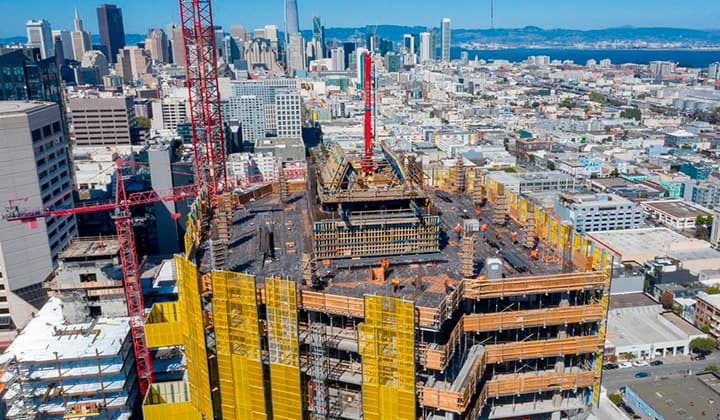
Kalıp tasarım otomasyonu
Our client from
California, USA
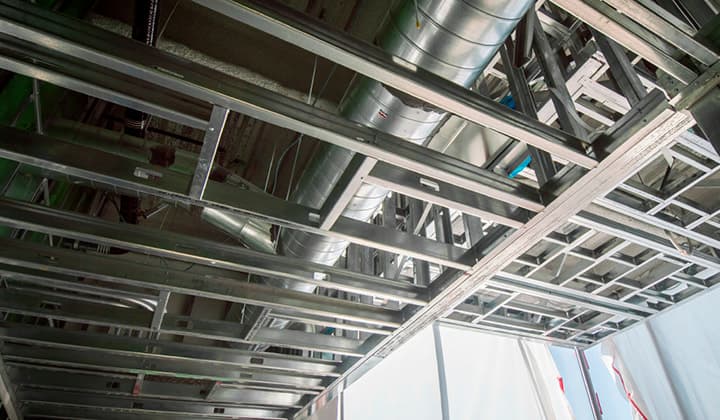
Asma tavan tasarım otomasyonu
Our client from
New York, USA
Duvar çerçeveleme tasarım otomasyonu
Our client from
California, USA