Herhangi bir sorunuz var mı? Bize ulaşın!
Ekibimize katılın!
Ücretsiz fiyat teklifi veya danışmanlık talep edin

Structural engineering support isn’t something most people budget for instinctively. It’s not as visible as the concrete or timber, but it plays a bigger role than you’d think in keeping projects safe, compliant, and on track. Whether you’re planning a simple beam replacement or a multi-storey extension, structural support work is one of those line items that deserves upfront clarity.
In this article, we’ll walk through what this support actually includes, how engineers typically charge for it, and what kind of numbers you might expect – both in basic residential jobs and more involved commercial builds. No fluff, no guesswork, just the facts, with a bit of context to help you ask the right questions before signing anything.
Average Structural Engineering Support Costs at a Glance
While pricing always depends on project specifics, there are some general figures that can help set expectations. For a typical residential inspection, most people in the UK pay between £650 and £1,500, while in the US the range tends to fall between $300 and $1,450. If you’re getting structural design and calculations for a home extension, expect somewhere around £1,000 to £2,700 in the UK or between $500 and $2,500 in the US.
Larger or more complex builds that need full structural design can push costs higher, often reaching £10,000 or more in the UK and well over $5,000 in the US, especially in major cities. If legal involvement is required, such as expert witness services or structural reports for insurance disputes, prices typically start around £2,800 and can rise to £8,400 or more. In the US, that kind of work might cost anywhere from $1,000 to $7,000 depending on how many hours are involved and whether court appearances are needed.
These numbers won’t apply to every job, but they offer a fair snapshot of what’s typical. Just keep in mind that a proper quote should always be based on scope, timeline, and documentation needs.
What Does Structural Engineering Support Actually Include?
Before we talk numbers, it helps to get clear on what you’re actually paying for. Structural engineering support isn’t just about sending someone in with a calculator and a clipboard. It’s a combination of design, validation, documentation, and sometimes, ongoing monitoring during the build.
Here’s what it can involve, depending on your project:
- Load-bearing analysis (walls, beams, floors, etc.).
- Structural calculations for building control or permits.
- Drawings and diagrams showing structural changes or reinforcements.
- On-site inspections before or during construction.
- Advice on materials, reinforcements, or structural alternatives.
- Legal or expert witness reports (for disputes or insurance claims).
- Coordination with architects, builders, or fabricators.
Not every project needs all of these. But even basic structural work needs to be designed and signed off properly, and that’s where the cost comes in.
Typical Pricing Models: Fixed Fee vs Hourly Rates
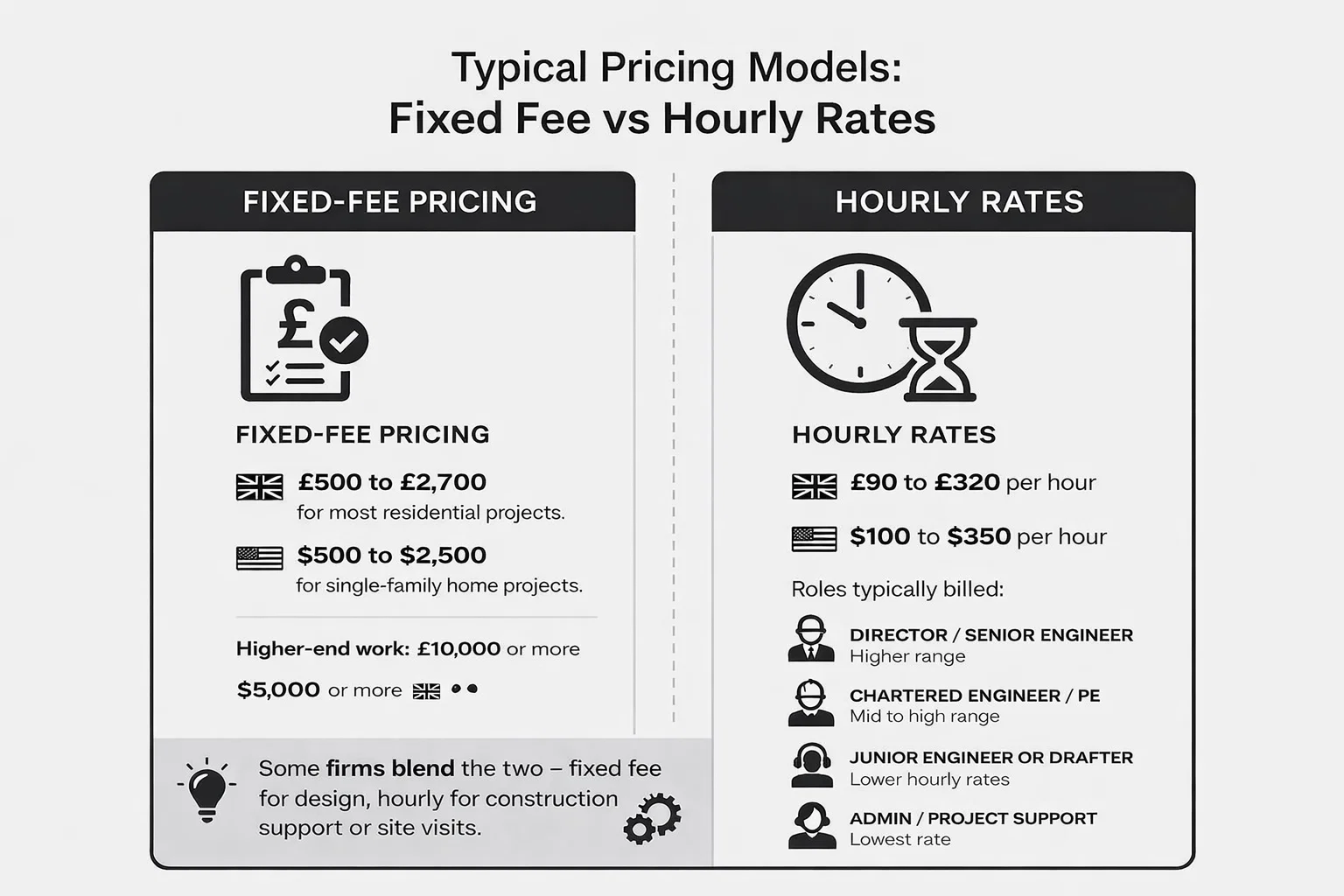
Structural engineers generally charge using one of two approaches:
Fixed-Fee Pricing
This is more common for well-scoped residential jobs. You get a set quote upfront for a specific service, like calculating the beam size needed to remove a load-bearing wall. It gives budget clarity but may not cover unexpected scope changes.
Typical fixed-fee ranges:
- UK: £500 to £2,700 for most residential projects.
- US: $500 to $2,500 for single-family home projects.
Higher-end work, like full-house designs or complex detailing, can run up to £10,000 or $5,000 and beyond.
Saatlik Ücretler
More common on commercial builds or projects where the scope might shift. You’re charged based on time spent, with different rates depending on the person doing the work.
Example rates:
- UK: £90 to £320 per hour.
- US: $100 to $350 per hour.
Roles typically billed:
- Director / Senior Engineer: Higher rate, usually for oversight or consulting.
- Chartered Engineer / PE: Mid to high range.
- Junior Engineer or Drafter: Lower hourly rates, for drawing or documentation.
- Admin / Project Support: Admin tasks, lowest rate.
Some firms blend the two – fixed fee for design, hourly for construction support or site visits.
Price Ranges by Type of Service
To make it easier to navigate, here’s how costs typically break down depending on what you need:
1. Yapısal Denetimler
Used to check cracks, water damage, foundation issues, or post-disaster conditions.
- UK: £500 to £1,500 (includes site visit + basic report).
- US: $200 to $1,445 (average around $520).
Watch out that some firms charge extra for the final written report, so double-check what’s included.
2. Structural Design and Calculations
Needed for any structural change, including removing walls, building extensions, or adding new loads.
- UK: £350 to £10,000+ (average residential range: £1,000 to £2,500).
- US: $500 to $5,000 (based on size and complexity).
- Some US engineers price by square footage: From $0.25 to $2.00 per square foot.
3. Expert Witness / Legal Consultation
Used in disputes, insurance claims, or structural failure cases.
- UK: £2,800 to £8,400 (depending on court involvement).
- US: $150 to $350 per hour (plus prep time, report writing, etc.).
What Affects the Final Price?
The same structural design task might be priced at £700 or £7,000 depending on the situation. The difference often comes down to several key factors.
Kapsam ve Karmaşıklık
Designing a single beam or lintel is a relatively quick task. But when the job involves an entire extension, loft conversion, or basement structure, things become far more involved. The engineer has to calculate loads across multiple elements, ensure everything works together, and often coordinate with architects or other consultants. More elements means more calculations, more checks, and more time.
Saha Koşulları
Every site brings its own challenges. Poor ground quality might mean extra foundation work. A sloped site or proximity to trees can complicate structural decisions. Tight urban plots or unusual layouts often require creative solutions. All of this adds to the time needed for assessment, design, and sometimes more than one site visit to get things right.
Documentation Needs
Not all jobs need the same level of paperwork. If your local authority, lender, or insurance provider asks for full structural calculations, technical drawings, or stamped approvals, that adds to the workload. These aren’t always included in a basic quote and can become separate billable items if not agreed upfront.
Timeline Pressure
When time is tight, pricing tends to go up. Projects that need immediate attention, weekend work, or turnaround within a few days often come with premium rates. That’s especially true if design changes happen late in the process or if other trades are already booked and waiting on the structural input.
Engineer Qualifications
Engineers with formal credentials like MICE, MIStructE, or PE bring more experience and legal standing to the table. That’s especially important when planning approval, mortgage assessments, or safety certification is involved. These professionals often charge more, but their involvement can also prevent delays or issues down the line.
Konum
Rates vary widely based on where the project is located. Central London, New York, or other large metro areas tend to have higher fees than smaller towns. This reflects not just higher business overheads, but also the complexity of urban construction environments, local regulations, and client expectations.
Travel and Site Access
If the job site is far away, in a remote location, or requires ferry travel, expect to see travel costs added. Even local projects can get pricier if the engineer has to deal with limited parking, restricted site access, or spend extra time navigating a cramped attic or multi-storey walk-up. More effort on site usually means more hours billed.
How We Approach Structural Engineering Support at Powerkh

At Powerkh, we’ve worked on hundreds of BIM and structural detailing projects across the UK, US, and Europe. When it comes to structural engineering support, our role is more than just calculations or compliance. We help ensure that what gets designed is actually what gets built. That means we stay involved throughout the process – not just during planning, but across coordination, site execution, and close-out.
Our engineering-led team supports clients from early-stage structural design through construction handover. Whether you’re tackling a residential extension or managing a complex commercial build, we offer structural modeling, design readiness reviews, constructability checks, and shop drawing preparation.
If you need structural support that blends precision with practical delivery, our team is built for that. We work closely with architects, fabricators, and contractors to make sure the engineering doesn’t just look good on paper – it holds up under real pressure.
What to Ask Before You Hire
Not all quotes are built the same. Before you lock anything in, make sure you ask:
- Is this a fixed fee or hourly?
- Does it include all calculations, drawings, and reports?
- Are site visits part of the quote?
- What happens if the design needs to change?
- Is the engineer chartered or licensed?
- Will I get stamped documents if needed for permits?
- Are taxes (VAT or sales tax) included in this number?
- Will you be available during construction for clarification?
A good engineer won’t just give you numbers. They’ll explain what’s included, what’s not, and where hidden costs might come up.
Pros and Cons of Structural Engineering Support
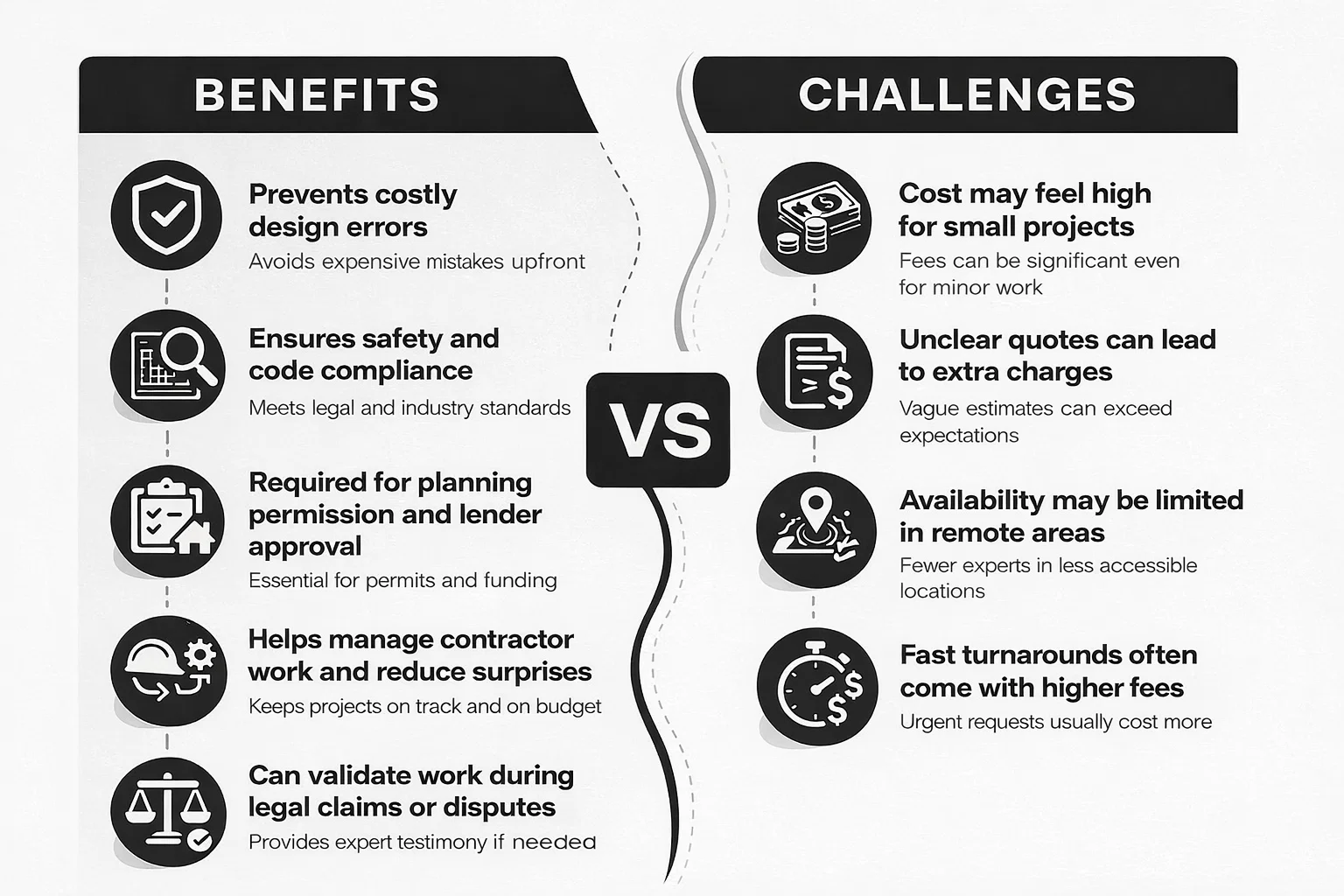
Understanding the costs is one thing, but it also helps to zoom out and look at the bigger picture. What exactly do you get in return for that investment? And are there any downsides to keep in mind? Like most professional services, structural engineering support comes with clear advantages, but there are also a few trade-offs to be aware of. Let’s take a look at both.
Benefits:
- Prevents costly design errors
- Ensures safety and code compliance
- Required for planning permission and lender approval
- Helps manage contractor work and reduce surprises
- Can validate work during legal claims or disputes
Challenges:
- Cost may feel high for small projects
- Unclear quotes can lead to extra charges
- Availability may be limited in remote areas
- Fast turnarounds often come with higher fees
How to Keep Costs Predictable
You can’t avoid all variables, but there are smart ways to keep structural support from wrecking your budget.
Be Specific About What You Need
The more detail you give upfront, the more accurate the quote will be. Vague requests often lead to wide pricing ranges. If you can, provide drawings, sketches, photos, or architect plans. That context helps the engineer understand the scope and avoid over- or under-estimating the work.
Ask for a Detailed Breakdown
Don’t settle for a single number with no explanation. Ask exactly what’s included in the fee: calculations, drawings, revisions, site visits, and reports. If something’s not covered, you want to know that before the invoice arrives.
Work With Someone Local When You Can
A local engineer usually knows the local soil conditions, permitting process, and typical construction methods. That insight helps avoid delays and unnecessary back-and-forth. You might also save on travel costs or site visit fees.
Bring an Engineer in Early
Leaving structural work until the last minute tends to raise costs. If permits are due or builders are already scheduled, you’ll likely need a rush job, which can cost more. Involving an engineer early gives time to plan properly and catch issues before they turn into delays.
Don’t Let Price Be the Only Factor
It’s easy to chase the lowest quote, but if that number leaves out drawings or site visits, you could end up paying more later. A well-scoped, transparent quote from someone who understands your project is almost always worth the extra upfront clarity.
Son Düşünceler
Structural engineering support is often one of the least understood parts of a building project. But it’s also one of the most important. The cost isn’t just about calculations or drawings – it’s about making sure what you’re building will actually hold up, meet regulations, and avoid nasty surprises.
Whether you’re tackling a home upgrade or coordinating a commercial build, budgeting realistically for structural support can save time, money, and stress. Ask questions, clarify scope, and work with someone who’s transparent about what they offer. Good engineering doesn’t just make things stand – it makes the entire project smoother.
SSS
1. Do I always need a structural engineer for small renovations?
Not always, but if you’re touching anything load-bearing, adding weight, or altering the structure in any way, it’s worth checking. Swapping out a non-load-bearing wall is one thing. Cutting into a structural beam or modifying a foundation? That’s where a structural engineer steps in. When in doubt, a quick consultation can save a lot of headaches later.
2. What’s the difference between structural drawings and calculations?
Drawings show what the structure should look like – placements of beams, columns, reinforcements, and so on. Calculations are the math behind it, proving those elements can actually support the loads they’re meant to. You usually need both for permits, and they should match up. If a quote only includes one, ask about the other.
3. Why do prices vary so much between firms?
A few reasons. Big city rates are higher. Licensed or chartered engineers cost more (and sometimes are required). Some quotes include everything up front, others don’t. And some firms (like Powerkh) stay involved from early design through to what gets built on site, which adds more value but may also carry a broader scope.
4. Can I just use a builder’s engineer?
Sometimes builders bring in their own engineers, especially for simpler jobs. That can be fine – just make sure the engineer is qualified and independent enough to spot problems. If the same person is designing and building without oversight, things can get missed. A second opinion is often worth the extra step.
5. What should I check before agreeing to a quote?
Ask what’s included: site visits, reports, drawings, revisions, VAT. Ask about the timeline, especially if permits or contractors are waiting on documents. And make sure the engineer will be available to answer questions if something needs adjusting during the build. A cheap quote that goes silent when construction starts isn’t much help.
6. Is it possible to negotiate structural engineering fees?
Not in the haggling sense, but yes, you can often shape the scope. If you only need a lintel spec instead of full drawings, the price drops. If you’re clear about what you actually need (and what you don’t), many firms will tailor the fee to match. Just be realistic about complexity. Structural safety isn’t a great place to cut corners.

Bir BIM Projeniz mi Var? Bizimle Konuşun.
Bize UlaşınVaka Çalışmalarımız
Ticari, endüstriyel ve konut sektörleri için 200'den fazla BIM ve VDC projesi gerçekleştirdik.
Çalışmalarımız şunları içermektedir:
Kalıp tasarım otomasyonu
Our client from
California, USA
Asma tavan tasarım otomasyonu
Our client from
New York, USA
Duvar çerçeveleme tasarım otomasyonu
Our client from
California, USA