Herhangi bir sorunuz var mı? Bize ulaşın!
Ekibimize katılın!
Ücretsiz fiyat teklifi veya danışmanlık talep edin

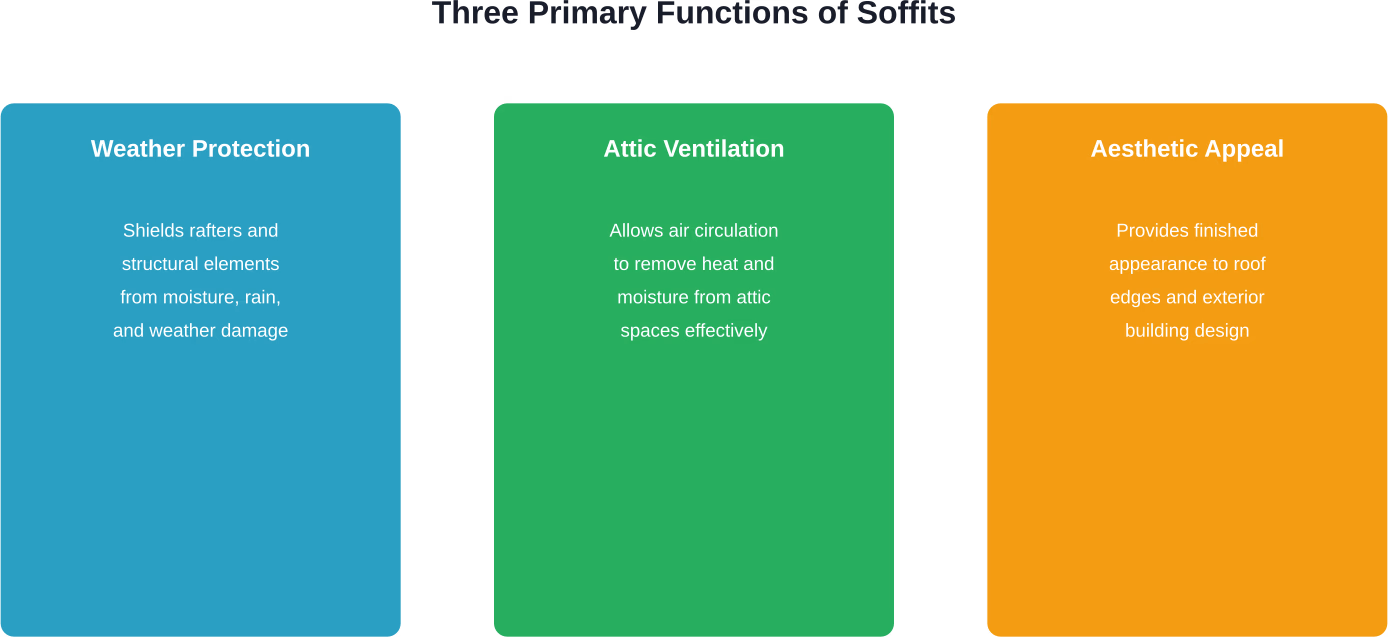
A soffit in construction refers to the finished underside of any overhanging building element, most commonly the area beneath roof eaves that extends from the exterior wall to the roofline. Soffits serve both functional and aesthetic purposes—protecting rafters from weather exposure, allowing ventilation for attic spaces, and providing a finished architectural appearance to a building’s exterior.
Walk around any house and look up at the roofline. That horizontal surface tucked beneath the eaves? That’s a soffit. Despite being one of those construction elements most people never think about, soffits play a surprisingly critical role in building integrity and performance.
But here’s the thing—soffits aren’t just decorative trim. They’re working components that protect structural elements, regulate airflow, and contribute to energy efficiency. Understanding what soffits are and how they function matters whether constructing a new building or maintaining an existing one.
Understanding the Soffit Definition
The term “soffit” comes from architectural terminology referring to the underside or under-face of any overhanging section. In construction, this most commonly describes the exposed surface beneath roof eaves, though the term can technically apply to other architectural features.
According to building standards, a soffit is the finished material that covers the underside of the roof overhang, bridging the gap between the exterior wall and the roofline edge. This seemingly simple component serves multiple functions simultaneously.
Soffits appear on both residential homes and commercial structures. They’re found wherever roof overhangs exist—along the sides of buildings, above porches, and around entire roof perimeters. The underside of a cornice also qualifies as a soffit, as does the ceiling beneath a flight of stairs or under classical architectural entablatures.
The Critical Role of Soffits in Building Design
So what exactly do soffits accomplish? Their functions extend far beyond appearance.
First, soffits protect roof rafters and trusses from weather exposure. Without this covering, structural lumber would face direct exposure to rain, snow, and humidity, leading to rot, mold growth, and structural deterioration. This protective function extends the lifespan of roof framing significantly.
Second, properly designed soffits facilitate attic ventilation. According to research from the Florida Solar Energy Center, attic ventilation can reduce the temperature of attic air and reduce temperature of attic surfaces by convection. Vented soffits work in conjunction with ridge vents or gable vents to create continuous airflow that removes heat and moisture from attic spaces.
This ventilation matters more than many realize. Trapped attic heat transfers downward into living spaces, increasing cooling costs during warm months. Moisture accumulation leads to insulation damage, mold problems, and premature roof system failure.
Third, soffits contribute to the architectural appearance of buildings. They provide a finished look to roof edges and can complement siding materials and overall design aesthetics. The visual continuity they create makes structures appear more polished and professionally constructed.
Vented vs. Non-Vented Soffits
Not all soffits are created equal. The distinction between vented and non-vented systems represents a fundamental design decision.
Vented soffits contain perforations, slots, or screens that allow exterior air to enter the attic space. This incoming air flows upward through the attic and exits through ridge vents or other exhaust points, creating continuous ventilation. According to the Florida Solar Energy Center, Florida residences and small commercial buildings are usually constructed in one of two ways: with openings for outside air to ventilate the space underneath the roof with insulation above the ceiling finish, or without any opening underneath the roof—creating an unvented attic space.
Non-vented soffits, by contrast, provide solid coverage without airflow openings. These work in unvented attic designs—also called conditioned attics—where insulation is installed at the roof deck rather than at the ceiling level. In these systems, the attic space becomes part of the conditioned building envelope.
The choice between vented and non-vented soffits depends on overall roof and insulation design. Vented soffits remain more common in traditional construction, particularly in climates where attic heat buildup presents significant concerns.
Common Soffit Materials and Their Properties
Material selection for soffits balances durability, maintenance requirements, cost, and appearance. Several options dominate the market.
| Material | Avantajlar | Disadvantages | Best Applications |
|---|---|---|---|
| Vinyl | Low cost, low maintenance, moisture resistant, easy installation | Can crack in extreme cold, limited color options, less durable than alternatives | Residential construction, budget projects, DIY installations |
| Aluminum | Lightweight, won’t rot, fire resistant, paintable, good ventilation options | Can dent, may corrode in coastal environments, shows scratches | Commercial buildings, coastal areas with proper coating |
| Wood | Natural appearance, paintable, traditional aesthetic, can be custom milled | Requires regular maintenance, susceptible to rot and insects, higher cost | Historic renovations, high-end residential, architectural designs |
| Fiber Cement | Extremely durable, fire resistant, insect proof, low maintenance, paintable | Higher initial cost, heavier weight, professional installation recommended | Long-term installations, areas with severe weather, fire-prone regions |
Vinyl soffits dominate residential construction due to their affordability and minimal upkeep. They resist moisture effectively and don’t require painting, making them attractive for homeowners prioritizing convenience.
Aluminum soffits offer durability without the weight of other materials. They work particularly well where ventilation is a priority, as perforated aluminum panels provide excellent airflow while maintaining structural integrity.
Wood soffits deliver unmatched aesthetic appeal but demand ongoing maintenance. Paint or stain must be refreshed periodically, and moisture exposure requires monitoring to prevent rot.
Fiber cement products provide the appearance of wood with superior durability. These engineered materials resist fire, insects, and moisture while requiring minimal maintenance over decades of service.
Finding and Identifying Soffits on Buildings
Locating soffits on a structure is straightforward once the concept is clear. Stand outside a building and look upward at the roofline. The horizontal surface visible beneath the eaves—between the exterior wall and where the roof edge ends—is the soffit.
On homes with wide roof overhangs, soffits can span several feet. On structures with minimal overhang, soffits might only be a few inches wide. Some modern architectural designs eliminate roof overhangs entirely, rendering soffits unnecessary.
Soffits typically run continuously around the building perimeter wherever roof overhangs exist. They can also appear on covered porches, above bay windows, beneath balconies, or under any architectural projection.
Look for small perforations or vent screens if determining whether soffits are vented. Solid, smooth surfaces without openings indicate non-vented installations.
Installation and Maintenance Considerations
Proper soffit installation requires attention to several critical factors. According to OSHA construction standards (29 CFR 1926 Subpart R (1926.750-1926.761)), workers performing elevated installations on steel structures must follow proper safety protocols, particularly when working on multi-story structures.
Installation typically involves securing soffit panels to a framework attached to roof framing members. Proper fastening prevents wind uplift and ensures long-term stability. Vented soffits must align with adequate exhaust ventilation at ridge or gable locations to create effective airflow.
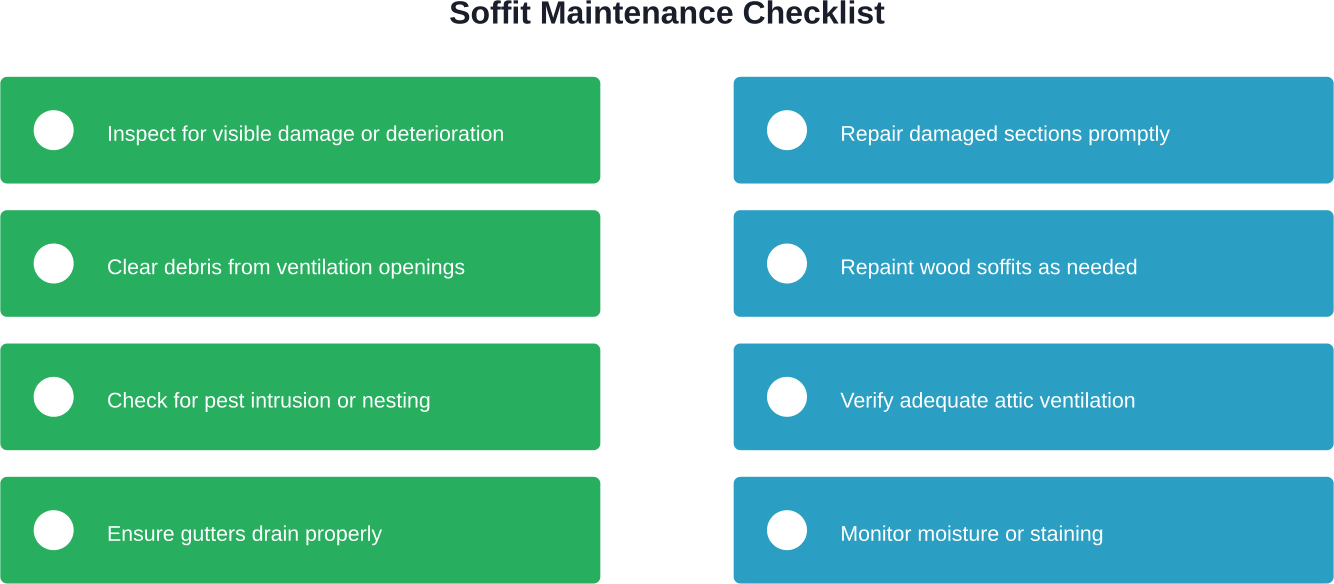
Maintenance requirements vary by material but generally remain minimal. Periodic inspection for damage, pest intrusion, or ventilation blockage should occur during routine building maintenance. Debris accumulation in vent openings compromises airflow and should be cleared.
Community discussions note that soffit damage often occurs from moisture infiltration, improper gutter function, or pest activity. Regular gutter cleaning prevents overflow that can saturate soffit materials. Addressing small damage promptly prevents larger structural issues from developing.
Get Soffits Installed Without Rework

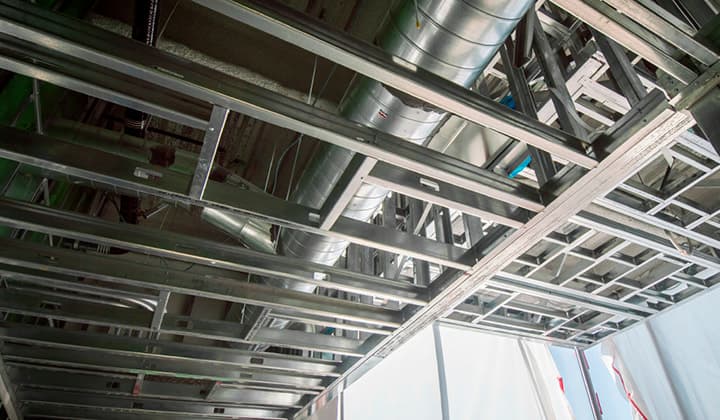
A soffit is where unresolved coordination gets hidden. Once it’s closed, access is gone and any issue above turns into rework. That’s where time and cost are lost. Powerkh steps in before closure to review what is actually happening above the soffit. You’re not relying on assumptions – you see what is in place and what is still unresolved.
Approve Soffit Areas Earlier
With Powerkh involved, you can clearly see:
- Whether the space above is fully coordinated
- Where conflicts will force reopening later
- Which areas are not ready to be closed
- What must be resolved before finishing
Contact Powerkh before closing soffits and avoid opening them again later.
Choosing the Right Soffit System
Material selection should consider climate conditions, building design, maintenance capacity, and budget. Coastal environments favor corrosion-resistant materials like vinyl or properly coated aluminum. Areas with high humidity benefit from materials that resist moisture and mold growth.
Architectural style matters too. Traditional homes often look best with wood soffits that can be painted to match trim colors. Contemporary designs might favor the clean lines of aluminum or fiber cement products.
Budget constraints influence decisions, but remember that initial cost differs from lifecycle cost. More expensive materials that require minimal maintenance may prove more economical over decades of service than cheaper options needing frequent attention.
Professional installation generally produces better results than DIY approaches, particularly for vented systems where proper airflow depends on correct installation. According to OSHA data on scaffolding safety, approximately 70 percent of workers learned safety requirements for installing work platforms, assembling scaffolds, and inspecting scaffolds through on-the-job training, emphasizing the value of experienced installers.
That said—proper soffit design and installation isn’t something to overlook. These components protect significant investments in building structure and contribute to long-term performance. Taking time to understand soffit functions and select appropriate materials pays dividends through decades of reliable service and reduced maintenance demands. Consider consulting building professionals when planning new construction or major renovations to ensure soffit systems integrate properly with overall building design.
Frequently Asked Questions About Soffits
What’s the difference between a soffit and fascia?
The soffit is the horizontal surface located underneath the roof overhang, running from the wall outward. The fascia is the vertical board at the roof edge where gutters are usually attached. Together, they protect the roof structure and create a finished edge.
Do all buildings need soffits?
No. Buildings without roof overhangs do not require soffits because there is no exposed underside. However, structures with overhangs typically include soffits to protect framing and improve appearance.
Can soffits improve energy efficiency?
Yes. Vented soffits help regulate attic airflow, reducing heat buildup in warmer months and preventing moisture accumulation. This improves insulation performance and can lower energy usage.
How often should soffits be inspected?
Annual inspections are standard for most properties. In harsher climates or areas with frequent storms or pests, checking twice a year is recommended. Always inspect after severe weather events or if damage is visible.
What causes soffit damage?
Damage commonly results from moisture exposure due to poor drainage, pest intrusion, wind impact, and general aging. Wood soffits are especially vulnerable to rot if ventilation or water management is inadequate.
Can soffits be replaced without replacing the entire roof?
Yes. Soffits can usually be repaired or replaced independently of the roof. Individual panels can be removed and installed without affecting shingles or structural components.
Are there building codes for soffits?
Yes, though requirements vary by location. Local building codes often define ventilation ratios, fire resistance requirements, and installation standards. Always check jurisdiction-specific regulations before construction or replacement.

Vaka Çalışmalarımız
Ticari, endüstriyel ve konut sektörleri için 200'den fazla BIM ve VDC projesi gerçekleştirdik.
Çalışmalarımız şunları içermektedir:
Kalıp tasarım otomasyonu
Our client from
California, USA
Asma tavan tasarım otomasyonu
Our client from
New York, USA
Duvar çerçeveleme tasarım otomasyonu
Our client from
California, USA