Herhangi bir sorunuz var mı? Bize ulaşın!
Ekibimize katılın!
Ücretsiz fiyat teklifi veya danışmanlık talep edin

Controlling dust on construction sites requires a multi-layered approach combining water suppression, physical barriers, dust suppressants, proper equipment maintenance, and adherence to OSHA regulations. Effective dust control protects worker health from respirable crystalline silica exposure, maintains regulatory compliance, and minimizes environmental impact. The most successful strategies include wet methods for cutting and grinding, HEPA-filtered vacuums, enclosure systems, and site-specific dust management plans.
Construction dust isn’t just a nuisance. It’s a serious health hazard that can lead to chronic lung diseases, regulatory violations, and significant project delays. According to the CDC, millions of U.S. workers face exposure to respirable crystalline silica across various construction activities, making dust control a critical safety priority.
The challenge extends beyond worker safety. Uncontrolled dust creates environmental concerns, disrupts surrounding communities, and can result in costly compliance penalties. But here’s the thing—effective dust control doesn’t require massive budget overhauls or complicated systems.
This guide breaks down practical, field-tested methods that contractors can implement immediately to create safer, cleaner jobsites while meeting OSHA’s crystalline silica standard.
Understanding the Dust Problem on Construction Sites
Construction dust contains more than just dirt particles. The real danger lies in respirable crystalline silica—microscopic particles released when cutting, grinding, or drilling materials like concrete, brick, mortar, and stone.
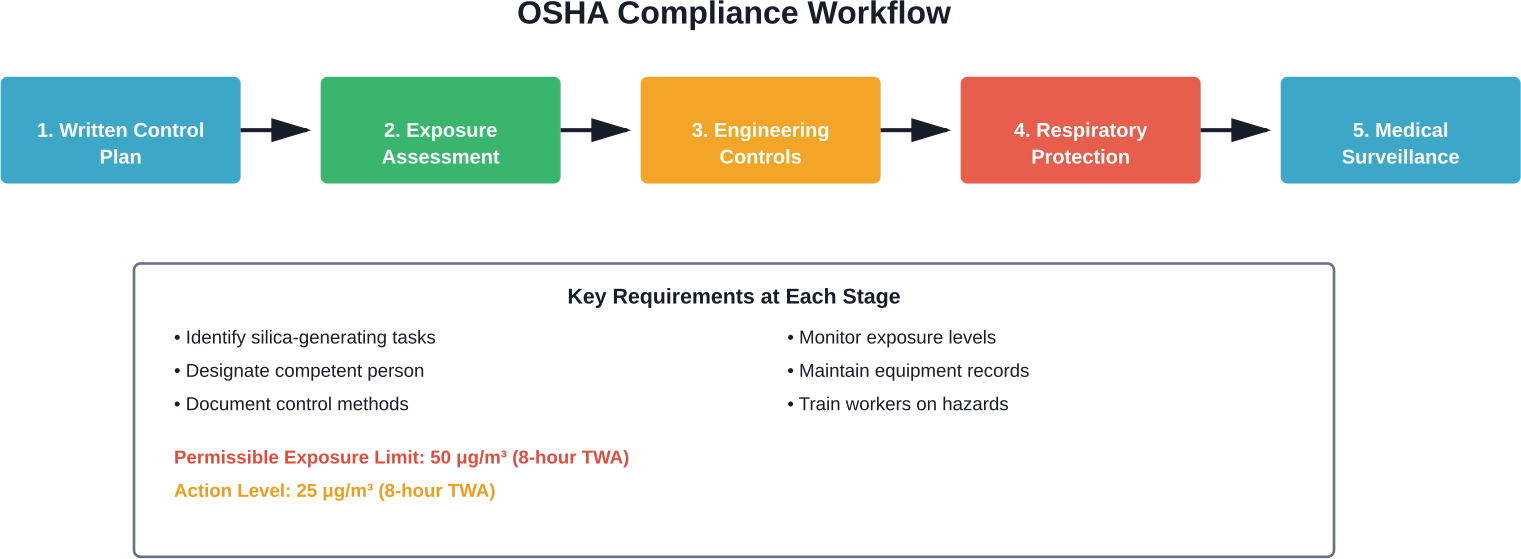
According to OSHA regulations under 29 C.F.R. § 1926.1153, OSHA regulations specify exposure limits under 29 C.F.R. § 1926.1153, with an action level of 25 micrograms per cubic meter as an 8-hour time-weighted average. The standard applies to all construction work where exposure might exceed 25 micrograms per cubic meter.
A 2017 medical study on construction workers found that exposure groups demonstrated significantly lower pulmonary function parameters compared to control groups, with mean FEV1% and FVC% values notably reduced (P< 0.001 and P= 0.009, respectively).
Health Risks Beyond Silicosis
Breathing dust containing crystalline silica leads to silicosis—a deadly lung disease with no effective treatment. But the risks don’t stop there.
Chronic exposure contributes to lung cancer, chronic obstructive pulmonary disease, and kidney disease. The CDC emphasizes that while silicosis remains preventable, controlling worker exposures represents the only reliable protection method.
Community discussions highlight the real-world impact. Workers describe construction dust as “horrible” and report respiratory issues even with basic precautions, underscoring the need for comprehensive control strategies rather than reactive measures.
Primary Dust Control Methods That Work
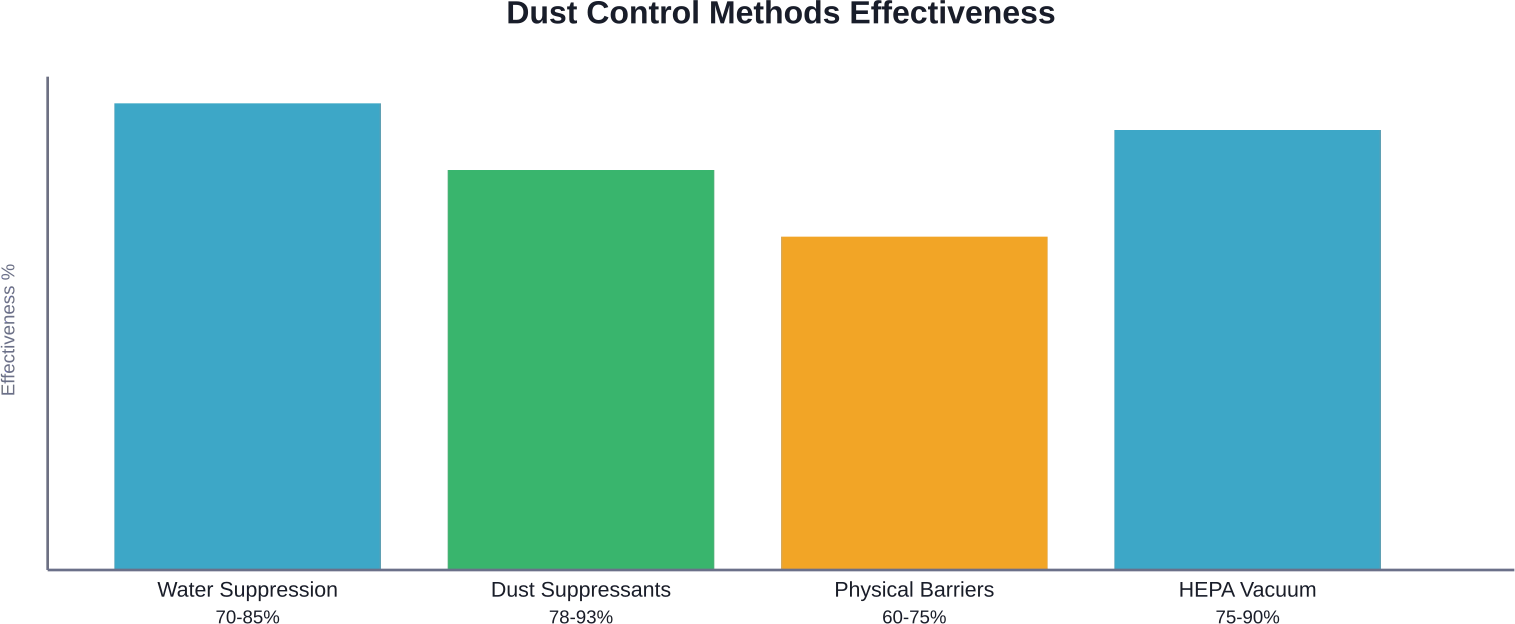
Effective dust control relies on multiple strategies working together. No single method provides complete protection, but combining approaches creates layered defenses that significantly reduce airborne particles.
Water Suppression Systems
Water remains the most accessible and cost-effective dust control method. Wet cutting, grinding, and drilling dramatically reduce airborne particles at the source.
The CDC’s safe work practices guidance specifically recommends following dust control methods that incorporate water delivery systems. For handheld electric grinders smoothing concrete surfaces, water application prevents hazardous crystalline silica dust from becoming airborne.
But water alone isn’t always enough. Temperature extremes, water availability, and site conditions sometimes limit effectiveness. That’s where combination approaches prove their value.
Chemical Dust Suppressants
Dust suppressant effectiveness varies by application and environmental conditions—often outperforming water alone.
Some modern suppressants include biocompatible polymer blends that can be mixed with water and applied using existing equipment, as demonstrated by research at the University of Arizona
Application timing matters. Pre-treating surfaces before dust-generating activities provides better results than reactive spraying after dust becomes airborne.
Get Construction Drawings and BIM Support From One Team

Powerkh works with construction teams that need more than basic drafting support. The company provides BIM and VDC services including BIM modeling, scan to BIM, BIM coordination, structural detailing, prefabrication support, and automation. That gives teams a clearer set of models and drawings before site work becomes harder to adjust.
Need Clearer Drawings and Better Coordination?
Talk with Powerkh to:
- turn project files and scans into usable BIM models
- catch clashes before they affect site work
- deliver detailed shop and construction drawings
👉 Contact Powerkh to review your project and BIM needs.
Engineering Controls and Equipment Solutions
OSHA’s construction silica standard emphasizes engineering controls as the primary defense. These controls eliminate or reduce exposure at the source rather than relying solely on personal protective equipment.
HEPA Filtration Requirements
High-efficiency particulate air filters must capture at least 99.97 percent of mono-dispersed particles measuring 0.3 micrometers in diameter. This specification, detailed in OSHA regulations, ensures filters effectively remove respirable crystalline silica.
Tools equipped with integrated HEPA vacuum systems collect dust during cutting, grinding, and drilling operations. The combination of wet methods and HEPA extraction provides the strongest protection for close-proximity work.
Ventilation System Performance
Research on blasting construction reveals significant differences in ventilation system effectiveness. Hybrid ventilation systems with air curtain generators demonstrate the best dust suppression efficiency, while simple blowing ventilation systems perform worst.
Underground and enclosed construction projects require particularly robust ventilation. Studies on outdoor versus underground construction workers show varying exposure levels, with underground environments concentrating airborne particles without proper air circulation.
| Control Method | Best Applications | Effectiveness | Cost Level |
|---|---|---|---|
| Wet Cutting/Grinding | Concrete, masonry, tile work | High | Low |
| HEPA Vacuum Attachment | Power tools, handheld equipment | Very High | Orta |
| Chemical Suppressants | Large open areas, roadways | High | Orta |
| Physical Barriers/Enclosures | Interior demolition, renovation | Medium-High | Low-Medium |
| Hybrid Ventilation Systems | Underground, confined spaces | Very High | High |
Physical Barriers and Containment Strategies
Dust barriers prevent contamination spread beyond immediate work zones. During renovation or interior construction, containing dust protects finished areas and reduces cleanup requirements.
Effective barriers seal doorways, hallways, and ventilation openings. Heavy-duty polyethylene sheeting with taped or zippered access points creates effective containment when properly installed.
For outdoor sites, perimeter fencing with dust control screening reduces off-site migration. Wind speed, humidity, and particle size determine how far dust travels, making site-specific assessments critical for barrier placement.
Mevzuata Uygunluk ve Dokümantasyon
OSHA’s respirable crystalline silica standard applies to all occupational exposures in construction work, except where employee exposure remains below 25 micrograms per cubic meter as an 8-hour time-weighted average.
The standard doesn’t include specific exemptions for short-term exposures. Tasks performed for 15 minutes daily or less still fall under the regulation, requiring appropriate controls regardless of exposure duration.
Required Compliance Elements
Employers must establish written exposure control plans identifying tasks that generate silica dust and specifying control methods for each. Plans should designate a competent person responsible for implementation.
Exposure assessment determines whether engineering controls adequately limit worker exposure. When controls can’t reduce exposure below the permissible limit, respiratory protection becomes mandatory.
Medical surveillance requirements apply when workers face exposure at or above the action level (25 micrograms per cubic meter) for 30 or more days per year. Regular examinations help detect early signs of silica-related disease.
Practical Implementation Tips for Contractors
Theory matters, but field application determines success. Here’s what works when implementing dust control measures on active construction sites.
Start with High-Risk Activities
Prioritize dust control for tasks that generate the highest exposure levels. Concrete cutting, tuck pointing, jackhammering, and abrasive blasting top the list.
Tools and equipment selection makes an immediate difference. Power tools with integrated dust collection systems cost more upfront but reduce long-term compliance costs and health risks.
Train Crews on Control Methods
Equipment only works when used correctly. Regular toolbox talks covering dust hazards, proper control methods, and equipment maintenance keep safety protocols front-of-mind.
Workers should understand why controls matter, not just how to operate equipment. The connection between respirable crystalline silica exposure and serious lung disease motivates consistent compliance better than abstract regulations.
Maintain Equipment Regularly
HEPA filters lose effectiveness when clogged. Water delivery systems fail when nozzles block or hoses leak. Dust barriers develop gaps as work progresses.
Daily equipment checks and scheduled maintenance prevent control failures. Assign specific crew members responsibility for inspecting and maintaining dust control systems.
Choosing Site-Specific Control Strategies
Not every control method suits every jobsite. Urban construction faces different challenges than rural projects. Interior renovation requires different approaches than new ground-up construction.
Site assessment should consider wind patterns, proximity to sensitive receptors, soil conditions, and water availability. Indoor projects need containment barriers. Outdoor sites benefit from perimeter controls and surface stabilization.
Budget constraints affect implementation, but creative combinations often deliver results without premium costs. Water application from existing site water supplies costs almost nothing but provides substantial dust reduction for many activities.
Protecting Workers and Meeting Compliance Standards
Construction dust control isn’t optional—it’s a fundamental safety requirement backed by OSHA regulations and decades of medical research. The health consequences of respirable crystalline silica exposure remain severe and irreversible.
But compliance doesn’t mean complicated systems or budget-breaking equipment investments. Water suppression, proper equipment selection, physical barriers, and trained workers create effective protection for most construction activities.
The key lies in implementation consistency. Control plans gather dust on office shelves while workers face actual dust on jobsites. Active management, regular training, and equipment maintenance transform written plans into lived practices.
Start with high-risk activities. Add controls progressively. Document everything. The combination protects worker health, satisfies regulatory requirements, and creates cleaner, more professional jobsites that benefit everyone.
Sıkça Sorulan Sorular
What is the OSHA permissible exposure limit for crystalline silica?
OSHA sets the permissible exposure limit at 50 micrograms per cubic meter of air measured as an 8-hour time-weighted average. The action level is 25 micrograms per cubic meter.
Do short-duration tasks require dust control?
Yes. OSHA standards apply regardless of task duration. Even short activities require dust control if they generate respirable crystalline silica.
What is the most cost-effective dust control method?
Water suppression is widely considered the most cost-effective method. When combined with proper work practices, it provides strong dust control without major equipment costs.
How often should HEPA filters be replaced?
Replacement depends on usage and dust levels. Signs like reduced suction, visible buildup, or damage indicate that filters should be replaced.
Are dust masks sufficient for silica exposure?
No. Proper respirators are required when engineering controls are not enough. They must be fitted and used according to OSHA standards.
What documentation must contractors maintain?
Documentation includes exposure control plans, assessment records, training logs, and medical surveillance records. These must often be retained for many years.
How do weather conditions affect dust control?
Wind, humidity, and temperature affect dust control performance. High winds and low humidity increase dust, while freezing temperatures limit water-based methods.

Vaka Çalışmalarımız
Ticari, endüstriyel ve konut sektörleri için 200'den fazla BIM ve VDC projesi gerçekleştirdik.
Çalışmalarımız şunları içermektedir:
Kalıp tasarım otomasyonu
Our client from
California, USA
Asma tavan tasarım otomasyonu
Our client from
New York, USA
Duvar çerçeveleme tasarım otomasyonu
Our client from
California, USA