Vous avez des questions ? Contactez nous !
Rejoignez notre équipe !
Demander un devis ou une consultation gratuite

Quick Summary: Construction technology (ConTech) refers to the application of advanced digital tools, software, equipment, and innovative techniques to improve efficiency, safety, productivity, and cost-effectiveness across all phases of building projects. It encompasses everything from BIM software and robotics to drones and AI-powered project management platforms.
The construction industry has undergone a dramatic transformation over the past few decades. What once relied heavily on manual labor and traditional methods now embraces cutting-edge technology at every stage of the building process.
But what exactly does construction technology mean? And why has it become so critical for modern building projects?
Construction technology—often called ConTech—represents the intersection of digital innovation and physical building. It’s fundamentally changing how projects are planned, executed, and managed.
Understanding Construction Technology
Construction technology refers to the collection of innovative tools, machinery, modifications, software, and systems used throughout the construction process. It encompasses both the physical equipment on job sites and the digital platforms that coordinate everything behind the scenes.
According to ASTM International, construction standards define the quality, performance, and safety of materials and processes used in building facilities worldwide. These standards have evolved significantly to accommodate technological advancement.
The term ConTech specifically highlights technology applications designed to streamline construction workflows, reduce costs, increase quality, and enhance worker safety. This includes everything from advanced machinery to cloud-based project management platforms.
Key Components of ConTech
Modern construction technology typically falls into several categories:
- Software and Digital Platforms: Project management tools, building information modeling (BIM), scheduling applications, and collaborative platforms
- Hardware and Equipment: Advanced machinery, robotics, drones, 3D printers, and automated tools
- Data and Analytics: IoT sensors, real-time monitoring systems, and predictive analytics
- Communication Systems: Mobile applications, cloud storage, and integrated communication networks
These technologies don’t work in isolation. Real talk: the most successful projects integrate multiple ConTech solutions that communicate seamlessly with each other.
Use Powerkh for BIM Project Delivery Support

Powerkh works with construction and design teams that need support with BIM models, drawings, coordination, scan data, and detailing. Its services include BIM modeling, Scan to BIM, BIM automation, prefabrication workflows, and structural detailing. The focus is on project execution and technical output.
Need Extra BIM Support on the Delivery Side?
Talk with Powerkh to:
- build models and documentation for active projects
- convert point cloud files into BIM outputs
- handle coordination, detailing, and related project work
👉 Contact Powerkh for a project review and consultation.
Why Construction Technology Matters
The construction industry faces unique challenges that technology helps address. Projects routinely deal with tight deadlines, budget constraints, complex coordination among multiple teams, and stringent safety requirements.
Here’s the thing though—traditional methods simply can’t keep pace with modern demands. According to MIT research on proptech innovations, the global proptech market is projected to grow significantly from 2026 to 2034, according to Business Fortune Insights projections. This explosive growth reflects how essential technology has become.
Core Benefits of Adopting ConTech
Organizations that embrace construction technology see measurable improvements across multiple dimensions:
| Benefit Area | Impact | Exemples |
|---|---|---|
| Efficacité | Faster project completion, reduced downtime | Automated scheduling, real-time updates |
| Sécurité | Fewer accidents, better hazard detection | Wearable sensors, drone inspections |
| Cost Control | Better budget management, waste reduction | Predictive analytics, resource optimization |
| Quality | Fewer errors, improved accuracy | BIM clash detection, robotic precision |
| Collaboration | Better team coordination, reduced miscommunication | Cloud platforms, mobile access |
NIST research on construction best practices confirms that information technologies significantly improve project performance when properly implemented.
Construction Technology vs. Construction Management
Many people confuse construction technology with construction management. But they’re distinct concepts that complement each other.
Construction management focuses on the big-picture planning and organization of projects. It involves budgeting, scheduling, coordinating subcontractors, managing resources, and overseeing the entire process from start to finish.
Construction technology, on the other hand, refers to the specific tools and systems that support those management activities. Technology enables better management, but management determines how technology gets applied.
Think of it this way: construction management is the strategy, while construction technology provides the tactical tools to execute that strategy effectively.
Common Construction Technologies in Use Today
The ConTech landscape includes numerous specific technologies, each addressing different aspects of the building process.
Modélisation des données du bâtiment (BIM)
BIM represents one of the most transformative technologies in modern construction. It creates detailed 3D models of buildings that include not just visual representation but also data about materials, costs, timelines, and performance characteristics.
According to the Associated General Contractors of America, BIM adoption facilitates better decision-making throughout project lifecycles and breaks down traditional silos between design and construction teams.
Drones and Aerial Monitoring
Drones provide aerial perspectives that were previously difficult or expensive to obtain. They’re used for site surveys, progress monitoring, safety inspections, and documentation.
These flying cameras capture real-time data that gets fed into project management systems, allowing teams to spot issues before they become costly problems.
Robotics and Automation
Robotic systems now handle repetitive tasks with precision that exceeds human capabilities. This includes everything from bricklaying robots to automated layout systems that mark exact locations for installations.
Automation doesn’t replace skilled workers—it frees them to focus on complex tasks that require human judgment and expertise.
IoT and Smart Equipment
Internet-connected sensors on equipment and throughout job sites generate continuous streams of data. This information helps optimize equipment usage, prevent breakdowns, monitor environmental conditions, and track worker locations for safety.
Smart equipment can self-diagnose issues, schedule its own maintenance, and communicate with other systems to coordinate activities automatically.
Career Opportunities in Construction Technology
The growth of ConTech has created new career paths that blend traditional construction knowledge with technical expertise.
According to the U.S. Bureau of Labor Statistics, total employment is projected to grow from 170.0 million in 2024 to 175.2 million in 2034. Within construction, careers in construction and excavation occupations have been projected to grow faster than average.
Roles in this space include BIM specialists, construction technology managers, drone operators, data analysts, software implementation specialists, and robotics coordinators. An associate degree in construction technology provides foundational knowledge for many of these positions.
The Future of Construction Technology
ConTech continues evolving rapidly. Artificial intelligence now powers predictive analytics that forecast delays before they happen. Augmented reality helps workers visualize finished projects while standing on empty lots. 3D printing produces entire building components off-site.
But wait. Does all this technology actually deliver results?
Research from NIST on information technology interaction effects shows that technology adoption combined with construction best practices significantly improves outcomes. The key is thoughtful implementation, not just buying the latest tools.
Organizations that succeed with ConTech focus on integration—ensuring different technologies work together seamlessly rather than creating new silos.
Questions fréquemment posées
What does construction technology include?
Construction technology (ConTech) includes digital tools like BIM and project management software, physical equipment such as drones and robotics, data systems like IoT sensors and analytics platforms, and communication tools that connect project teams. It covers any system that improves planning, execution, or management of construction projects.
How is construction technology different from traditional construction?
Traditional construction relies on manual processes and paper-based workflows. Construction technology introduces digital tools, automation, real-time data, and analytics, enabling better accuracy, faster delivery, improved coordination, and enhanced safety.
What skills do construction technology professionals need?
Professionals need both construction knowledge and technical skills, including BIM software proficiency, data analysis, problem-solving, and communication abilities. Many roles require specialized training in construction technology.
Is construction technology expensive to implement?
Costs vary depending on the technology and scale. While some solutions require upfront investment, many offer fast ROI through efficiency gains and reduced errors. Cloud-based tools help lower entry costs with subscription models.
Can small construction companies benefit from ConTech?
Yes. Many solutions are scalable and accessible to smaller firms. Starting with targeted tools like mobile apps, drones, or project management software allows companies to gain value without large investments.
How does construction technology improve safety?
ConTech improves safety through wearable sensors, drones for inspections, hazard detection via BIM, and automation of risky tasks. Real-time monitoring helps identify and prevent dangerous situations.
What’s the relationship between BIM and construction technology?
BIM is a key component of construction technology. It provides digital models and data management that connect other technologies, serving as a central platform for integrating project data from multiple systems.
Conclusion
Construction technology represents far more than just new gadgets on job sites. It’s fundamentally reshaping how buildings get designed, constructed, and maintained.
From software that prevents costly errors before ground breaks to robotics that perform tasks with superhuman precision, ConTech addresses the industry’s most persistent challenges. It makes projects safer, faster, more cost-effective, and higher quality.
The transformation is accelerating. Organizations that embrace these tools strategically—focusing on integration and measurable outcomes rather than technology for its own sake—position themselves for sustained competitive advantage.
Ready to explore how construction technology can transform your projects? Start by identifying your biggest operational challenges, then research ConTech solutions specifically designed to address those pain points. The future of construction is already here.

Nos études de cas
Nous avons géré plus de 200 projets BIM et VDC pour les secteurs commerciaux, industriels et résidentiels.
Notre travail comprend
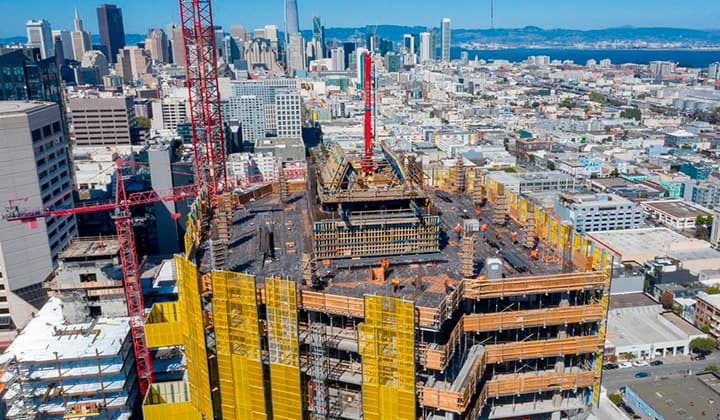
Automatisation de la conception des coffrages
Our client from
California, USA
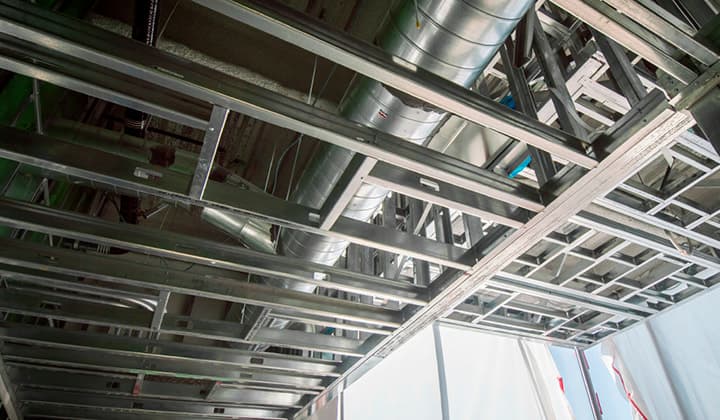
Automatisation de la conception des plafonds suspendus
Our client from
New York, USA
Automatisation de la conception de l'ossature des murs
Our client from
California, USA