Vous avez des questions ? Contactez nous !
Rejoignez notre équipe !
Demander un devis ou une consultation gratuite

A lintel is a horizontal structural beam installed above openings like doors, windows, and fireplaces to support the weight of the wall and structure above. Without lintels, masonry above openings would collapse under its own weight. Different lintel types include steel, concrete, timber, and stone, each suited to specific construction requirements and load conditions.
Walk past any brick building and look closely at the windows. See that horizontal element sitting right above each opening? That’s a lintel, quietly doing one of the most important structural jobs in construction.
Most homeowners never think about lintels. But without them, walls would crack and openings would collapse under their own weight.
This guide breaks down everything about lintels—what they are, why they matter, and which type belongs in different construction scenarios.
Understanding Lintels: The Basics
A lintel is a horizontal structural member placed across the top of openings in walls. These openings include doors, windows, fireplaces, and any other gap that interrupts the continuity of a wall.
The primary function? Supporting the load from above.
When builders create an opening in a load-bearing wall, they remove material that was previously carrying weight. The lintel beam bridges this gap, transferring the structural load to the vertical supports on either side of the opening.
According to the University of Illinois architectural documentation, lintels represent one of the four basic structural types in building construction—the trabeated or post-and-lintel system. This approach has been fundamental to architecture for thousands of years.
Why Lintels Are Structurally Critical
Without proper lintel support, masonry above an opening would experience tension forces it can’t handle. Brick and concrete are strong in compression but weak in tension.
The lintel redistributes these forces. It acts as a beam, converting the downward pressure into compression and tension forces that the lintel material itself can withstand.
Then it transfers these loads to the bearing points at each end—the parts of the wall that remain intact on either side of the opening.
Types of Lintels Used in Construction
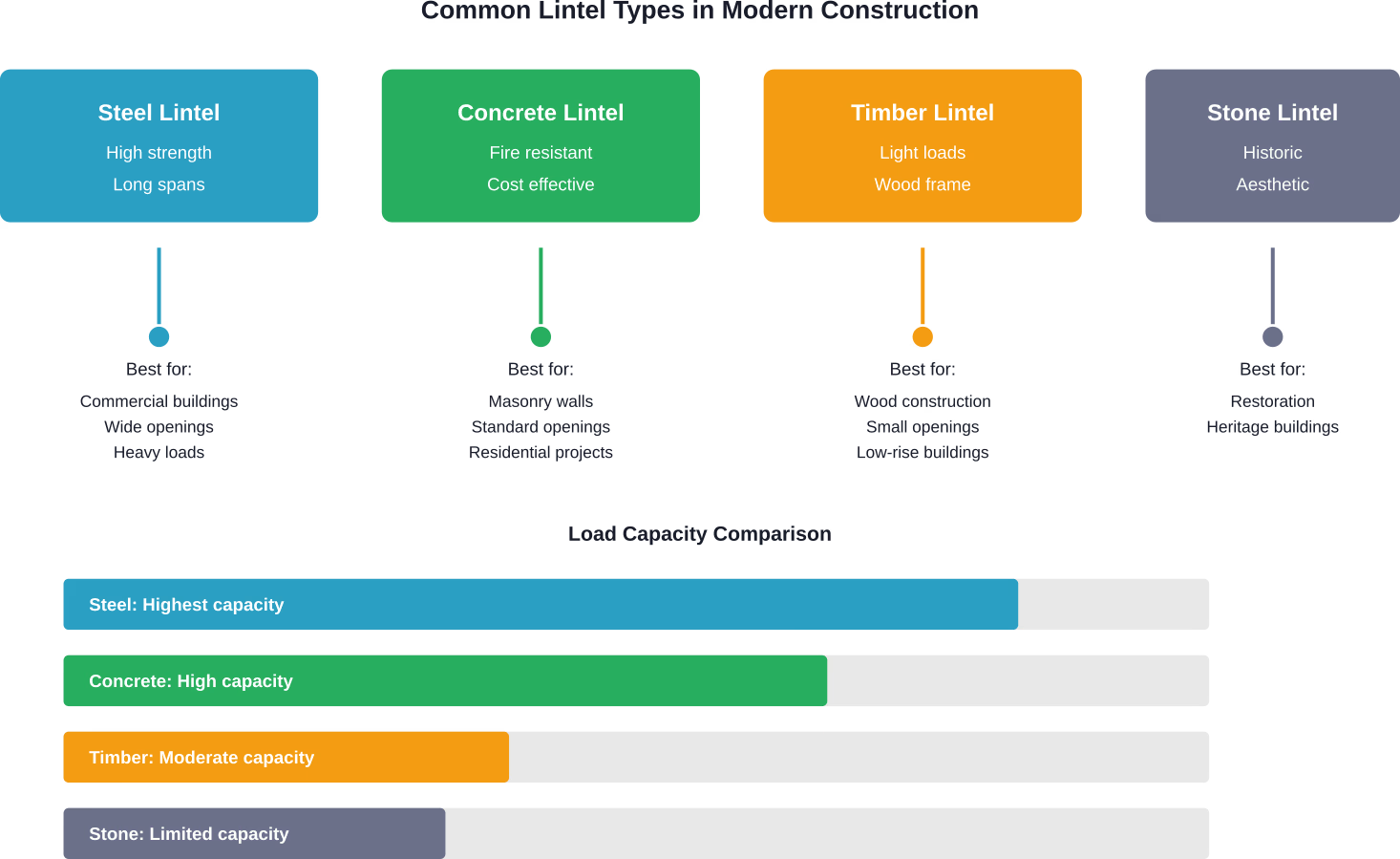
Different construction scenarios call for different lintel materials. Load requirements, span distances, aesthetic considerations, and building codes all influence the selection.
Steel Lintels
Steel lintels dominate modern construction, especially for commercial buildings and larger residential openings.
They offer exceptional strength-to-weight ratios. A relatively thin steel beam can support substantial loads across wide spans that would require much bulkier alternatives in other materials.
According to AISC Learning Portal documentation on structural steel members, steel lintels require careful design consideration for torsion in bearing wall applications, particularly for large openings.
Steel lintels come in several profiles: angle sections, I-beams, channel sections, and box sections. The profile selection depends on the specific load calculations and architectural requirements.
The main drawback? Corrosion. Steel lintels need proper protection from moisture, which makes installation details crucial.
Concrete Lintels
Concrete lintels—both precast and cast-in-place—are workhorses in masonry construction.
ASTM C1623 provides the standard specification for manufactured concrete masonry lintels. According to ASTM records, the specification was last updated January 16, 2026, and covers minimum requirements for materials, manufacturing, and performance testing.
Precast concrete lintels arrive on-site ready to install. They’re manufactured under controlled conditions with embedded reinforcement steel bars that provide tensile strength.
Cast-in-place lintels get formed and poured directly into the wall structure. This approach works well for non-standard openings or when precast options aren’t readily available.
Concrete lintels integrate seamlessly with masonry walls. They offer good fire resistance and don’t require the corrosion protection that steel demands.
Timber Lintels
Wood lintels still appear in residential construction, particularly in wood-frame buildings.
They work well for lighter loads and shorter spans. Installation is straightforward, and timber integrates naturally with wood-framed wall systems.
But timber has limitations. It’s susceptible to rot, insect damage, and degradation from moisture exposure. Many building codes restrict timber lintel use or require specific treatments and protections.
Stone and Brick Lintels
Stone lintels are mostly historical curiosities now, though they remain relevant in restoration work and heritage building maintenance.
Traditional masonry construction used large stone blocks as lintels. These worked, but only for relatively modest spans and loads.
Brick lintels—where bricks are laid in special patterns to span an opening—face similar limitations. They’re primarily architectural features rather than serious structural solutions in modern construction.
How Lintels Function Structurally
The structural behavior of a lintel follows basic beam mechanics. When the wall above applies downward pressure, the lintel bends slightly.
This bending creates compression forces in the top portion of the lintel and tension forces in the bottom portion. The lintel material must resist both.
The load then transfers to the bearing points—the areas where the lintel ends rest on the wall. These bearing points need adequate length to distribute the concentrated load without crushing the masonry beneath.
Critical Design Factors
Several factors determine lintel size and material selection:
- Span length: The width of the opening directly affects the bending moment the lintel must resist
- Load magnitude: Number of floors above, roof weight, and any concentrated loads
- Bearing length: How far the lintel extends beyond the opening on each side
- Lintel depth: Deeper beams are stiffer and can carry more load
- Material properties: Strength, elastic modulus, and allowable stress values
Building Code Requirements for Masonry Structures (TMS 402) provides design and analysis methods for masonry lintels. This reference appears in ASTM C1623 specifications for concrete masonry lintels.
Installation Requirements and Best Practices
Proper lintel installation makes the difference between a structural element that performs for decades and one that fails prematurely.
The bearing length—how far the lintel extends past the opening on each side—is critical. Most codes require minimum bearing lengths based on the span. A common rule of thumb calls for bearing lengths of at least 4 inches, though longer spans need more.
The bearing surface itself must be level, clean, and capable of supporting the concentrated load. Bedding the lintel ends in fresh mortar ensures even load distribution.
Common Installation Mistakes
Insufficient bearing length tops the list. When lintels don’t extend far enough into the supporting masonry, concentrated stresses can crack or crush the bearing area.
Installing lintels upside down happens more often than it should. Some lintel profiles have specific top and bottom orientations. Reversing them compromises structural performance.
Inadequate corrosion protection for steel lintels leads to rust, expansion, and eventual failure. Moisture barriers and proper flashing details are essential.
Check Your Lintels Before You Build Above

Lintel issues don’t announce themselves – they show up when masonry continues and something doesn’t sit right. Small placement shifts, uneven bearing, or misjudged levels turn into cracks, adjustments, or rebuilds higher up. That’s where time and cost go without warning.
Powerkh gives you a ground-level view of how lintels are actually installed in the structure. You’re not relying on drawings or assumptions – you see exactly what’s in place and where it starts to differ from what was intended, before it’s hidden by the next stage of work.
Confirm Lintels to Prevent Problems
What you get with Powerkh:
- A direct check of how lintels sit within the built structure
- Visibility into uneven support or misplacement on site
- Clear understanding of what is already off and by how much
- Actionable points to resolve before work continues
Don’t carry hidden errors into the next lift – contact Powerkh and verify your lintels while they’re still accessible.
Signs of Lintel Problems
Lintels don’t last forever, especially in older buildings where maintenance has been deferred.
Cracks in the masonry above windows and doors often indicate lintel distress. These typically appear as stepped cracks following the mortar joints or as vertical cracks directly above the opening corners.
Sagging or deflection of the lintel itself becomes visible in severe cases. The opening may appear to narrow at the top, or the lintel may visibly bow downward.
Rust staining below steel lintels signals corrosion problems. As steel rusts, it expands—this expansion can crack surrounding masonry and spall off the protective covering.
| Warning Sign | What It Indicates | Urgency Level |
|---|---|---|
| Stepped cracks above opening | Lintel deflection or failure | High |
| Vertical cracks at opening corners | Inadequate support or settlement | Medium to High |
| Rust stains on masonry | Steel lintel corrosion | Moyen |
| Visible lintel sagging | Advanced structural failure | Critical |
| Mortar joint separation | Movement or inadequate bearing | Moyen |
| Water infiltration around opening | Flashing or lintel failure | Moyen |
When to Call a Professional
Any visible cracking around openings deserves professional evaluation. What looks like minor cosmetic damage might indicate serious structural issues.
Lintel replacement isn’t a DIY project. It requires temporary support of the wall above while the failed lintel is removed and replaced—work that demands engineering knowledge and proper equipment.
Lintel Materials: A Detailed Comparison
Choosing the right lintel material involves weighing multiple factors against project requirements.
| Material | Avantages | Disadvantages | Typical Applications |
|---|---|---|---|
| Steel | High strength, long spans, thin profile | Corrosion risk, requires protection, thermal bridging | Commercial buildings, wide openings, heavy loads |
| Concrete (precast) | Fire resistant, corrosion resistant, integrates with masonry | Heavy, limited spans vs. steel, requires lifting equipment | Residential masonry, standard openings |
| Concrete (cast-in-place) | Custom sizes, good for irregular openings | Requires formwork, curing time, weather dependent | Non-standard openings, renovation work |
| Timber | Easy to work, lightweight, economical | Rot susceptible, limited strength, fire risk | Wood-frame construction, light loads |
| Stone | Aesthetic appeal, durability, traditional appearance | Heavy, limited span capacity, expensive | Historic restoration, architectural features |
Modern Developments in Lintel Technology
Lintel technology hasn’t remained static. Recent developments address traditional limitations and expand performance capabilities.
Composite lintels combine materials to optimize performance. Steel-reinforced concrete lintels, for instance, leverage concrete’s compression strength and steel’s tension resistance.
Galvanized and stainless steel lintels offer improved corrosion resistance. The initial cost premium pays off through extended service life and reduced maintenance.
Insulated lintels address thermal bridging concerns in energy-efficient construction. Traditional steel lintels create cold spots that can lead to condensation and heat loss. Thermally broken designs interrupt the direct thermal path.
Regulatory Standards and Building Codes
Lintel design and installation aren’t left to chance. Building codes specify minimum requirements to ensure structural safety.
The International Building Code (IBC), published by ICC, includes Chapter 21 on masonry construction. This chapter addresses lintel requirements within the broader context of masonry structural elements.
ASTM standards provide detailed specifications for lintel materials and manufacturing. ASTM C1623 specifically covers manufactured concrete masonry lintels, establishing minimum requirements for compressive strength, absorption, and dimensional tolerances.
Local amendments to model codes may impose additional requirements. Always verify applicable codes for the specific project location.
Cost Considerations
Lintel costs vary widely based on material, size, and complexity.
Steel lintels generally cost more per linear foot than concrete options, but their superior strength-to-weight ratio can reduce overall project costs for longer spans by eliminating intermediate supports.
Precast concrete lintels offer predictable pricing and quick installation. Custom fabrication for non-standard sizes adds cost and lead time.
Don’t focus solely on material costs. Installation labor, required equipment, and long-term maintenance factor into the total cost equation. A cheaper lintel that requires replacement in 15 years costs more over the building lifecycle than a premium option that lasts 50 years.
Conclusion
Lintels might be hidden from view, but their structural importance can’t be overstated. These horizontal beams make safe door and window openings possible in masonry and load-bearing construction.
Understanding lintel types, functions, and failure modes helps builders select appropriate options and helps homeowners recognize problems before they become critical.
Whether specifying lintels for new construction or evaluating existing installations, proper attention to material selection, sizing, and installation details ensures these critical structural elements perform their intended function for decades.
For new construction projects, consult with structural engineers to verify lintel specifications meet load requirements and comply with applicable building codes. For existing buildings showing signs of lintel distress, professional structural evaluation should be the first step before cosmetic repairs that might hide ongoing structural problems.
Questions fréquemment posées
What happens if a building doesn’t have lintels?
Without lintels above openings, the wall material above would not be supported and could collapse under its own weight. Openings interrupt the load path, and lintels provide the horizontal support needed to carry loads safely across that gap.
How far should a lintel extend beyond the opening?
Lintels typically extend at least 4 inches beyond each side of the opening, though 6 inches or more is common for larger spans. Adequate bearing length ensures loads are distributed safely into the supporting wall.
Can existing lintels be repaired, or must they be replaced?
Minor damage like surface corrosion may be repairable, but significant deflection, cracking, or advanced corrosion usually requires replacement. Proper support of the structure above is necessary during repair or replacement work.
Do interior non-load-bearing walls need lintels?
Non-load-bearing walls do not require structural lintels, but they still need headers or framing members to support finishes above openings like doors. These elements carry minimal loads compared to true structural lintels.
How long do lintels typically last?
Lifespan depends on material and exposure. Steel lintels can last 50-100 years in dry conditions but may deteriorate faster with moisture. Concrete lintels often last longer with proper protection, while timber lintels typically have shorter lifespans.
Are lintels visible from inside or outside the building?
Lintels are usually hidden within the wall structure and not visible. Decorative elements may resemble lintels, but the actual structural component is typically concealed within the wall assembly.
Can lintels be used for load-bearing walls in multi-story buildings?
Yes, lintels are used in multi-story construction, but they must be designed to handle higher loads from multiple levels. This typically requires engineered steel or reinforced concrete lintels with proper calculations for load capacity and support conditions.

Nos études de cas
Nous avons géré plus de 200 projets BIM et VDC pour les secteurs commerciaux, industriels et résidentiels.
Notre travail comprend
Automatisation de la conception des coffrages
Our client from
California, USA
Automatisation de la conception des plafonds suspendus
Our client from
New York, USA
Automatisation de la conception de l'ossature des murs
Our client from
California, USA