Vous avez des questions ? Contactez nous !
Rejoignez notre équipe !
Demander un devis ou une consultation gratuite

A knee wall is a short vertical wall, typically under three feet in height, used in construction to support roof rafters and create usable space in attics or loft areas. According to Francis D. K. Ching’s Visual Dictionary of Architecture, it’s defined as ‘a short wall supporting rafters at some intermediate position along their length.’ These walls serve both structural and functional purposes in home building.
Walk into most finished attics, and there’s a good chance the vertical wall you see along the sloped ceiling isn’t just decorative. That’s a knee wall, and it’s doing more work than most homeowners realize.
These short walls show up in timber roof construction, loft conversions, and anywhere builders need to turn awkward attic space into something functional. But what exactly makes a knee wall different from any other wall?
Here’s the thing though—knee walls aren’t one-size-fits-all. Their height, placement, and construction directly impact everything from headroom to energy efficiency. Understanding what they are and how they function helps make better decisions during construction or renovation.
Defining the Knee Wall
According to Wikipedia, a knee wall is a short wall, typically under three feet (one metre) in height, used to support the rafters in timber roof construction. Francis D. K. Ching’s Visual Dictionary of Architecture defines it more precisely as “a short wall supporting rafters at some intermediate position along their length.”
Most knee walls measure between 18 inches and 36 inches tall. That range isn’t arbitrary—it balances structural support with practical space considerations.
The name itself comes from the wall’s height, which roughly corresponds to knee level. Simple enough. But the function goes beyond just filling the gap between floor and sloped ceiling.
Why Knee Walls Matter in Construction
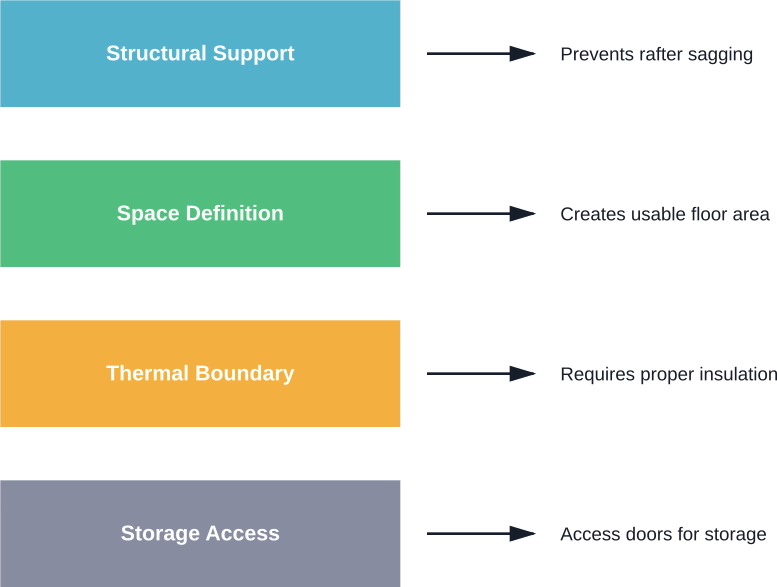
Knee walls serve two primary purposes: structural support and space definition.
From a structural standpoint, they support the rafters at an intermediate position along their length. This prevents sagging and distributes the roof load more effectively. Without that support, longer rafter spans would require heavier timber or additional bracing.
But they also create usable space. That’s where things get interesting.
In attic conversions, knee walls define where the room actually begins. The area behind the knee wall—between the wall and the roof eave—becomes storage space rather than awkward, unusable square footage. The area in front of the knee wall becomes livable space with adequate headroom.
The Height Question
Knee wall height directly impacts room comfort and functionality. Generally speaking, taller knee walls create more usable floor space but reduce storage area behind the wall. Shorter knee walls do the opposite.
A 36-inch knee wall provides better headroom near the room’s perimeter. Someone can stand closer to the wall without ducking. A 18-inch knee wall pushes the standing zone toward the room’s center but maximizes behind-wall storage.
There’s no universal “correct” height. It depends on roof pitch, intended use, and personal preference.
| Knee Wall Height | Usable Floor Space | Storage Area | Meilleur pour
|
|---|---|---|---|
| 18-24 inches | Moderate | Maximum | Storage-focused attics |
| 24-30 inches | Good | Good | Balanced approach |
| 30-36 inches | Maximum | Limited | Living spaces, bedrooms |
Build Accurate BIM Models for Foundation Systems

Foundation elements like stem walls require precise modeling and coordination between structural and architectural teams. Powerkh provides BIM modeling, Scan to BIM, structural detailing, and coordination services. The company helps teams create models and documentation that support real construction workflows.
Working on Foundation Design or Modeling?
Talk with Powerkh to:
- develop BIM models for foundation systems
- create detailed drawings for construction use
- support coordination and clash resolution
👉 Contact Powerkh for a project review and consultation.
Common Locations and Applications
Knee walls appear most frequently in homes with finished attics or loft spaces. That’s their bread and butter.
But they also show up in:
- Cape Cod-style homes with steep roof pitches
- Bungalows with second-floor bedrooms
- Gabled roof structures requiring interior partition
- Dormer installations where vertical wall meets sloped ceiling
- Workshop or studio conversions in upper floors
Essentially, anywhere a sloped ceiling meets a floor, knee walls become relevant.
Construction Considerations
Building a knee wall isn’t complicated, but it requires attention to several factors.
First, the wall needs proper framing. Standard 2×4 studs work for most applications, spaced 16 or 24 inches on center depending on local building codes and load requirements. The bottom plate anchors to the floor joists, while the top plate connects to the rafters.
Second, insulation becomes critical. The space behind a knee wall—between the wall and the roof eave—represents a major energy loss zone if not properly insulated and air-sealed. That triangular cavity needs insulation on all sides: the knee wall itself, the attic floor behind it, and the roof deck above.
Third, access matters. Many builders include small access doors in knee walls to reach the storage area behind. These doors need weatherstripping to maintain the thermal boundary.
Energy Efficiency and Insulation
Here’s where knee walls often cause problems.
That space behind the knee wall—the triangular area between the wall, floor, and roof—creates a thermal challenge. If not properly sealed and insulated, it becomes a heat loss highway in winter and a heat gain problem in summer.
Based on available data, attic knee walls require attention to three surfaces:
- The knee wall itself (insulate between studs and air-seal)
- The attic floor behind the wall (continuous insulation layer)
- The roof deck or rafter bays above the space (insulation and ventilation)
Many experts suggest treating the entire cavity as conditioned space or as unconditioned space—but not a mix. Halfway measures create moisture and efficiency problems.
Working with Different Roof Types
Knee walls adapt to various roof configurations, though their necessity varies.
Steep-pitch roofs (10/12 or 12/12) benefit most from knee walls. The vertical rise creates substantial attic height, making finished space practical. The knee wall defines where the ceiling-to-floor transition happens.
Moderate-pitch roofs (6/12 to 8/12) still accommodate knee walls, though the usable space decreases. The wall height might drop to the lower end of the range—18 to 24 inches—to preserve headroom in the center.
Low-pitch roofs (4/12 or less) rarely justify knee walls. There’s simply not enough vertical space to make the division worthwhile.
Planning Considerations for Builders
When incorporating knee walls into construction plans, several factors deserve attention.
- First, local building codes may specify minimum ceiling heights for habitable space. The knee wall height affects how much of the attic floor area counts toward that requirement. Check codes before finalizing wall height.
- Second, consider furniture placement. A 36-inch knee wall allows dressers, desks, or low bookshelves against the perimeter. An 18-inch wall doesn’t. If the space will function as a bedroom or office, taller walls make sense.
- Third, think about the mechanical systems. HVAC ducts, electrical wiring, and plumbing often run through the space behind knee walls. Plan access accordingly.
Common Mistakes to Avoid
Real talk: Most knee wall problems stem from insulation and air sealing failures.
Skipping insulation behind the wall creates a thermal bypass. Air circulates through the cavity, carrying heat in or out regardless of what’s happening in the living space.
Forgetting to insulate the attic floor behind the knee wall creates similar problems. Heat migrates through that surface, reducing overall home energy efficiency.
Using batt insulation without air sealing compounds the issue. Batts compress easily and don’t stop air movement. They need continuous air barriers to function properly.
Another common error? Building the knee wall too short. An 18-inch wall in a bedroom limits furniture placement and makes the room feel cramped. Unless storage is the priority, taller walls usually win.
Making the Right Choice
Knee walls might seem like a minor construction detail, but they influence comfort, energy efficiency, and usable space in significant ways.
The right height balances headroom with storage. The right insulation strategy prevents energy waste. The right placement maximizes the room’s functionality.
For anyone planning an attic conversion or building a home with finished upper floors, understanding knee walls helps make informed decisions that pay off for years. Talk to builders about local code requirements, climate considerations, and intended use before settling on specifications.
Done right, a knee wall becomes an invisible workhorse—supporting the structure while defining livable space. Done wrong, it creates energy problems and limits room functionality. The difference comes down to planning.
Questions fréquemment posées
What is the standard height for a knee wall?
Knee walls are usually between 18 and 36 inches tall, with most in the 24 to 30 inch range. The final height depends on roof pitch, use, and local code requirements.
Do knee walls provide structural support?
Yes. Knee walls often support rafters mid-span, helping reduce sagging and distribute roof loads more efficiently.
Can a knee wall be removed?
Removal depends on its structural role. If the wall supports rafters, alternative support must be added before removal. A structural engineer should evaluate the situation.
How should the space behind a knee wall be insulated?
Proper insulation includes the knee wall surface, the attic floor behind it, and the roof deck above. Air sealing is essential to prevent heat loss and moisture issues.
What’s the difference between a knee wall and a pony wall?
A knee wall supports roof rafters in attic spaces, while a pony wall is a general short wall used for division or design. Knee walls have a structural role tied to the roof system.
Does a knee wall count toward room square footage?
Only areas with sufficient ceiling height, typically 7 feet or more, count as usable square footage. Knee walls limit how much of the space meets this requirement.
Can a knee wall include windows or doors?
Access doors are common for storage areas behind knee walls. Windows typically require roof modifications like dormers, since the wall sits below the roof slope.

Nos études de cas
Nous avons géré plus de 200 projets BIM et VDC pour les secteurs commerciaux, industriels et résidentiels.
Notre travail comprend
Automatisation de la conception des coffrages
Our client from
California, USA
Automatisation de la conception des plafonds suspendus
Our client from
New York, USA
Automatisation de la conception de l'ossature des murs
Our client from
California, USA