Vous avez des questions ? Contactez nous !
Rejoignez notre équipe !
Demander un devis ou une consultation gratuite

A construction waste management plan is a strategic document that outlines how construction and demolition debris will be handled, diverted from landfills, and recycled throughout a project. According to the EPA, these plans help protect human health, comply with regulations, conserve resources, and minimize environmental impacts during construction activities. Most jurisdictions require a minimum diversion rate of 65% from landfills.
Construction sites generate mountains of waste. Concrete chunks, timber offcuts, metal scraps, packaging materials—it all adds up fast.
But here’s the thing: dumping everything into landfills isn’t just wasteful. It’s expensive, environmentally damaging, and in many places, illegal without proper documentation.
That’s where construction waste management plans come in. These documents aren’t just bureaucratic paperwork. They’re strategic blueprints that help projects reduce costs, meet regulatory requirements, and minimize environmental impact.
Understanding Construction Waste Management Plans
A construction waste management plan is a formal document that identifies how a construction or demolition project will handle debris and materials. It outlines specific strategies for reducing, reusing, and recycling waste generated during the project lifecycle.
According to the EPA’s planning guidelines, these plans address the management of materials and wastes generated by various incidents and projects. The agency recommends that communities and organizations have pre-incident waste management plans (sometimes called debris management plans) that address all hazards for which they’re at risk.
Real talk: these aren’t optional feel-good documents anymore. Many municipalities now mandate waste management plans for building permits, with strict diversion requirements.
What Materials Do These Plans Cover?
Construction and demolition waste encompasses a surprisingly diverse range of materials. Wood framing, drywall, asphalt shingles, concrete, brick, metals, glass, plastics, and cardboard all fall under this umbrella.
Some materials get special attention due to regulatory concerns. Asbestos, lead-based paint residue, and other hazardous substances require specific handling protocols that must be detailed in the plan.
The EPA notes that proper debris management protects human health, ensures regulatory compliance, conserves disposal capacity, reduces injuries, and prevents environmental impacts.
Why Construction Waste Management Plans Matter
Let’s break down the real-world benefits these plans deliver.
First up: regulatory compliance. Cities like Redondo Beach have implemented Construction & Demolition Recycling programs since 2004, requiring waste management plans for permits. The City of Industry requires all new construction and demolition projects to divert a minimum of 65% of all debris from landfills.
That 65% diversion rate appears repeatedly across municipal requirements. Projects that don’t meet these thresholds face deposit forfeitures and potential permit issues.
Cost Savings Through Better Planning
Waste disposal costs money. Every dumpster haul, every landfill ton—it’s coming out of the project budget.
Effective waste management plans identify opportunities to reduce these costs. Separating materials on-site allows valuable metals, clean wood, and concrete to be sold or recycled rather than landfilled. Some materials command decent resale prices when properly sorted.
The EPA highlights that planning reduces the number of times debris gets handled, the number of transporters needed, and the facilities required. Fewer touches mean lower labor costs and faster project timelines.
Environmental Impact Reduction
Construction generates significant waste volumes. Without proper management, this debris consumes landfill space and wastes embodied energy in materials that could be recycled.
Resource Conservation and Recovery Act (RCRA) regulations, administered by the EPA, aim to protect communities from waste disposal hazards while conserving energy and natural resources through recycling and recovery.
Diverting construction waste from landfills reduces greenhouse gas emissions, preserves virgin material resources, and minimizes habitat destruction associated with raw material extraction.
Use Powerkh to Build More Reliable Project Models

When construction work depends on accurate design information, Powerkh can support the project with hands-on BIM and VDC work. The company provides BIM modeling, BIM coordination, scan to BIM, structural detailing, prefabrication support, and BIM automation. That helps teams turn drawings, scans, and design files into models and documentation that are easier to build from.
Need Better BIM Output for the Project?
Talk with Powerkh to:
- create BIM models from drawings or point cloud data
- improve coordination across project teams
- prepare shop drawings and fabrication-ready documents
👉 Contact Powerkh to review your project and BIM needs.
Core Components of an Effective Plan
What actually goes into one of these plans? Let’s walk through the essential elements.
Project Information and Scope
Every plan starts with basic project details. Address, project type (new construction, renovation, demolition), square footage, estimated timeline, and responsible parties all get documented upfront.
This section establishes the baseline. How much waste will this project likely generate? What types of materials will dominate the waste stream?
Waste Stream Identification
Here’s where projects get specific about materials. A detailed breakdown lists each waste type expected, with estimated quantities in tons or cubic yards.
Common categories include:
- Concrete and masonry (often the largest volume)
- Wood and lumber
- Metals (ferrous and non-ferrous)
- Drywall and gypsum board
- Cardboard and packaging
- Asphalt and roofing materials
- Plastics and glass
Accurate estimates matter. Underestimating waste volumes leads to inadequate container provisions and scrambling mid-project.
Diversion Strategies and Methods
This section outlines exactly how the project will achieve required diversion rates. Will materials be source-separated on-site? Will mixed debris go to a processing facility for mechanical separation?
The plan specifies designated recycling facilities and haulers. Many jurisdictions maintain lists of approved processors. The City of Industry, for instance, allows applicants to use franchise haulers like Valley Vista Services, which ensures proper tonnage tracking and diversion certification.
On-site separation typically yields higher diversion rates than mixed processing. But it requires more space, labor, and coordination.
Documentation and Reporting Procedures
Compliance requires proof. Waste management plans detail what documentation will be maintained and when reports will be submitted.
Typical documentation includes:
- Hauler receipts with tonnage and destination facilities
- Recycling facility certifications
- Weight tickets from scales
- Photographic evidence of sorting areas
Many cities now require this documentation within 30 days of project completion. Redondo Beach specifies that the deposit is fully refundable if at least 65% of all wastes generated during the project are diverted from landfills and required documentation is uploaded within the 30-day window.
| Plan Component | Required Information | Objectif |
|---|---|---|
| Project Details | Address, scope, timeline, square footage | Establishes baseline and jurisdictional requirements |
| Waste Identification | Material types, estimated quantities | Enables accurate resource planning and container sizing |
| Diversion Strategy | Separation methods, facilities, haulers | Defines how diversion targets will be achieved |
| Responsible Parties | Names, roles, contact information | Clarifies accountability and communication chains |
| Documentation Plan | Record types, submission deadlines | Ensures compliance verification and deposit recovery |
How to Create a Construction Waste Management Plan
Ready to build one of these plans? Here’s the practical process.
Conduct a Material Assessment
Start by walking through construction documents. What materials are being installed? What’s being demolished or removed?
For demolition projects, site surveys help identify salvageable materials. That vintage hardwood flooring might find eager buyers. Those light fixtures could go to architectural salvage organizations.
Quantify everything. Use square footage calculations, architectural drawings, and historical data from similar projects to estimate waste volumes by material type.
Research Local Requirements
Regulatory requirements vary significantly by jurisdiction. Some cities require plans for all projects above certain square footage thresholds. Others mandate them only for specific project types.
Check with the local building department early in the planning process. What’s the minimum diversion rate? Are there approved hauler lists? What documentation format is required?
According to EPA guidance, thinking through these issues when writing a waste management plan improves response and recovery efficiency. The number of debris handling touches, transporters needed, and facilities required all decrease with better planning.
Identify Diversion Opportunities
Now comes the strategic work. How will this project hit its diversion targets?
Look for reuse opportunities first. Can concrete be crushed on-site for base material? Can dimensional lumber be salvaged for another project?
Then identify recycling outlets. Contact local recycling facilities to confirm they accept your material types. Verify their processing capabilities and obtain their facility certifications.
Some materials are easy wins—metals, clean wood, cardboard. Others require more effort—mixed plastics, composite materials, contaminated items.
Design the Logistics
Site layout matters enormously. Where will sorting containers go? How will material flow from demolition points to designated bins?
Container placement needs to balance accessibility for workers with room for hauler trucks. Cramped sites require creative solutions—vertical space, phased placement, frequent pickups.
Labor is another consideration. Who’s responsible for sorting? Will there be dedicated sustainability coordinators, or will trade contractors handle their own material separation?
Establish Tracking Systems
Documentation can’t be an afterthought. Set up systems from day one to capture hauler tickets, facility receipts, and weight data.
Many jurisdictions now use online portals for waste management plan submission and tracking. These platforms allow contractors to upload documentation, calculate diversion rates automatically, and submit final reports electronically.
Assign someone specific responsibility for maintaining records. Projects that treat documentation as everyone’s job often find it becomes no one’s priority.
Common Challenges and Solutions
Theory meets reality fast on construction sites. Here’s what typically goes wrong and how to address it.
Limited Site Space
Urban construction sites often lack room for multiple sorting containers. Contractors face tough choices about which materials to separate.
Solutions include prioritizing high-volume materials (concrete, wood, metal), using smaller containers with more frequent pickups, and scheduling material-specific work phases to concentrate waste streams.
Some projects use mobile crushing equipment to process concrete on-site, dramatically reducing hauling costs and material volumes.
Worker Compliance
Even the best plan fails if workers don’t follow sorting procedures. Time pressure, lack of training, and simple convenience lead to contamination of recyclable streams.
Regular toolbox talks help. Make waste management part of site orientation. Post clear signage at containers showing what goes where. Consider incentive programs that reward crews for good sorting performance.
Leadership matters too. When supervisors actively enforce sorting requirements, compliance improves dramatically.
Contamination Issues
Mixed materials lose recycling value fast. Food waste in cardboard, dirt on wood, multiple material types in single containers—all of these reduce diversion rates.
Prevention beats correction. Design processes that keep materials clean from the start. Protect salvaged items from weather and traffic. Use tarps, designated clean zones, and prompt removal of recyclables before contamination occurs.
Documentation Gaps
Projects sometimes discover at completion that they’re missing crucial hauler receipts or facility certifications. Without proper documentation, even successfully diverted materials don’t count toward compliance.
Digital tools help. Photograph every hauler ticket immediately upon receipt. Use cloud storage for real-time documentation backup. Schedule weekly documentation reviews rather than waiting until project end.
Regulatory Landscape and Compliance
The regulatory environment around construction waste continues evolving. More jurisdictions adopt mandatory diversion requirements each year.
Municipal Requirements
Cities typically enforce waste management plans through the building permit process. Plans get submitted during permit application, reviewed by sustainability or public works staff, and approved before permits issue.
Deposits are common enforcement mechanisms. Redondo Beach’s program, for instance, collects deposits that are refunded upon demonstration of 65% diversion. Projects that miss the 30-day documentation deadline or fail to meet diversion targets forfeit deposits.
State and Federal Oversight
The Resource Conservation and Recovery Act establishes federal framework for waste management. The EPA administers RCRA with goals including protecting communities from disposal hazards, conserving energy and natural resources through recycling, and reducing waste generation.
State regulations often exceed federal minimums. California, for example, has aggressive construction waste diversion mandates tied to broader zero-waste goals.
Hazardous Material Handling
Special regulations govern hazardous construction waste. Asbestos, lead paint, treated wood, certain adhesives, and various chemical products require specific handling, transportation, and disposal procedures.
These materials can’t simply be mixed with general construction debris. Waste management plans must address hazardous material identification, containment, licensed hauler selection, and disposal facility certification.
OSHA maintains oversight of worker safety during hazardous waste handling. The agency partners with industry associations like the National Waste and Recycling Association and Solid Waste Association of North America to provide training resources and safety guidance.
| Material Type | Typical Diversion Method | Considérations particulières |
|---|---|---|
| Concrete and Asphalt | Crushing for aggregate | High volume but excellent recycling rates possible |
| Wood and Lumber | Clean wood recycling, contaminated wood to biomass | Separate treated from untreated; watch for nails and hardware |
| Metals | Scrap metal recycling | Valuable commodity; separate ferrous from non-ferrous |
| Drywall | Gypsum recycling facilities | Keep dry; separate from other materials |
| Cardboard and Paper | Standard recycling streams | Protect from moisture and contamination |
| Asbestos | Licensed hazardous waste disposal | Requires certified abatement and special handling |
Best Practices for Maximum Diversion
Projects that consistently exceed minimum diversion requirements follow certain patterns.
Design for Deconstruction
Waste management thinking should start during design, not demolition. Buildings designed for future adaptability generate less waste when eventually modified or demolished.
Mechanical fasteners rather than adhesives, modular systems, and clearly labeled material types all facilitate future recycling. These decisions made during initial design pay dividends decades later.
Salvage Before Demolition
Careful deconstruction recovers materials that mechanical demolition destroys. Fixtures, cabinets, doors, windows, and even structural lumber often have significant reuse value.
Organizations working to reduce construction and demolition material disposal, as noted by the EPA, include numerous salvage operations and material reuse centers. Partnering with these groups can turn waste into community resources while improving project diversion rates.
Impliquer les parties prenantes dès le début
Waste management isn’t just the general contractor’s responsibility. Designers, subcontractors, suppliers, and haulers all influence outcomes.
Early conversations with trades about packaging reduction, with suppliers about take-back programs, and with specialty recyclers about material specifications prevent problems before they start.
Contrôler et ajuster
Track diversion rates throughout the project, not just at completion. Weekly or monthly calculations reveal trends and allow course correction.
If wood diversion drops because of contamination, address sorting procedures immediately. If concrete recycling isn’t hitting targets, investigate whether the crushing facility has capacity constraints.
Tools and Resources
Numerous resources support waste management planning efforts.
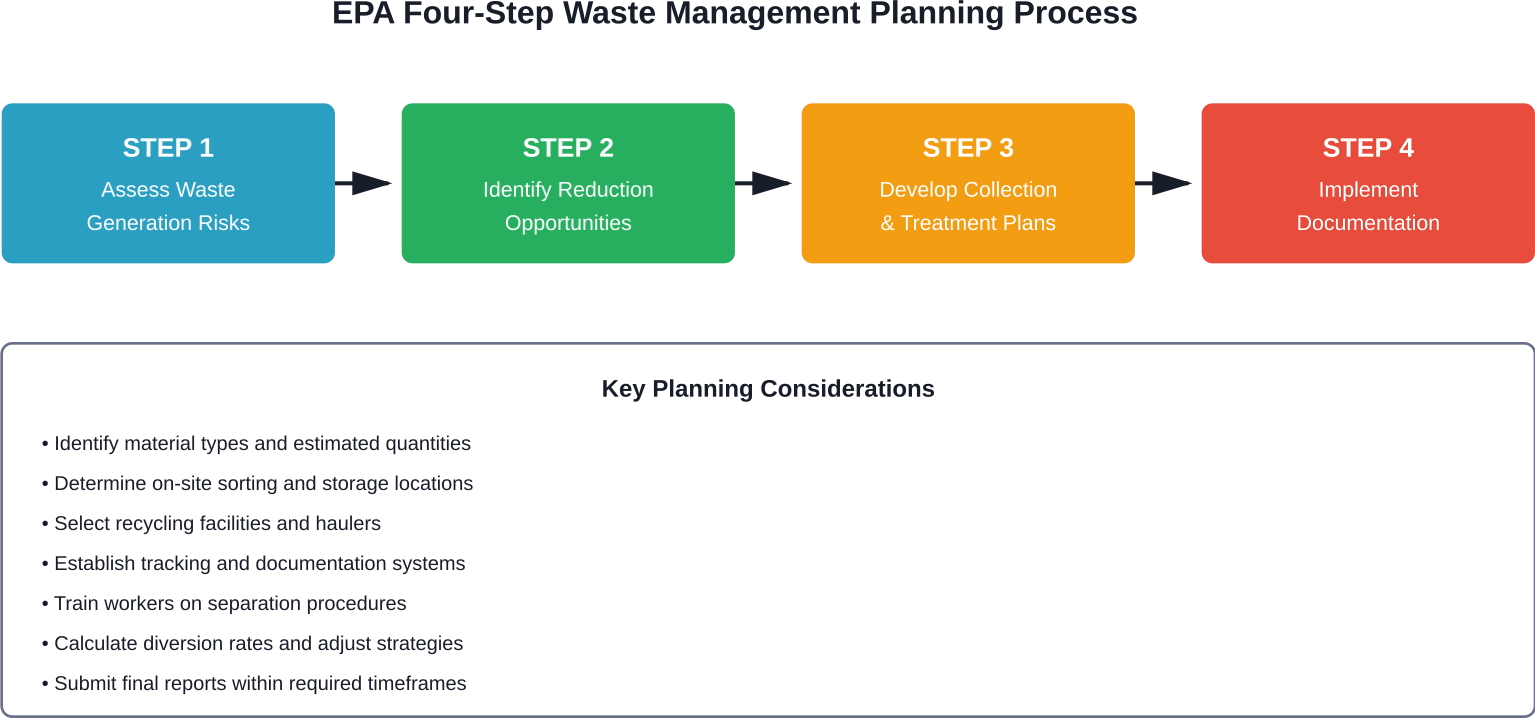
The EPA provides comprehensive planning guidelines, including its four-step waste management planning process. This framework walks communities and organizations through assessment, opportunity identification, collection planning, and documentation implementation.
Trade associations offer valuable resources too. The Associated General Contractors of America, noted by the EPA as the largest construction trade association, provides member resources on waste reduction and recycling.
Software platforms increasingly support waste management documentation and tracking. Online portals allow real-time documentation upload, automatic diversion calculation, and digital reporting to regulatory authorities.
Many municipalities maintain lists of approved recycling facilities, certified haulers, and salvage organizations. These resources simplify facility selection and ensure regulatory compliance.
The Bottom Line
Construction waste management plans have evolved from optional sustainability gestures to mandatory compliance documents. They serve multiple purposes—regulatory compliance, cost reduction, environmental protection, and resource conservation.
Effective plans require upfront assessment, strategic thinking, practical logistics, and consistent documentation. Projects that integrate waste management into overall planning from the start achieve better outcomes than those treating it as an afterthought.
The regulatory trend points toward stricter requirements and higher diversion targets. Forward-thinking contractors and developers are getting ahead of these changes, building waste reduction expertise that will deliver competitive advantages as standards tighten.
Whether driven by regulation, economics, or environmental commitment, comprehensive waste management planning has become essential to modern construction practice.
Ready to develop a plan for your next project? Start by reviewing local requirements, assessing material streams, and identifying diversion opportunities. The investment in planning pays returns throughout the project lifecycle—and protects that permit deposit too.
Questions fréquemment posées
Who is required to have a construction waste management plan?
Requirements vary by jurisdiction. Many municipalities require waste management plans for projects exceeding certain size or valuation thresholds. Demolition projects often require plans regardless of size.
What happens if a project does not meet the required diversion rate?
Consequences may include forfeiting deposits, fines, or delays in final approvals. Repeated non-compliance can also impact future permits or contractor status.
Can waste management plans be modified during construction?
Yes. Plans can be updated as project conditions change. Most jurisdictions allow amendments if properly documented and approved by the relevant authority.
How are diversion rates calculated?
Diversion rates are calculated by dividing the weight of diverted materials by the total waste generated, then multiplying by 100. Accurate tracking requires weight data from all waste streams.
What documentation is required to demonstrate compliance?
Typical documentation includes hauler receipts, recycling facility confirmations, weight tickets, and final calculation reports. Some jurisdictions also require photos and additional verification.
Are there penalties for late documentation submission?
Yes. Late submission can result in loss of deposits or additional penalties, even if diversion targets were met. Deadlines are usually strictly enforced.
What materials typically have the highest diversion rates?
Metals, concrete, and asphalt usually achieve the highest diversion rates. Clean wood, cardboard, and drywall also perform well when properly separated.

Vous avez un projet BIM ? Parlez-en avec nous.
Nous contacterNos études de cas
Nous avons géré plus de 200 projets BIM et VDC pour les secteurs commerciaux, industriels et résidentiels.
Notre travail comprend
Automatisation de la conception des coffrages
Our client from
California, USA
Automatisation de la conception des plafonds suspendus
Our client from
New York, USA
Automatisation de la conception de l'ossature des murs
Our client from
California, USA