Vous avez des questions ? Contactez nous !
Rejoignez notre équipe !
Demander un devis ou une consultation gratuite

Quick Summary: A construction blueprint is a technical drawing that provides detailed plans for building projects, showing measurements, materials, structural components, and systems. Originally created using a blue-tinted reproduction process in the 1840s, blueprints now exist primarily as digital documents that guide contractors, architects, and engineers through every phase of construction.
When the cyanotype process was developed in 1842 by Sir John Herschel, it allowed line drawings to be reproduced with a distinctive blue background and white lines. This process eventually became widely used for architectural and engineering drawings in the 1870s, giving rise to the term “blueprint.” The name has stuck ever since, even though modern construction drawings are now almost entirely digital and rarely appear in the classic blue-and-white format.
Today, blueprints are vital technical drawings used in commercial construction to guide the building process from foundation to finish. They provide detailed information, including precise measurements, materials, and specifications for every aspect of a project.
But here’s the thing—blueprints aren’t just drawings. According to professional carpenter Elly Hart, “Construction blueprints aren’t just drawings—they’re a contract that represents what’s going to be built, and it’s a critical form of communication that gets everybody involved on the same page.”
Understanding Construction Blueprints
Blueprint reading is the process of interpreting and understanding technical drawings used in construction and engineering. This skill allows professionals to read, analyze, and execute construction plans accurately, ensuring projects meet design specifications and building codes.
Construction blueprints serve as comprehensive guides that detail structural components, electrical systems, plumbing layouts, and architectural elements. These drawings transform an architect’s vision into concrete instructions that contractors can follow.
The American Institute of Architects (AIA) defines the architectural design process through multiple phases, with construction documents representing one of the most detailed stages. The level of detail in these documents may vary depending on the owner’s preference. If the construction document set isn’t 100 percent complete, this is noted on the set when sent out for bid.
The Evolution From Paper to Digital
While traditional paper blueprints still exist, the construction industry has shifted dramatically toward digital formats. Digital document control systems help organize blueprints in a logical manner or cross-reference with numerical filing systems like CSI MasterFormat.
This transition hasn’t just changed how blueprints are stored. It’s transformed how professionals collaborate, share revisions, and access plans on job sites.
The Purpose of Construction Blueprints
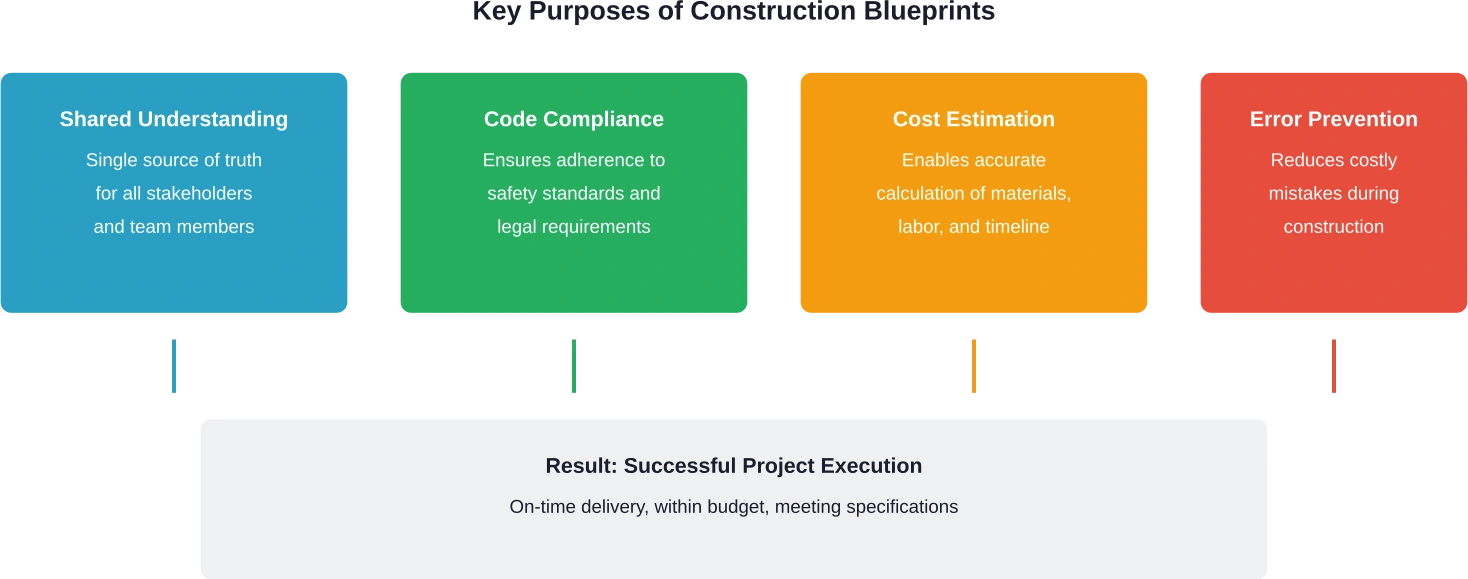
So what’s the actual purpose of these detailed drawings? Blueprints serve multiple critical functions in any construction project.
First, they establish a shared understanding. Every stakeholder—from architects to general contractors to subcontractors—needs to work from the same set of plans. Blueprints create that single source of truth.
Second, they ensure code compliance. Building codes and regulations vary by jurisdiction, and blueprints must incorporate all relevant safety standards and legal requirements. ASCE Standards provide technical guidelines for promoting safety, reliability, productivity, and efficiency in civil engineering.
Third, blueprints enable accurate cost estimation. Contractors use these drawings to calculate materials, labor, and time requirements. This phase results in contractors’ final estimates of project costs, according to the AIA’s guidelines on defining project services.
Key Elements of Construction Blueprints
Reading construction blueprints accurately requires understanding their standard components. Each element provides specific information critical to the building process.
Bloc de titres
The title block appears on every sheet and contains essential project information. It typically includes the project name, address, architect’s name, drawing number, date, and revision information.
This section also identifies the specific drawing type and scale. Without this information, interpreting the rest of the blueprint becomes nearly impossible.
Scale and Measurements
Blueprints represent large buildings on manageable paper or screen sizes using scale ratios. Common scales include 1/4 inch = 1 foot or 1/8 inch = 1 foot.
Understanding scale is fundamental to blueprint reading. A dimension shown as 2 inches on a 1/4-inch scale drawing represents an 8-foot measurement in reality.
Symbols and Abbreviations
Construction drawings use standardized symbols to represent doors, windows, electrical outlets, plumbing fixtures, and other building elements. These symbols create a universal language that professionals across the industry recognize.
Common abbreviations include FD (floor drain), WH (water heater), and GFI (ground fault interrupter). Learning these symbols is essential for blueprint reading.
Views and Perspectives
Blueprints show buildings from multiple angles. Floor plans provide overhead views, elevations show exterior walls from the side, and sections reveal interior details by cutting through the structure.
Each view serves a specific purpose. Floor plans show room layouts and dimensions. Elevations display exterior design and window placement. Sections reveal structural details and material specifications.
| View Type | Objectif | Shows |
|---|---|---|
| Floor Plan | Overhead layout view | Room arrangement, dimensions, door/window placement |
| Elevation | Exterior wall view | Building height, exterior finishes, window positions |
| Section | Interior cut-through | Wall construction, structural details, material layers |
| Detail Drawing | Close-up of specific elements | Connection methods, fastener types, precise specifications |
Get Blueprints You Can Build From

Blueprints are supposed to guide construction, but in reality, teams often read them differently. Missing context, overlaps between trades, and unclear details turn drawings into assumptions on site. Powerkh helps remove that ambiguity by making sure drawings and models tell the same story, so teams don’t have to guess what was intended. They step in before and after issues to check how information will actually be used on site.
Choose Powerkh for Buildable Drawings
What you get working with Powerkh:
- Drawings that different trades interpret the same way, not differently
- Fewer assumptions on site when details overlap or are unclear
- Early clarity in areas where plans typically create confusion
- Consistent link between what’s drawn, modelled, and built
- Support that carries design intent through to site execution
Contact Powerkh to make sure your blueprints are understood the same way by everyone on site.
Types of Construction Drawings
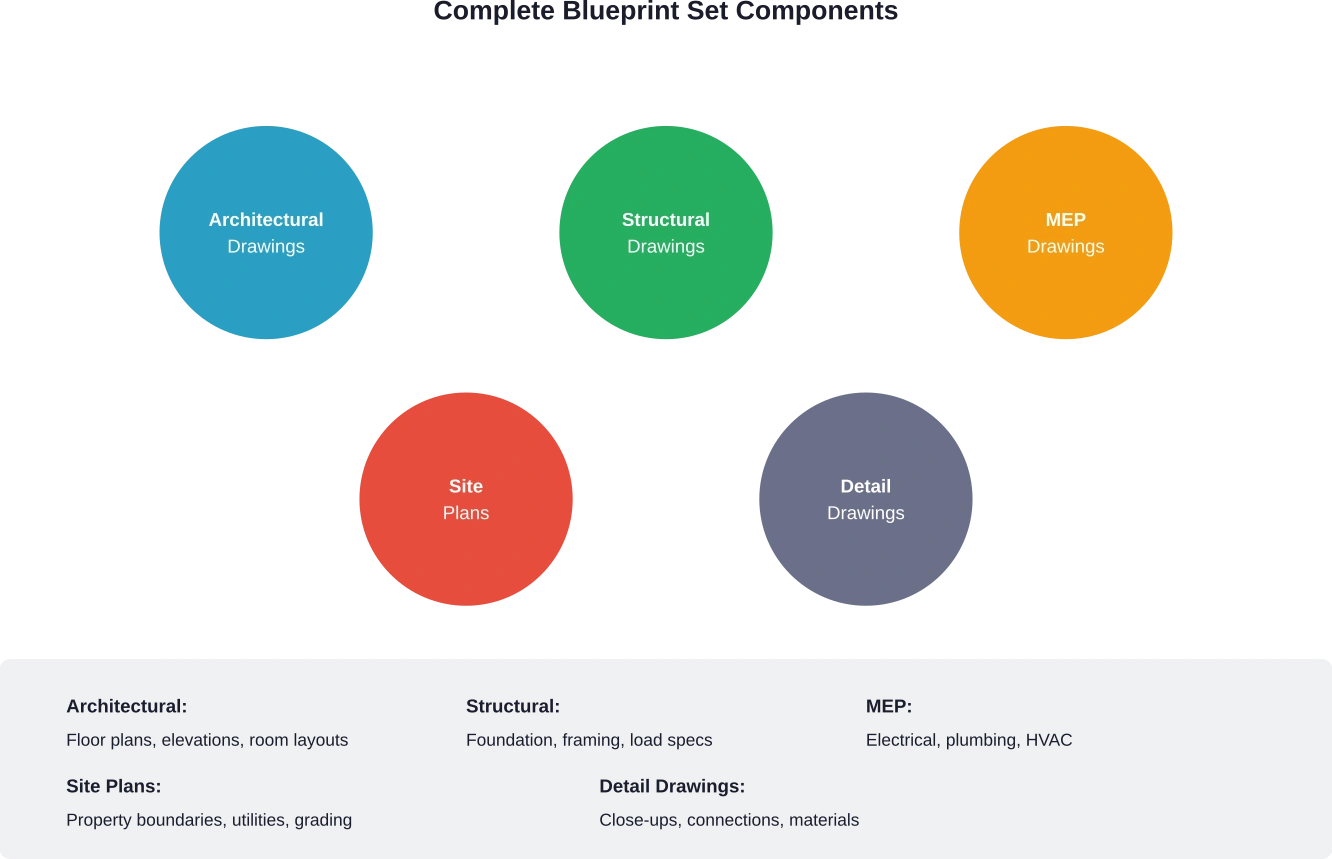
A complete set of construction blueprints includes multiple drawing types. Each addresses different aspects of the project.
Dessins d'architecture
These drawings show the building’s design and layout. They include floor plans, elevations, sections, and details of architectural elements.
Architectural drawings communicate the architect’s vision and provide contractors with dimensional information needed for framing and finishing work.
Structural Drawings
Structural drawings outline the core framework and stability of the building. Engineers prepare these to show foundation plans, framing details, and load-bearing specifications.
These drawings ensure the structure can safely support all intended loads and resist environmental forces like wind and earthquakes.
Dessins mécaniques, électriques et de plomberie (MEP)
MEP drawings detail wiring layouts, electrical connections, HVAC systems, and plumbing configurations. Different trades rely on these specialized drawings.
Electrical drawings show circuit routing, panel locations, and fixture placement. Plumbing drawings indicate pipe runs, fixture connections, and drainage systems. Mechanical drawings detail heating, cooling, and ventilation equipment.
Plans du site
Site plans show the building’s location on the property. They include property boundaries, topography, utilities, parking areas, and landscaping.
These drawings help contractors understand site conditions before breaking ground.
How to Read Construction Blueprints
Reading construction blueprints accurately can prevent costly errors and keep projects on schedule. The process involves systematic steps that professionals follow.
Start With the Title Block
Always begin by examining the title block. Confirm the project name, verify the drawing number, and check the revision date. Outdated plans cause expensive mistakes.
The title block also identifies the drawing scale and type, both critical for proper interpretation.
Understand the Scale
Check the scale ratio before taking any measurements from the drawing. A misread scale can throw off an entire project’s dimensions.
Many blueprints include a graphic scale—a ruler-like image that remains accurate even if the drawing is resized during copying or printing.
Review General Notes and Specifications
General notes provide important information about materials, construction methods, and special requirements. These notes often appear near the title block or on a separate specifications sheet.
Don’t skip this step. Notes frequently contain critical details that aren’t shown graphically on the drawings.
Examine Different Views Together
Cross-reference floor plans with elevations and sections. A feature shown in plan view becomes clearer when examined in elevation or section.
This holistic approach helps catch discrepancies and builds a complete mental picture of the structure.
Learn Standard Symbols
Familiarize yourself with common construction symbols. Doors show as arcs indicating swing direction. Windows appear as gaps in walls with specific symbols. Electrical outlets use standardized circular symbols.
Many blueprint sets include a legend or symbol key, especially for project-specific symbols.
Follow a Systematic Approach
Read blueprints in a logical sequence. Start with site plans to understand the overall project context. Move to floor plans for layout understanding. Then examine elevations for height and exterior details. Finally, review sections and details for specific construction information.
This progression builds understanding from general to specific.
Blueprint Reading for Different Professionals
Different construction professionals focus on different aspects of blueprints based on their roles.
General Contractors
General contractors need comprehensive blueprint knowledge. They coordinate all trades and ensure work proceeds according to plans.
For general contractors, blueprint reading involves understanding how different systems interact and identifying potential conflicts before construction begins.
Specialized Trades
Electricians focus primarily on electrical drawings. Plumbers concentrate on plumbing plans. HVAC technicians study mechanical drawings.
But wait—specialized contractors still need basic understanding of architectural and structural drawings to coordinate their work within the overall building design.
Architectes et ingénieurs
Architects and engineers not only read blueprints but create them. The AIA Framework for Design Excellence challenges architects and design professionals to apply ten principles of sustainable, resilient, and inclusive design practice.
These professionals must ensure their drawings communicate design intent clearly while meeting all code requirements.
Learning Blueprint Reading Skills
Blueprint reading is essential for anyone involved in the construction industry. So how do professionals acquire this critical skill?
According to the Virtual Design & Construction Institute, options for learning blueprint reading range from free online tutorials to structured courses. If seeking free or low-cost options, there are plenty of online tutorials, YouTube videos, and basic guides available.
More structured learning—such as online courses, bootcamps, or in-person classes—may range from $200 to $1,500 or more, depending on the depth of instruction. Some industry organizations and trade schools offer specialized blueprint reading courses tailored to specific trades.
Real talk: hands-on practice with actual blueprint sets provides the most effective learning. Many professionals develop skills through apprenticeships where experienced workers mentor them through real projects.
Common Blueprint Reading Challenges
Even experienced professionals encounter blueprint reading difficulties. Recognizing common challenges helps avoid mistakes.
Discrepancies Between Drawings
Sometimes floor plans don’t match elevations, or structural drawings conflict with architectural plans. When discrepancies appear, professionals must contact the architect or engineer for clarification before proceeding.
Never assume or guess when drawings conflict. That’s how costly errors happen.
Unclear or Missing Information
Occasionally blueprints omit critical details or contain unclear specifications. Construction specifications firm knowledge becomes critical for well-coordinated projects, according to AIA resources.
When information is missing, submit requests for information (RFIs) to the design team rather than making assumptions.
Revisions and Updates
Construction projects generate numerous revisions. Working from outdated plans causes serious problems.
Always verify that blueprints represent the latest revision. Digital document management systems help track versions and ensure everyone works from current drawings.
| Défi | Impact | Solution |
|---|---|---|
| Drawing discrepancies | Conflicting dimensions or details | Contact architect/engineer for clarification |
| Missing information | Incomplete specifications | Submit RFI to design team |
| Outdated revisions | Work based on superseded plans | Use document management system, verify revision dates |
| Unfamiliar symbols | Misinterpreted design intent | Reference symbol legend, consult with experienced professionals |
Digital Blueprints and Modern Technology
The construction industry has embraced digital transformation. Traditional paper blueprints are giving way to sophisticated digital workflows.
Building Information Modeling (BIM) represents a significant advance beyond traditional blueprints. BIM creates three-dimensional digital representations of buildings that contain detailed information about every component.
Digital blueprints offer advantages over paper. They’re easier to update, distribute, and store. Field workers can access plans on tablets, zooming into details without carrying bulky paper sets.
However, the fundamental skills of blueprint reading remain relevant. Whether viewing plans on paper or screen, professionals must understand symbols, scales, and drawing conventions.
Questions fréquemment posées
What’s the difference between blueprints and construction drawings?
The terms are often used interchangeably. Historically, “blueprints” referred to a specific reproduction method, while “construction drawings” describe the full set of technical plans used in building projects. Today, both terms generally mean the same thing.
How long does it take to learn blueprint reading?
Basic skills can be learned in a few weeks, but proficiency usually requires several months of practice. Advanced expertise develops over years of experience working with real construction projects.
Can blueprints be changed during construction?
Yes. Changes are made through a formal change order process. Updated drawings include revision numbers and dates, and all project participants must use the latest versions.
Who is responsible for creating construction blueprints?
Architects create architectural drawings, while structural and MEP engineers develop their respective plans. Together, they produce a coordinated set of documents for construction.
Are digital blueprints replacing paper blueprints completely?
Digital drawings are becoming standard, especially with mobile devices on job sites. However, paper prints are still used in some cases for convenience and backup.
What happens if a contractor builds something differently than shown on blueprints?
Unauthorized deviations can lead to failed inspections, code violations, and costly rework. All changes must be formally approved to avoid legal and financial risks.
Do I need special software to view digital blueprints?
Most drawings can be viewed using standard PDF software. However, specialized tools like AutoCAD, Revit, or Bluebeam offer advanced features for measurement, markup, and collaboration.
Conclusion
Construction blueprints remain foundational to successful building projects. These technical drawings communicate design intent, ensure code compliance, enable accurate cost estimation, and coordinate work among multiple trades.
Understanding how to read blueprints—from interpreting the title block and scale to recognizing symbols and cross-referencing different views—is essential for contractors, engineers, architects, and anyone involved in construction.
The industry continues evolving toward digital formats and BIM technology, but the core principles of blueprint reading persist. Accurate interpretation of construction drawings prevents costly mistakes and keeps projects on schedule.
Whether working on residential remodels or large-scale commercial construction, developing strong blueprint reading skills remains one of the most valuable investments construction professionals can make. Start with the fundamentals, practice with real projects, and continue learning throughout your career.
Ready to improve your blueprint reading skills? Consider enrolling in a structured course or finding a mentor who can guide you through actual project plans. The ability to accurately interpret construction blueprints opens doors throughout the construction industry.

Nos études de cas
Nous avons géré plus de 200 projets BIM et VDC pour les secteurs commerciaux, industriels et résidentiels.
Notre travail comprend
Automatisation de la conception des coffrages
Our client from
California, USA
Automatisation de la conception des plafonds suspendus
Our client from
New York, USA
Automatisation de la conception de l'ossature des murs
Our client from
California, USA