Vous avez des questions ? Contactez nous !
Rejoignez notre équipe !
Demander un devis ou une consultation gratuite

A bollard in construction is a short, sturdy vertical post designed to control vehicle and pedestrian traffic, establish safety perimeters, and protect workers, equipment, and infrastructure at construction sites. These posts can be fixed, removable, or collapsible, made from materials like steel, concrete, or plastic, and are essential for creating secure work zones and preventing vehicle-related accidents.
Construction sites are inherently hazardous environments where heavy machinery, vehicles, and workers converge in tight spaces. Among the most critical safety tools deployed at these sites are bollards—those short, sturdy posts that often go unnoticed yet perform vital protective functions.
But what exactly is a bollard in construction, and why has it become such an essential component of modern worksite safety? This guide explores everything from basic definitions to advanced safety standards.
What Are Bollards in Construction?
Bollards are short, vertical posts installed to control or restrict vehicle and pedestrian movement. In construction contexts, they serve as physical barriers that create safety zones, protect workers from traffic impacts, and safeguard expensive equipment and infrastructure from accidental collisions.
These posts typically range from 36 to 48 inches in height and can be constructed from various materials depending on their intended purpose. The fundamental design principle remains consistent: create a visible, durable barrier that prevents vehicles from entering restricted areas while allowing pedestrian access when needed.
According to data from the Federal Highway Administration, in 2021, more than 60% of fatalities at roadside worksites were the result of vehicle impacts. This stark statistic underscores why bollards have become standard equipment rather than optional additions at construction sites.
Primary Uses of Construction Bollards
Construction managers deploy bollards for several critical functions that directly impact worksite safety and operational efficiency.
Worksite Perimeter Protection
Bollards establish clear boundaries around construction zones, preventing unauthorized vehicle access. This is particularly crucial for projects adjacent to active roadways where traffic could inadvertently enter the work area.
The posts create visible delineation that both drivers and pedestrians can easily identify, reducing confusion about where the construction zone begins.
Equipment and Infrastructure Safeguarding
Expensive construction equipment, temporary structures, and utility installations require protection from accidental impacts. Strategically placed bollards act as the first line of defense, absorbing or deflecting vehicle strikes before damage occurs.
This protective function extends to permanent infrastructure being built or renovated, preventing costly repairs from vehicular accidents during the construction phase.
Traffic Control and Access Management
Removable and collapsible bollards allow construction managers to control access dynamically. Delivery vehicles, emergency responders, and authorized personnel can enter when bollards are temporarily removed, while unauthorized access remains restricted during other times.
This flexibility proves invaluable for projects requiring periodic material deliveries without compromising overall site security.
Work With a BIM and VDC Services Team

Powerkh provides BIM modeling, coordination, Scan to BIM, BIM automation, and structural detailing. The company supports construction teams with models, drawings, and technical documentation used in real projects.
Need BIM Support for a Project?
Talk with Powerkh to:
- build BIM models and construction documentation
- prepare drawings for fabrication and site use
- support coordination across project teams
👉 Contact Powerkh for a project review and consultation.
Types of Construction Bollards
Not all bollards are created equal. Construction projects require different bollard types depending on site conditions, duration, and specific safety requirements.
Fixed Bollards
These permanently installed posts are embedded in concrete foundations, providing maximum strength and durability. Fixed bollards suit long-term construction projects or permanent installations where access points won’t change.
Their immovable nature makes them ideal for high-traffic areas requiring consistent protection throughout the project lifecycle.
Removable Bollards
Removable bollards feature locking mechanisms that allow authorized personnel to extract them from ground sleeves when temporary access is needed. This design provides permanent foundation stability with operational flexibility.
Construction sites frequently use removable bollards at entry points where delivery trucks need periodic access but security must be maintained during off-hours.
Collapsible Bollards
Collapsible models fold down to ground level when not in use, eliminating removal and storage requirements. They work well for areas requiring frequent but temporary vehicle access.
The folding mechanism allows quick deployment, making them popular for sites with variable access needs throughout the construction day.
Surface-Mounted Bollards
When ground excavation isn’t feasible—such as on finished pavements or above underground utilities—surface-mounted bollards attach directly to existing surfaces using robust anchor bolts.
These provide adequate protection without extensive installation work, though they typically offer less impact resistance than embedded alternatives.
| Bollard Type | Installation Method | Flexibilité | Best Use Case |
|---|---|---|---|
| Fixed | Concrete embedding | None | Permanent perimeter protection |
| Removable | Ground sleeve system | High | Controlled access points |
| Collapsible | Hinged foundation | Moderate | Variable access zones |
| Surface-Mounted | Anchor bolts | Low | Finished surfaces, temporary sites |
Bollard Materials and Construction
The material composition of construction bollards directly affects their protective capabilities, longevity, and suitability for specific applications.
Steel Bollards
Steel remains the most common material for construction bollards due to its exceptional strength-to-weight ratio and impact resistance. Powder-coated or galvanized steel resists corrosion, extending service life in outdoor environments.
Heavy-duty steel bollards can withstand significant vehicle impacts, making them appropriate for high-risk areas adjacent to busy roadways.
Concrete Bollards
Concrete posts offer superior mass and impact absorption at lower material costs. Their weight makes them naturally stable, though less suitable for temporary installations requiring frequent relocation.
Many construction sites use concrete bollards for perimeter protection where permanence and maximum impact resistance are priorities.
Plastic and Composite Bollards
Lightweight plastic bollards serve primarily as visual guides rather than physical barriers. They’re ideal for low-risk areas where traffic control matters more than impact protection.
Their affordability and portability make them common for temporary traffic management around construction zones.
Understanding Bollard Safety Standards
Professional construction projects increasingly require bollards meeting specific crash-rating standards, particularly when federal facilities or Department of Defense projects are involved.
ASTM F3016 Standard
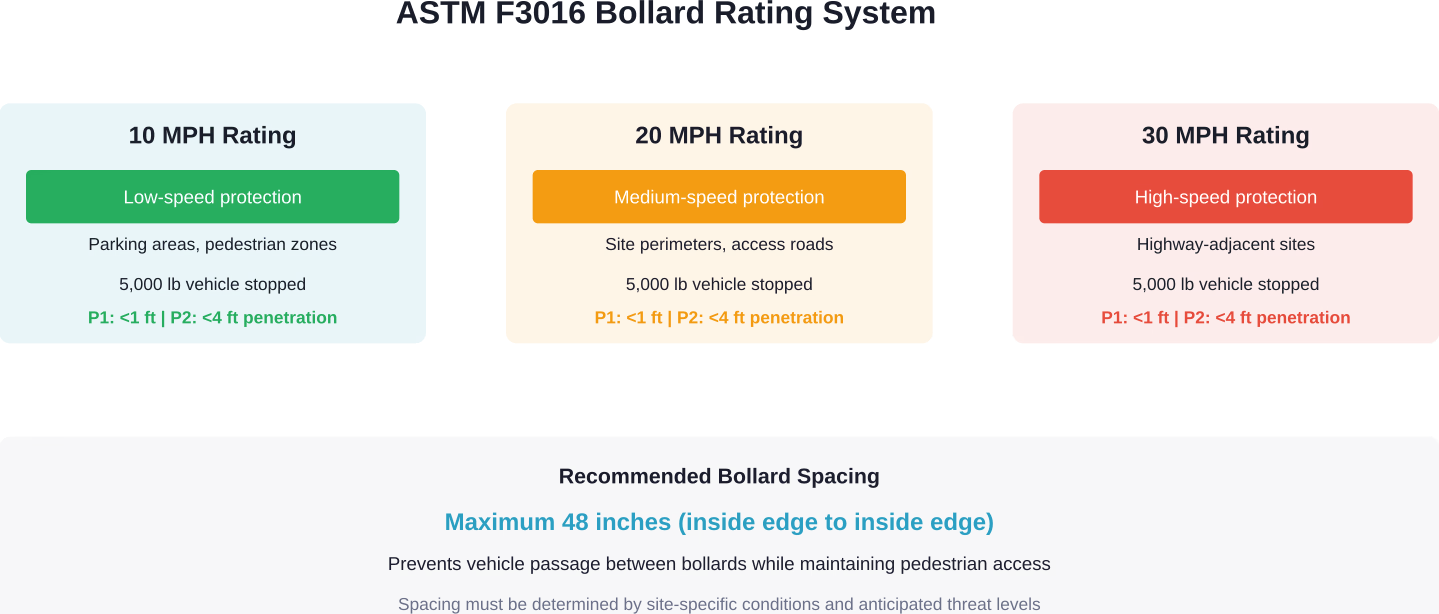
The ASTM F3016 standard details testing methods for bollards designed to stop a 5,000-pound vehicle traveling at 10, 20, or 30 mph. Two penetration ratings exist: P1 (less than 1 foot of dynamic penetration) and P2 (less than 4 feet of penetration).
According to authoritative testing documentation, recommended spacing between bollards should not exceed 48 inches from inside edge to inside edge to prevent vehicle passage between posts.
ASTM F2656 Standard
ASTM F2656 addresses higher-security applications, testing barriers against vehicles up to 15,000 pounds at speeds reaching 50 mph. Federal facilities often require F2656 certification along with Department of Defense approval.
According to ASTM bollard standards guidance, federal projects require barriers meeting the Buy American Act, which mandates a 60% domestic content minimum (increasing to 65% in 2024 and 75% in 2029). The Army Corps of Engineers maintains lists of approved barriers.
Installation Considerations for Construction Sites
Proper bollard installation determines whether these safety devices perform as intended when impact occurs.
Installation expenses add to total project costs. Foundation depth and concrete quality directly affect bollard stability, with embedded bollards typically requiring foundations extending at least 36 inches below grade for adequate anchoring.
Spacing decisions balance security needs with operational requirements. Tighter spacing provides better protection but may complicate material movement and equipment maneuvering within the site.
Visibility enhancements—reflective tape, bright paint, or integrated lighting—ensure bollards remain visible during low-light conditions, preventing accidental collisions from construction vehicles operating on-site.
Cost Considerations
Bollard costs vary significantly based on material, features, and certification requirements. Basic traffic bollards can start at a few hundred dollars, while crash-rated or custom bollards can exceed $1,000 per unit.
Long-term maintenance costs also factor into total ownership calculations. Steel bollards require periodic inspection for corrosion, while concrete posts need structural integrity checks after any significant impacts.
| Cost Factor | Budget Range | Impact on Selection |
|---|---|---|
| Basic traffic bollard | $200-$500 | Visual guidance, light duty |
| Standard steel bollard | $400-$800 | Moderate protection, common use |
| Crash-rated bollard | $1,000-$3,000+ | High security, federal requirements |
| Installation (embedded) | $300-$1,000 per post | Requires excavation, concrete |
| Installation (surface) | $100-$300 per post | Faster deployment, lower labor |
Protecting Construction Sites With the Right Bollards
Bollards have evolved from simple posts into engineered safety systems backed by rigorous testing standards and performance certifications. Their role in construction site safety extends beyond mere traffic control to encompass worker protection, equipment preservation, and liability reduction.
Selecting appropriate bollards requires balancing protection requirements, budget constraints, and operational flexibility. Fixed installations provide maximum security for permanent perimeters, while removable and collapsible options accommodate sites needing variable access throughout project phases.
As construction safety regulations continue emphasizing proactive protection measures, bollards represent a relatively affordable investment that significantly reduces accident risk. Whether meeting federal crash-rating standards or establishing basic traffic control, these unassuming posts serve as critical safety infrastructure at modern construction sites.
Questions fréquemment posées
What is the primary purpose of bollards at construction sites?
Bollards protect workers, equipment, and infrastructure from vehicle impact. They help control traffic flow, restrict unauthorized access, and define safe zones within construction areas.
How far apart should construction bollards be placed?
Bollards are typically spaced no more than 48 inches apart to prevent vehicles from passing between them. Exact spacing depends on site conditions and required access for pedestrians.
Can bollards be temporarily removed when needed?
Yes, removable bollards can be taken out using locking systems, and collapsible models can fold down. Fixed bollards are permanent and cannot be moved without reconstruction.
What materials are construction bollards made from?
Common materials include steel for strength, concrete for durability and mass, and plastic or composite materials for lightweight visual guidance. The choice depends on protection needs and installation type.
Do construction bollards need to meet specific safety standards?
High-security or regulated projects may require bollards that meet crash-rating standards. Standard construction sites often use non-rated bollards unless project specifications or local regulations require certified systems.
How much do construction bollards typically cost?
Basic bollards can cost a few hundred dollars each, while heavy-duty or crash-rated units cost significantly more. Installation costs vary depending on whether they are surface-mounted or embedded.
What’s the difference between fixed and removable bollards?
Fixed bollards are permanently installed in concrete and provide maximum stability. Removable bollards use sleeves and locking systems, allowing them to be taken out when access is required.

Nos études de cas
Nous avons géré plus de 200 projets BIM et VDC pour les secteurs commerciaux, industriels et résidentiels.
Notre travail comprend
Automatisation de la conception des coffrages
Our client from
California, USA
Automatisation de la conception des plafonds suspendus
Our client from
New York, USA
Automatisation de la conception de l'ossature des murs
Our client from
California, USA