Vous avez des questions ? Contactez nous !
Rejoignez notre équipe !
Demander un devis ou une consultation gratuite

Procurement in construction is the strategic process of acquiring and managing all materials, equipment, labor, and services needed to complete a building project. It encompasses everything from planning budgets and sourcing suppliers to negotiating contracts and coordinating deliveries, typically accounting for 40-70% of total project costs. Effective procurement ensures projects stay on schedule, within budget, and meet quality standards while minimizing risks and waste.
Construction projects don’t just appear overnight. Behind every finished building stands a complex web of materials, equipment, skilled labor, and specialized services—all carefully sourced, negotiated, and delivered at the right time.
That’s procurement. And in construction, it’s not just about buying stuff.
It’s a strategic process that determines whether projects finish on time, stay within budget, or spiral into costly delays and quality issues. Procurement activities can account for 40–70% of total project costs on large-scale construction projects. Get it right, and projects run smoothly. Get it wrong, and the consequences ripple through every phase of the build.
So what exactly does procurement in construction involve? How do professionals navigate the sourcing, contracting, and management challenges that come with modern building projects?
Here’s everything construction professionals need to know about procurement in 2026.
What Is Procurement in Construction?
Procurement in construction refers to the comprehensive process of acquiring all the resources needed to deliver a building project successfully. This includes sourcing and purchasing materials, equipment, labor, and specialized services from initial planning through project completion.
But it’s more than just purchasing.
Construction procurement encompasses strategic planning, supplier evaluation, contract negotiation, quality assurance, logistics coordination, and ongoing relationship management. It’s about getting the right resources, from the right suppliers, at the right price, delivered at the right time.
The process starts long before the first shovel hits the ground. Project teams must assess what materials and services they’ll need, identify potential suppliers, evaluate costs against budgets, negotiate favorable terms, and coordinate complex delivery schedules that align with construction phases.
Think of procurement as the circulatory system of a construction project—it keeps resources flowing to where they’re needed, when they’re needed, preventing bottlenecks that could halt progress.
Why Procurement Matters in Construction
Materials represent one of the largest expenses for construction firms. Disorganized or wasteful purchasing practices can quickly erode profit margins and derail project timelines.
Effective procurement directly impacts several critical project outcomes:
- Cost control: Strategic sourcing and bulk purchasing can secure better pricing and reduce material waste
- Schedule adherence: Coordinated deliveries prevent delays caused by material shortages or late arrivals
- L'assurance qualité : Vetting suppliers and establishing specifications ensures materials meet project standards
- Risk mitigation: Diversifying suppliers and building contingencies protects against supply chain disruptions
- Compliance: Proper documentation and contractor vetting ensure regulatory and safety standards are met
In recent years, contractors have faced dampened expectations for 2026 projects amid economic uncertainties and policy changes, according to industry outlook data from the Associated General Contractors of America. These pressures make efficient procurement practices even more critical for maintaining profitability.
The Construction Procurement Process: Step by Step
Construction procurement follows a structured workflow that aligns with project phases. While specific steps may vary based on project size and complexity, most procurement processes share these core stages.
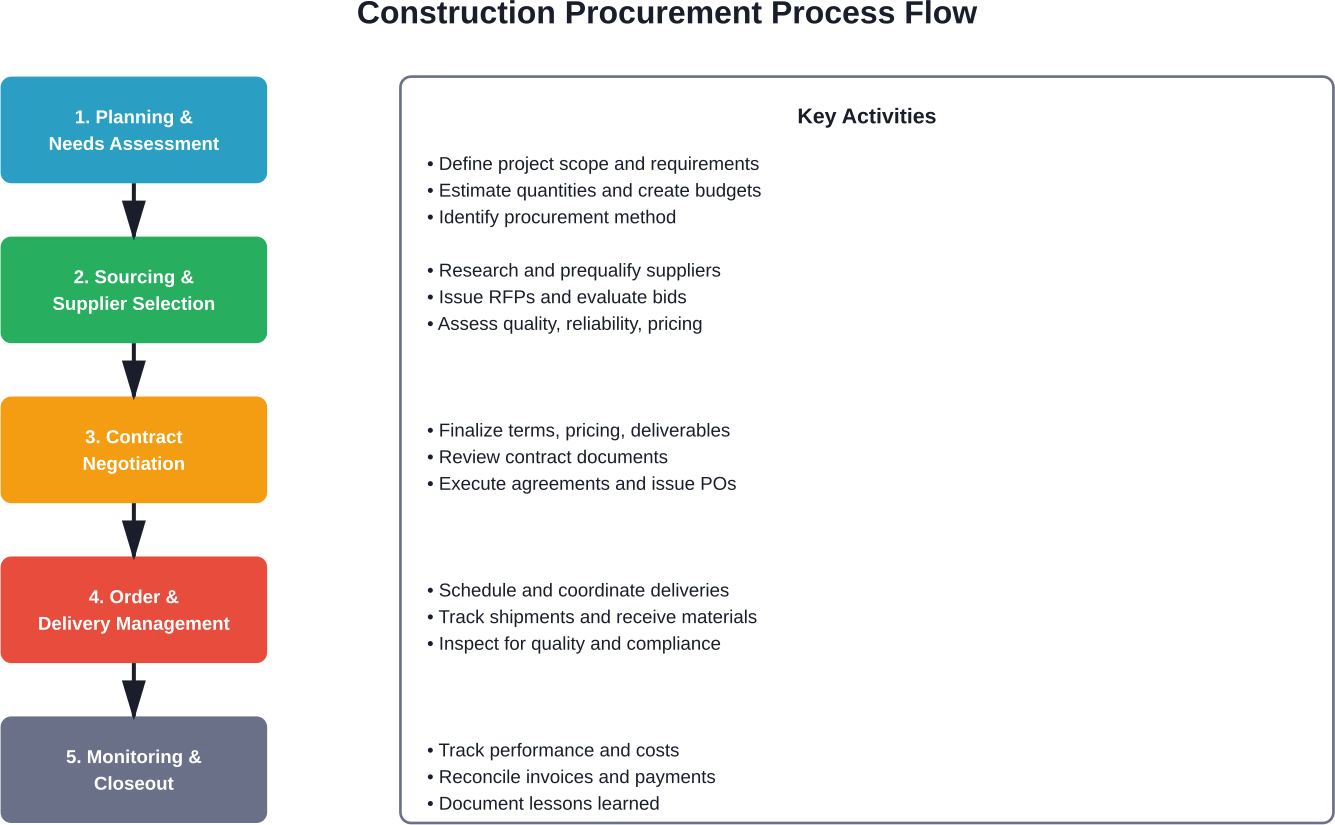
1. Planning and Needs Assessment
Every procurement process begins with understanding what the project requires. Teams review architectural drawings, specifications, and project schedules to identify all necessary materials, equipment, and services.
During this phase, project managers work with estimators to quantify materials, assess market prices, and establish preliminary budgets. They factor in bulk discounts, potential price fluctuations, and contingencies for long-term projects.
The planning stage also determines the appropriate procurement method based on project type, budget constraints, timeline requirements, and risk tolerance.
2. Sourcing and Supplier Selection
Once needs are defined, the sourcing process begins. Teams research potential suppliers, evaluate their capabilities, and often prequalify vendors based on criteria like experience, financial stability, quality certifications, and past performance.
For significant purchases or contracts, organizations typically issue Requests for Proposals (RFPs) or Requests for Quotations (RFQs) that outline project requirements and invite competitive bidding.
Evaluation criteria typically include pricing, delivery timelines, quality standards, warranty terms, and the supplier’s track record. Smart procurement teams don’t always choose the lowest bid—reliability and quality often matter more than rock-bottom pricing.
3. Contract Negotiation and Execution
After selecting suppliers and contractors, the negotiation phase establishes final terms. This covers pricing structures, payment schedules, delivery timelines, quality specifications, warranty provisions, and dispute resolution procedures.
Contract documents serve as the legal foundation for the business relationship, documenting commitments each party is making and helping prevent misunderstandings later. According to Stanford University’s procurement guidance, these agreements help avoid later disputes by clearly confirming what each party has committed to deliver.
Once terms are finalized and contracts executed, purchase orders are issued to initiate the procurement.
4. Order and Delivery Management
With contracts in place, logistics coordination becomes critical. Project teams schedule deliveries to align with construction phases, ensuring materials arrive when needed without creating on-site storage problems or workflow bottlenecks.
This phase involves tracking shipments, coordinating with site supervisors, receiving materials, and conducting quality inspections to verify that delivered goods meet specifications and arrive in acceptable condition.
Delivery management also includes handling change orders, managing substitutions when specified materials become unavailable, and addressing any delivery delays or quality issues that arise.
5. Monitoring and Closeout
Throughout the procurement cycle, teams monitor supplier performance, track spending against budgets, and manage any issues that emerge. This ongoing oversight ensures procurement activities support rather than hinder project progress.
At project completion, procurement closeout involves reconciling all invoices, processing final payments, documenting lessons learned, and archiving contract records for future reference and compliance purposes.
Construction Procurement Methods
Not all construction projects procure resources the same way. Different procurement methods distribute risk, responsibility, and control differently among project stakeholders.
Choosing the right method depends on project complexity, budget certainty, timeline constraints, and how much control the owner wants over the design and construction process.
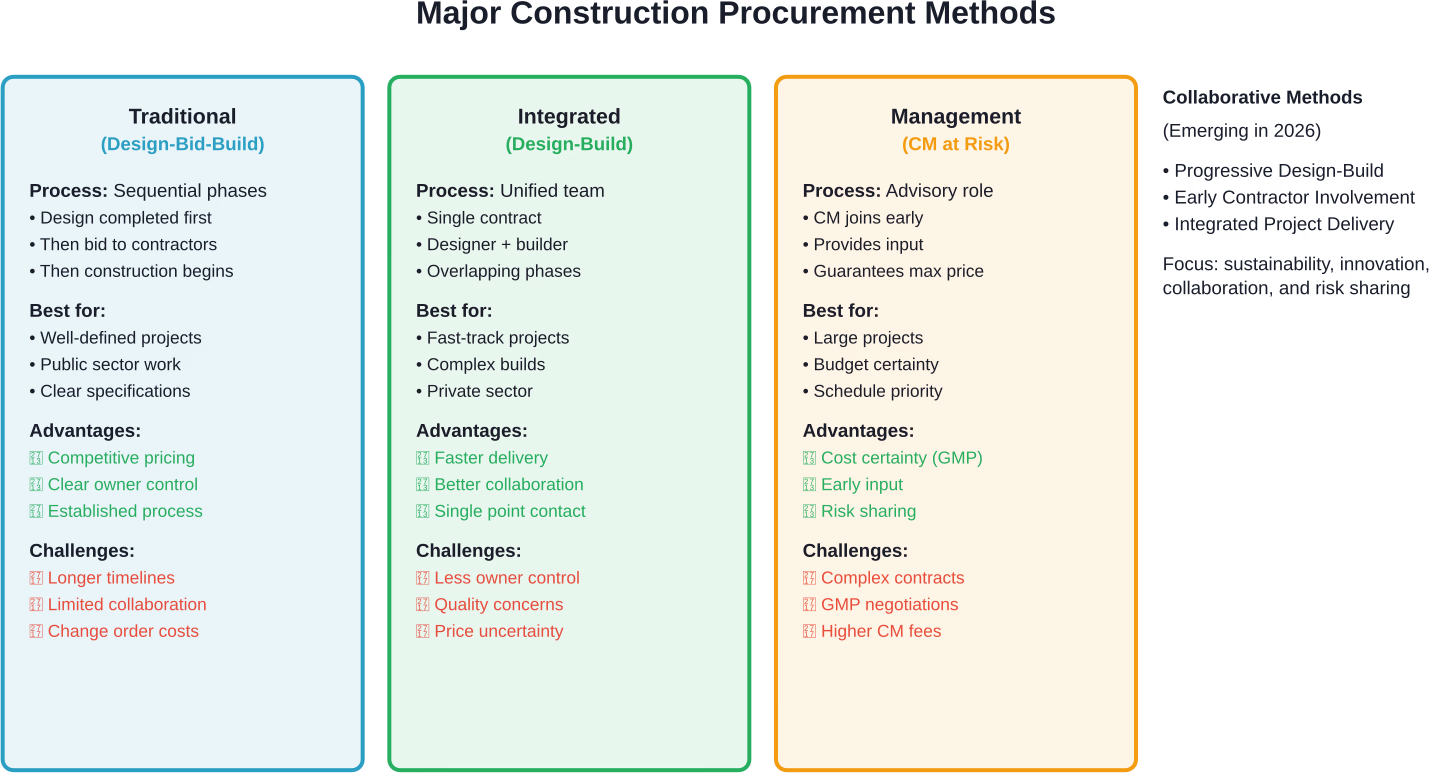
Traditional Procurement (Design-Bid-Build)
The traditional method separates design and construction into distinct phases. The owner hires an architect or engineer to complete the design, then solicits bids from contractors to build according to those plans.
This sequential approach provides clear separation of responsibilities and competitive pricing through the bidding process. But it can lead to longer project timelines and limited collaboration between designers and builders.
Integrated Procurement (Design-Build)
Design-build consolidates design and construction under a single contract. The owner contracts with one entity responsible for both designing and building the project.
This method enables faster project delivery through overlapping design and construction phases. It also improves collaboration since designers and builders work together from the start. However, owners give up some control over design decisions.
Management-Based Procurement (Construction Manager at Risk)
In CM-at-Risk arrangements, a construction manager joins the project team during design to provide cost and schedule input. The CM eventually guarantees a maximum price (GMP) and takes on construction responsibility.
This method balances owner control with contractor expertise and provides cost certainty through the GMP commitment. The early involvement helps identify constructability issues before they become expensive problems.
Collaborative Procurement Methods
Research from Purdue University libraries indicates the construction industry is moving toward collaborative procurement methods like Progressive Design-Build (PDB), Early Contractor Involvement (ECI), and similar approaches that emphasize partnership over adversarial relationships.
These methods focus on sustainability, innovation, and shared risk management—factors increasingly important in modern construction projects.
Key Roles in Construction Procurement
Effective procurement requires coordination across multiple roles, each with distinct responsibilities.
| Rôle | Primary Responsibilities | Key Skills Required
|
|---|---|---|
| Procurement Manager | Oversees procurement strategy, supplier relationships, contract negotiations, and overall purchasing coordination | Negotiation, supplier management, contract law, market analysis |
| Project Manager | Defines project requirements, approves procurement decisions, coordinates with procurement team on timing and priorities | Project planning, scheduling, budget management, communication |
| Estimator | Quantifies material needs, researches pricing, develops cost estimates, and identifies budget risks | Cost analysis, quantity takeoffs, market research, data analysis |
| Purchasing Agent | Issues purchase orders, tracks deliveries, manages supplier communications, processes invoices | Detail orientation, vendor relations, logistics coordination |
| Quality Manager | Establishes specifications, inspects delivered materials, verifies compliance with standards | Quality control, technical knowledge, inspection protocols |
| Legal/Contracts Specialist | Reviews contract terms, ensures regulatory compliance, manages dispute resolution | Contract law, risk assessment, regulatory knowledge |
On smaller projects, one person might wear multiple hats. Larger projects typically have dedicated specialists for each function.
Common Challenges in Construction Procurement
Despite careful planning, procurement teams face recurring challenges that can impact project outcomes.
Supply Chain Disruptions
Global supply chains remain vulnerable to disruptions from geopolitical events, natural disasters, transportation bottlenecks, and manufacturing delays. These disruptions can cause material shortages and price volatility that derail project budgets and schedules.
Building contingency plans, diversifying suppliers, and maintaining buffer inventory for critical materials helps mitigate these risks.
Price Fluctuations and Budget Uncertainty
Construction materials face significant price volatility based on commodity markets, tariffs, and supply-demand imbalances. Industry outlook data from early 2026 shows contractors experiencing dampened expectations amid tariff impacts and economic uncertainties.
Long-term projects are particularly vulnerable when material prices increase between budgeting and purchasing phases. Price escalation clauses and strategic buying can help manage this uncertainty.
Quality Control Issues
Not all suppliers deliver consistent quality. Substandard materials can compromise structural integrity, fail inspections, and require costly rework.
Rigorous supplier vetting, clear specifications, and thorough receiving inspections are essential quality safeguards.
Coordination and Communication Gaps
Construction projects involve numerous stakeholders—owners, designers, general contractors, subcontractors, suppliers, and inspectors. Communication breakdowns between these parties lead to ordering errors, delivery conflicts, and schedule disruptions.
Centralized procurement platforms and regular coordination meetings help keep everyone aligned.
Compliance and Documentation
Construction procurement involves extensive regulatory requirements, contract documentation, and compliance obligations. Federal projects must follow the Federal Acquisition Regulation (FAR), which the GSA maintains and updates regularly.
Incomplete documentation can cause payment delays, failed audits, and legal disputes. Robust record-keeping systems are non-negotiable for successful procurement management.
Best Practices for Construction Procurement Management
Leading construction firms employ proven strategies to optimize their procurement processes and avoid common pitfalls.
Develop a Clear Procurement Strategy Early
Don’t treat procurement as an afterthought. During project planning, establish a comprehensive procurement strategy that identifies what needs to be purchased, when, from whom, and how it will be managed.
This upfront planning prevents reactive, last-minute purchasing that often results in higher costs and rushed decisions.
Build Strong Supplier Relationships
Procurement isn’t just transactional—it’s relational. Cultivating partnerships with reliable suppliers creates mutual benefits. Preferred suppliers often provide better pricing, prioritize delivery during shortages, and work collaboratively to solve problems.
Regular communication, fair payment practices, and long-term commitments strengthen these relationships.
Implement Centralized Procurement Systems
Digital tools including ERP systems, AI-powered forecasting, and building information modeling integration automate procurement steps and strengthen decision-making, according to industry data on construction procurement trends.
These systems provide real-time visibility into spending, inventory levels, and delivery status while reducing manual paperwork and data entry errors.
Standardize Processes and Documentation
Consistent processes reduce errors and improve efficiency. Develop standardized templates for RFPs, contracts, purchase orders, and inspection checklists.
Documentation standards ensure compliance requirements are met and make information easy to find during audits or disputes.
Monitor Performance Metrics
Track key performance indicators like cost variance, on-time delivery rates, quality defect rates, and supplier performance scores. These metrics identify problems early and highlight opportunities for improvement.
Regular performance reviews with suppliers also create accountability and drive continuous improvement.
Plan for Contingencies
Hope for the best but plan for disruptions. Identify alternative suppliers for critical materials, build schedule buffers for long-lead items, and maintain contingency budgets for price increases.
Risk assessment should be ongoing throughout the procurement cycle, not just during initial planning.
Invest in Team Training
Procurement practices evolve. New regulations, technologies, and market conditions require ongoing education. Organizations like the Associated General Contractors of America offer contract documents training and business development resources to help professionals stay current.
Well-trained procurement teams make better decisions and navigate complex situations more effectively.
Validate Procurement Before You Sign

Procurement doesn’t fail at purchase – it fails when what you ordered doesn’t fit, doesn’t connect, or can’t be installed as planned. That’s where delays and changes start. Powerkh reviews the design behind procurement packages before you commit, checking how systems will actually come together on site and where mismatches will show up.
Lock Packages Without Surprises
What you get with Powerkh:
- Clear confirmation that specified systems will fit and connect on site
- Visibility into interface risks before orders are placed
- Detection of missing or inconsistent details in packages
- Early warnings on items that will require changes after delivery
- Confidence that what you procure can be installed as planned
Before you sign off, contact Powerkh and make sure what you’re procuring will work when it hits the site.
The Role of Technology in Modern Construction Procurement
Technology has transformed how construction firms manage procurement, moving from paper-based processes to integrated digital systems.
Enterprise Resource Planning (ERP) Systems
ERP platforms integrate procurement with project management, accounting, and inventory systems. This integration provides unified visibility across projects and enables data-driven decision-making.
Real-time cost tracking helps teams spot budget issues before they escalate into major problems.
Intégration de la modélisation des données du bâtiment (BIM)
BIM software connects 3D design models directly to procurement systems. Teams can extract accurate quantity takeoffs from models, reducing estimation errors and ensuring material orders match actual needs.
This integration also enables clash detection that identifies potential issues before materials are purchased.
IA et analyse prédictive
Artificial intelligence analyzes historical data to forecast material needs, predict price trends, and identify optimal ordering times. Machine learning algorithms can also flag potential supplier risks based on performance patterns.
These capabilities help procurement teams make more strategic decisions with better timing.
Cloud-Based Collaboration Platforms
Cloud platforms enable real-time collaboration among distributed teams. Project stakeholders can access current procurement information, approve purchases, track deliveries, and communicate from anywhere.
This accessibility is particularly valuable for large projects with multiple sites or when team members work remotely.
Internet of Things (IoT) Tracking
IoT sensors and RFID tags provide real-time tracking of materials from manufacturer through delivery to job site. This visibility reduces loss, prevents theft, and enables proactive responses when shipments are delayed.
Smart inventory systems can even trigger automatic reordering when stock levels drop below thresholds.
Procurement in Federal Construction Projects
Government construction projects follow specialized procurement regulations that differ significantly from private sector practices.
The Federal Acquisition Regulation (FAR) establishes uniform policies for acquisition of supplies and services by executive agencies, issued and maintained jointly, pursuant to the Office of Federal Procurement Policy (OFPP) Reauthorization Act, under the statutory authorities granted to the Secretary of Defense, Administrator of General Services, and the Administrator, National Aeronautics and Space Administration.
Recent updates to FAR Part 36, which specifically covers Construction and Architect-Engineer Contracts, include comprehensive revisions with structural reorganization to align with the acquisition lifecycle, according to GSA Class Deviation RFO-2025-36 issued July 22, 2025.
Federal procurement emphasizes transparency, competition, and compliance. Contractors working on government projects must navigate additional requirements for certifications, reporting, and documentation that private projects don’t require.
Sustainability Considerations in Construction Procurement
Environmental concerns increasingly influence procurement decisions. Sustainable procurement involves selecting materials and suppliers based not just on cost and quality but also on environmental impact.
Key sustainability considerations include:
- Sourcing locally produced materials to reduce transportation emissions
- Selecting products with recycled content or sustainable certifications
- Evaluating supplier environmental practices and carbon footprints
- Minimizing material waste through accurate ordering and efficient packaging
- Choosing durable materials that reduce lifecycle replacement needs
Research on procurement method evolution identifies sustainability as one of the modern factors significantly impacting how construction procurement methods are selected and implemented.
Green building certifications like LEED often include procurement requirements that specify minimum percentages of sustainable materials or regional sourcing.
Future Trends in Construction Procurement
Several emerging trends are reshaping construction procurement practices heading into the latter half of 2026.
Increased Automation
Automated procurement systems will handle more routine purchasing decisions, freeing professionals to focus on strategic activities. AI-driven platforms will analyze requirements, compare suppliers, and generate purchase orders with minimal human intervention.
Blockchain for Contract Management
Blockchain technology promises more transparent, secure contract execution and payment processing. Smart contracts could automatically release payments when delivery conditions are met, reducing disputes and payment delays.
Circular Economy Principles
Construction firms are exploring procurement strategies that support material reuse and recycling. This includes sourcing reclaimed materials, designing for disassembly, and partnering with suppliers who take back products at end-of-life.
Préfabrication et construction modulaire
As more construction moves toward factory-based prefabrication, procurement shifts from buying raw materials to purchasing completed assemblies. This changes supplier relationships and requires different quality control approaches.
Greater Supply Chain Transparency
Stakeholders demand more visibility into where materials come from and how they’re produced. Digital tracking systems will provide comprehensive supply chain documentation from raw material extraction through final installation.
Conclusion
Procurement forms the backbone of successful construction project delivery. It’s far more than just buying materials—it’s a strategic function that determines whether projects meet their cost, schedule, and quality objectives.
From selecting the right procurement method to building strong supplier relationships, from leveraging technology to planning for contingencies, effective procurement requires careful planning and skilled execution across multiple disciplines.
As construction projects grow more complex and supply chains face continued uncertainties, procurement expertise becomes increasingly valuable. Organizations that invest in procurement capabilities—through better systems, trained personnel, and strategic processes—position themselves for competitive advantage.
The construction industry continues evolving toward more collaborative procurement approaches that emphasize partnership, sustainability, and innovation. Firms that adapt to these trends while maintaining disciplined procurement fundamentals will deliver better projects more consistently.
Whether managing a small residential build or a major infrastructure project, understanding and implementing sound procurement practices makes the difference between projects that succeed and those that struggle.
Ready to improve construction procurement on your next project? Start by assessing current processes, identifying gaps, and implementing the best practices outlined above. Strong procurement doesn’t happen by accident—it requires intentional strategy and continuous improvement.
Questions fréquemment posées
What is the difference between procurement and purchasing in construction?
Purchasing is the tactical act of buying specific items—issuing purchase orders and completing transactions. Procurement is the broader strategic process that includes planning what to buy, identifying and evaluating suppliers, negotiating contracts, managing relationships, coordinating deliveries, and monitoring performance. Purchasing is a component of the larger procurement function.
Who typically manages procurement on construction projects?
Procurement management varies by project size and organizational structure. Large projects often have dedicated procurement managers or departments. Mid-sized projects might assign procurement duties to project managers or senior estimators. Small projects may have general contractors handling procurement alongside other responsibilities. Regardless of title, effective procurement requires coordination among project managers, estimators, purchasing agents, and quality control specialists.
How much do procurement activities typically cost in construction projects?
Procurement activities can account for 40-70% of total project costs on large-scale construction projects. This percentage includes the actual cost of materials, equipment, and subcontracted services, not just the administrative costs of managing procurement. The administrative overhead for procurement management typically ranges from 2-5% of total procurement spending.
What procurement method is best for fast-track construction projects?
Design-build and Construction Manager at Risk methods work best for fast-track projects because they allow construction to begin before design is fully complete. These integrated approaches enable overlapping design and construction phases, reducing overall project duration. Traditional design-bid-build requires design completion before construction bidding begins, making it too slow for fast-track schedules.
How do construction firms handle procurement during material shortages?
During shortages, successful firms employ several strategies: identifying alternative suppliers and maintaining backup vendor relationships; specifying acceptable substitute materials in project documents; ordering long-lead items early; maintaining strategic inventory of critical materials; building stronger relationships with preferred suppliers who prioritize them during shortages; and including material escalation clauses in contracts to manage price volatility. Proactive communication with design teams about material availability enables timely substitutions when needed.
What role does procurement play in construction project delays?
Procurement directly impacts project schedules. Late material deliveries, incorrect orders, quality defects requiring replacement, and inadequate coordination between procurement and construction schedules are common causes of delays. Effective procurement management prevents these issues through accurate planning, reliable supplier selection, proper delivery coordination, and quality verification. Poor procurement practices can cascade through the entire project schedule, while excellent procurement keeps projects on track.
Are there special procurement requirements for government construction projects?
Yes. Federal construction projects must follow the Federal Acquisition Regulation (FAR), particularly FAR Part 36 which governs Construction and Architect-Engineer Contracts. These regulations mandate competitive bidding procedures, specific contract types, compliance certifications, prevailing wage requirements, domestic preference rules, and extensive documentation. State and local government projects have similar but varying requirements. Government procurement emphasizes transparency, fair competition, and regulatory compliance more heavily than private sector projects. Contractors new to government work should familiarize themselves with applicable regulations or work with consultants experienced in public procurement.

Nos études de cas
Nous avons géré plus de 200 projets BIM et VDC pour les secteurs commerciaux, industriels et résidentiels.
Notre travail comprend
Automatisation de la conception des coffrages
Our client from
California, USA
Automatisation de la conception des plafonds suspendus
Our client from
New York, USA
Automatisation de la conception de l'ossature des murs
Our client from
California, USA