Vous avez des questions ? Contactez nous !
Rejoignez notre équipe !
Demander un devis ou une consultation gratuite

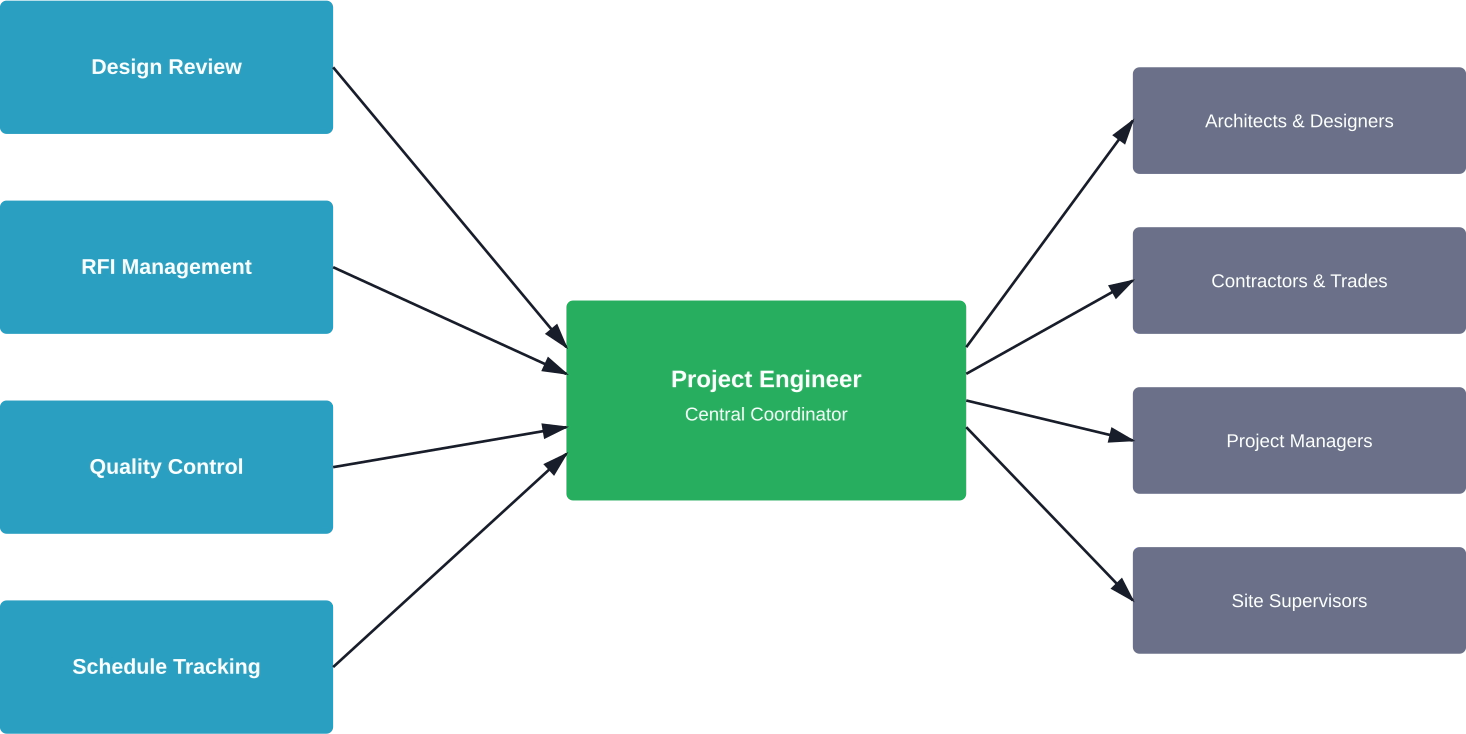
A project engineer in construction bridges the gap between design and field execution, managing technical details, coordinating teams, and ensuring projects meet quality, budget, and schedule requirements. These professionals combine engineering expertise with hands-on project management skills to oversee everything from planning through construction completion. They serve as the critical link between architects, contractors, and stakeholders throughout the building process.
Walk onto any major construction site and there’s someone orchestrating the technical chaos. That’s the project engineer. Not quite the project manager, not exactly a field engineer—this role sits right in the middle, handling the technical backbone of modern construction projects.
The construction industry is experiencing significant growth. According to the Bureau of Labor Statistics, overall employment in construction and extraction occupations is projected to grow faster than the average for all occupations from 2024 to 2034. About 649,300 openings are projected each year, on average. Within this expanding field, project engineers play an increasingly critical role as building projects become more complex and technology-driven.
But what exactly does a project engineer do? How does this role differ from other construction positions? And what does it take to build a career in this field?
Defining the Project Engineer Role
A project engineer in construction serves as the technical specialist who ensures engineering principles are properly applied throughout a building project. They’re responsible for translating design documents into actionable construction plans while managing the day-to-day technical challenges that arise on site.
According to job postings from organizations like the American Society of Civil Engineers, project engineers work both in office settings and at various jobsites, handling everything from reviewing blueprints to coordinating with subcontractors. The position typically falls under titles like Project Engineer, Field Engineer, or Staff Engineer depending on the organization.
Here’s what separates project engineers from similar roles:
| Rôle | Primary Focus | Typical Responsibilities |
|---|---|---|
| Project Engineer | Technical execution and coordination | Design review, RFI management, quality control, technical problem-solving |
| Project Manager | Overall project delivery | Budget, schedule, client relations, contract management |
| Field Engineer | On-site implementation | Daily field activities, crew coordination, material tracking |
| Construction Manager | Strategic oversight | Multiple projects, resource allocation, business development |
The Bureau of Labor Statistics notes that construction managers (a closely related role) plan, coordinate, budget, and supervise construction projects from start to finish, with a 2024 median annual wage of $106,980. Project engineers typically earn somewhat less, working under construction managers while focusing more heavily on technical implementation.
Support Project Engineering With BIM Modeling and Detailing

Project engineers work with drawings, revisions, technical coordination, and documentation throughout the build. Powerkh provides BIM modeling, BIM coordination, structural detailing, prefabrication support, Scan to BIM, and BIM automation. Their team helps turn project drawings and site information into coordinated models, shop drawings, and technical documentation that can be used during delivery.
Need BIM Support for Project Engineering Work?
Talk with Powerkh to:
- build coordinated BIM models
- prepare shop drawings and technical detailing
- support project documentation with modeling and automation
👉 Contact Powerkh to review your drawings, scope, and BIM needs.
Core Responsibilities of Construction Project Engineers
The project engineer’s workday involves juggling technical and administrative tasks. No two days look identical, but certain responsibilities remain constant.
Technical Planning and Design Review
Project engineers spend considerable time reviewing architectural and engineering drawings. They identify potential conflicts between different building systems—maybe the HVAC ductwork clashes with structural beams, or the electrical routing doesn’t account for plumbing runs.
This coordination happens before problems reach the field. Community discussions among construction professionals highlight that catching design issues early can save projects thousands of dollars and weeks of delays.
Managing Requests for Information (RFIs)
When contractors or subcontractors encounter unclear specifications or design conflicts, they submit RFIs. The project engineer reviews these questions, researches the answer (often consulting with design teams), and provides timely responses that keep construction moving forward.
RFI management requires both technical knowledge and communication skills. A backlog of unanswered RFIs can halt entire crews.
Quality Control and Compliance
Project engineers verify that work meets specifications and building codes. They conduct site inspections, document deficiencies, and ensure corrective action happens before moving to the next construction phase.
According to research from Texas A&M University, nearly 98% of construction projects experience delays or budget overruns. Quality control performed by project engineers helps minimize these issues by catching problems before they cascade.
Budget and Schedule Tracking
While project managers own the overall budget and timeline, project engineers track specific technical aspects. They monitor material quantities, labor hours for particular tasks, and technical milestones. This ground-level data feeds into broader project controls.
Coordination de l'équipe
Construction involves dozens of different trades working in sequence or simultaneously. Project engineers coordinate these activities, ensuring electricians don’t need access to areas where concrete is curing, or that structural steel arrives before the crane crew shows up.
The American Society of Civil Engineers recognizes that effective civil engineering services require proper use of the entire project team, including civil engineer professionals, engineering specialists, and engineering technicians working together.
Essential Skills for Construction Project Engineers
Technical knowledge alone won’t cut it. Project engineers need a blend of hard and soft skills to succeed in this multifaceted role.
Technical Competencies
Strong understanding of construction methods, building systems, and materials forms the foundation. Project engineers should be able to read and interpret complex construction drawings, understand structural principles, and grasp how different building systems integrate.
Proficiency with industry software is increasingly critical. That includes project management platforms, Building Information Modeling (BIM) tools, scheduling software, and document management systems.
According to University of Washington research on construction project management, common software skills include proficiency in design and project-control tools that help manage the increasingly complex demands of modern construction.
Problem-Solving Abilities
Construction sites generate constant challenges. Materials arrive damaged, weather delays critical activities, design assumptions don’t match field conditions. Project engineers need creative problem-solving skills and the ability to make sound decisions under pressure.
The Texas A&M College of Architecture notes that construction managers ideally possess strong emotional intelligence and adaptability, with the ability to communicate with various stakeholders—skills equally important for project engineers.
Compétences en matière de communication
Project engineers translate between technical language and practical field terminology. They write clear RFI responses, present technical information to non-technical audiences, and document decisions for future reference.
Poor communication creates expensive mistakes. Clear, timely information sharing prevents them.
Time Management and Organization
Juggling multiple priorities simultaneously requires excellent organizational skills. Project engineers track numerous action items, deadlines, and deliverables while responding to urgent field issues that pop up without warning.
Educational Pathways and Career Entry
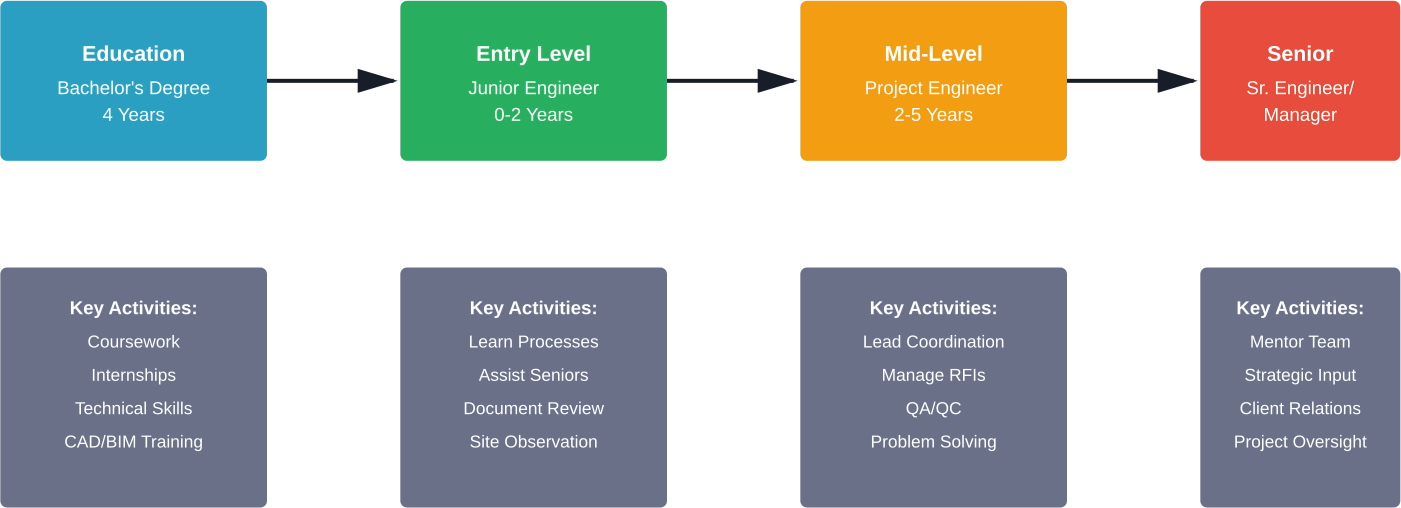
Most project engineers hold bachelor’s degrees in engineering or construction-related fields. According to the Bureau of Labor Statistics, large construction firms typically prefer candidates who have both construction experience and a bachelor’s degree in a construction-related field.
Common degree programs include:
- Génie civil
- Ingénierie de la construction
- Gestion de la construction
- Ingénierie architecturale
- Mechanical or Electrical Engineering (for specialized projects)
LSU Online notes that their new Bachelor of Science in Construction Engineering program merges the technical foundation of civil engineering with practical, project-focused construction management skills—exactly the combination project engineers need.
Some professionals enter the field through engineering technology programs. The Bureau of Labor Statistics reports that civil engineering technologists and technicians, who help civil engineers plan, design, and build infrastructure projects, earned a median annual wage of $64,200 in May 2024.
Getting That First Project Engineer Position
Entry into project engineering typically requires some combination of education and hands-on experience. Internships during college provide crucial exposure to construction environments and help students understand whether this career path suits them.
Many project engineers start in assistant or junior positions, gradually taking on more responsibility as they demonstrate competence. Real-world problem-solving ability often matters as much as academic credentials.
Salary Expectations and Job Outlook
Compensation for project engineers varies based on experience, location, project type, and industry sector. Based on data compiled from multiple construction career sources, here’s the general salary landscape:
| Experience Level | Annual Salary Range (USD) | Typical Responsibilities |
|---|---|---|
| Entry-Level (0-1 years) | $60,000 – $85,000 | Basic coordination, document management, learning processes |
| Mid-Level (1-3 years) | $65,000 – $91,000 | Independent RFI management, quality control, team coordination |
| Senior (4-6 years) | $73,000 – $100,000 | Complex problem-solving, mentoring, strategic input |
One job posting from Foundation Constructors, Inc. advertised a project engineer position at $70,000 to $80,000 per year plus benefits and company ownership opportunities—right in line with these ranges.
The broader job outlook appears strong. According to the Bureau of Labor Statistics, employment of construction managers is projected to grow 9% from 2024 to 2034, faster than the average for all occupations.
This growth is driven by continued infrastructure investment, building modernization, and the complexity of contemporary construction projects that require specialized technical expertise.
Technology and Modern Tools
Construction technology has evolved dramatically. Project engineers now work with sophisticated digital tools that would have been science fiction two decades ago.
Building Information Modeling (BIM) has transformed how project engineers coordinate design. Instead of overlaying 2D drawings, BIM creates three-dimensional models where conflicts between building systems become immediately visible.
Project management software centralizes scheduling, budget tracking, and communication. Cloud-based platforms mean field engineers can access updated drawings and specifications from tablets on site rather than working from outdated printed plans.
Drones provide aerial site documentation. Laser scanning captures precise as-built conditions. Augmented reality lets teams visualize how finished construction will look before breaking ground.
These tools don’t replace engineering judgment—they enhance it. Project engineers who embrace technology and continuously update their skills maintain competitive advantages in the job market.
Project Engineer vs. Project Manager
Confusion between these roles is common. Both work on construction projects, both coordinate activities, both solve problems. But their focus differs significantly.
Project managers own the overall project outcome. They manage budgets, negotiate contracts, maintain client relationships, and make high-level strategic decisions. Their view is broad, covering the entire project from conception through closeout.
Project engineers dive into technical details. They ensure the engineering is sound, the design is buildable, and field execution matches specifications. Their view is deep, focusing on the technical quality and coordination of the actual construction work.
In practice, the project engineer often reports to the project manager. They work closely together, with the project engineer providing technical expertise that informs the project manager’s strategic decisions.
Some professionals start as project engineers and eventually transition into project management roles as they gain experience and develop business skills beyond pure technical expertise.
Working Across Industries
Project engineers work across multiple construction sectors, each with unique characteristics:
- Commercial Construction: Office buildings, retail centers, and mixed-use developments. These projects often involve complex coordination between numerous trades and tight urban site constraints.
- Infrastructure: Roads, bridges, tunnels, and utility systems. Infrastructure projects require deep understanding of civil engineering principles and often involve public agencies with specific regulatory requirements.
- Industrial: Manufacturing facilities, warehouses, and distribution centers. Industrial projects frequently include specialized systems and equipment installation that requires close coordination with operations teams.
- Residential: While less common for dedicated project engineers, large residential developments and high-rise apartments may employ project engineers to manage technical coordination.
The fundamental skills transfer across sectors, though each requires specific technical knowledge about materials, methods, and regulations particular to that industry.
Building a Future in Construction Engineering
The construction industry needs skilled project engineers. Projects are getting more complex, technology is advancing rapidly, and the demand for infrastructure continues growing.
For those who enjoy solving practical problems, working with diverse teams, and seeing tangible results from their efforts, project engineering offers a rewarding career path. The work is challenging but rarely boring. Every project brings new technical puzzles to solve.
Success requires continuous learning. Technology evolves, building codes change, new construction methods emerge. Project engineers who stay current with industry developments position themselves for advancement into senior technical roles or management positions.
The path forward is clear: gain solid educational foundation, pursue hands-on experience, develop both technical and interpersonal skills, and embrace the complexity that makes construction projects fascinating.
Ready to explore this career? Start by researching construction engineering programs, reaching out to project engineers working in the field, or pursuing internships that provide exposure to real construction environments. The industry needs talented people who can bridge the gap between design and reality.
Questions fréquemment posées
Do project engineers need a Professional Engineer (PE) license?
Not always. Many project engineers work without a PE license, though it can improve career opportunities and is sometimes required for senior roles.
What’s the difference between a project engineer and a field engineer?
Field engineers focus on on-site work, while project engineers handle both field and office responsibilities, including coordination and technical documentation.
Can project engineers work remotely?
Partially. Some tasks can be done remotely, but regular on-site presence is required for coordination and inspections.
How long does it take to become a project engineer?
Typically four to six years, including a degree and initial work experience.
What industries hire the most project engineers?
Construction, infrastructure, and industrial sectors are the main employers of project engineers.
Is project engineering a good career for career changers?
It can be, especially for those with technical or construction backgrounds, though others may need additional training.
What’s the typical work schedule for project engineers?
Schedules often exceed 40 hours per week, with longer hours during busy project phases.

Nos études de cas
Nous avons géré plus de 200 projets BIM et VDC pour les secteurs commerciaux, industriels et résidentiels.
Notre travail comprend
Automatisation de la conception des coffrages
Our client from
California, USA
Automatisation de la conception des plafonds suspendus
Our client from
New York, USA
Automatisation de la conception de l'ossature des murs
Our client from
California, USA


