Vous avez des questions ? Contactez nous !
Rejoignez notre équipe !
Demander un devis ou une consultation gratuite

A construction project manager is a professional who oversees construction projects from planning to completion, managing budgets, schedules, teams, and resources. They coordinate contractors, ensure compliance with regulations, and serve as the primary point of contact between stakeholders, all while keeping projects on time and within budget.
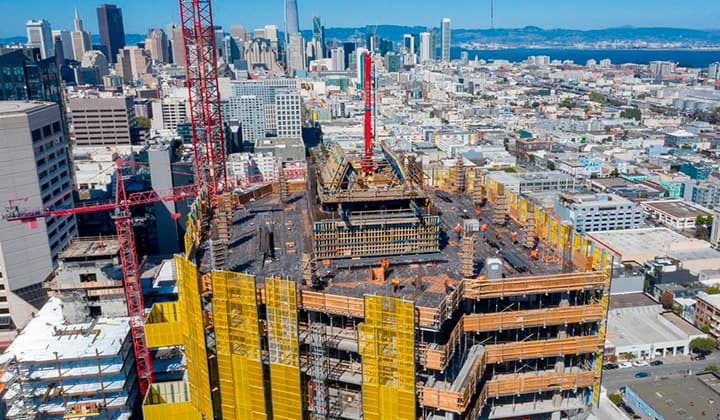
Walk past any construction site and you’ll see cranes lifting materials, crews laying foundations, and supervisors coordinating the chaos. But behind the visible action, there’s someone orchestrating the entire operation—the construction project manager.
This role sits at the intersection of planning, execution, and leadership. Without skilled project managers, even the most ambitious construction ventures can spiral into cost overruns and delays.
The construction industry contributes $2.2 trillion to the U.S. economy, accounting for 4.5% of GDP and employing 8.2 million people, according to Texas State University research. That massive scale demands exceptional coordination. Here’s the thing though—nearly 70% of construction projects experience delays, and cost overruns often balloon budgets by 20-30% due to inaccurate estimates and unforeseen changes.
That’s where construction project managers make their mark.
What Is a Construction Project Manager?
A construction project manager is the professional responsible for planning, coordinating, and overseeing construction projects from initial conception through final completion. They manage the big picture while handling countless granular details that determine whether a project succeeds or fails.
These professionals don’t swing hammers or operate heavy machinery. Instead, they manage the people who do.
Their domain includes residential buildings, commercial properties, industrial facilities, highways, and government infrastructure. Every type of construction requires someone to ensure that architectural plans become physical reality—on schedule and within budget.
The U.S. Bureau of Labor Statistics projects employment of construction managers to grow 9% from 2024 to 2034. The median annual wage for construction managers was $106,980 in May 2024, though compensation varies widely based on experience, location, and project complexity.
Improve Project Coordination With Powerkh

In construction, project managers often need better visibility into design, coordination issues, and documentation status. Powerkh supports that side of the work through BIM modeling, coordination, Scan to BIM, automation, and detailing services. The company helps teams turn drawings and project data into models and documents that are easier to manage during execution.
Need Better BIM Coordination for Project Delivery?
Talk with Powerkh to:
- build and manage accurate BIM models
- track design changes through coordinated workflows
- support fabrication, detailing, and project documentation
👉 Contact Powerkh to review your drawings, scope, and BIM needs.
Core Responsibilities of a Construction Project Manager
Construction project managers juggle multiple responsibilities simultaneously. Their workday rarely looks the same twice, but certain core duties define the role.
Budget Management and Cost Control
Every construction project operates within financial constraints. Project managers develop initial budgets, track expenditures throughout the build, and make adjustments when circumstances change.
They review contractor bids, negotiate pricing for materials and labor, and identify opportunities to reduce costs without compromising quality. When unexpected expenses arise—and they always do—project managers determine how to absorb those costs or secure additional funding.
Cost overruns plague most projects. Effective budget management separates successful builds from financial disasters.
Schedule Development and Timeline Management
Time is money in construction. Project managers create detailed schedules that outline when each phase must begin and end. They coordinate multiple teams working on overlapping tasks, ensuring that electricians don’t arrive before framers finish their work.
Weather delays, material shortages, and labor issues constantly threaten timelines. Project managers adapt schedules in real-time, reprioritizing tasks to minimize delays and keep the overall project moving forward.
According to industry research, maintaining realistic timelines requires understanding how small problems can cascade into interconnected setbacks that crush a venture.
Team Coordination and Contractor Management
Construction projects involve dozens or even hundreds of workers from multiple companies. General contractors, subcontractors, material suppliers, architects, engineers, and inspectors all need coordination.
Project managers serve as the central hub for communication. They conduct regular meetings, resolve conflicts between teams, and ensure everyone understands current priorities and deadlines.
Selecting reliable subcontractors matters enormously. Project managers evaluate potential partners based on past performance, pricing, and capacity to deliver quality work on schedule.
Quality Assurance and Compliance
Buildings must meet strict safety codes, zoning regulations, and quality standards. Project managers ensure all work complies with local, state, and federal requirements.
They coordinate inspections at critical milestones, address any deficiencies inspectors identify, and verify that materials and methods meet specifications. Cutting corners might save time initially, but creates liability issues and potential structural problems down the road.
Quality control protects both the project owner and the construction firm’s reputation.
Communication avec les parties prenantes
Project managers act as the primary point of contact between everyone involved in a build. They update owners on progress, discuss design changes with architects, negotiate with contractors, and respond to community concerns.
Clear communication prevents misunderstandings that lead to expensive rework. When scope changes occur—and they frequently do—project managers document those changes and ensure all parties agree on the implications for cost and schedule.
Risk Management and Problem Solving
Construction sites present endless opportunities for things to go wrong. Material deliveries arrive late. Equipment breaks down. Weather creates hazardous conditions. Design drawings contain errors.
Project managers anticipate potential risks and develop contingency plans. When problems occur despite precautions, they implement solutions quickly to minimize impact on the overall project.
This requires both technical knowledge and creative thinking. Sometimes the best solution isn’t obvious.
Construction Project Manager vs. Construction Manager
These titles sound similar and people often use them interchangeably. But they represent distinct roles with different focuses.
Understanding the difference matters for anyone considering a construction career or hiring for these positions.
Scope and Focus
Construction project managers focus on the overall project delivery—the big picture. They manage budgets, schedules, contracts, and stakeholder relationships across the entire build.
Construction managers typically focus more on on-site execution. They oversee daily operations, manage crews directly, ensure work meets quality standards, and handle immediate logistical challenges.
Think of it this way: project managers ask “Are we on track to finish on time and within budget?” Construction managers ask “Did the concrete pour go smoothly today?”
Strategic vs. Tactical
Project managers operate more strategically. They develop comprehensive plans, allocate resources across multiple phases, and make decisions that affect the project’s overall success.
Construction managers work more tactically. They implement the plans project managers create, adapting to daily realities on the ground.
Both roles require leadership, but they exercise it differently. Project managers lead through planning and coordination. Construction managers lead through direct supervision and hands-on problem solving.
Office vs. Field Work
Project managers split time between offices and job sites. They attend meetings, review documents, negotiate contracts, and coordinate with stakeholders who aren’t physically present at the build.
Construction managers spend most of their time on-site. They’re visible to crews, available to answer questions, and positioned to spot problems before they escalate.
Real talk: many professionals transition from construction management to project management as they gain experience. The on-site knowledge construction managers develop becomes invaluable when moving into broader project oversight.
| Aspect | Project Manager | Construction Manager |
|---|---|---|
| Primary Focus | Overall project delivery | On-site execution |
| Key Responsibilities | Budget, schedule, contracts | Daily operations, crew supervision |
| Work Location | Office and site visits | Primarily on-site |
| Decision Level | Strategic planning | Tactical implementation |
| Stakeholder Interaction | Owners, architects, executives | Crews, subcontractors, suppliers |
| Typical Background | Business or engineering degree | Field experience, trade background |
Essential Skills for Construction Project Managers
Technical knowledge alone doesn’t make someone an effective project manager. The role demands a diverse skill set that combines hard and soft competencies.
Technical and Industry Knowledge
Project managers need solid understanding of construction methods, materials, and processes. They don’t necessarily need to perform trades themselves, but they must comprehend what each trade involves.
Reading blueprints, understanding building codes, and recognizing structural systems all fall within essential technical knowledge. This expertise enables informed decision-making and credible communication with specialized contractors.
According to construction industry analyst Johnathan E. Mitchell writing in HR Future, there’s a “discrepancy between the existing workforce’s skills and the emerging requirements of modern construction practices.” Emerging techniques and technologies address diverse industry challenges, but only when project managers understand how to implement them.
Leadership and Team Management
Construction projects succeed or fail based on people. Project managers must motivate diverse teams, resolve interpersonal conflicts, and create environments where everyone works toward common goals.
This involves recognizing when team members need support, delegating appropriately, and holding people accountable for commitments. Strong leaders inspire confidence without micromanaging.
Compétences en matière de communication
Project managers constantly translate between different languages—not literally, but professionally. They explain technical concepts to non-technical owners, convey owner priorities to contractors, and facilitate understanding among specialists who think differently.
Written communication matters too. Clear documentation prevents disputes and provides reference points when memories fade or personnel change.
Problem-Solving and Critical Thinking
No construction project proceeds exactly as planned. Materials arrive damaged. Subcontractors underperform. Design conflicts emerge during installation.
Effective project managers analyze problems quickly, consider multiple solutions, and make decisions with incomplete information. They balance ideal outcomes against practical constraints.
Financial Acumen
Managing multimillion-dollar budgets requires understanding cost accounting, cash flow, and financial forecasting. Project managers review invoices, track expenditures against budgets, and project future costs based on current trends.
They negotiate pricing, evaluate value propositions, and make trade-offs between cost, quality, and schedule. Financial discipline protects profitability.
Technology Proficiency
Modern construction relies on specialized software for scheduling, budgeting, drawing management, and communication. Project managers use tools like project management platforms, building information modeling (BIM), and collaboration software.
Comfort with technology improves efficiency and enables data-driven decision making. The industry continues adopting new tools, so adaptability matters more than mastering any single platform.
Career Path and Education
People enter construction project management through various routes. There’s no single correct path, though certain approaches offer advantages.
Educational Background
Many project managers hold bachelor’s degrees in construction management, civil engineering, architecture, or related fields. These programs provide foundational knowledge about construction processes, materials science, structural systems, and project planning.
Some professionals earn business degrees with construction industry experience. Others come from trade backgrounds and develop project management skills through experience and continuing education.
Graduate programs like Texas A&M’s online Master of Science in Construction Management help professionals advance their careers by developing strategic thinking and leadership capabilities beyond technical skills.
Experience Requirements
Most project managers start in entry-level roles—assistant project managers, project engineers, or field engineers. They learn by supporting experienced managers, handling discrete portions of larger projects, and gradually assuming more responsibility.
The Associated General Contractors (AGC) offers an Advanced Project Manager Course designed for experienced construction professionals with at least eight years of field-tested expertise. This immersive program tackles advanced concepts like negotiating with confidence and delivering lasting results.
Real-world experience can’t be replaced. Book knowledge provides frameworks, but managing actual builds teaches judgment.
Certifications and Professional Development
Professional certifications demonstrate competency and commitment. The Project Management Institute (PMI) offers credentials like the Project Management Professional (PMP) and the PMI-PMOCP™ (PMO Certified Professional).
AGC’s Construction Project Manager Course helps professionals hone skills necessary to work efficiently, increase jobsite productivity, and propel construction businesses forward.
Continuing education keeps project managers current with evolving building codes, new materials, emerging technologies, and best practices.
The Project Lifecycle: Pre-Construction Through Closeout
Construction project managers guide builds through distinct phases, each with unique challenges and priorities.
Planification de la pré-construction
This phase determines whether projects succeed or struggle. Project managers participate in feasibility studies, help develop budgets, create preliminary schedules, and identify potential risks.
They work with architects and engineers to refine designs, review constructability, and flag issues before construction begins. Proper pre-planning correlates directly with a company’s bottom line.
Securing permits, arranging financing, and selecting contractors all happen during pre-construction. Thoroughness here prevents expensive changes later.
Mobilization and Early Execution
Once construction begins, project managers coordinate site mobilization—establishing temporary facilities, delivering initial materials, and ensuring crews have what they need to start work.
Early execution sets the tone. Project managers establish communication rhythms, clarify expectations, and demonstrate how problems will be addressed. Building strong working relationships during this phase pays dividends throughout the project.
Active Construction
This phase consumes most of the project timeline. Project managers monitor progress against schedules, track costs against budgets, coordinate inspections, and manage the inevitable changes that arise.
They conduct regular site meetings, review contractor payment applications, update stakeholders, and maintain detailed documentation. The work can be intense, with multiple urgent issues demanding attention simultaneously.
Closeout and Handover
As construction nears completion, project managers coordinate final inspections, compile closeout documentation, and create punch lists of remaining items.
They ensure contractors complete all warranty paperwork, deliver operation manuals, and train owner personnel on building systems. Final walkthroughs verify that everything functions as designed.
Successful closeouts leave owners satisfied and create positive references for future work.
Challenges Construction Project Managers Face
The role comes with significant pressures and ongoing obstacles that test even experienced professionals.
Managing Conflicting Priorities
Owners want high quality and low costs. Contractors want profitable margins and reasonable timelines. Architects want design integrity preserved. Regulators want strict code compliance.
Project managers navigate these competing interests, finding compromises that satisfy stakeholders without compromising project fundamentals. Not everyone gets everything they want.
Dealing with Uncertainty
Construction inherently involves unknowns. Underground utilities appear in unexpected locations. Soil conditions differ from geotechnical reports. Existing structures contain hazardous materials not identified during initial assessments.
Project managers can’t eliminate uncertainty, but they can build contingencies and maintain flexibility to adapt when surprises occur.
Labor and Supply Chain Issues
Skilled labor shortages affect many markets. Material costs fluctuate. Supply chains experience disruptions. These external factors create constraints project managers must work within.
Building relationships with reliable subcontractors and suppliers helps, but doesn’t eliminate the challenge entirely.
Technology Adoption
New construction technologies offer productivity improvements and better outcomes. But implementation requires investment, training, and workflow changes that can meet resistance.
Project managers must balance innovation’s benefits against disruption to established processes. Sometimes the cutting edge bleeds.
The Impact of Construction Project Managers
Skilled project management creates ripple effects beyond individual builds.
According to the Associated General Contractors of America, every $1 billion spent on construction creates an average of 6,000+ jobs. Managing those investments effectively maximizes economic impact.
Successful projects deliver lasting value. Buildings serve communities for decades. Infrastructure enables commerce and connectivity. Poor project management wastes resources and creates structures that underperform or require expensive repairs.
Project managers also shape organizational capabilities. They mentor junior team members, develop improved processes, and build institutional knowledge that elevates entire companies.
Tools and Technologies Project Managers Use
Technology has transformed how construction projects are managed. Modern project managers rely on various digital tools.
Project Management Software
Platforms designed specifically for construction help managers track schedules, budgets, documents, and communications in centralized systems. These tools provide visibility across all project aspects and enable data-driven decisions.
Modélisation des données du bâtiment (BIM)
BIM creates three-dimensional digital representations of buildings. Project managers use these models to visualize constructability issues, coordinate systems, and communicate design intent to contractors.
BIM reduces conflicts between different building systems and helps teams identify problems before construction begins, when changes cost less.
Plateformes de collaboration
Cloud-based systems enable real-time communication and document sharing among distributed teams. Field personnel access current drawings on tablets. Changes get communicated instantly rather than waiting for updated paper plans.
Mobile Applications
Apps bring project management capabilities to job sites. Managers conduct inspections, document conditions, create punch lists, and update schedules without returning to offices.
Getting Started in Construction Project Management
For those considering this career path, several steps can help build the foundation for success.
Gaining relevant education provides essential knowledge. Whether through formal degree programs or industry training courses, understanding construction processes, project planning, and business fundamentals creates a strong base.
Seeking entry-level opportunities in construction—even in support roles—builds practical knowledge. Observing experienced project managers, asking questions, and volunteering for responsibilities demonstrates initiative.
Developing both technical and interpersonal skills matters. Construction combines engineering, business, and human dynamics. Professionals who can bridge these domains excel.
Building a professional network opens doors. Industry associations, professional events, and mentorship relationships provide learning opportunities and career advancement paths.
Now, here’s what really matters: construction project management offers the chance to create tangible impact. Every completed building, bridge, or facility represents months or years of coordinated effort. Project managers orchestrate that complexity, turning architectural visions into physical reality.
The role demands versatility, resilience, and continuous learning. Markets evolve. Technologies advance. Regulations change. Successful project managers adapt while maintaining focus on fundamental objectives—delivering quality projects on time and within budget.
For those drawn to leadership, problem-solving, and seeing the direct results of their work, construction project management provides a challenging and rewarding career. The industry needs skilled professionals who can navigate complexity and drive successful outcomes.
The buildings around us didn’t appear by accident. Behind each one stands a project manager who coordinated the chaos, solved countless problems, and kept everything moving toward completion. That’s the role. That’s the challenge. That’s the opportunity.
Questions fréquemment posées
What degree do you need to become a construction project manager?
Most professionals hold bachelor’s degrees in construction management, engineering, or architecture, though some enter through experience and certifications.
How much do construction project managers earn?
Salaries vary widely depending on experience and location, with higher earnings for senior managers and complex projects.
What’s the difference between a construction project manager and a general contractor?
General contractors handle construction work directly, while project managers coordinate the entire project, including contractors, budgets, and schedules.
Do construction project managers need certifications?
Certifications are not required but help demonstrate expertise and improve career opportunities.
What percentage of construction projects experience delays?
A large portion of projects experience delays due to factors like planning issues, cost changes, and unexpected conditions.
Can you become a construction project manager without a degree?
Yes. Many professionals advance through field experience, certifications, and demonstrated leadership skills.

Nos études de cas
Nous avons géré plus de 200 projets BIM et VDC pour les secteurs commerciaux, industriels et résidentiels.
Notre travail comprend
Automatisation de la conception des coffrages
Our client from
California, USA
Automatisation de la conception des plafonds suspendus
Our client from
New York, USA
Automatisation de la conception de l'ossature des murs
Our client from
California, USA