Vous avez des questions ? Contactez nous !
Rejoignez notre équipe !
Demander un devis ou une consultation gratuite

Construction project management is the specialized discipline of planning, coordinating, and controlling construction projects from initiation to completion. It encompasses managing budgets, schedules, quality, safety, and teams to deliver buildings and infrastructure on time and within budget while meeting all specifications and regulatory requirements.
Every building, bridge, and infrastructure project starts as a concept. Turning that concept into reality requires orchestration across dozens of moving parts—workers, materials, equipment, permits, budgets, and timelines.
That’s where construction project management comes in.
Construction project management is the practice of planning, coordinating, and controlling a construction project from inception through completion. It’s distinct from general project management because it deals with physical structures, complex regulations, weather dependencies, and the coordination of specialized trades.
The construction industry accounts for approximately 9% of all jobs in Australia (around 1.3 million people), making it one of the country’s largest employment sectors. Behind every successful project is a construction manager ensuring everything runs smoothly.
But what exactly does construction project management involve? What skills matter? And how do these professionals keep multimillion-dollar projects on track?
Let’s break it down.
Understanding Construction Project Management
Construction project management involves overseeing all aspects of a building project. Unlike other industries where project management might focus primarily on deliverables and deadlines, construction adds layers of complexity: physical site conditions, safety regulations, weather impacts, supply chain logistics, and the coordination of multiple specialized contractors.
At its core, construction project management ensures that projects are delivered:
- On schedule
- Within budget
- To specified quality standards
- In compliance with regulations and safety requirements
- With effective coordination among all stakeholders
The construction manager acts as the central hub connecting owners, architects, engineers, contractors, subcontractors, suppliers, and regulatory agencies. They translate design intent into built reality.
Here’s the thing though—construction project management isn’t just about keeping everyone busy. It’s about strategic sequencing, risk mitigation, and making hundreds of daily decisions that ripple through the entire project.
The Scale and Impact
Construction projects range dramatically in size and complexity. A residential renovation might cost $50,000 and take three months. A major infrastructure project can exceed billions and span decades.
According to ASCE reporting on risk management tools, the difference in risk magnitude matters significantly. A risk with potential $10,000 impact receives different treatment than one with $1 million potential impact. Construction managers must constantly evaluate and prioritize based on these realities.
Risk assessment becomes particularly critical on large infrastructure projects.
Core Responsibilities of Construction Project Managers
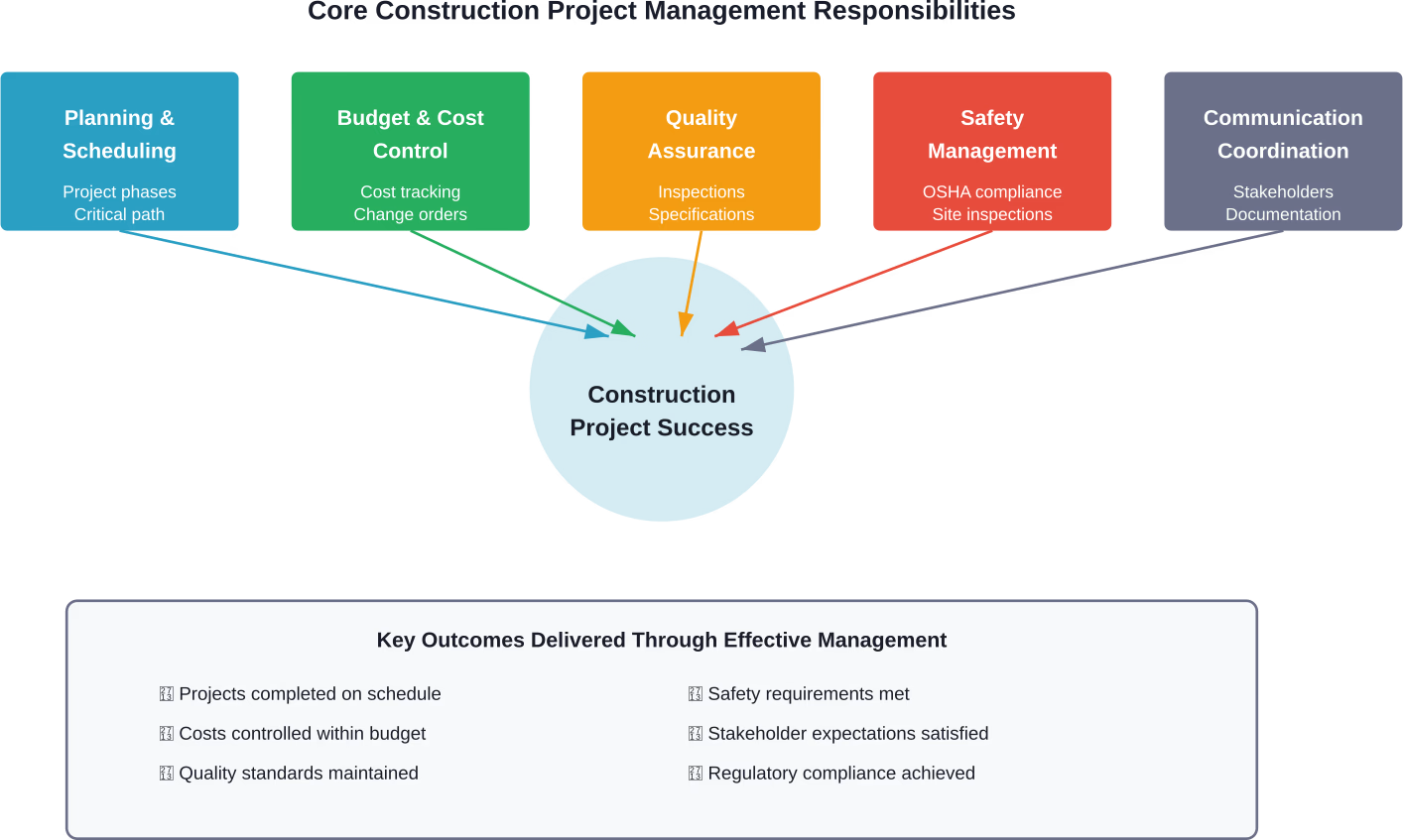
What does a construction project manager actually do day-to-day? The role blends technical knowledge, business acumen, and people management across several key areas.
Planning and Scheduling
Before ground breaks, construction managers develop comprehensive project plans. This includes:
- Breaking the project into phases and tasks
- Sequencing work to avoid conflicts
- Estimating duration for each activity
- Identifying critical path items that can’t be delayed
- Coordinating with multiple trades and contractors
Scheduling isn’t a one-time activity. Construction managers continuously update schedules as conditions change, delays occur, or scope modifications arise.
Budget Management and Cost Control
Construction managers develop initial budgets and track expenses throughout the project lifecycle. This involves:
- Estimating material, labor, and equipment costs
- Managing change orders that affect budget
- Tracking actual spending against projections
- Identifying cost overruns early
- Finding cost-saving opportunities without sacrificing quality
Financial control is critical. Projects can quickly exceed budget if costs aren’t monitored closely. Effective managers identify problems early when corrections are still possible.
Quality Assurance and Control
Construction managers ensure work meets specifications and standards. They:
- Review plans and specifications
- Inspect work at key milestones
- Verify materials meet requirements
- Address deficiencies promptly
- Conduct final walkthroughs before handover
Quality control prevents costly rework and ensures the finished project performs as intended.
Safety Management
Construction sites present inherent hazards. Project managers implement safety programs, conduct regular inspections, and ensure compliance with OSHA regulations. Falls remain a leading cause of construction fatalities—OSHA’s National Safety Stand-Down event on May 7, 2025 engaged more than 1,800 construction workers and stakeholders at a worksite in Bethesda, Maryland specifically to address fall prevention.
Safety isn’t just regulatory compliance. It directly impacts project performance, worker morale, and company reputation.
Communication and Coordination
Anthony Reneaud, P.E., who has led multibillion-dollar construction projects and has three decades of experience in construction management, identifies responsiveness as the top trait construction professionals want from engineers. After technical expertise grabs attention, it’s the soft skill of responsiveness that builds successful working relationships.
Construction managers coordinate:
- Daily communications with contractors and subcontractors
- Regular owner updates on progress and issues
- Coordination meetings with design teams
- Permit and inspection scheduling with authorities
- Conflict resolution among project stakeholders
Real talk: much of construction management is communication. Getting the right information to the right people at the right time prevents most problems.
The Construction Project Management Process
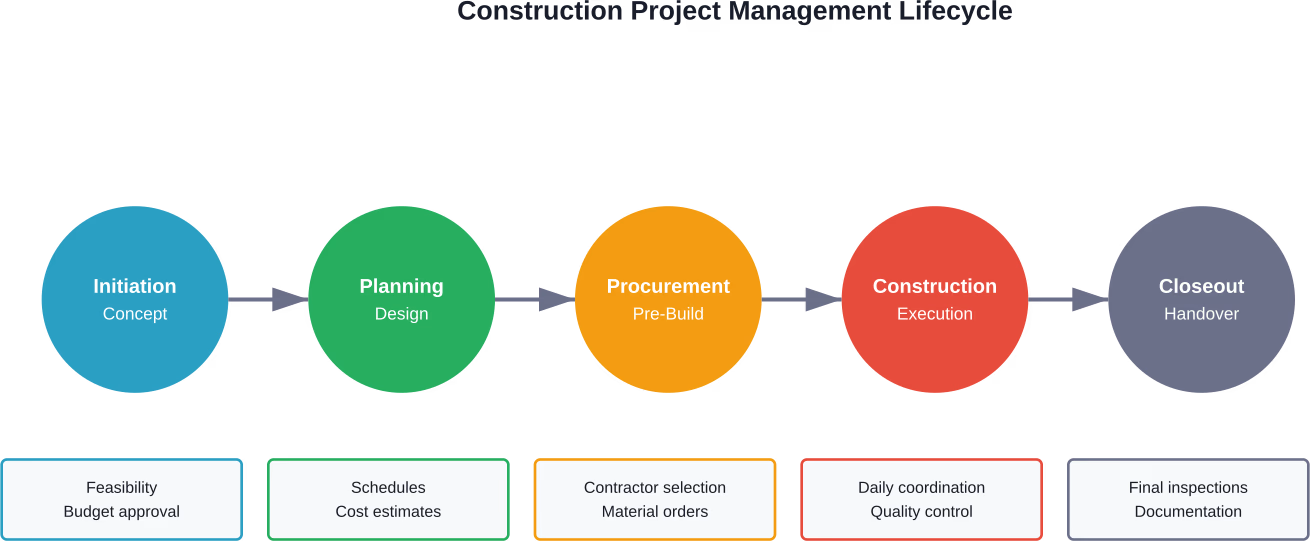
Construction projects follow a structured lifecycle. While specific phases vary by project type and delivery method, most follow this general progression.
Initiation and Concept Development
Projects begin with an idea and feasibility assessment. Owners identify needs, establish preliminary budgets, and determine whether the project makes sense. Construction managers may participate in feasibility studies, helping owners understand realistic costs and schedules.
Planning and Design
Once approved, projects enter detailed planning. Architects and engineers develop designs. Construction managers contribute constructability reviews—evaluating whether designs can be built efficiently and cost-effectively.
Planning includes:
- Detailed cost estimates
- Project schedules with milestones
- Procurement strategies for materials and equipment
- Risk identification and mitigation plans
- Safety plans and protocols
Thorough planning reduces problems during construction. Issues caught on paper are exponentially cheaper to fix than those discovered in the field.
Procurement and Pre-Construction
Construction managers coordinate procurement of contractors, subcontractors, materials, and equipment. This phase includes:
- Bid solicitation and evaluation
- Contract negotiations
- Supplier selection
- Pre-construction meetings
- Site preparation
Strong procurement practices secure quality resources at competitive prices. Poor procurement decisions create problems throughout construction.
Construction Execution
This is where plans become physical reality. Construction managers oversee daily operations:
- Coordinating multiple trades and contractors
- Monitoring progress against schedule
- Tracking costs and approving payments
- Resolving conflicts and problems
- Ensuring safety compliance
- Managing change orders
- Maintaining quality standards
The construction phase demands constant attention and quick decision-making. Small delays compound quickly if not addressed.
Closeout and Handover
As construction completes, managers coordinate final activities:
- Punch list completion
- Final inspections and approvals
- System testing and commissioning
- Documentation compilation
- Training for owners and operators
- Warranty information transfer
Proper closeout ensures owners receive a fully functional facility with all necessary documentation for ongoing operations and maintenance.
Keep Your Project Under Control Between Planning And Site

Construction project management is often described as timelines, budgets, and coordination, but most issues don’t come from planning itself, they come from how design decisions hold up once work begins.
Powerkh works alongside that process, focusing on the link between design and execution. They use BIM coordination, clash detection, and engineering-led review to make sure models are actually buildable and stay aligned as the project moves forward. This helps reduce rework, avoid late-stage conflicts, and keep teams working from the same, accurate version of the project .
👉 Contact Powerkh to review how your project is being coordinated and keep it consistent from planning through construction.
Key Players on the Construction Project Team
Construction projects involve numerous stakeholders, each with specific roles and responsibilities.
The Owner
The owner initiates the project and provides funding. Owners may be private developers, corporations, government agencies, or individuals. They define project requirements and make final decisions on major issues.
Design Professionals
Architects design the building aesthetics and functionality. Engineers (structural, mechanical, electrical, civil) design building systems and ensure structural integrity. These professionals create the plans and specifications that guide construction.
The Construction Manager
The construction manager coordinates all project activities. Depending on the delivery method, they may work for the owner, the general contractor, or as an independent consultant. They’re the central point of coordination.
General Contractor
The general contractor holds primary responsibility for construction execution. They hire subcontractors, purchase materials, manage workers, and ensure work complies with plans and specifications.
Subcontractors
Specialized subcontractors perform specific work: electrical, plumbing, HVAC, concrete, steel erection, roofing, and countless other trades. Most construction work is performed by subcontractors rather than the general contractor’s direct employees.
Suppliers and Vendors
Material suppliers and equipment vendors provide the physical components of the project. Timely delivery of quality materials is essential to maintaining schedule and budget.
Regulatory Authorities
Building departments, fire marshals, health inspectors, and other authorities review plans, issue permits, and conduct inspections to ensure code compliance.
Effective construction project management coordinates all these parties toward common goals.
Different Project Delivery Methods
The way construction projects are structured affects the construction manager’s role and relationships. Several delivery methods exist, each with advantages for different situations.
Design-Bid-Build
The traditional method separates design from construction. The owner contracts with designers to complete plans, then bids the project to contractors. The construction manager works for either the owner or the contractor, depending on the contract structure.
Advantages include complete designs before pricing and clear separation of responsibilities. Disadvantages include longer timelines since phases are sequential and limited contractor input during design.
Conception-construction
A single entity holds responsibility for both design and construction. The owner contracts with one firm that manages both architects and builders. Construction managers in design-build projects coordinate between design and construction activities happening simultaneously.
This method typically shortens schedules and provides single-source accountability. However, owners have less direct control over design decisions.
Construction Management at Risk
The construction manager acts as a consultant during design, then becomes the general contractor during construction. This provides early contractor input while maintaining owner control over design.
The construction manager provides guaranteed maximum price and assumes financial risk for cost overruns.
Exécution intégrée des projets
All major stakeholders (owner, designer, builder) form a single team from project start. Risk and reward are shared contractually. This collaborative approach aims to align incentives and reduce conflicts.
While promising for complex projects, integrated delivery requires high trust and sophisticated contract structures.
| Delivery Method | Design Control | Vitesse | Owner Involvement | Meilleur pour |
|---|---|---|---|---|
| Design-Bid-Build | High | Slower | High during design | Well-defined projects |
| Conception-construction | Moderate | Faster | Lower during design | Fast-track projects |
| CM at Risk | High | Moderate | High throughout | Complex projects |
| Integrated Delivery | Shared | Fastest | Very high | Innovative/complex |
Essential Skills for Construction Project Managers
Successful construction project management requires a blend of technical knowledge and interpersonal abilities.
Technical Competencies
Construction managers need strong foundational knowledge:
- Reading and interpreting construction drawings and specifications
- Understanding building systems and construction methods
- Estimating costs and durations accurately
- Using project management software and scheduling tools
- Knowledge of building codes and regulations
- Understanding contract documents and legal requirements
Technical expertise provides credibility with contractors and allows managers to identify potential problems before they occur.
Business and Financial Acumen
Construction is business. Managers must understand:
- Cost accounting and financial reporting
- Contract management and claims resolution
- Risk management principles
- Insurance and bonding requirements
- Value engineering and cost optimization
Financial discipline separates successful projects from those that exceed budget.
Leadership and Communication
As Reneaud’s advice emphasizes, responsiveness matters enormously. Construction managers must:
- Communicate clearly with diverse audiences
- Resolve conflicts among stakeholders
- Lead teams without direct authority
- Make decisions under pressure
- Negotiate effectively
- Build trust and credibility
Many construction management challenges are people problems, not technical problems.
Problem-Solving and Adaptability
Construction rarely goes exactly as planned. Weather changes, materials arrive late, unforeseen conditions emerge, and countless other issues arise. Effective managers:
- Anticipate potential problems
- Develop contingency plans
- Think creatively when standard solutions don’t work
- Stay calm under pressure
- Learn from past experiences
Adaptability determines whether unexpected issues become minor adjustments or major crises.
Tools and Technology in Construction Project Management
Modern construction project management relies heavily on specialized software and technology tools.
Scheduling Software
Tools like Microsoft Project, Primavera P6, and others help managers create detailed schedules, identify critical paths, and track progress. These tools make it possible to manage projects with thousands of activities and complex interdependencies.
Modélisation de l'information sur les bâtiments
BIM represents buildings as coordinated 3D digital models. Construction managers use BIM to visualize projects, identify conflicts before construction, and coordinate complex systems. BIM reduces costly field conflicts and rework.
Plateformes de gestion de projet
Cloud-based platforms like Procore, Autodesk Construction Cloud, and others centralize project information. These systems handle document management, submittals, RFIs, change orders, and communications. They provide real-time visibility to all stakeholders.
According to information from Revizto SA’s work in integrated collaboration tools, effective software platforms help manage risks and challenges across architecture, engineering, and construction workflows.
Mobile Technology
Tablets and smartphones bring project information to the field. Superintendents can access drawings, take photos, update schedules, and communicate issues without returning to the office. Mobile technology accelerates communication and decision-making.
Drones and Reality Capture
Drones survey sites, monitor progress, and create accurate as-built documentation. This technology provides data that was previously difficult or expensive to obtain.
Common Challenges in Construction Project Management
Despite best efforts, construction projects face recurring challenges.
Scope Changes and Creep
Owners often modify requirements during construction. While some changes are unavoidable, uncontrolled scope creep destroys schedules and budgets. Effective change order management is essential.
Labor Shortages and Skills Gaps
According to reporting in HR Future, there is a documented discrepancy between the existing workforce’s skills and the emerging requirements of modern construction practices. While new techniques and technologies address various challenges, the workforce sometimes lacks necessary skills.
This affects both productivity and project timelines.
Supply Chain Disruptions
Material availability and pricing have become increasingly volatile. Long lead times for specialized equipment and materials can delay projects. Proactive procurement and inventory management help mitigate these risks.
Weather and Site Conditions
Weather impacts construction schedules, particularly for exterior work. Unforeseen site conditions—poor soil, underground utilities, contamination—create delays and cost increases. Thorough investigation during planning reduces but doesn’t eliminate these surprises.
Communication Breakdowns
With so many parties involved, miscommunication happens frequently. Unclear instructions, incomplete information, and assumptions lead to errors and rework. Establishing clear communication protocols and documentation standards prevents many problems.
Conformité réglementaire
Building codes, environmental regulations, safety requirements, and permit processes add complexity. OSHA publishes lists of the most frequently cited safety standards to help employers identify and address common violations before inspections occur. Staying current with requirements and maintaining compliance documentation is ongoing work.
Career Paths in Construction Project Management
Construction project management offers diverse career opportunities for those interested in the field.
Education and Entry Points
Many construction managers hold degrees in construction management, civil engineering, architecture, or related fields. However, experienced field workers also advance into management roles based on practical knowledge and demonstrated leadership.
Victor Hernandez, an assistant project manager for Skanska, advanced his career through hands-on experience on large projects. Such experiences expose new professionals to different aspects of construction, accelerating learning and career development.
Certifications professionnelles
Several certifications demonstrate expertise and commitment:
- Project Management Professional (PMP) from PMI
- Certified Construction Manager (CCM) from CMAA
- LEED accreditations for sustainable construction
- Various specialty certifications in scheduling, estimating, and safety
Certifications enhance credibility and often lead to advancement opportunities.
Career Progression
Typical progression might follow:
- Assistant Project Manager or Project Engineer
- Project Manager for smaller projects
- Senior Project Manager for larger projects
- Program Manager overseeing multiple projects
- Director or VP of Construction/Operations
Career advancement in construction emphasizes embracing large, complex projects as opportunities for growth rather than obstacles to avoid.
Specialization Opportunities
Construction managers can specialize by:
- Project type (commercial, residential, infrastructure, industrial)
- Project phase (pre-construction, construction, closeout)
- Technical focus (scheduling, estimating, BIM coordination)
- Client type (public sector, private development, institutional)
Specialization often commands premium compensation and opens unique opportunities.
The Future of Construction Project Management
The construction industry continues evolving, bringing new opportunities and challenges for project managers.
Sustainability and Green Building
ASCE’s work on Standard Practice for Sustainable Infrastructure (ASCE/COS 73-23) defines sustainability in infrastructure programs and projects. According to reporting on this standard’s development, some committee members spent 25-40 hours a week on the effort.
Construction managers increasingly must understand sustainable practices, green building certifications, and lifecycle analysis. Environmental considerations affect material selection, construction methods, and long-term building performance.
Artificial Intelligence and Automation
AI tools are emerging for schedule optimization, risk prediction, and automated progress tracking. While these technologies won’t replace human judgment, they’ll augment decision-making and reduce routine administrative work.
Generative AI applications in construction are being explored for design optimization and documentation generation.
Modular and Off-Site Construction
Building components manufactured in controlled factory environments offer quality advantages and schedule compression. Construction managers must adapt traditional sequencing approaches for projects utilizing prefabrication and modular assembly.
Data Analytics and Predictive Management
Increasing data capture enables predictive analytics. Construction managers can identify patterns predicting delays, cost overruns, or quality issues before they occur. Data-driven decision making will become standard practice.
Conclusion
Construction project management is the discipline that transforms architectural visions into physical reality. It requires balancing technical expertise with business acumen, leadership skills with detailed planning, and strategic thinking with tactical problem-solving.
The construction manager stands at the center of complex projects, coordinating dozens of stakeholders, managing substantial budgets, and making countless decisions that determine project success. When done well, construction project management delivers buildings and infrastructure on time, within budget, and to quality standards—creating lasting value for communities and owners.
The field offers rewarding career opportunities for those who enjoy variety, problem-solving, and seeing tangible results from their work. Each project presents unique challenges and the satisfaction of creating something permanent and useful.
Whether managing a small renovation or a billion-dollar infrastructure program, the principles remain consistent: plan thoroughly, communicate clearly, coordinate effectively, control costs, maintain quality, and prioritize safety.
For those considering careers in construction project management, the industry needs skilled professionals who can navigate increasing complexity while delivering successful projects. The combination of technical knowledge, business skills, and leadership abilities makes construction managers invaluable to successful project delivery.
Ready to explore construction project management further? The field welcomes those willing to learn, adapt, and lead through the challenges and rewards of building our physical world.
Questions fréquemment posées
What’s the difference between a construction manager and a project manager?
Construction managers focus specifically on building projects, including site operations, safety, and coordination of trades. Project managers work across industries and manage a broader range of projects without requiring construction-specific expertise.
How much do construction project managers earn?
Salaries vary based on experience, location, and project size. Entry-level roles typically start around $55,000 to $70,000 annually, while experienced managers can earn $120,000 or more on larger projects.
Do construction project managers need to be licensed engineers?
Not always. Licensing depends on the project type and location. Many construction managers operate without engineering licenses, though certifications or engineering credentials can be beneficial in certain roles.
What’s the most challenging aspect of construction project management?
Coordinating multiple stakeholders with different priorities is often the biggest challenge. Managers must balance timelines, budgets, quality, and safety while dealing with unexpected issues like weather or supply delays.
Can someone become a construction manager without a degree?
Yes. Some professionals advance through hands-on experience in the field. However, many companies now prefer candidates with formal education or certifications alongside practical experience.
What software should aspiring construction managers learn?
Key tools include scheduling software like Microsoft Project or Primavera P6, project platforms like Procore, and spreadsheet tools like Excel. Basic knowledge of BIM tools is also useful.
How is construction project management changing with new technology?
Technology is improving visibility, collaboration, and planning through tools like BIM, mobile apps, and drones. While tools evolve, the core responsibility of managing people and resources remains the same.

Nos études de cas
Nous avons géré plus de 200 projets BIM et VDC pour les secteurs commerciaux, industriels et résidentiels.
Notre travail comprend
Automatisation de la conception des coffrages
Our client from
California, USA
Automatisation de la conception des plafonds suspendus
Our client from
New York, USA
Automatisation de la conception de l'ossature des murs
Our client from
California, USA