Vous avez des questions ? Contactez nous !
Rejoignez notre équipe !
Demander un devis ou une consultation gratuite

Masonry construction involves building structures from individual units like bricks, stones, or concrete blocks that are laid and bound together with mortar. This time-tested building method has been used for centuries and remains popular today due to its durability, fire resistance, and aesthetic appeal.
From the Egyptian pyramids to modern commercial buildings, masonry has shaped the way humans construct lasting structures. But what exactly makes this building method so enduring?
Masonry construction stands out from other building techniques because it relies on assembling individual units rather than pouring or fabricating large sections. Each brick, stone, or block becomes part of a larger whole, bound together to create walls, buildings, and other structures that can last for generations.
Understanding Masonry Construction: The Basics
At its core, masonry involves placing individual building units in systematic patterns and connecting them with mortar—a paste-like mixture that hardens to bind the units together. The craft requires precision and skill, which is why trained masons spend years perfecting their techniques.
According to ASTM standards, masonry materials include mortar, tiles, bricks, cement, aggregates, clay, concrete, and fiber mixtures used in conjunction with the erection of building structures. These standards guide manufacturers and construction companies in producing consistent, reliable materials.
The process seems straightforward. A mason applies mortar to a surface, places a masonry unit on top, checks for level and alignment, then repeats. But the reality involves understanding load distribution, bonding patterns, joint types, and material properties.
Why Mortar Matters
Mortar does more than just glue masonry units together. It distributes loads evenly across units, compensates for size variations in individual pieces, and seals against weather penetration. Different mortar types serve different purposes, and ASTM has developed specifications for historic masonry repair that recognize the importance of matching mortar properties to specific applications.
Traditional mortars contain cement, lime, sand, and water. The proportions vary based on strength requirements and environmental conditions. Too much cement creates a brittle joint that can crack. Too little reduces bonding strength.
Common Materials Used in Masonry Construction
Three primary materials dominate modern masonry work, each bringing distinct characteristics to construction projects.
Brick
Clay bricks have been used for thousands of years. Modern bricks are manufactured to precise dimensions and fired in kilns to achieve consistent strength. They come in various grades and types depending on exposure conditions and aesthetic requirements.
Bricks offer excellent compression strength and can bear significant loads. They’re favored for both structural and veneer applications. The color variations and textures available make brick a popular choice for architects seeking specific visual effects.
Stone
Natural stone represents the oldest masonry material. Granite, limestone, marble, and sandstone each bring unique properties. Stone masonry often requires more skill because natural materials vary in size, shape, and density.
Stonework creates some of the most visually striking masonry. The irregular patterns and natural textures produce buildings with distinct character. But stone costs more than manufactured units and demands experienced craftspeople.
Concrete Blocks
Concrete masonry units—commonly called CMUs or concrete blocks—dominate commercial construction. These manufactured blocks offer consistent dimensions, predictable strength, and cost efficiency.
Standard nominal dimensions for a concrete block are 8 by 8 by 16 inches, but actual dimensions are 7 5/8 by 7 5/8 by 15 5/8 inches to allow for a 3/8-inch mortar joint. Hollow cores reduce weight and create channels for reinforcement steel and utilities. Some applications fill these cores with concrete for additional strength.
Types of Masonry Construction
Not all masonry work follows the same approach. Different techniques serve different structural and aesthetic needs.
Solid Masonry
Traditional solid masonry construction uses full units throughout the wall thickness. Multiple layers—called wythes—bond together to create thick, strong walls. Historic buildings often feature solid masonry construction with walls two or three feet thick at the base.
This method provides exceptional durability and thermal mass. The buildings regulate temperature naturally because the thick walls absorb heat during the day and release it at night. But solid masonry requires more material and labor than modern alternatives.
Veneer Masonry
Veneer masonry applies a single layer of masonry units over a structural backing—typically wood or steel framing. The veneer provides the appearance and weather protection of masonry without serving as the primary structural support.
Metal ties connect the veneer to the backing, allowing some independent movement. This prevents cracks when different materials expand at different rates. Veneer construction costs less than solid masonry and works well for residential buildings.
Reinforced Masonry
Reinforced masonry incorporates steel bars within the masonry structure. According to NIST research on seismic design, reinforced masonry shear walls serve as primary seismic force-resisting elements in buildings. The steel reinforcement dramatically increases tensile strength and earthquake resistance.
Vertical reinforcement runs through hollow cores in blocks or between wythes in brick construction. Horizontal reinforcement sits in special courses or bond beams. Grout fills the spaces around the steel, creating a composite structure stronger than either material alone.
Dry Stone Masonry
Dry stone construction uses no mortar. Stones are carefully selected and fitted together so friction and gravity hold them in place. This ancient technique still sees use for retaining walls, garden features, and agricultural structures.
Skilled dry stone masons understand how to lock stones together through precise shaping and placement. The structures can flex and move slightly without damage, making them surprisingly durable in freeze-thaw climates where mortared joints might crack.
Get BIM Support From Powerkh

If your project depends on accurate models, coordinated drawings, and fewer issues in the field, Powerkh is worth bringing in early. The company provides BIM and VDC services for construction teams, including BIM modeling, BIM coordination, scan to BIM, structural detailing, prefabrication support, and BIM automation. That work helps turn drawings and site data into buildable documentation teams can actually use.
Need Better Models, Drawings, and Coordination?
Talk with Powerkh to:
- build BIM models from design files or point cloud data
- catch clashes and resolve coordination issues earlier
- prepare shop drawings and fabrication-ready documentation
👉 Contact Powerkh to review your project and BIM needs.
Advantages of Masonry Construction
Why does masonry remain popular after thousands of years? Several key benefits explain its enduring appeal.
Exceptional Durability
Properly constructed masonry buildings last for centuries with minimal maintenance. The materials don’t rot, rust, or degrade like wood or steel. Many masonry structures built hundreds of years ago still serve their original function.
Weather resistance is outstanding. Rain, snow, and wind have little effect on masonry walls. The materials are inert and don’t support mold or insect infestation.
Fire Resistance
Masonry provides excellent passive fire protection. According to research on masonry structures, walls have an endothermic effect from chemically bound water in hydrates and unbound moisture in concrete blocks. Masonry can withstand fire exposure for extended periods without structural failure.
Building codes recognize this advantage. Masonry structures often receive favorable ratings for fire resistance, potentially reducing insurance costs and allowing closer spacing to property lines.
Sound Insulation
The mass of masonry materials provides natural sound damping. Exterior walls block traffic and neighborhood noise effectively. Interior masonry walls between apartments or commercial spaces provide privacy and quiet.
This acoustic performance comes passively, without requiring special insulation materials or construction techniques. The weight and density of the materials do the work.
Thermal Mass
Masonry structures moderate indoor temperatures through thermal mass effects. The materials absorb heat slowly and release it gradually, smoothing out daily temperature swings. In many climates, this reduces heating and cooling costs.
Historic masonry buildings often maintain comfortable temperatures without mechanical systems. Modern design can enhance this effect through strategic placement of masonry walls relative to sun exposure.
Low Maintenance
Masonry requires minimal upkeep. No painting, staining, or sealing is needed for basic weather protection. Occasional repointing—replacing deteriorated mortar joints—is the primary maintenance task, typically needed every few decades.
This long-term cost advantage offsets higher initial construction costs. Over a building’s lifetime, masonry often proves more economical than alternatives requiring regular maintenance.
| Advantage | Description | Primary Benefit |
|---|---|---|
| Durability | Structures last centuries with minimal maintenance | Long service life, reduced replacement costs |
| Fire Resistance | Non-combustible materials with high fire ratings | Safety and lower insurance premiums |
| Sound Insulation | Mass provides natural acoustic damping | Privacy and noise reduction |
| Thermal Mass | Moderates temperature swings passively | Energy efficiency and comfort |
| Low Maintenance | Requires minimal ongoing care | Reduced lifecycle costs |
| Weather Resistance | Unaffected by moisture, insects, rot | Consistent performance over time |
Défis et limites
Masonry construction isn’t perfect for every situation. Understanding the limitations helps determine when it makes sense.
Initial Cost
Masonry construction typically costs more upfront than wood framing or steel structures. Material costs are higher, and skilled labor commands premium wages. Project timelines extend because masonry work can’t be rushed.
This cost difference matters most in residential construction where budgets are tight. Commercial projects often justify the premium through long-term benefits.
Weight Considerations
Masonry materials are heavy. Foundations must be designed to support the additional load, adding cost and complexity. Some sites with poor soil conditions make masonry construction impractical.
The weight also limits design flexibility. Masonry buildings typically use conventional layouts with load-bearing walls in predictable patterns. Large open spans require expensive steel or concrete beams.
Construction Speed
Laying masonry units by hand takes time. Weather conditions affect progress—mortar won’t set properly in freezing temperatures or extreme heat. Projects can face delays that compressed schedules can’t accommodate.
Prefabricated construction methods offer faster completion. In situations where time matters more than longevity, alternatives to masonry may be preferred.
Seismic Vulnerability
Unreinforced masonry performs poorly in earthquakes. The materials are strong in compression but weak in tension. When ground motion creates lateral forces, unreinforced walls can crack or collapse.
Research from NIST and other institutions has led to improved seismic design requirements. Modern reinforced masonry structures perform well in earthquakes when properly engineered. But older unreinforced buildings represent significant seismic hazards in earthquake-prone regions.
Skilled Labor Requirements
Quality masonry depends on skilled craftspeople. Poor workmanship creates weak spots, uneven walls, and aesthetic problems that are difficult to correct. The declining number of trained masons in some regions makes finding qualified workers challenging.
Apprenticeship programs and technical schools work to maintain the skill base. But the knowledge transfer from experienced masons to new workers remains critical for the trade’s future.
Applications of Masonry Construction
Where does masonry construction make the most sense? Several building types particularly benefit from masonry’s characteristics.
Residential Buildings
Brick and stone homes carry aesthetic appeal and long-term value. In many markets, masonry homes command premium prices. The durability and low maintenance attract homeowners planning to stay long-term.
Masonry veneer over wood framing combines the appearance of masonry with the cost efficiency of conventional construction. This hybrid approach dominates suburban residential development in many regions.
Commercial Structures
Retail, office, and industrial buildings frequently use masonry construction. Concrete block provides cost-effective walls for warehouses and manufacturing facilities. Brick or stone veneers create attractive storefronts and office buildings.
The fire resistance benefits commercial applications where code requirements are stringent. Masonry walls can provide required fire separations without additional fire-rated materials.
Institutional Buildings
Schools, hospitals, and government buildings often feature masonry construction. The durability justifies higher initial costs for facilities expected to serve for generations. Impact resistance matters in high-traffic environments where walls face abuse.
Acoustic properties benefit schools and healthcare facilities where sound control is important. Masonry walls between classrooms or patient rooms provide privacy without expensive sound insulation systems.
Projets d'infrastructure
Bridges, retaining walls, and water management structures commonly use masonry construction. Stone and concrete units withstand water exposure and freeze-thaw cycles. The weight that limits building applications becomes an advantage in retaining walls where mass provides stability.
Modern Innovations in Masonry
Traditional doesn’t mean stagnant. Research and development continues to advance masonry construction capabilities.
Thin Joint Masonry
Academic research on thin joint masonry has explored polymer-modified mortars applied in very thin layers. This technology uses precision-manufactured units with tight dimensional tolerances. The thin mortar joints—typically 2-3mm instead of 10mm—reduce material usage and improve certain performance characteristics.
Studies show significant gains in tensile flexural strength when thin layer mortar is used with solid dense concrete blocks and clay bricks. This allows thinner walls with equivalent strength, reducing material consumption and foundation loads.
Interlocking Masonry Units
Some manufacturers produce units that interlock mechanically, reducing reliance on mortar for structural integrity. These systems speed installation and can be disassembled for reuse—addressing sustainability concerns about construction waste.
Insulated Concrete Forms
Combining masonry with insulation addresses thermal performance limitations. Special blocks include insulation layers or accept insulation inserts. This improves energy efficiency while maintaining masonry’s other benefits.
Digital Design Tools
Building Information Modeling (BIM) software now includes masonry-specific features. Designers can model masonry structures with accurate material properties, calculate loads, and generate construction documents. This reduces errors and improves coordination between design and construction teams.
Choosing the Right Approach
So when does masonry make sense for a project? Consider these factors.
Budget flexibility matters most. If initial construction costs must be minimized, masonry may not fit. But for owners taking a long-term view, the lifecycle economics often favor masonry despite higher upfront investment.
Building use influences material selection. High-traffic environments benefit from impact resistance. Buildings requiring fire separation find masonry advantageous. Aesthetic goals matter too—some architectural styles demand masonry while others don’t.
Site conditions affect feasibility. Soil bearing capacity must support masonry’s weight. Access for material delivery and equipment can limit options on constrained sites. Climate affects construction scheduling and material selection.
Local building codes and design standards provide guardrails. Seismic requirements, energy codes, and fire regulations influence whether masonry makes sense technically and economically.
The Future of Masonry Construction
Where is masonry heading? Several trends shape the future.
Sustainability concerns drive interest in masonry material recovery and reuse. Research at institutions like IIT’s College of Architecture investigates reducing material and energy consumption through building deconstruction and masonry unit recovery. As construction waste becomes less acceptable, masonry’s potential for reuse gains importance.
Robotic and automated masonry placement remains experimental but shows promise. Several research projects have demonstrated machines that can lay bricks faster than human masons with consistent quality. Commercial viability remains years away, but automation could address skilled labor shortages.
Performance requirements continue increasing. Energy codes demand better insulation. Seismic standards become more stringent. Masonry systems evolve to meet these requirements while maintaining traditional advantages.
The fundamental appeal endures though. Structures built from individual units, bound together with mortar, continue to provide durable, attractive buildings that stand for generations.
Conclusion: Time-Tested and Still Relevant
Masonry construction has survived technological revolutions and shifting architectural fashions because it delivers tangible benefits. The durability, fire resistance, and low maintenance of masonry structures justify the method’s continued use despite higher initial costs.
Understanding what masonry construction involves—from material selection through construction techniques to long-term performance—helps building owners, designers, and contractors make informed decisions. Whether solid brick walls, stone veneer, or reinforced concrete block, masonry offers options for nearly any building type.
The craft requires skill and patience. But the results speak for themselves in buildings that serve their purpose decade after decade with minimal attention. In a construction industry often focused on speed and initial cost, masonry’s emphasis on longevity and quality offers a valuable counterpoint.
For projects where durability matters, where fire safety is paramount, or where architectural character is valued, masonry construction deserves serious consideration. The ancient building method continues evolving while staying true to fundamental principles that have worked for millennia.
Questions fréquemment posées
How long does masonry construction last?
Properly constructed masonry buildings routinely last 100+ years with basic maintenance. Many historic masonry structures have served for centuries. The longevity depends on material quality, construction workmanship, and environmental exposure. Coastal environments with salt spray are more aggressive than inland locations. Repointing mortar joints every 30-50 years typically keeps masonry walls in good condition indefinitely.
Is masonry construction more expensive than wood framing?
Yes, masonry construction typically costs 15-40% more initially than comparable wood frame construction. However, lifecycle costs often favor masonry due to minimal maintenance requirements, superior durability, and lower insurance premiums. The cost premium varies by region based on material availability and labor rates. In some areas with abundant stone or clay resources, masonry costs approach wood framing prices.
Can masonry walls be load-bearing in modern construction?
Absolutely. Reinforced masonry walls serve as primary structural elements in buildings up to several stories tall. Engineers design these walls to carry vertical loads and resist lateral forces from wind and earthquakes. The International Building Code includes detailed provisions for masonry structural design. Many modern commercial buildings use load-bearing masonry construction successfully.
What’s the difference between mortar and concrete?
Both contain cement, sand, and water, but concrete adds larger aggregate (gravel or crushed stone) and is designed to carry structural loads independently. Mortar uses finer sand, contains more cement, and serves primarily to bond masonry units together while distributing loads between them. Mortar is softer than concrete, allowing some flexibility in masonry assemblies. The different properties suit different purposes in construction.
Does masonry construction work in earthquake zones?
Yes, but only with proper engineering and reinforcement. Unreinforced masonry performs poorly in earthquakes and represents a hazard in seismic regions. Modern reinforced masonry construction, following current building codes, performs well during seismic events. Research from NIST and other institutions has established design methods for special reinforced masonry shear walls that serve as primary seismic force-resisting elements in buildings.
Can damaged masonry be repaired?
Most masonry damage can be repaired successfully. Cracked or deteriorated mortar joints are repointed by removing old mortar and installing fresh material. Damaged individual units can be cut out and replaced. Even significant structural damage from settlement or impacts can often be repaired, though costs may be substantial. ASTM has developed specific standards for mortars used in historic masonry repair, recognizing the importance of matching original material properties.
What maintenance does masonry construction require?
Masonry requires less maintenance than most building materials. Primary tasks include: inspecting mortar joints every 5-10 years for deterioration, repointing joints as needed (typically every 30-50 years), ensuring weep holes remain clear for drainage, and removing stains or biological growth that affects appearance. No painting, staining, or sealing is typically necessary for weather protection, though some surface treatments can be applied for aesthetic purposes or to enhance water repellency.

Nos études de cas
Nous avons géré plus de 200 projets BIM et VDC pour les secteurs commerciaux, industriels et résidentiels.
Notre travail comprend
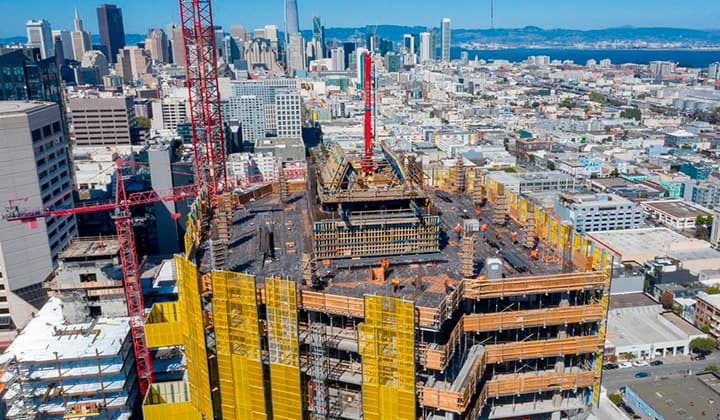
Automatisation de la conception des coffrages
Our client from
California, USA
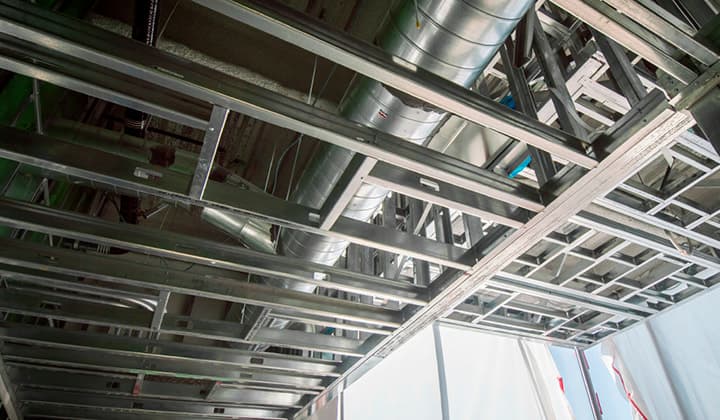
Automatisation de la conception des plafonds suspendus
Our client from
New York, USA
Automatisation de la conception de l'ossature des murs
Our client from
California, USA