Haben Sie noch Fragen? Kontaktieren Sie uns!
Kommen Sie in unser Team!
Kostenloses Angebot oder Beratung anfordern

Waterproofing in construction is the process of applying materials and systems to building structures to prevent water penetration and moisture damage. It protects foundations, roofs, walls, and other vulnerable areas from water intrusion that can compromise structural integrity, cause mold growth, and lead costly repairs. Proper waterproofing during construction is essential for building longevity and occupant health.
A building can look perfectly sealed and still allow water to pass through it. Tiny pathways exist in roof connections, wall surfaces, foundations, and structural joints where moisture slowly travels inward. Materials such as concrete, brick, and stone appear dense, yet their porous nature permits water movement over time.
Water damage accounts for approximately 70% of construction litigation cases. That’s not a small number. Buildings without proper protection face structural deterioration, mold growth, and interior damage that costs thousands to repair.
So what exactly is waterproofing in construction, and why does it matter so much?
Understanding Waterproofing in Construction
Waterproofing is the application of specialized materials, membranes, and systems to building structures that create barriers preventing water penetration. The goal is simple: keep water out of spaces where it causes damage.
But here’s the thing—waterproofing isn’t the same as water resistance. Water-resistant materials slow water down temporarily but fail after prolonged exposure. Waterproofing blocks water completely and works indefinitely when properly installed.
According to ISO/TS 18734:2026, waterproofing systems for underground concrete structures must meet specific requirements for elastic barriers and protection against leakage and contamination. These standards ensure systems perform under real-world conditions including hydrostatic pressure.
The process involves more than slapping on a coating. Effective waterproofing requires understanding where water enters, how it moves, and which protection methods suit specific building areas.
Why Waterproofing Is Critical During Construction
Moisture intrusion remains the leading cause of construction-related litigation. Water finds its way through cracks, joints, and porous materials, creating problems that compound over time.
Structural damage occurs when water penetrates concrete and corrodes steel reinforcement. Foundation walls crack under freeze-thaw cycles. Wood framing rots. Metal fasteners rust.
Mold growth presents serious health risks. Once moisture establishes itself inside wall cavities or beneath flooring, fungal colonies develop rapidly. Removing established mold costs significantly more than preventing it.
Property value suffers when water damage becomes visible. A properly waterproofed home maintains its value and attracts future buyers. Buildings with documented water problems sell at substantial discounts.
Real talk: investing in quality waterproofing during construction saves money compared to retrofitting later. Accessing buried foundations or removing finished surfaces to install protection systems costs exponentially more than doing it right the first time.
Where Buildings Need Waterproofing Protection
Not all building areas face equal water exposure. Certain zones require more robust protection due to constant moisture contact or hydrostatic pressure.
Foundations and Below-Grade Structures
Foundation walls encounter groundwater and soil moisture continuously. Below-grade spaces experience hydrostatic pressure—water in surrounding soil pushing against walls trying to find entry points.
Basements without proper waterproofing develop seepage through floor-wall joints, cracks, and porous concrete. The water table fluctuates seasonally, increasing pressure during wet periods.
Roofs and Terraces
Roofs receive direct rain exposure and must shed water quickly. Flat roofs and terraces face particular challenges because water pools rather than running off immediately.
Membrane failures on roofs often occur at penetrations, edges, and seams. According to the National Roofing Contractors Association, electronic leak detection (ELD) locates breaches in membranes, whereas flood testing locates leaks.
Bathrooms and Wet Rooms
Interior spaces with regular water use need protection beneath finished surfaces. Shower pans, bathroom floors, and walls around tubs require waterproof barriers under tile or other finishes.
Water that penetrates tile grout migrates through substrate materials, damaging framing and creating mold conditions behind walls.
Balconies and External Decks
Exterior elevated surfaces expose occupied spaces below to water intrusion. Balcony waterproofing fails when drainage systems clog or membrane seams separate due to structural movement.
Retaining Walls and Planters
Structures holding soil and vegetation face constant moisture from irrigation and drainage. Planters integrated into buildings require robust waterproofing because plant roots can penetrate conventional barriers.
Bring Powerkh in for BIM Modeling and Drawings

Some projects need more than general consulting – they need a team that can build the models and drawings. Powerkh provides BIM and VDC services such as BIM modeling, scan to BIM, structural detailing, BIM coordination, and prefabrication support. The work is focused on giving construction teams documentation they can use during planning and execution.
Need a Team to Build the BIM Files?
Talk with Powerkh to:
- convert drawings or scans into usable BIM models
- prepare detailed shop and construction drawings
- improve coordination before site work begins
👉 Contact Powerkh to review your project and BIM needs.
Main Waterproofing Methods Used in Construction
Different situations call for different waterproofing approaches. Each method offers specific advantages depending on substrate type, water exposure, and application requirements.
Liquid Waterproofing Membranes
Liquid-applied membranes start as coatings that cure into seamless, elastic barriers. These materials conform to complex shapes and provide excellent detail work around penetrations.
According to ASTM C898/C898M-25a, high solids content, cold liquid-applied elastomeric waterproofing membranes must meet specific performance criteria. The standard guides proper use with separate wearing courses.
Coverage rates depend on dry film thickness (DFT) and solids content. Here’s how to calculate coverage:
| (% Solids by Volume × 1604) ÷ Desired DFT (mils) = Coverage Rate (sf/gal) |
At 100% solids, 1 gallon covers 1604 square feet at 1 mil thickness.
At 120 mils, the coverage is $1604 / 120 = 13.366…$ (rounded to 13.37) square feet per gallon.
Liquid membranes offer moderate to high cost but deliver 10-20 year lifespans when properly maintained. They work exceptionally well for complex shapes where sheet membranes would require extensive cutting and seaming.
Sheet Waterproofing Membranes
Pre-manufactured sheet membranes come in rolls made from modified bitumen, EPDM rubber, PVC, or TPO. Factory-controlled production ensures consistent thickness and quality.
These membranes excel on large flat surfaces like foundation walls and plaza decks. Installation involves adhering or mechanically fastening sheets with carefully sealed overlaps.
Sheet membranes also provide moderate to high cost with 15-30 year typical lifespans. The key advantage is predictable performance since manufacturing happens under controlled conditions rather than on-site.
Cementitious Waterproofing
Cementitious systems use cement-based coatings applied to concrete and masonry substrates. These rigid systems bond directly to concrete surfaces.
The method suits water-retaining structures like pools, water treatment facilities, and tunnels. It’s among the most economical options and integrates well with concrete construction.
However, cementitious waterproofing lacks flexibility. Structural movement or substrate cracks can compromise the barrier. Typical lifespan ranges from 10-15 years in ideal conditions.
Bentonite Clay Waterproofing
Bentonite panels or coatings use sodium bentonite clay that swells when wet, creating a self-sealing barrier. The material fills gaps and seals around penetrations automatically.
Foundation walls benefit from bentonite’s self-healing properties. Small cracks or punctures seal themselves as the clay expands upon water contact.
Installation is relatively straightforward, and the system performs well under hydrostatic pressure. Lifespan exceeds 20 years with proper soil backfill protection.
Integral Waterproofing
Integral waterproofing adds compounds directly into concrete mixes, making the concrete itself water-resistant. Crystalline admixtures react with moisture and cement to form crystals that block capillary pores.
According to a comparative study, concrete with integral waterproofing can show improved performance. Testing has indicated concrete can maintain workability while being enhanced with waterproof characteristics.
This method provides permanent protection since the waterproofing becomes part of the concrete matrix. It’s particularly valuable for structures where external membrane access is difficult after construction.
| Waterproofing Method | Best Applications | Kostenbereich | Typical Lifespan | Key Advantage
|
|---|---|---|---|---|
| Liquid Membrane | Complex shapes, details | Moderate to High | 10-20 years | Seamless application |
| Sheet Membrane | Large flat surfaces | Moderate to High | 15-30 years | Consistent thickness |
| Cementitious | Water tanks, pools | Low to Moderate | 10-15 years | Economical, bonds to concrete |
| Bentonite Clay | Foundation walls | Moderate | 20+ years | Self-healing properties |
| Integral | New concrete structures | Low to Moderate | Permanent | Built into material |
Waterproofing vs. Dampproofing: What's the Difference?
These terms get used interchangeably, but they describe different protection levels.
Dampproofing resists moisture vapor and minor dampness. It handles humidity and condensation but cannot withstand standing water or hydrostatic pressure. Dampproofing typically uses spray-applied asphalt coatings or cementitious parging.
Waterproofing creates impermeable barriers that block liquid water completely, even under pressure. It protects against bulk water intrusion from rain, groundwater, and flooding.
Building codes often specify waterproofing for habitable below-grade spaces but may allow dampproofing for non-habitable areas. That said, investing in full waterproofing usually makes sense given the catastrophic cost of water intrusion.
Understanding Hydrostatic Pressure and Its Impact
Hydrostatic pressure is the force water exerts when it accumulates in soil around foundations. The pressure increases with depth—deeper basements experience greater force.
Water seeks the path of least resistance. It penetrates through cracks, construction joints, pipe penetrations, and porous concrete. Even hairline cracks become entry points under sufficient pressure.
Waterproofing systems must resist this pressure to remain effective. ASTM standards specify testing procedures for membranes under hydrostatic conditions.
Drainage systems work alongside waterproofing to manage hydrostatic pressure. Perimeter drains, sump pumps, and drainage boards reduce water accumulation around foundations, decreasing the burden on waterproof barriers.
Key Factors for Selecting Waterproofing Methods
Choosing the right waterproofing approach depends on multiple project-specific factors.
Water Exposure Conditions
Constant water contact requires more robust protection than occasional splash. Below-grade walls need systems rated for hydrostatic pressure. Roofs need UV-resistant membranes that withstand weathering.
Substrate Material and Condition
Concrete accepts different systems than wood or metal. New construction offers easier access than renovation projects. Surface preparation requirements vary—some membranes need perfectly smooth substrates while others tolerate minor irregularities.
Building Movement Expectations
Structures experience thermal expansion, settling, and seismic movement. Rigid waterproofing systems crack under these stresses. Elastic membranes accommodate movement without failing.
Accessibility for Future Maintenance
Buried foundations can’t be easily accessed for repairs. These areas justify premium systems with longer lifespans. Exposed roofs allow periodic inspection and maintenance, making shorter-lived economical systems viable.
Budget and Lifecycle Cost
Initial cost matters, but lifecycle analysis tells the complete story. A premium membrane costing twice as much but lasting three times longer delivers better value.
Repair costs dwarf prevention costs. Water damage remediation, mold abatement, and structural repairs can run tens of thousands of dollars—far exceeding the expense of proper initial waterproofing.
Waterproofing Standards and Testing
Industry standards ensure waterproofing materials and systems perform reliably. Several organizations publish specifications that manufacturers and contractors reference.
ASTM International maintains numerous waterproofing standards. ASTM D7877-24 provides guidance for electronic methods of detecting and locating leaks in waterproof membranes, with focus on preventing premature membrane failure. This standard helps verify installation quality.
ASTM D226/D226M-25 specifies requirements for asphalt-saturated organic felt used in roofing and waterproofing applications, covering two types: Type I (No. 15 asphalt felt) and Type II (No. 30 asphalt felt).
ISO standards address international waterproofing requirements. ISO/TS 18734:2026 covers elastic barriers for underground concrete structures, establishing performance benchmarks recognized globally.
Testing methods validate waterproofing effectiveness before and after installation. Water absorption tests measure how much moisture materials permit through their structure. Permeability tests quantify water transmission rates under pressure.
Electronic leak detection (ELD) has become increasingly common for quality assurance. According to the National Roofing Contractors Association, electronic leak detection (ELD) locates breaches in membranes, whereas flood testing locates leaks, allowing targeted repairs.
Common Waterproofing Failures and Prevention
Understanding typical failure modes helps avoid expensive mistakes.
Poor Surface Preparation
Membranes applied to contaminated or improperly prepared substrates fail to bond correctly. Dust, oil, laitance, and moisture prevent proper adhesion.
Surface preparation requirements vary by product but generally demand clean, sound, and appropriately profiled substrates. Skipping prep work virtually guarantees premature failure.
Inadequate Detailing at Transitions
Water finds its way through transitions between different building elements. Floor-wall joints, pipe penetrations, and material changes require careful detailing with reinforcement strips and additional membrane layers.
Many waterproofing failures occur at details rather than in field areas. Spending extra time on transitions pays dividends.
Insufficient Membrane Thickness
Applying membranes too thin compromises their protective capacity. Manufacturers specify minimum dry film thickness for good reason—thinner applications may not bridge substrate imperfections or withstand expected service conditions.
Damage During Backfill or Construction
Foundation waterproofing faces mechanical abuse during backfilling operations. Sharp rocks, heavy equipment, and careless work puncture membranes.
Protection boards shield waterproofing from damage. These rigid panels create barriers between membranes and backfill material.
Lack of Drainage Management
Waterproofing alone doesn’t solve water problems—drainage systems must direct water away from structures. Clogged drains increase hydrostatic pressure and eventually overwhelm even excellent waterproofing.
Exterior vs. Interior Waterproofing Approaches
Waterproofing can be applied to either the exterior (positive side) or interior (negative side) of structures. Each approach has distinct characteristics.
Exterior Waterproofing
Positive-side waterproofing applied to exterior surfaces prevents water from entering the structure. This is the preferred approach because it keeps water out of walls entirely rather than managing it after penetration.
Foundation excavation during new construction provides ideal access for exterior waterproofing. The method works best when implemented during initial building rather than as remediation.
Interior Waterproofing
Negative-side systems applied to interior surfaces manage water that has already penetrated the structure. These systems don’t prevent water entry but control it after the fact.
Interior approaches make sense for existing buildings where exterior excavation is impractical or prohibitively expensive. They typically combine with drainage systems that collect penetrating water and channel it to sump pumps.
But here’s the catch—negative-side waterproofing means water still saturates the wall structure. While interior spaces stay dry, the wall itself remains wet, which can affect durability over time.
Integration with Other Building Systems
Effective waterproofing doesn’t exist in isolation. It integrates with multiple building systems to provide complete protection.
Drainage Systems
Perimeter drains, drainage boards, and weeping tile systems reduce water accumulation around foundations. By managing the water that reaches waterproofing, these systems decrease stress on membranes.
Vapor Barriers
Vapor barriers control moisture in gaseous form while waterproofing handles liquid water. Both may be necessary in certain assemblies, though some systems provide dual functionality.
Air Barriers
Building envelope design coordinates air barriers and waterproofing to prevent both air leakage and water intrusion. Continuous barrier systems serve multiple functions when properly detailed.
Insulation
Insulation placement relative to waterproofing affects condensation risk. Thermal analysis ensures dew points occur outside waterproof barriers to prevent trapped moisture.
| Application Area | Recommended Method | Key Consideration | Typical DFT/Thickness
|
|---|---|---|---|
| Foundation Walls | Sheet membrane or bentonite | Hydrostatic pressure resistance | 60-80 mils |
| Basement Floors | Sheet membrane under slab | Vapor transmission control | 15-20 mils minimum |
| Flat Roofs | Modified bitumen or single-ply | UV resistance and weathering | 60-100 mils |
| Shower Pans | Liquid or sheet membrane | Detail work at drains | 40-60 mils |
| Planters | Root-resistant membrane | Penetration resistance | 80-120 mils |
| Plaza Decks | Traffic-bearing membrane | Abrasion resistance | 90-125 mils |
Signs a Building Needs Waterproofing Attention
Recognizing water intrusion early minimizes damage and repair costs.
Visible water stains or efflorescence on walls indicate moisture movement through concrete or masonry. White crystalline deposits form when water carries dissolved salts to surfaces.
Musty odors suggest hidden moisture and possible mold growth. Mold produces volatile organic compounds that create characteristic smells before visible colonies appear.
Paint peeling or wallpaper bubbling occurs when moisture accumulates behind finishes. The moisture prevents proper adhesion and causes coatings to separate.
Damp or wet floors, particularly in basements, directly indicate water entry. Puddles after rain obviously signal problems, but persistent dampness even during dry weather suggests ongoing moisture intrusion.
Cracks in foundation walls create pathways for water under hydrostatic pressure. Small cracks expand through freeze-thaw cycles and structural movement.
Rust stains around metal fixtures or structural elements indicate water contact causing corrosion. Steel embedded in concrete corrodes when moisture penetrates the protective concrete cover.
Future Trends in Construction Waterproofing
Waterproofing technology continues evolving with new materials and application methods.
Smart membranes with integrated sensors can monitor moisture conditions and detect leaks in real-time. These systems provide early warning before visible damage occurs.
Self-healing materials incorporate compounds that react when water penetrates, automatically sealing small breaches. Crystalline technologies and encapsulated healing agents represent active research areas.
Spray-applied membranes offer rapid installation compared to traditional methods. Advanced polymer formulations provide elasticity and durability while reducing labor requirements.
Sustainable waterproofing materials address environmental concerns. Bio-based polymers, recycled content membranes, and low-VOC formulations reduce ecological impact without sacrificing performance.
Building information modeling (BIM) integration allows designers to identify potential waterproofing conflicts during virtual construction. Clash detection prevents installation problems before they occur on-site.
Cost Considerations and ROI
Waterproofing represents a significant construction expense, but the return on investment is substantial when considering avoided damage.
Material costs vary widely based on system type and project scale. Basic dampproofing might cost a few dollars per square foot while premium membrane systems reach ten dollars or more per square foot.
Labor represents a major cost component. Complex details, difficult access, and surface preparation requirements increase installation time. Weather delays affect exterior work scheduling.
That said, waterproofing cost is tiny compared to water damage remediation. Foundation repair, mold abatement, and interior restoration easily exceed the entire building’s original waterproofing budget.
Insurance companies recognize properly waterproofed buildings as lower-risk investments. Some insurers offer premium reductions for documented waterproofing systems.
Property values benefit from verifiable waterproofing. Buyers pay premiums for homes with professional waterproofing documentation and warranties.
Conclusion: Protecting Your Investment Through Proper Waterproofing
Waterproofing in construction represents far more than just keeping interior spaces dry. It protects structural integrity, prevents health hazards from mold growth, preserves property value, and avoids catastrophically expensive repairs.
The method selected matters. Foundation walls under hydrostatic pressure need robust sheet membranes or bentonite systems. Roofs require UV-resistant materials. Complex details benefit from liquid-applied products that create seamless barriers.
Standards from organizations like ASTM International and ISO provide performance benchmarks ensuring systems work as intended. Following these specifications and manufacturer guidelines delivers reliable protection.
Now here’s the reality: cutting corners on waterproofing during construction might save a few thousand dollars initially but risks tens of thousands in future damage. Water finds its way through the smallest openings and causes problems that compound over time.
So what’s the smart approach? Work with qualified waterproofing contractors who understand substrate preparation, proper detailing, and system integration. Specify materials meeting relevant ASTM standards. Include drainage systems that manage water before it reaches waterproof barriers. And invest in quality systems appropriate for each building area’s specific conditions.
For new construction projects, prioritize waterproofing in the design phase rather than treating it as an afterthought. The easiest time to install effective protection is during initial building when access is unrestricted.
Existing buildings showing signs of water intrusion need prompt attention. Delaying repairs allows damage to spread and costs to escalate. Professional assessment identifies problem sources and appropriate remediation strategies.
Ready to protect a building investment? Consult with waterproofing specialists who can evaluate specific situations and recommend systems that provide long-term protection. The peace of mind from knowing a structure is properly protected far exceeds the modest investment in quality waterproofing.
Frequently Asked Questions About Waterproofing in Construction
How long does construction waterproofing typically last?
Waterproofing lifespan varies by system type and conditions. Sheet membranes last 15-30 years, liquid membranes 10-20 years, and integral concrete waterproofing provides permanent protection. Proper installation and maintenance significantly affect longevity. Exposed systems degrade faster than protected ones due to UV exposure and physical wear.
Can waterproofing be added to existing buildings?
Yes, but retrofit waterproofing is more complex and expensive than new construction installation. Exterior systems require excavation to access foundation walls. Interior systems provide negative-side protection but don’t prevent water from saturating the wall structure. Injection grouting can seal cracks without excavation for specific situations.
What’s the difference between waterproofing and water-resistant materials?
Waterproofing blocks water completely and works indefinitely when wet, providing 100% protection against all moisture. Water-resistant materials slow water penetration temporarily but fail after prolonged exposure. Water-resistant products suit light moisture conditions while waterproofing handles constant water contact and hydrostatic pressure.
Do all foundations need waterproofing?
Building codes distinguish between habitable and non-habitable below-grade spaces. Habitable basements typically require full waterproofing while non-habitable areas may only need dampproofing. However, even for code-minimum situations, investing in waterproofing rather than just dampproofing provides better long-term protection and maintains property value.
How is waterproofing tested after installation?
Electronic leak detection uses electrical current to locate breaches in membranes, providing precise identification of problem areas. Flood testing involves temporarily ponding water on horizontal surfaces to verify watertightness. Visual inspection examines seams, transitions, and penetrations for proper detailing. Some systems undergo water spray testing before concealment.
What causes waterproofing systems to fail prematurely?
Common failure causes include poor surface preparation preventing proper adhesion, insufficient membrane thickness, inadequate detailing at transitions and penetrations, mechanical damage during construction, and lack of drainage management causing excessive hydrostatic pressure. Selecting inappropriate systems for specific conditions also leads to early failure.
Is waterproofing necessary for roofs in dry climates?
Yes, even dry climates experience occasional rain that roofs must shed effectively. A single rain event can cause significant damage if the roof lacks proper waterproofing. Flash floods, intense but brief storms, and seasonal variations occur in most climates. Additionally, waterproofing protects during construction before the building is complete.

Haben Sie ein BIM-Projekt? Sprechen Sie mit uns.
KontaktUnsere Fallstudien
Wir haben mehr als 200 BIM- und VDC-Projekte für Gewerbe, Industrie und Wohnungsbau durchgeführt.
Unsere Arbeit umfasst:
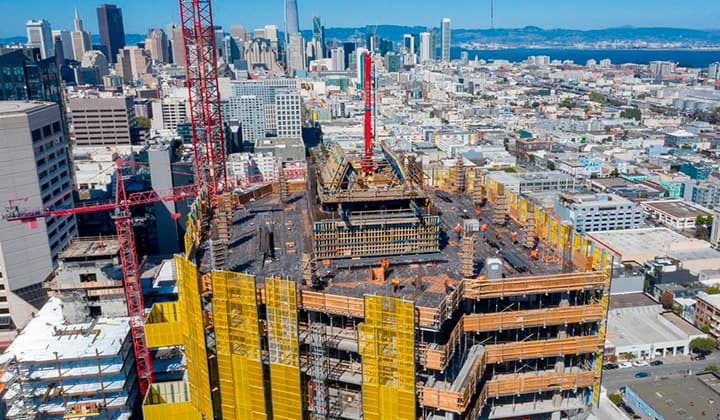
Automatisierung der Schalungsplanung
Our client from
California, USA
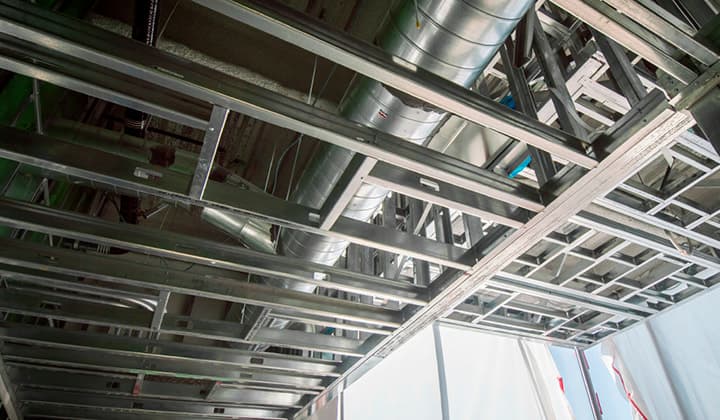
Automatisierung von abgehängten Decken
Our client from
New York, USA
Automatisierung von Wandkonstruktionen
Our client from
California, USA