Haben Sie noch Fragen? Kontaktieren Sie uns!
Kommen Sie in unser Team!
Kostenloses Angebot oder Beratung anfordern

Reducing carbon emissions on construction sites requires a multi-faceted approach targeting both operational and embodied carbon. Key strategies include switching to low-carbon equipment and fuels, optimizing material selection and transport, implementing waste reduction programs, and deploying renewable energy sources. The construction industry accounts for 37-39% of global emissions, making site-level interventions critical for achieving net-zero targets by 2050.
Construction sites are environmental pressure points. Diesel generators rumble through the night, trucks haul materials across hundreds of miles, and concrete cures while releasing stored carbon. The cumulative effect? The construction industry is responsible for approximately 37-39% of global carbon emissions, according to multiple industry analyses.
That’s a staggering number. And it means construction professionals hold tremendous power to shift the climate trajectory.
But here’s the thing—cutting emissions on a construction site isn’t about making a single grand gesture. It’s about layering smart decisions throughout the project lifecycle. Some changes deliver immediate wins. Others require planning six months before ground breaks.
This guide breaks down the most effective strategies for reducing carbon emissions where the work actually happens: on the construction site itself.
Understanding the Two Types of Carbon in Construction
Before diving into tactics, it helps to understand what you’re actually measuring. Construction carbon splits into two distinct categories, and they require different approaches.
Operational Carbon
Operational carbon covers emissions from construction activities and site operations. Think diesel-powered equipment, temporary heating and lighting, vehicle movements, and energy use for tools and facilities.
Construction accounts for 14.5% of particulate matter (PM2.5) in the air, largely from diesel exhaust. These emissions include carbon dioxide, carbon monoxide, sulfur compounds, nitrogen oxides, and hydrocarbons.
Operational emissions are easier to track and modify because they happen in real-time under direct control of the site management team.
Embodied Carbon
According to the EPA, embodied carbon refers to greenhouse gas emissions associated with the production, extraction, transport, and manufacturing stages of construction materials. This includes everything from mining raw materials to factory processing to delivery logistics.
Embodied carbon constitutes over 30% of all global emissions in buildings, according to industry analysis. For construction sites, the materials arriving on-site carry substantial embedded emissions that were generated elsewhere but driven by project specifications.
The EPA released draft criteria on March 5, 2024 for Product Category Rules supporting a new label program for low embodied carbon construction materials under the Inflation Reduction Act. This federal initiative leverages government purchasing power to drive market transformation toward climate-friendly materials.
Work With Powerkh on BIM, Drawings, and Coordination

Powerkh supports construction teams with the technical side of BIM and VDC work. Its services include BIM modeling, scan to BIM, BIM coordination, structural detailing, prefabrication support, and automation. That can be useful when a project needs better model accuracy, cleaner drawing sets, or stronger coordination before work moves further along.
Need Better Models and Construction Documentation?
Talk with Powerkh to:
- create coordinated BIM files from existing project data
- improve drawing quality before execution starts
- prepare shop drawings and fabrication documentation
👉 Contact Powerkh to review your project and BIM needs.
Major Sources of Carbon Emissions on Construction Sites
Knowing where emissions originate helps prioritize interventions. Not all sources contribute equally, and some are far easier to address than others.
Diesel-Powered Equipment and Machinery
Heavy machinery dominates site emissions. Excavators, bulldozers, cranes, and loaders typically run on diesel fuel, producing direct carbon dioxide emissions plus particulate matter and nitrogen oxides.
The average construction site operates multiple pieces of heavy equipment simultaneously. Engine efficiency varies widely based on equipment age, maintenance standards, and operational patterns.
Material Production and Transportation
Concrete and steel carry enormous embodied carbon loads. Cement production is a significant contributor to global CO2 emissions. Steel manufacturing is similarly carbon-intensive.
Transportation compounds this impact. Materials sourced from distant suppliers generate emissions from long-haul trucking. A single project might involve hundreds of delivery trips.
Temporary Power Generation
Before permanent electrical service connects, sites rely on temporary power solutions. Diesel generators are standard equipment, running continuously to power tools, lighting, and site offices.
These generators burn fuel inefficiently compared to grid electricity or modern alternatives. They’re also frequently oversized for actual load requirements, wasting fuel during low-demand periods.
Site Waste and Material Inefficiency
According to academic research, the construction industry’s traditional linear model focuses on take-make-dispose patterns. Waste sent to landfills represents embodied carbon that provided zero building value.
Excessive material ordering, poor storage leading to damage, offcuts from inefficient cutting patterns, and packaging waste all contribute. The EPA provides resources on reducing, reusing, and recycling construction and demolition materials to address these emissions.
Practical Strategies to Reduce Operational Carbon
Operational emissions happen on your watch, which means you can control them directly. These strategies target the machinery, energy, and logistics that drive daily site carbon output.
Transition to Electric and Hybrid Equipment
Equipment electrification delivers immediate emission reductions. Electric excavators, loaders, and lifts produce zero direct emissions and operate more quietly.
Battery technology has advanced significantly. Modern electric construction equipment offers runtime comparable to diesel counterparts for many applications. Charging infrastructure is the primary barrier, but it’s increasingly solvable with planning.
Hybrid equipment offers a middle path. These machines combine electric motors with small engines, reducing fuel consumption by 30-50% compared to conventional diesel equipment.
Real talk: electric equipment costs more upfront. But fuel savings, reduced maintenance, and potential incentives can offset the premium over equipment lifetime.
Implement Energy Storage Systems
Energy Storage Systems (ESS) represent a significant opportunity for construction sites. These battery systems can store electricity during off-peak hours and discharge during high-demand periods, reducing reliance on diesel generators.
ESS technology allows sites to capture energy from renewable sources or grid power, then distribute it as needed. This smooths out demand spikes that typically require oversized generators or multiple units running simultaneously.
The technology is particularly valuable for sites with intermittent high-power needs rather than continuous baseline loads.
Optimize Logistics and Transportation
Material delivery scheduling directly impacts emissions. Consolidating deliveries reduces total vehicle trips. Route optimization software can cut unnecessary mileage.
Partnering with suppliers located closer to the site lowers transportation emissions substantially. Local sourcing also reduces delivery time and potential delays.
Consider requiring suppliers to report their transportation emissions. This visibility enables informed decisions and creates market pressure for cleaner logistics.
Right-Size Equipment for Actual Needs
Oversized equipment wastes fuel. A detailed analysis of power requirements helps match equipment capacity to actual demand.
For generators, sizing calculations should account for simultaneous load rather than summing nameplate ratings of all connected tools. Most sites can reduce generator capacity by 30-40% with proper engineering.
Equipment that operates at 70-85% of rated capacity runs more efficiently than identical equipment operating at 20-30% capacity.
Establish Strict Idling Policies
Equipment idling burns fuel while accomplishing nothing. A simple policy—engines off when not actively working—can cut fuel consumption by 10-15%.
Modern equipment restarts quickly. The old belief that restarting uses more fuel than idling is outdated for equipment manufactured in the past decade.
Monitoring and enforcement matter. Site managers should track idling behavior and address violations consistently.
Reducing Embodied Carbon Through Material Decisions
Embodied carbon lives in the materials before they arrive on-site. Reducing it requires decisions during design and procurement phases, but site teams can still influence outcomes.
Specify Low-Carbon Concrete Alternatives
Concrete is unavoidable in most construction, but not all concrete is equal. Low-carbon concrete mixes substitute traditional Portland cement with supplementary cementitious materials like fly ash, slag cement, or calcined clay.
These alternatives can reduce concrete’s carbon footprint by 40-70% without compromising structural performance for many applications. The EPA is actively working with federal agencies and industry stakeholders on consistent approaches for reporting greenhouse gas emissions in construction materials.
Some manufacturers now offer carbon-sequestering concrete that absorbs CO2 during curing. While still emerging, this technology shows promise for further reducing net emissions.
Prioritize Recycled and Reclaimed Materials
Recycled steel production uses significantly less energy than virgin steel production. Reclaimed wood, recycled aggregates, and salvaged architectural elements all carry lower embodied carbon than new equivalents.
Material reuse extends beyond environmental benefits. Reclaimed materials often cost less and can differentiate projects aesthetically.
The challenge is sourcing consistency and meeting specifications. Early supplier engagement helps identify viable recycled options before procurement locks in conventional materials.
Source Materials Locally
Transportation emissions scale with distance. Materials sourced within 500 miles generate significantly lower supply chain emissions than equivalent materials shipped across continents.
Local sourcing also supports regional economies and typically shortens delivery lead times. For projects with sustainability certifications, local materials often earn additional credits.
Balancing local availability against embodied carbon of production requires analysis. Sometimes a low-carbon material from farther away beats a conventional local product, but proximity matters considerably.
Design for Material Efficiency
Waste prevention is more effective than waste management. Designing to standard material dimensions reduces cutting waste. Modular construction maximizes factory fabrication efficiency.
Prefabrication and off-site construction generate less waste than traditional stick-built methods. Factory environments enable better material handling, storage, and recycling of offcuts.
Digital fabrication tools can optimize cutting patterns to minimize waste. Building Information Modeling allows precise material takeoffs, reducing over-ordering.
Implement Comprehensive Waste Management
Despite prevention efforts, construction generates waste. Proper management recovers value and prevents embodied carbon from becoming landfill methane.
Establishing dedicated sorting areas for wood, metal, concrete, drywall, and cardboard enables recycling. Many materials have established recycling pathways when properly segregated.
Concrete and masonry waste can be crushed for use as aggregate. Wood waste might fuel biomass energy or become mulch. Metal scraps have commodity value.
The EPA provides extensive resources on best practices for reducing, reusing, and recycling construction and demolition materials as part of its embodied carbon reduction initiatives.
| Material Category | Conventional Option | Low-Carbon Alternative | Emission Reduction |
|---|---|---|---|
| Concrete | 100% Portland cement | Cement with 50% fly ash or slag | 40-50% |
| Steel | Virgin steel | Recycled steel content | 70-75% |
| Insulation | Foam board (XPS/EPS) | Cellulose or mineral wool | 30-60% |
| Timber | Conventional lumber | FSC-certified or reclaimed | 15-25% |
| Aggregate | Quarried virgin stone | Crushed recycled concrete | 50-60% |
Renewable Energy Integration on Construction Sites
Bringing clean energy directly to the construction site eliminates emissions at the source. The technology is mature, increasingly affordable, and scalable to projects of all sizes.
Solar Power Systems
Temporary solar arrays can power site offices, lighting, and small tools. Portable solar generators replace diesel units for low-to-moderate power needs.
Larger projects can install grid-tied solar systems early in construction. These systems power construction activities, then transition to permanent building infrastructure.
Solar works best in sunny climates and for sites with space for panel deployment. But even partial solar offset reduces diesel consumption and emissions.
Wind Power for Suitable Sites
Construction sites in windy locations can deploy small wind turbines for supplemental power. These are less common than solar but viable in appropriate conditions.
Wind power’s intermittency requires battery storage or hybrid systems. Combined wind-solar-battery configurations provide more consistent output than either technology alone.
Grid Connection as Priority
When available, connecting to grid electricity early in the construction process beats any temporary generation method for emissions and cost.
Permanent electrical service eliminates generator fuel costs, noise, and maintenance. Even grid power from conventional sources typically produces lower emissions per kilowatt-hour than diesel generation.
Early coordination with utilities can advance connection timing. Some jurisdictions offer expedited permitting for projects committing to sustainable construction practices.
Monitoring, Measuring, and Reporting Carbon Emissions
Management requires measurement. Sites can’t optimize what they don’t track. Carbon accounting creates visibility and accountability.
Establish Baseline Measurements
Before implementing reduction strategies, document current emissions. Track fuel consumption, electricity use, material deliveries, and waste generation.
This baseline enables comparison after interventions. It also identifies the largest emission sources that deserve priority attention.
Several software platforms now offer construction-specific carbon tracking. These tools integrate with project management systems to calculate emissions based on activities, equipment, and materials.
Continuous Monitoring Systems
Real-time monitoring provides immediate feedback on emission-generating activities. Telematics systems on equipment track fuel consumption, idle time, and operational efficiency.
Energy monitoring on temporary power systems reveals usage patterns and optimization opportunities. Smart metering can trigger alerts when consumption exceeds expected parameters.
Regular Reporting and Transparency
Regular carbon reporting keeps sustainability goals visible. Weekly or monthly reports showing emission trends, reduction progress, and comparison to targets maintain team focus.
Transparency with clients and stakeholders demonstrates commitment. Some clients now require carbon reporting as a contractual obligation.
Industry frameworks like ISO 14064 provide standardized approaches for quantifying and reporting greenhouse gas emissions. The ISO 14064-1:2018 standard specifies principles and requirements at the organization level for quantification and reporting of greenhouse gas emissions and removals.
Training and Culture for Carbon Reduction
Technology and materials enable emission reductions, but people implement them. Site culture determines whether strategies succeed or become performative gestures.
Workforce Education
Equipment operators who understand why idling policies matter enforce them better than those viewing rules as arbitrary. Training builds buy-in.
Educational programs covering climate impact, carbon sources, and reduction strategies empower workers to identify opportunities and contribute ideas.
Sustainability training shouldn’t be a one-time event. Regular toolbox talks keep concepts fresh and acknowledge progress.
Incentive Structures
Aligning incentives with carbon goals accelerates adoption. Performance bonuses tied to emission reduction targets motivate teams.
Recognition programs highlight crews or individuals demonstrating exceptional sustainability practices. Public acknowledgment costs nothing but drives behavior.
Leadership Commitment
Sustainability initiatives fail without visible leadership support. Site managers and project executives must demonstrate commitment through decisions, resource allocation, and consistent messaging.
When carbon reduction conflicts with convenience, leadership must reinforce priorities. That might mean rejecting a cheaper high-carbon material or accepting temporary delays for better environmental outcomes.
Overcoming Common Barriers
Real talk: reducing construction site emissions isn’t always easy. Understanding common obstacles helps navigate them.
Cost Concerns
Low-carbon equipment and materials often cost more initially. But lifecycle analysis frequently shows favorable economics when factoring fuel savings, maintenance, incentives, and resale value.
Incremental implementation spreads costs over time. Starting with no-cost behavioral changes builds momentum while generating savings to fund larger investments.
Federal and state incentive programs increasingly support green construction equipment and practices. The Inflation Reduction Act includes substantial funding for low-carbon construction initiatives.
Supply Chain Limitations
Low-carbon materials aren’t universally available. Supply constraints can delay projects or force compromises.
Early specification and supplier engagement mitigate this challenge. Projects with 12-18 month timelines can influence supplier inventory decisions.
Industry demand drives supply. Each project specifying low-carbon materials strengthens the business case for suppliers to expand sustainable offerings.
Knowledge Gaps
Many construction professionals lack training in carbon accounting, sustainable materials, or low-emission equipment operation.
Addressing knowledge gaps requires industry-wide commitment to education. Professional development programs, certification courses, and manufacturer training all contribute.
Partnerships with sustainability consultants or specialized firms can bridge immediate knowledge needs while internal capabilities develop.
Regulatory Uncertainty
Building codes and standards are evolving to address climate concerns. Requirements vary by jurisdiction and change periodically.
Staying current with regulations requires monitoring. Industry associations typically track regulatory developments and provide member guidance.
Progressive projects can exceed current requirements in anticipation of future standards. Buildings designed for tomorrow’s codes avoid costly retrofits.
Case Studies and Real-World Implementation
Theory matters less than practice. Construction sites worldwide are demonstrating that substantial emission reductions are achievable.
Urban Renovation Project
A commercial renovation project in a major metropolitan area cut site emissions by 42% through a combination of strategies. The project connected to grid power immediately rather than using diesel generators, implemented strict idling policies with telematics monitoring, and specified concrete with 60% fly ash replacement.
Material sourcing emphasized local suppliers within 300 miles. The project diverted 87% of demolition waste from landfills through aggressive sorting and recycling programs.
Total cost premium for sustainable practices came to roughly 3% of project budget, offset partially by fuel savings and waste disposal reductions.
Infrastructure Construction
A highway expansion project deployed hybrid excavators and loaders, reducing diesel consumption by 38% compared to conventional equipment. The project also utilized recycled concrete aggregate for 70% of base course material.
Solar-powered traffic management systems and temporary lighting eliminated generator use for peripheral site needs. Centralized concrete batching minimized truck trips.
Kommerzielles Hochhaus
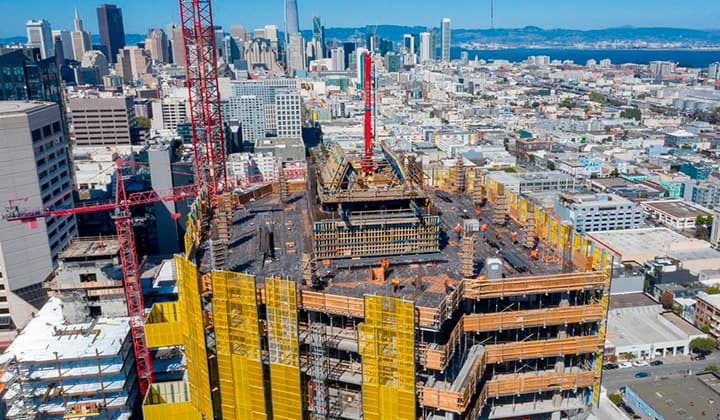
A 30-story office tower achieved significant embodied carbon reduction through structural material selection. The design specified high-strength concrete with supplementary cementitious materials and cross-laminated timber for select applications.
Tower crane power came from grid connection established early. Electric scissor lifts and boom lifts replaced diesel alternatives. The project tracked carbon weekly and publicly reported progress.
Future Trends in Construction Carbon Reduction
The construction industry is evolving rapidly as climate pressure intensifies. Several emerging trends will shape carbon reduction strategies in coming years.
Regulatory Tightening
Building codes increasingly incorporate carbon limits. Several jurisdictions now require lifecycle carbon assessments for large projects. This trend will expand as governments pursue net-zero targets.
The EPA’s label program for low embodied carbon construction materials, supported by the Inflation Reduction Act, represents significant federal engagement. This program will likely influence state and local regulations.
Carbon Pricing
Market mechanisms that put a price on carbon emissions create direct financial incentives for reduction. Carbon taxes or cap-and-trade systems affecting construction are expanding globally.
When carbon carries explicit cost, low-emission alternatives become economically compelling without requiring environmental commitment as primary motivation.
Technology Advancement
Battery technology continues improving, making electric equipment viable for heavier applications. Hydrogen fuel cells may eventually power the largest construction equipment.
Digital tools for carbon tracking are becoming more sophisticated and easier to integrate with existing project management systems. Artificial intelligence can optimize logistics and equipment deployment for minimal emissions.
Supply Chain Transparency
Manufacturers increasingly provide Environmental Product Declarations detailing embodied carbon. This transparency enables informed material selection and creates competitive pressure for lower-carbon production.
Blockchain and other tracking technologies may soon provide verified carbon accounting throughout construction supply chains.
Modular and Off-Site Construction
Factory-based construction methods are gaining market share. These approaches offer superior carbon performance through material efficiency, controlled environments, and reduced transportation needs.
As modular construction matures and overcomes stigma, adoption will accelerate based on cost and schedule advantages that happen to include lower emissions.
Getting Started: A Practical Action Plan
For construction professionals ready to reduce site carbon emissions, starting requires structure. Here’s a practical approach.
Month 1: Assessment
- Document current fuel consumption across all equipment
- Inventory material sources and transportation distances
- Measure waste generation by category
- Identify quick-win opportunities requiring minimal investment
Month 2-3: Quick Wins
- Implement strict idling policies with monitoring
- Right-size generators and equipment for actual loads
- Establish waste sorting and recycling protocols
- Train workforce on carbon awareness and reduction strategies
Month 4-6: Infrastructure Development
- Evaluate solar or battery storage systems for site power needs
- Develop relationships with suppliers of low-carbon materials
- Implement carbon tracking software
- Set measurable reduction targets
Month 7-12: Equipment Transition
- Begin transitioning equipment fleet to electric or hybrid
- Pilot advanced technologies on limited basis
- Develop supplier requirements for carbon reporting
- Establish regular reporting cadence
Ongoing: Optimization
- Continuously monitor performance against targets
- Share learnings across project portfolio
- Adjust strategies based on results
- Engage industry peers to drive broader change
Conclusion: Building a Lower-Carbon Future
Construction sites are climate leverage points. The decisions made during planning and execution shape emissions for decades through both immediate operational impacts and long-lasting embodied carbon in materials.
The good news? Proven strategies exist for cutting construction site carbon emissions by 40-60% without sacrificing quality, safety, or profitability. Technology is mature. Materials are available. Economic cases strengthen as climate awareness grows.
What’s required now is commitment to implementation. That means moving beyond performative gestures toward systematic integration of carbon reduction into every aspect of construction operations.
Start with quick wins that deliver immediate results and build organizational momentum. Progress from behavioral changes to infrastructure investments to equipment fleet transitions. Measure rigorously. Report transparently. Learn continuously.
The construction industry accounts for nearly 40% of global carbon emissions. This enormous contribution represents both a sobering responsibility and an extraordinary opportunity. When construction companies commit to carbon reduction, global climate trajectories shift measurably.
The question isn’t whether construction must decarbonize—regulatory, market, and climate pressures make that inevitable. The question is whether individual companies and projects will lead the transition or lag behind competitors who recognize sustainability as strategic advantage.
Begin today. Assess current emissions. Implement one new strategy this month. Track the results. Then build from there.
The climate crisis demands action at every level, and construction sites are precisely where that action happens—one project, one decision, one ton of avoided emissions at a time.
Häufig gestellte Fragen
What percentage of global emissions comes from construction?
The construction industry accounts for approximately 37-39% of global carbon emissions. This includes both operational emissions from construction activities and embodied emissions from material production.
What is the difference between operational carbon and embodied carbon?
Operational carbon comes from on-site activities like fuel use and equipment operation. Embodied carbon comes from material production, including extraction, manufacturing, and transportation.
Does electric construction equipment really save money?
Electric equipment usually costs more upfront but can reduce long-term costs through lower fuel use, reduced maintenance, and available incentives. Payback periods typically range from 3-7 years depending on usage.
How can small construction companies reduce carbon emissions?
Small companies can start with simple changes like reducing idling, sorting waste, using grid power instead of generators, and sourcing materials locally. These steps often require discipline rather than large investments.
What are the most carbon-intensive construction materials?
Concrete and steel have the highest embodied carbon impact. Cement production and steel manufacturing both contribute significantly to global emissions, making low-carbon alternatives important.
Are there government incentives for reducing construction site emissions?
Yes. Many regions offer tax credits, rebates, and programs that support low-carbon construction practices. Incentives vary by location and project type, so checking local programs is important.
How do I measure carbon emissions on a construction site?
Measurement involves tracking fuel use, electricity consumption, materials, and waste. Specialized software and frameworks like ISO 14064 help calculate and report emissions accurately.

Unsere Fallstudien
Wir haben mehr als 200 BIM- und VDC-Projekte für Gewerbe, Industrie und Wohnungsbau durchgeführt.
Unsere Arbeit umfasst:
Automatisierung der Schalungsplanung
Our client from
California, USA
Automatisierung von abgehängten Decken
Our client from
New York, USA
Automatisierung von Wandkonstruktionen
Our client from
California, USA