هل لديك أي أسئلة؟ اتصل بنا!
انضم إلى فريقنا!
اطلب عرض أسعار أو استشارة مجانية

Retainage is a percentage of payment—typically 5-10%—withheld from contractors and subcontractors during a construction project until work is fully completed. This practice, dating back to Britain’s 1840s railroad boom, serves as a financial incentive for quality work and protects owners against incomplete projects, defects, or potential liens.
Walk onto any active construction site, and there’s money being held somewhere in limbo.
Not because of disputes. Not because anyone did anything wrong. But because of retainage—a practice so embedded in construction contracts that most industry professionals consider it standard procedure.
But what exactly is retainage? How does it work? And more importantly, what does it mean for contractors trying to keep cash flowing while waiting months—or even years—for that final check?
This guide breaks down everything about retainage in construction: its purpose, how the rules vary by state, the cash flow challenges it creates, and practical strategies for managing withheld funds.
Understanding Retainage: The Basics
Retainage is a portion of the agreed contract price deliberately withheld until construction work is complete. According to ConsensusDocs, this mechanism originated during the railroad boom that embraced Great Britain in the 1840s and has remained a fixture of construction contracts ever since.
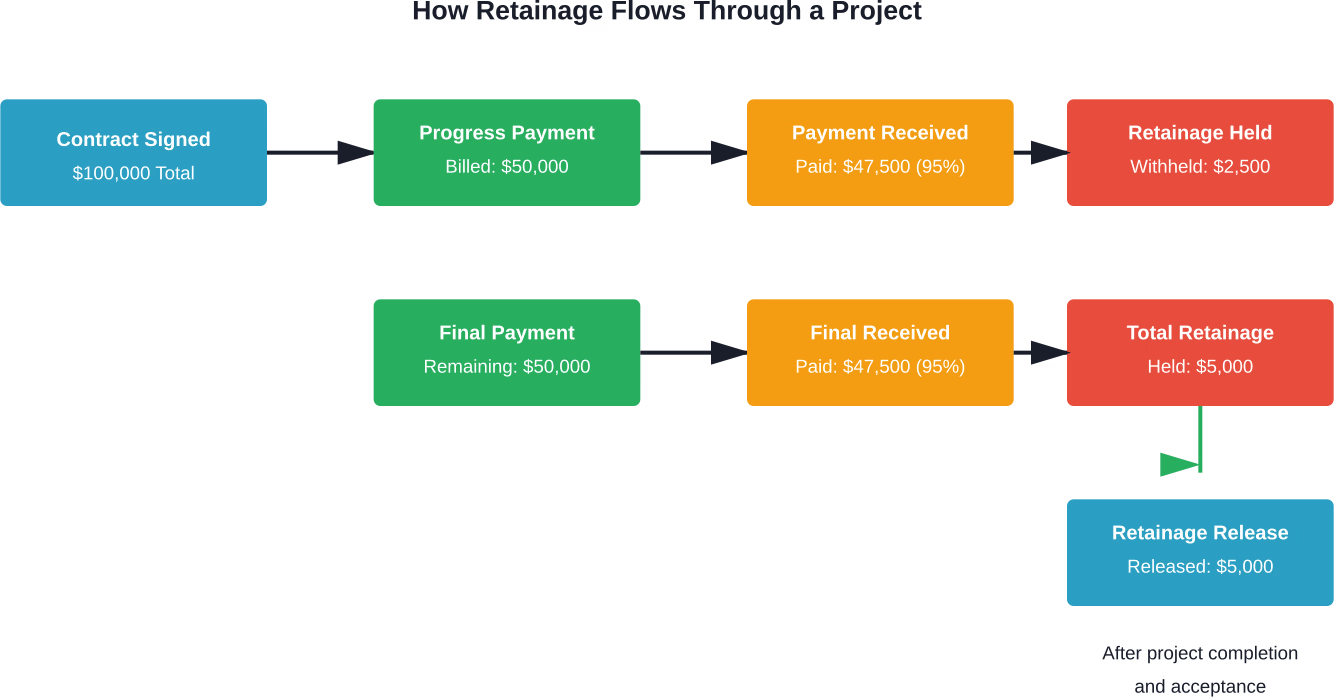
In its simplest terms, retainage works like this: when a contractor submits a progress payment request, the owner doesn’t pay the full amount. Instead, they hold back a percentage—creating a financial cushion that gets released only when specific project milestones or final completion occurs.
The concept is unique to the construction industry. Most other sectors pay for work upon completion of each phase or delivery. Construction projects, however, span months or years, involve multiple parties, and carry significant risk of defects or incomplete work surfacing late in the timeline.
How Much Gets Withheld?
According to ConsensusDocs research, retainage typically ranges from 5-10% of each progress payment. However, some state statutes specify acceptable ranges as a percentage of the contract amount.
In states that define allowable percentages for retainage withholding, the prevailing range is consistently 5-10% of the contract amount or progress payment. Other states either don’t mandate specific limits or allow parties to negotiate freely.
For example, Washington State’s RCW 60.30.010 explicitly states that for private construction projects, parties may withhold no more than 5% of the contract price of completed work. The statute makes clear that partial payment under retainage provisions isn’t acceptance of work or a waiver of defects.
Retainage vs. Retention: Same Thing?
Yes. The terms “retainage” and “retention” refer to the same practice—money withheld from contract payments to secure future performance. Regional preferences and contract language determine which term gets used, but both describe identical financial arrangements.
The Purpose Behind Withholding Payment
Why hold back money from contractors who’ve already completed work? The practice serves multiple strategic functions for owners and general contractors.
According to Wikipedia’s analysis of construction contracts, retainage attempts to accomplish two primary objectives: provide incentive for contractors or subcontractors to complete projects, and protect owners against liens, claims, or defaults that may surface as work nears completion.
Financial Incentive for Completion
Retainage creates a financial stake in finishing the job. When 5-10% of total contract value remains unpaid, contractors have concrete motivation to address punch list items, resolve defects, and achieve final sign-off rather than abandoning projects for more lucrative opportunities.
This matters particularly on long-duration projects where market conditions shift. That apartment complex that seemed profitable when bid might look less attractive a year later when new work commands premium rates. Retainage keeps contractors engaged through completion.
Protection Against Defects and Liens
Construction projects involve complex coordination. Defects might not become apparent until systems integrate or weather exposes poor workmanship. Retainage provides owners with financial leverage to secure corrections without litigation.
The practice also protects against mechanic’s liens—legal claims subcontractors or suppliers can file against property when they’re not paid. If a general contractor fails to pay subs despite receiving payment from the owner, retainage funds can potentially satisfy those claims and clear the title.
Ensuring Contractual Performance
Beyond completion and quality, retainage secures other contractual obligations: submitting closeout documents, delivering warranties, training facility staff on systems, and providing as-built drawings. These administrative requirements often get neglected when contractors move to new projects, but withheld funds maintain attention through final deliverables.
State Laws and Retainage Rules
Retainage regulations vary significantly across jurisdictions. While the practice is nearly universal, states impose different limits on percentages, release timing, and payment terms.
Public vs. Private Projects
Most states distinguish between public and private construction when regulating retainage. Government projects typically face stricter statutory requirements, while private work allows more contractual flexibility.
Washington State’s RCW 60.28.011 addresses public transportation projects specifically, establishing detailed requirements for retained percentages, bond alternatives, and release conditions that differ from private project rules.
Maximum Retainage Percentages
States that regulate retainage percentages generally cap withholding at 5-10% of contract value. Washington’s private construction statute limits retainage to 5% maximum. Other jurisdictions allow higher percentages or leave amounts to negotiate.
These caps apply to each tier of the contracting chain. If the owner withholds 10% from the general contractor, that general contractor typically withholds equivalent percentages from subcontractors—creating cascading retention that multiplies cash flow impact through the project pyramid.
Release Timing Requirements
When must retainage get released? State laws vary on timing triggers:
- Substantial completion: Some states require partial release when projects reach substantial completion (capable of use for intended purpose, with only minor items remaining)
- Final completion: Full release after punch list completion and final acceptance
- Time-based triggers: Certain jurisdictions mandate release within specific timeframes after completion milestones
- Phased release: Progressive reduction of withheld percentages as projects advance
Understanding these requirements is critical. A contractor in one state might expect retainage release at substantial completion, while another jurisdiction delays payment until final closeout documentation is submitted and approved.
Federal Project Rules
Federal construction projects follow different retainage rules than state or private work. The Federal Acquisition Regulation (FAR) governs payment terms for federal contracts, including retention provisions that may differ from local state requirements where the work physically occurs.
The Cash Flow Challenge
Here’s where retainage creates real problems for contractors: cash flow.
According to Construction Financial Management Association (CFMA) data, retainage typically sits at 5% or 10% of project value. That might not sound catastrophic at first glance. But construction operates on thin margins.
CFMA notes that when retention reaches 10% of total bid price, profit margins can become lower than the construction industry’s already-slim averages. Many contractors operate on net margins of 2-5%. Withholding 10% means the profit is held hostage until final completion—which might be months or years away on large projects.
Compounding Effects Across Multiple Projects
The cash flow impact multiplies across a contractor’s portfolio. A company running five simultaneous projects might have substantial capital tied up in retainage across all jobs. That money can’t pay for:
- Labor on current projects
- Materials and equipment purchases
- Overhead expenses like insurance and bonding
- Growth investments in tools or vehicles
- Emergency expenses when problems arise
Small and mid-sized contractors feel this pressure most acutely. Without deep credit lines or substantial cash reserves, retainage withholding can force difficult decisions: delay paying subcontractors, turn down new opportunities, or secure expensive short-term financing.
The Subcontractor Squeeze
Subcontractors face even tighter cash flow constraints. The general contractor withholds retainage from sub payments, but the GC might not receive their own retained funds from the owner for additional weeks or months after the sub’s work is complete.
This creates a waterfall delay: the sub finishes work, the GC withholds retainage, the owner withholds retainage from the GC, and only after the entire project completes does money flow back down the chain. For a subcontractor who finished their scope in month three of a twelve-month project, that’s nine months of waiting for final payment.
| Party | Work Completed | Payment Received | Retainage Held | Months Waiting |
|---|---|---|---|---|
| Electrician (Sub) | Month 3 | 95% Month 3 | $3,500 | 9 months |
| Plumber (Sub) | Month 4 | 95% Month 4 | $4,200 | 8 months |
| General Contractor | Month 12 | 95% Monthly | $28,000 | 1-2 months |
| Owner | Month 12 | N/A | Holds all retainage | Releases after review |
Best Practices for Managing Retainage
Contractors can’t eliminate retainage, but they can manage it more effectively through contract negotiation and financial planning.
Negotiate Better Terms Upfront
Everything about retainage should be addressed before signing contracts. Key negotiation points include:
- Lower percentages: Push for 5% instead of 10%, or progressive reduction as work advances
- Early release triggers: Negotiate release at substantial completion rather than final completion
- Phased release: Structure release tied to specific milestones, not just project end
- Interest on retained funds: Some jurisdictions allow or require interest payments on retainage held beyond certain periods
According to ConsensusDocs, both owner and contractor must agree on retained amounts before work begins. This makes pre-contract negotiation the primary opportunity to influence terms.
Document Everything Meticulously
Retainage release often depends on proving work completion to the owner’s satisfaction. Thorough documentation accelerates this process:
- Photograph completed work from multiple angles
- Maintain detailed daily logs of progress
- Track punch list items with dates and resolution evidence
- Organize submittals, change orders, and approvals systematically
- Prepare closeout documents throughout the project, not after
When the time comes to request retainage release, comprehensive documentation eliminates disputes about whether contractual requirements were satisfied.
Understand Release Procedures
Each project has specific procedures for retainage release. These might include:
- Formal completion notices or applications
- Owner inspections and approval processes
- Lien waiver requirements from all subcontractors and suppliers
- Submission of warranties, manuals, and as-built documents
- Certificate of occupancy or other regulatory approvals
Clarify these procedures early. Missing one requirement—a single unsigned lien waiver from a minor supplier—can delay release for weeks.
Build Retainage Into Financial Planning
Since retainage is predictable, contractors should build it into cash flow projections and financial planning:
- Calculate total retainage across all active projects monthly
- Forecast release dates based on project schedules
- Maintain credit lines sized to cover retainage impacts
- Structure overhead budgets around reduced available cash
- Consider retainage in job profitability calculations
According to construction accounting best practices, treating withheld funds as temporarily unavailable rather than counting them in current cash flow prevents overspending and cash crunches.
Get Retainage Released Faster

Retainage gets held when there’s doubt. Unclear completion, open issues, or lack of proof slows payment even when work is done. باورخ removes that doubt by showing what is complete, what is still open, and what is blocking approval. Instead of chasing sign-offs at the end, you move into close-out with everything already verified. That cuts delays and helps payments move without long back-and-forth.
Remove Approval Delays
Powerkh helps you unlock retainage by:
- Providing clear proof of completed work aligned with design
- Breaking down what is finished, partial, and still open
- Flagging issues that block final approval before review
- Supporting agreement between parties with objective data
- Reducing disputes during valuation and close-out
If retainage is holding up payments, contact Powerkh and move approvals forward with clear, verifiable proof.
Alternatives to Traditional Retainage
Some project teams are exploring alternatives that provide owner security without the cash flow burden on contractors.
Retainage Bonds
A retainage bond allows contractors to receive full payment while the surety company guarantees funds will be available to correct defects or complete punch list items. The contractor pays a premium for the bond—typically 1-2% of the retained amount annually—but receives immediate cash flow benefits.
Washington’s RCW 60.28.011 explicitly provides for bonds in lieu of retained funds on public projects, recognizing this as a viable alternative to traditional withholding.
Escrow Accounts
Some contracts establish escrow accounts where retainage is deposited rather than simply withheld. This provides transparency, allows interest accrual to benefit the contractor, and can expedite release through clear escrow agreement terms.
Progressive Reduction
Rather than maintaining full retainage percentages throughout a project, some contracts reduce withholding as work progresses. For example:
- First 50% of project: 10% retainage
- Next 25% of project: 5% retainage
- Final 25% of project: 2.5% retainage
This approach acknowledges the reduced risk as projects near completion while maintaining incentive for final performance.
Elimination on Low-Risk Projects
Some project owners with strong contractor relationships eliminate retainage entirely on smaller or lower-risk projects. This approach relies on contractor reputation, bonding, and warranties rather than withheld funds to ensure performance.
How Retainage Affects Different Project Parties
Retainage impacts each participant in construction projects differently.
Owners
For owners, retainage provides leverage and security. It’s their primary tool for ensuring contractors address defects, complete punch lists, and provide closeout documents. Without retainage, owners must rely entirely on legal remedies—which are slower and more expensive than simply withholding payment.
But retainage isn’t without owner downsides. Holding funds creates administrative burden: tracking retained amounts, processing release requests, coordinating lien waivers. It can also damage relationships with quality contractors who resent payment delays.
General Contractors
General contractors get squeezed from both directions. Owners withhold retainage from them while they simultaneously withhold from subcontractors. This creates two responsibilities:
- Managing their own cash flow with reduced incoming payments
- Administering retainage release to subs (which requires collecting lien waivers, verifying completion, and processing payments)
The administrative burden is significant on large projects with dozens of subcontractors.
Subcontractors
Subcontractors bear the heaviest retainage burden relative to company size. Small electrical contractors may face significant cash flow challenges when retainage is withheld on multiple concurrent projects, as they often have limited credit capacity and cash reserves.
Many subcontractors factor retainage delays into their pricing, effectively charging for the cost of financing and risk. This makes projects more expensive for everyone.
Suppliers
Material suppliers typically don’t face direct retainage on their invoices—they sell products that get paid upon delivery. But they’re indirectly affected when contractors struggle with cash flow and delay supplier payments while waiting for their own retainage release.
Technology and Retainage Management
Modern construction technology platforms now include features specifically designed to manage retainage tracking and release.
Project management software can automatically calculate retainage on invoices, track cumulative withheld amounts across all change orders, and generate retainage-specific reports showing when funds should be released based on completion percentages.
Payment platforms integrate retainage tracking with lien waiver management, allowing automated workflows where subcontractor retainage releases conditionally upon uploading required documentation.
Cloud-based financial systems help contractors forecast cash flow more accurately by modeling retainage impacts across project portfolios and identifying periods where withheld funds might create liquidity constraints.
These tools don’t eliminate retainage’s cash flow impact, but they reduce administrative overhead and provide visibility that enables better planning.
Common Retainage Disputes
Despite being contractually defined, retainage frequently becomes a dispute point.
Definition of Completion
When exactly is work “complete” enough to trigger retainage release? Owners might claim substantial deficiencies remain while contractors argue only minor punch list items persist. This definitional dispute can delay payments for months.
Excessive Withholding
Some owners or general contractors withhold amounts exceeding contractual percentages or state law limits. Contractors might not notice until preparing final billing, at which point resolving the discrepancy requires time-consuming reconciliation or legal action.
Delayed Release Processing
Even when contractual completion occurs, owners sometimes delay processing retainage releases. Administrative backlog, personnel changes, or simply deprioritizing payment can leave contractors waiting weeks beyond contractually required release dates.
Disputed Work Quality
Owners may claim defective work justifies withholding retainage beyond contract terms. These disputes often hinge on subjective quality assessments or specification interpretations that require third-party resolution.
The Debate: Should Retainage Continue?
Within the construction industry, retainage remains controversial. Some advocate for its elimination while others defend it as essential risk management.
Arguments for Elimination
Critics argue retainage creates disproportionate harm:
- Cash flow impacts hit small contractors hardest, creating competitive disadvantages
- The practice increases project costs as contractors price in financing expenses
- Modern bonding and insurance provide better completion security
- Retainage enables abuse by owners using financial leverage to extract concessions
- The administrative burden outweighs benefits on low-risk projects
Some jurisdictions have reduced or eliminated retainage on public projects, citing improved contractor financial health and reduced total project costs.
Arguments for Retention
Defenders counter that retainage serves irreplaceable functions:
- No other mechanism provides equivalent incentive for punch list completion
- Bonds and insurance involve claims processes slower than withheld payment
- Elimination would increase owner risk, particularly with less-established contractors
- The practice has centuries of precedent and understood procedures
- Financial pressure is often the only tool that motivates final closeout
According to ConsensusDocs, despite debates about retainage’s merits, most construction contracts continue including retention provisions because owners view the protection as essential.
Key Takeaways for Managing Retainage
Retainage is simply part of construction contracting—a financial mechanism with deep historical roots that isn’t disappearing anytime soon.
Understanding how it works, what state laws require, and how to manage cash flow despite withheld payments separates contractors who thrive from those who struggle. The key is treating retainage not as unexpected money but as temporarily unavailable capital that requires careful planning.
Smart contract negotiation, meticulous documentation, and technology-enabled tracking all reduce retainage’s burden. And alternatives like retainage bonds offer paths to improved cash flow for contractors with access to bonding capacity.
But ultimately, retainage management comes down to financial discipline: building realistic budgets that account for withheld funds, maintaining adequate credit facilities, and systematically pursuing release as soon as contractual conditions are satisfied.
For contractors and subcontractors navigating projects in 2026, mastering retainage isn’t optional—it’s fundamental to sustainable business operations in an industry where cash flow challenges can make or break even technically excellent companies.
الأسئلة الشائعة
What is the typical retainage percentage in construction?
Retainage typically ranges from 5-10% of each progress payment or the total contract value. According to research from ConsensusDocs and CFMA, 5% and 10% are the most common percentages, with state laws in jurisdictions that regulate retainage generally allowing this range. Private contracts may negotiate different amounts, while public projects often face statutory caps—such as Washington State’s 5% maximum on private construction.
When does retainage get released?
Retainage release timing varies by contract and jurisdiction. Common release triggers include substantial completion (when the project is capable of use for its intended purpose), final completion (after all punch list items are addressed), or specific timeframes after completion milestones. Some contracts provide for partial retainage release at substantial completion with final amounts released after closeout documentation is submitted and accepted.
Can contractors refuse to work with retainage?
Contractors can negotiate to eliminate or reduce retainage during contract discussions, but they generally cannot refuse retainage provisions in standard contracts and still win the work. On private projects with negotiable terms, experienced contractors with strong reputations sometimes successfully negotiate reduced percentages or elimination. Public projects typically mandate retainage through statute, leaving no room for negotiation.
How does retainage affect subcontractors?
Retainage creates significant cash flow challenges for subcontractors, who often complete their work early in projects but must wait until overall project completion to receive final payment. If a subcontractor finishes in month three of a twelve-month project, they wait nine additional months for retainage release. This extended timeline is particularly difficult for small subcontracting businesses with limited credit capacity and cash reserves.
Are there alternatives to traditional retainage?
Yes, several alternatives exist including retainage bonds (where a surety guarantees funds allowing full contractor payment), escrow accounts (providing transparency and potential interest earnings), progressive reduction (decreasing withholding percentage as work advances), and complete elimination on low-risk projects. Washington State law explicitly allows bonds in lieu of retained funds on public projects, recognizing these alternatives as viable options.
What happens if retainage isn’t paid?
When owners or general contractors fail to release retainage despite contractual obligations, contractors can pursue several remedies: filing mechanic’s liens against the property, submitting claims against payment bonds (on bonded projects), demanding arbitration or mediation per contract dispute resolution clauses, or filing breach of contract lawsuits. Many jurisdictions also provide for interest on late-paid retainage and allow recovery of attorney’s fees for collection actions.
How should contractors account for retainage?
According to FASB ASC Topic 606 addressing revenue recognition in construction, contractors should classify retainage as a contract asset on their balance sheet since it represents a conditional right to payment. QuickBooks and other accounting platforms recommend tracking retainage separately from accounts receivable, forecasting release dates based on project schedules, and excluding withheld amounts from available cash flow calculations to prevent over-committing resources.

دراسات الحالة لدينا
لقد تعاملنا مع أكثر من 200 مشروع من مشاريع نمذجة معلومات المباني ونمذجة معلومات المباني للقطاعات التجارية والصناعية والسكنية.
يشمل عملنا ما يلي:
أتمتة تصميم القوالب
Our client from
California, USA
أتمتة تصميم السقف المعلق
Our client from
New York, USA
أتمتة تصميم إطارات الحائط
Our client from
California, USA