هل لديك أي أسئلة؟ اتصل بنا!
انضم إلى فريقنا!
اطلب عرض أسعار أو استشارة مجانية

Project management in construction is the structured process of planning, coordinating, and controlling all aspects of a building project from initial concept through completion. It encompasses budget management, scheduling, resource allocation, quality control, and stakeholder coordination to deliver projects on time, within budget, and to specification. Construction project managers serve as the central hub connecting owners, architects, engineers, contractors, and suppliers throughout the project lifecycle.
Construction projects are complex beasts. A single commercial building might involve hundreds of workers, dozens of subcontractors, thousands of materials, and millions of dollars. Without proper management, even simple projects can spiral into budget overruns and missed deadlines.
That’s where construction project management comes in. It transforms chaos into coordination.
But what does that actually mean in practice? And why does it matter so much for the industry?
A Clear Definition Of Construction Project Management
Construction project management is the specialized discipline of overseeing construction projects from conception to completion. It applies project management principles specifically to the unique challenges of the building industry.
The core function is simple: ensure that construction work gets done on time, within budget, and to the required quality standards. The execution? That’s where complexity lives.
According to the Bureau of Labor Statistics, the primary responsibilities of a construction project manager include preparing cost estimates, monitoring project resources, collaborating with project stakeholders, monitoring project progress, and ensuring that all aspects of the project remain in compliance with industry safety standards and regulatory requirements.
Construction project management differs from general project management in several key ways. The physical nature of the work creates dependencies that software projects never face. Weather affects schedules. Material deliveries can delay entire phases. Safety regulations require constant vigilance. Permits and inspections add regulatory checkpoints throughout the process.
And here’s the thing: construction projects rarely go exactly as planned. Materials arrive late. Subcontractors overlap. Weather causes delays. The construction project manager navigates all these disruptions while keeping the project moving forward.
Why Construction Project Management Matters
Construction accounts for a significant portion of economic activity. As of 2025, the construction industry accounts for around 9% of all jobs in Australia, making it one of the country’s largest employment sectors.
With this scale comes enormous financial stakes. Projects routinely involve budgets in the millions or tens of millions of dollars. Even small percentage overruns translate to substantial losses.
Proper project management reduces these risks. The Construction Management Association of America suggests aiming to finish each project 10% faster than estimated by scheduling tasks 2-4 weeks in advance and ensuring materials arrive on schedule.
But it’s not just about speed and cost. Quality matters too.
According to ASCE’s Quality in the Constructed Project guide, the guide discusses the roles, responsibilities, requirements, and limits of authority of participants in the design and construction process, highlighting concepts and practices that are valuable to each in achieving project goals and objectives.
Real talk: bad project management costs money, damages reputations, and can even endanger lives. Construction sites are inherently dangerous. Coordination failures can lead to accidents. Structural shortcuts can compromise building integrity. Proper management mitigates these risks.
The Construction Project Lifecycle
Construction projects move through distinct phases, each with specific goals and deliverables. Understanding this lifecycle is fundamental to managing construction work effectively.
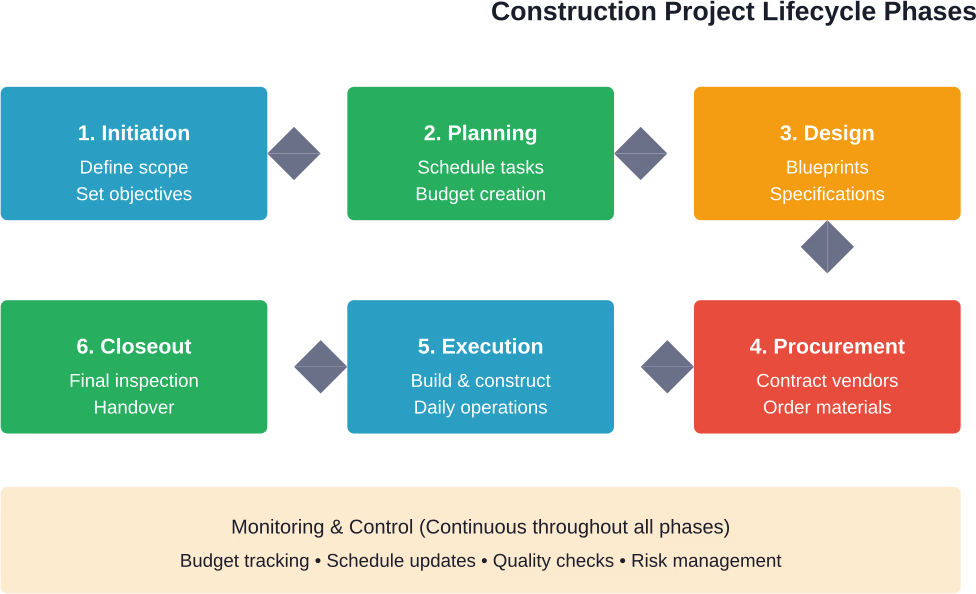
Initiation Phase
Everything starts here. The owner identifies a need—a new office building, a highway expansion, a residential development. Project managers work with stakeholders to define the project scope and establish feasibility.
Key activities include site analysis, preliminary budgeting, and securing initial approvals. This phase answers the fundamental question: should this project move forward?
Planning Phase
Once approved, detailed planning begins. This is where project managers develop comprehensive schedules, finalize budgets, identify resources, and establish communication protocols.
Planning also involves risk assessment. ASCE emphasizes the importance of identifying and analyzing risks early in the project lifecycle. According to their guidance on risk management tools, risk assessment should use order-of-magnitude ranking where a risk with a rank of 2 has a 10x greater impact than a risk with a rank of 1.
For instance, if a risk item has a potential $10,000 impact on the project, it would be assigned an impact of 1, whereas another item with a potential impact of $1 million would result in a higher ranking. This systematic approach helps prioritize mitigation efforts.
Design Phase
Architects and engineers create detailed plans and specifications. Project managers coordinate between design professionals and stakeholders to ensure designs meet requirements while staying within budget.
Design decisions have ripple effects throughout the project. Material selections affect costs. Structural choices impact schedules. The project manager balances competing priorities to keep design aligned with project goals.
ASCE notes that design is an iterative, judgment-based process subject to uncertainty. Design professionals work to a standard of care rather than guaranteeing perfect outcomes—a reality that project managers must navigate when coordinating stakeholder expectations.
Procurement Phase
With designs finalized, procurement begins. This involves bidding out work packages, negotiating contracts, and securing materials. Project managers evaluate vendor proposals, verify qualifications, and establish contractual terms.
Timing matters enormously. Materials ordered too early tie up capital and require storage. Materials ordered too late delay construction. Effective procurement requires precise coordination with the construction schedule.
Execution Phase
Construction begins. This is where planning meets reality. Project managers coordinate trades, manage daily operations, track progress, and solve problems as they arise.
Execution involves constant communication. Daily huddles with foremen. Weekly meetings with stakeholders. Regular updates to owners. The project manager serves as the information hub, ensuring everyone has what they need when they need it.
Quality control happens continuously during execution. Inspections verify work meets specifications. Testing confirms materials perform as expected. Proper documentation creates an audit trail for compliance and warranty purposes.
Closeout Phase
As construction nears completion, closeout activities begin. Final inspections verify code compliance. Punch lists capture remaining work. Documentation gets compiled for handover.
The project manager coordinates final payments, releases retainage, and transfers operating manuals and warranties to the owner. Closeout also includes conducting lessons-learned sessions to improve future projects.
Take Control Of What Happens Between Design And Delivery

If project management only tracks timelines and budgets, it misses where most issues actually begin – in how design is interpreted, coordinated, and built on site.
This is where باورخ steps in. They work across design support, coordination, and on-site verification to keep projects consistent as they move forward. Instead of relying on assumptions, they bring in model checks, critical zone coordination, and real-condition validation to show where things are already shifting. That gives project managers a more grounded view of the project and helps avoid late-stage surprises that disrupt delivery.
Work through your project with باورخ and see where things start to move off plan before it affects your timeline.
Core Responsibilities Of Construction Project Managers
Construction project managers juggle multiple responsibilities simultaneously. Here are the critical ones:
Budget Management
Project managers develop and monitor budgets throughout the project lifecycle. This includes preparing initial cost estimates, tracking expenditures, processing change orders, and forecasting final costs.
Cost control requires vigilance. Small overruns on individual line items can snowball into major budget problems. Effective managers spot trends early and take corrective action before costs spiral.
Schedule Development and Control
Creating realistic schedules requires understanding task dependencies, resource availability, and potential constraints. Project managers build schedules that account for weather windows, material lead times, and labor availability.
But schedules always change. Delays happen. Priorities shift. The project manager updates schedules continuously, communicating impacts and adjusting resources to minimize delays.
Resource Coordination
Construction requires coordinating people, equipment, and materials. Project managers ensure the right resources arrive at the right time. Too early and they sit idle. Too late and work stops.
This involves managing subcontractor schedules, coordinating equipment rentals, tracking material deliveries, and ensuring adequate labor availability for each phase of work.
التواصل مع أصحاب المصلحة
Multiple parties have stakes in construction projects: owners, architects, engineers, contractors, subcontractors, suppliers, regulatory agencies, and sometimes the public. Project managers maintain communication across all these groups.
Different stakeholders need different information at different frequencies. Owners want high-level progress updates. Subcontractors need detailed coordination information. Regulators require compliance documentation. The project manager tailors communication to each audience.
ضمان الجودة
Ensuring work meets specifications requires constant oversight. Project managers implement quality control processes, conduct inspections, verify testing, and address deficiencies promptly.
Quality problems caught early cost less to fix than those discovered later. A foundation issue caught during construction might cost thousands to remedy. The same issue discovered after building occupancy could cost millions.
إدارة المخاطر
Construction projects face numerous risks: weather delays, material shortages, labor disputes, design errors, site conditions, regulatory changes. Project managers identify potential risks, assess their likelihood and impact, and develop mitigation strategies.
According to ASCE guidance, effective risk management tools help identify approaches that lead to more positive project outcomes. When used effectively, systematic risk assessment enables proactive rather than reactive management.
Safety Oversight
Construction sites are dangerous. Project managers enforce safety protocols, conduct safety meetings, verify proper equipment use, and ensure compliance with occupational safety regulations.
Safety isn’t just ethical—it’s practical. Accidents delay projects, increase costs, damage reputations, and can result in legal liability. Effective safety management protects workers and the project.
The Construction Project Team Structure
Construction projects involve many specialized roles. Understanding team structure helps clarify how project management fits within the broader organization.
| الدور | Primary Responsibilities | Reports To
|
|---|---|---|
| Project Owner | Provides funding, defines requirements, approves major decisions | N/A |
| Project Manager | Overall project coordination, schedule, budget, quality | Project Owner |
| Architect | Design, aesthetics, building codes, spatial planning | Project Manager |
| المهندسين | Structural, mechanical, electrical, and civil systems design | Project Manager |
| General Contractor | Construction execution, subcontractor coordination | Project Manager |
| Subcontractors | Specialized trades (plumbing, electrical, HVAC, etc.) | General Contractor |
| Superintendent | On-site daily operations, crew coordination | General Contractor |
The project manager sits at the center of this network, coordinating information flow and decision-making across all roles. While the general contractor manages construction execution, the project manager maintains oversight of the entire project on behalf of the owner.
Types Of Construction Projects
Construction project management applies across diverse project types, each with unique characteristics and challenges.
الإنشاءات السكنية
Single-family homes, multi-family developments, and residential renovations. These projects typically have shorter durations and smaller budgets compared to commercial work, but still require careful coordination of multiple trades.
Commercial Construction
Office buildings, retail centers, hotels, and restaurants. Commercial projects often involve complex mechanical and electrical systems, tenant improvement coordination, and tight schedules driven by business opening dates.
الإنشاءات الصناعية
Manufacturing facilities, warehouses, processing plants, and distribution centers. Industrial projects require specialized knowledge of process equipment, heavy foundations, and operational requirements.
مشاريع البنية التحتية
Roads, bridges, utilities, and public works. Infrastructure involves unique challenges including public agency coordination, traffic management, environmental compliance, and long-term sustainability considerations.
According to ASCE, sustainable infrastructure has become increasingly important. The ASCE/COS 73-23 Standard Practice for Sustainable Infrastructure defines sustainability in infrastructure programs and projects, providing guidance for incorporating long-term environmental and social considerations into project planning and execution.
Institutional Construction
Schools, hospitals, government buildings, and cultural facilities. These projects often require specialized compliance with regulatory requirements, operational coordination with active facilities, and accommodation of specific user needs.
Project Management Methodologies In Construction
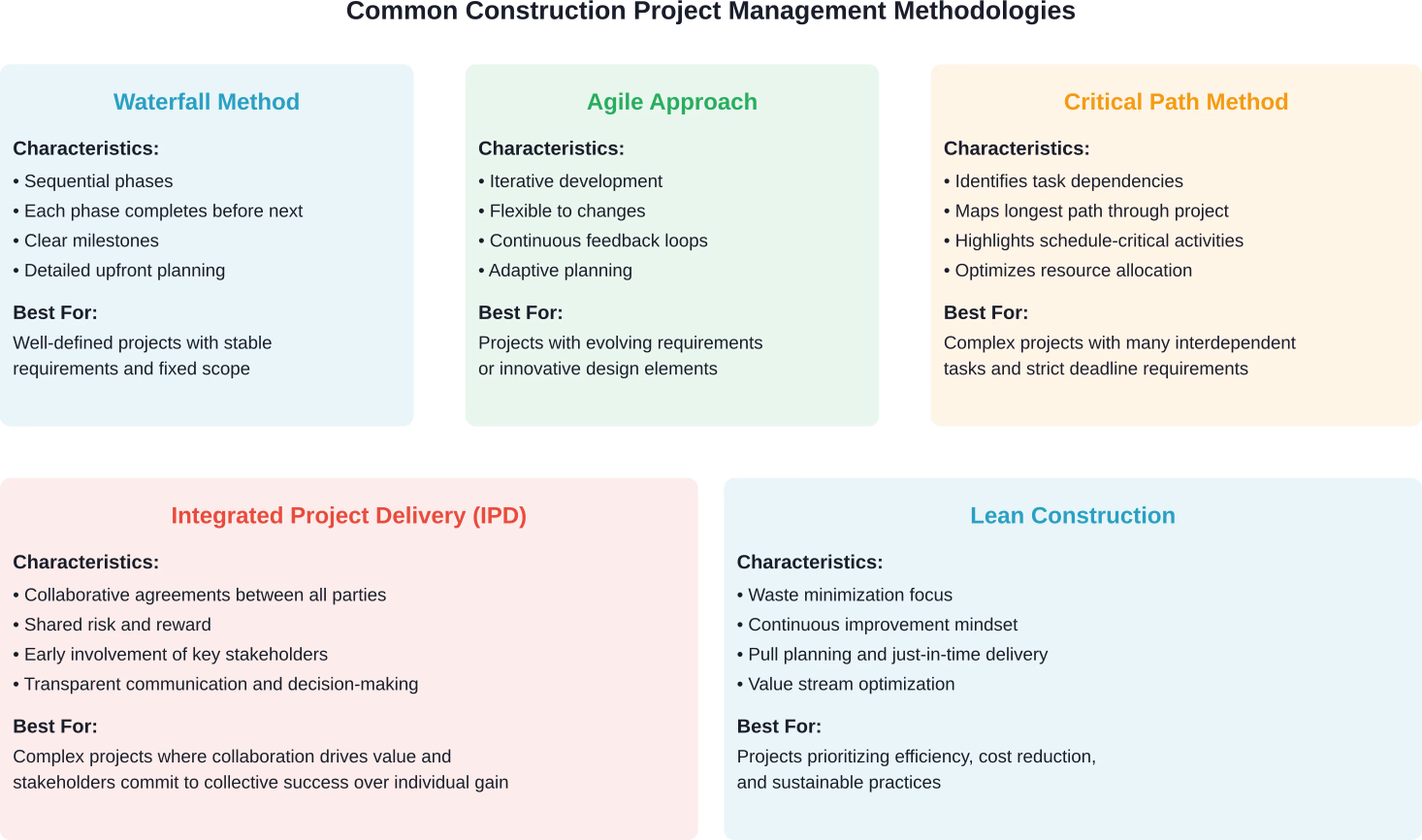
Different management approaches suit different project types and organizational preferences. Here are the primary methodologies used in construction:
Traditional Waterfall
The classic sequential approach. Design completes before procurement begins. Procurement finishes before construction starts. Each phase has clear deliverables and approval gates.
Waterfall works well for projects with stable requirements and well-understood processes. It provides clear accountability and straightforward progress tracking. But it offers limited flexibility for changes once later phases begin.
Critical Path Method
CPM focuses on identifying the sequence of tasks that determines overall project duration. By mapping task dependencies and durations, project managers identify which activities have schedule flexibility and which are critical.
This methodology enables sophisticated schedule optimization. Resources can be shifted from non-critical tasks to critical ones. Schedule compression focuses on the activities that actually affect completion date.
Agile and Adaptive Approaches
While less common than in software development, agile principles are gaining traction in construction. Adaptive approaches work well for renovation projects, tenant improvements, and projects where requirements evolve during execution.
Agile construction emphasizes iterative planning, regular stakeholder feedback, and flexibility to accommodate changes. Short planning cycles allow rapid response to emerging issues or opportunities.
تسليم المشروع المتكامل
IPD brings owners, designers, and contractors together in collaborative agreements with shared risk and reward. All major stakeholders participate early in planning and design, enabling better coordination and fewer conflicts.
Lean Construction
Borrowed from manufacturing, lean construction focuses on eliminating waste, optimizing workflows, and maximizing value. Techniques include pull planning, last planner system, and continuous improvement.
Lean approaches reduce material waste, minimize rework, optimize labor productivity, and shorten schedules. The methodology requires commitment from all project participants and cultural acceptance of collaborative planning.
Essential Skills For Construction Project Managers
Successful construction project management requires a blend of technical knowledge, leadership capabilities, and interpersonal skills.
Technical Construction Knowledge
Understanding construction methods, materials, equipment, and sequencing is fundamental. Project managers need enough technical knowledge to evaluate contractor proposals, assess field conditions, and make informed decisions.
This doesn’t require the same depth as specialized tradespeople, but managers must understand how buildings go together and what different trades require.
Contract Administration
Construction involves complex contractual relationships. Project managers must understand contract types, payment terms, change order processes, and dispute resolution mechanisms.
Strong contract administration protects all parties, ensures clear expectations, and provides frameworks for resolving inevitable disagreements.
Financial Acumen
Managing multi-million dollar budgets requires solid financial skills. Project managers must read financial statements, evaluate cost reports, forecast expenditures, and understand how financial decisions impact project outcomes.
Financial management in construction extends beyond basic accounting to include cash flow management, financial reporting, bonding, and tax considerations.
مهارات التواصل
Project managers spend significant time communicating—in meetings, through reports, via email, and on site. Clear communication prevents misunderstandings, aligns expectations, and keeps work moving.
Different audiences require different communication styles. Technical discussions with engineers differ from budget reviews with owners. Effective managers adapt their communication to the audience.
Problem-Solving Ability
Construction projects generate constant challenges. Materials don’t arrive. Weather causes delays. Design conflicts emerge. Equipment breaks down. Project managers must quickly assess problems, evaluate options, and implement solutions.
The best solutions balance multiple considerations: cost, schedule, quality, safety, and stakeholder satisfaction. Rigid thinking leads to suboptimal outcomes.
Leadership and Team Building
Project managers lead without direct authority over many team members. Subcontractors work for the general contractor. Designers work for the architect. Effective leadership builds commitment through influence rather than command.
Strong project managers create team cohesion, motivate performance, and maintain morale through the inevitable challenges that construction presents.
Technology Proficiency
Modern construction relies heavily on technology. Building Information Modeling, scheduling software, cost tracking systems, mobile field applications, and collaboration platforms are standard tools.
Project managers need not be software experts, but must understand technology capabilities and limitations to use tools effectively and make informed technology decisions.
Tools And Technology In Construction Project Management
Technology has transformed construction project management over the past decade. Digital tools now handle tasks that previously required extensive manual effort.
| Tool Category | Primary Functions | Key Benefits
|
|---|---|---|
| Scheduling Software | Task sequencing, resource allocation, timeline visualization | Identifies critical path, tracks progress, enables what-if scenarios |
| Cost Management Systems | Budget tracking, expense monitoring, forecasting | Real-time cost visibility, variance analysis, change order tracking |
| نمذجة معلومات البناء | 3D modeling, clash detection, quantity takeoffs | Reduces conflicts, improves coordination, enables visualization |
| إدارة المستندات | Drawing control, submittal tracking, RFI management | Centralized information, version control, audit trails |
| Field Management Apps | Daily reports, time tracking, inspection documentation | Mobile access, photo documentation, real-time updates |
| منصات التعاون | Communication, file sharing, workflow automation | Improved coordination, reduced email, streamlined processes |
Selecting appropriate tools depends on project complexity, team capabilities, and owner requirements. Large complex projects justify sophisticated integrated platforms. Smaller projects may need only basic scheduling and cost tracking.
But tools only provide value when properly implemented and consistently used. Technology adoption requires training, process changes, and ongoing support. The most sophisticated software delivers limited value if teams revert to spreadsheets and email.
Common Challenges In Construction Project Management
Despite careful planning, construction projects face recurring challenges that test project managers’ skills and resilience.
Scope Creep
Owners often request changes or additions as projects progress. Small changes accumulate. Before long, scope has grown significantly beyond the original plan—usually without commensurate budget or schedule adjustments.
Managing scope creep requires disciplined change control processes. Every change gets documented, priced, and approved before implementation. Informal additions lead to disputes about what was included in the original scope.
Weather Delays
Rain, snow, extreme heat, and other weather conditions regularly disrupt construction schedules. Some weather impacts can be anticipated and built into planning. Others arrive unexpectedly.
Project managers mitigate weather risk through realistic scheduling that accounts for seasonal patterns, flexibility to shift indoor work during bad weather, and prompt schedule adjustments when delays occur.
Labor Shortages
The construction industry faces ongoing challenges attracting and retaining skilled workers. Labor shortages delay projects, increase costs, and sometimes compromise quality when inexperienced workers handle complex tasks.
Proactive managers build relationships with reliable subcontractors, plan work to match labor availability, and sometimes adjust schedules to accommodate workforce constraints.
Material Availability and Cost Volatility
Supply chain disruptions, commodity price fluctuations, and manufacturing capacity constraints affect material availability and costs. Materials specified during design may be unavailable or prohibitively expensive when procurement occurs.
Strategies include early material procurement for critical items, maintaining approved alternate products, and building price escalation provisions into contracts when appropriate.
Coordination Failures
With dozens of subcontractors working on complex projects, coordination failures are common. Electrical conduit conflicts with ductwork. Plumbing interferes with structural members. These clashes cause rework, delays, and cost overruns.
Building Information Modeling reduces coordination issues by identifying conflicts digitally before construction. Regular coordination meetings and detailed planning also help prevent field conflicts.
الامتثال التنظيمي
Construction involves extensive regulatory requirements: building codes, zoning ordinances, environmental regulations, safety standards, accessibility requirements, and more. Compliance requires careful attention throughout the project.
Permit delays can halt work. Inspection failures require remediation. Regulatory changes during construction can necessitate design modifications. Project managers must stay current on applicable requirements and build regulatory processes into project schedules.
Career Pathways In Construction Project Management
Multiple routes lead into construction project management. There’s no single prescribed path.
Education and Credentials
Many project managers hold degrees in construction management, civil engineering, or architecture. Academic programs provide foundational knowledge in construction methods, project controls, and management principles.
According to Texas A&M University’s Master of Science in Construction Management program, the interdisciplinary graduate degree helps students develop key skills required to successfully implement construction management knowledge and strategies using innovative approaches that build upon traditional processes.
Professional certifications demonstrate competency and commitment. The Project Management Institute’s PMP certification is widely recognized. Construction-specific certifications include the Certified Construction Manager designation and various specialty credentials.
Experience Progression
Many successful project managers start in field positions—as laborers, carpenters, or other trades. This hands-on experience provides invaluable understanding of how construction actually happens.
Typical progression moves from field roles to project engineer or assistant project manager positions, then to project manager, and potentially to senior project manager or program manager roles overseeing multiple projects.
The Associated General Contractors offers an Advanced Project Manager Course designed for experienced construction professionals with at least eight years of field-tested expertise. The immersive program goes beyond fundamentals to tackle advanced challenges senior project managers face.
Continuing Professional Development
Construction evolves constantly. New materials, methods, technologies, and regulations require ongoing learning. Successful project managers commit to continuous professional development through courses, conferences, industry publications, and professional associations.
Specialization opportunities exist in specific project types (healthcare, education, infrastructure), delivery methods (design-build, IPD), or functional areas (scheduling, estimating, sustainability).
The Future Of Construction Project Management
Several trends are reshaping construction project management as the industry evolves.
Sustainability and Green Building
According to ASCE, sustainable projects can lead to long-term cost savings and recognition within communities. The ASCE/COS 73-23 Standard Practice for Sustainable Infrastructure defines sustainability in infrastructure programs and projects, providing guidance for project teams.
Project managers increasingly need knowledge of sustainable design strategies, green building certification systems, life cycle cost analysis, and environmental impact assessment. Sustainability is becoming standard practice rather than a niche specialty.
Digital Transformation
Technology continues advancing rapidly. Artificial intelligence assists with schedule optimization and risk prediction. Drones provide site documentation and progress monitoring. Augmented reality enables visualization of designs in context. Robotics handles repetitive tasks.
Project managers must stay current with emerging technologies, evaluate their applicability to specific projects, and lead implementation efforts.
Prefabrication and Modularization
Manufacturing building components off-site in controlled environments offers quality, schedule, and cost advantages. Modular construction is expanding beyond residential into commercial and institutional projects.
This shift changes project management dynamics. More work happens before site mobilization. Coordination between manufacturing and field installation becomes critical. Transportation and crane logistics require careful planning.
Workforce Development
As experienced project managers retire, the industry faces knowledge transfer challenges. Attracting younger professionals into construction project management requires competitive compensation, clear career paths, and modern work environments.
Organizations investing in training programs, mentorship, and professional development will have competitive advantages in attracting and retaining project management talent.
الخاتمة
Construction project management transforms complex building initiatives from abstract concepts into physical reality. It coordinates people, materials, equipment, money, and time to deliver projects that meet owner requirements while satisfying regulatory demands and stakeholder expectations.
The discipline requires diverse skills: technical construction knowledge, financial acumen, communication abilities, leadership qualities, and problem-solving capabilities. Technology increasingly enables better coordination, but successful project management ultimately depends on skilled professionals who understand both the technical and human dimensions of construction.
As the construction industry evolves—embracing sustainability, adopting new technologies, and addressing workforce challenges—project management practices continue adapting. The fundamental responsibilities remain constant, but the tools, methods, and contexts change.
For those considering construction project management careers, the field offers diverse opportunities across project types, geographies, and specializations. The work is challenging, demanding, and sometimes frustrating. It’s also deeply rewarding when projects succeed, buildings rise, and infrastructure serves communities for generations.
Whether managing a small renovation or overseeing a billion-dollar infrastructure program, construction project managers share a common mission: delivering quality projects on time and within budget. That mission has never been more important as communities worldwide invest in the infrastructure and buildings that shape how people live, work, and connect.
الأسئلة الشائعة
What qualifications do you need to become a construction project manager?
Most construction project managers have degrees in construction management, engineering, or related fields. However, many professionals enter the role through field experience and progress over time. Certifications like PMP or CCM can strengthen credentials.
How does construction project management differ from general project management?
Construction project management involves physical site work, safety regulations, weather impacts, and coordination of multiple trades. These factors create challenges not typically present in other types of project management.
What is the average salary for construction project managers?
Salaries depend on experience, location, and project complexity. Entry-level roles may start around $60,000 to $75,000, while senior managers on large projects can earn over $150,000 annually.
What software tools do construction project managers typically use?
Common tools include scheduling software, cost management systems, BIM platforms, document management tools, and field reporting apps. The exact tools vary depending on project size and company standards.
How long does it take to complete a typical construction project?
Timelines vary widely. Residential homes may take 6 to 12 months, while large commercial or infrastructure projects can take several years depending on complexity.
What are the biggest challenges facing construction project managers today?
Key challenges include labor shortages, rising material costs, supply chain issues, regulatory complexity, and coordination between multiple stakeholders.
Is certification necessary to work as a construction project manager?
Certification is not required but is highly valued. Credentials like PMP or Certified Construction Manager can improve career opportunities and demonstrate expertise.

دراسات الحالة لدينا
لقد تعاملنا مع أكثر من 200 مشروع من مشاريع نمذجة معلومات المباني ونمذجة معلومات المباني للقطاعات التجارية والصناعية والسكنية.
يشمل عملنا ما يلي:
أتمتة تصميم القوالب
Our client from
California, USA
أتمتة تصميم السقف المعلق
Our client from
New York, USA
أتمتة تصميم إطارات الحائط
Our client from
California, USA