هل لديك أي أسئلة؟ اتصل بنا!
انضم إلى فريقنا!
اطلب عرض أسعار أو استشارة مجانية

Framing in construction is the process of creating the structural skeleton of a building using interconnected studs, joists, rafters, and beams. This framework provides the essential support, shape, and stability for walls, floors, and roofs, serving as the foundation upon which all other building components rest.
Walk past any construction site and you’ll see it—the skeletal outline of what will eventually become someone’s home or workplace. That’s framing, and it’s arguably the most critical stage of any construction project.
Framing gives buildings their shape, strength, and structural integrity. Without proper framing, everything else falls apart. Literally.
But what exactly happens during this stage? What materials are involved? And why does it matter so much for the finished structure?
Understanding Framing: The Skeleton of Every Building
Framing in construction refers to the fitting together of pieces to create a structure’s support system. Think of it as the bones of a building—the framework that holds everything else in place.
This structural framework consists of vertical studs, horizontal joists, angled rafters, and supporting beams all connected to form walls, floors, and roofs. The frame determines the building’s dimensions, room layouts, and load-bearing capacity.
According to regulations from the Occupational Safety and Health Administration (OSHA), proper framing is essential not just for structural integrity but also for worker safety during construction. Fall protection requirements during the framing stage are strictly regulated to prevent injuries.
Here’s the thing though—framing isn’t just about slapping some wood together. Each component serves a specific structural purpose, and the quality of framing work directly impacts the building’s longevity, energy efficiency, and safety.
The Load-Bearing Principle
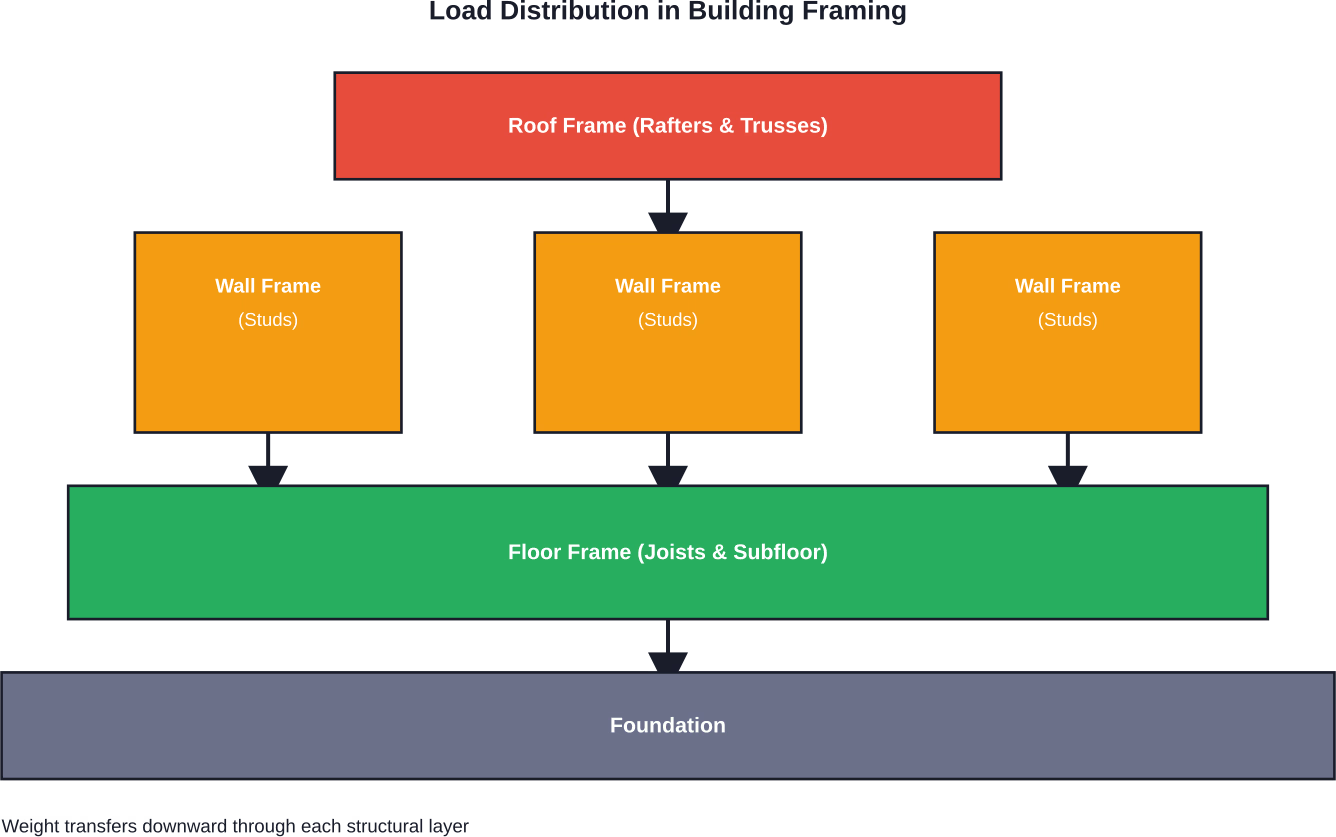
Every framing system works on a simple principle: distribute weight efficiently from top to bottom. Roofs transfer loads to walls, walls transfer to floors, and floors transfer to the foundation.
Any lower platform supports the weight of the platforms and walls above the level of its component headers and joists. This hierarchical load distribution is what keeps buildings standing for decades.
Primary Framing Materials Used in Construction
Material choice significantly impacts a building’s performance, cost, and construction timeline. The three dominant framing materials each offer distinct advantages.
Wood Framing
Wood remains the most common framing material in residential construction. It’s cost-effective, readily available, and familiar to most builders.
In some countries, framing lumber is subject to regulated standards that require a grade-stamp and a moisture content not exceeding 19%. This ensures dimensional stability and prevents warping or rot over time.
Common wood species for framing include Douglas fir, spruce, pine, cedar, and hemlock. Softwoods dominate because they’re easier to work with while still providing adequate strength.
الإطارات الفولاذية
Steel framing offers superior strength and fire resistance. It’s become increasingly popular in commercial construction and multi-story residential buildings.
Steel studs don’t warp, rot, or attract pests. They’re also lighter than wood, which can reduce foundation requirements. That said, steel conducts heat readily, requiring careful insulation planning to maintain energy efficiency.
Engineered Wood Products
Laminated veneer lumber (LVL), I-joists, and engineered trusses represent modern alternatives that combine wood fibers with adhesives to create stronger, more consistent products.
These materials can span greater distances without support, opening up more flexible floor plans and reducing material waste.
| Material | المزايا | Common Applications |
|---|---|---|
| Wood (Dimensional Lumber) | Cost-effective, easy to work with, renewable | Residential walls, floors, roofs |
| Steel | Fire-resistant, pest-proof, high strength-to-weight | Commercial buildings, multi-story structures |
| Engineered Wood | Consistent quality, longer spans, less waste | Floor joists, headers, roof trusses |
Four Historical Framing Methods
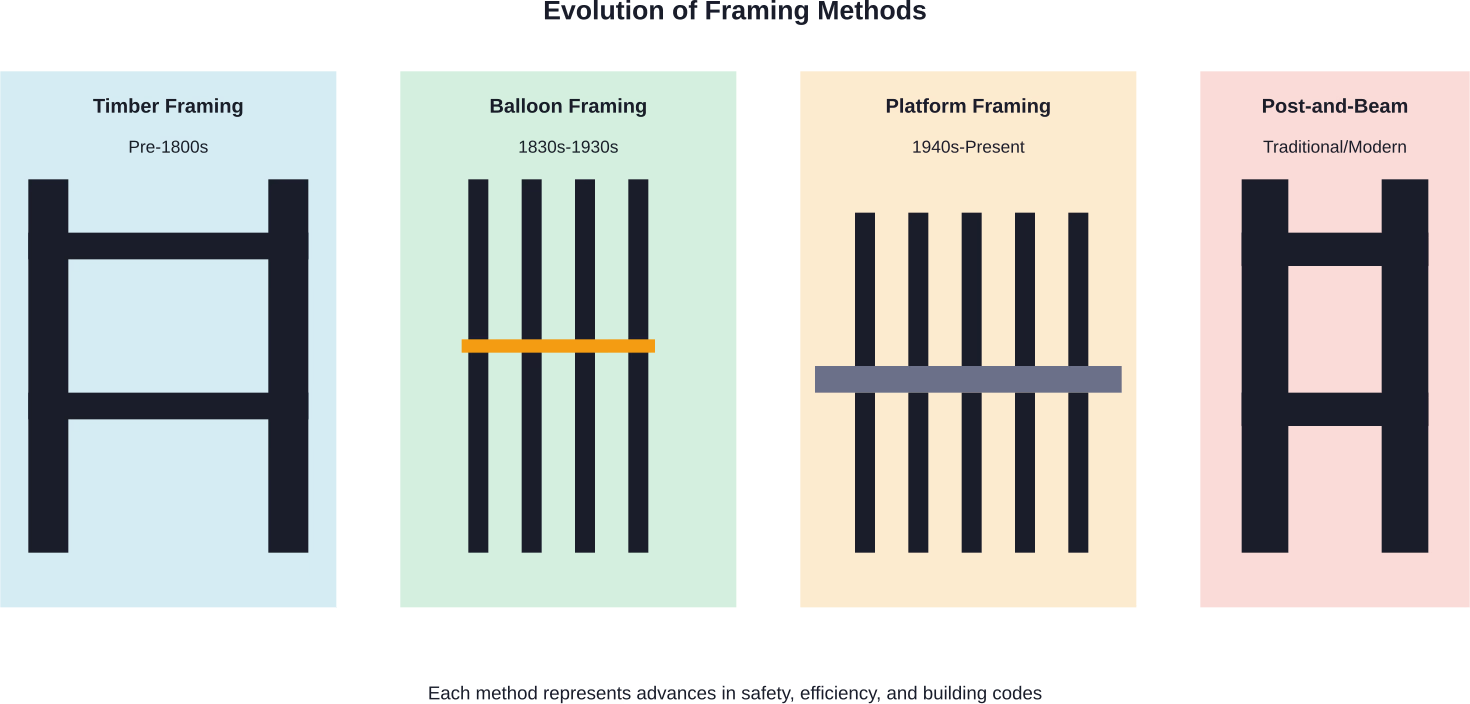
Construction framing has evolved significantly over centuries. Understanding these methods helps explain why modern techniques work the way they do.
Timber Framing
The oldest method uses large timber posts and beams joined with mortise-and-tenon connections. This technique dates back thousands of years and creates extremely durable structures.
Many timber-framed buildings from the 1600s still stand today. The method requires skilled craftspeople and substantial material, making it expensive for modern projects.
Balloon Framing
Developed in the 1830s, balloon framing revolutionized American construction. Long vertical studs run continuously from foundation to roof, with floor joists nailed to the studs.
While this created strong walls, it also created continuous cavities that acted as chimneys during fires. Fire safety concerns led to this method’s decline.
Platform Framing
Now the dominant residential method, platform framing builds one story at a time. Each floor serves as a platform for constructing the next level.
This approach is safer for workers and provides natural fire breaks between floors. According to OSHA guidance on fall protection in residential construction, platform framing allows for more effective safety measures during construction.
Post-and-Beam Framing
Similar to timber framing but using modern fasteners instead of traditional joinery, post-and-beam creates open interior spaces with exposed structural elements.
This method works well for contemporary designs where exposed beams add aesthetic value.
Key Components of a Framing System
Understanding framing terminology helps communicate effectively about construction projects. Here are the essential components.
Wall Framing Elements
Studs are the vertical members, typically spaced 16 or 24 inches apart. Top and bottom plates run horizontally, connecting the studs into wall sections.
Headers span openings for doors and windows, transferring loads around these gaps. Cripple studs and jack studs provide additional support around openings.
Floor Framing Elements
Joists are horizontal members that support floor loads. They rest on beams or bearing walls and are typically covered with plywood or oriented strand board (OSB) subflooring.
Rim joists run perpendicular to standard joists along the building’s perimeter, providing lateral support and enclosing the floor system.
Roof Framing Elements
Rafters create the sloped roof structure, running from the ridge board at the peak to the top plates of exterior walls. Roof trusses—prefabricated triangular units—have largely replaced traditional rafter systems in residential construction.
According to the American Wood Council’s 2024 Wood Frame Construction Manual (WFCM), modern roof framing must meet specific engineered design provisions based on wind, snow, and seismic loads determined by local conditions.
Why Framing Matters for Building Performance
Quality framing work influences nearly every aspect of a building’s performance and longevity.
Structural Stability
Properly designed and constructed framing prevents structural failure, floor sagging, and wall movement. It determines how well a building withstands wind, snow loads, seismic activity, and daily use.
Poor framing leads to cracked drywall, sticking doors, uneven floors, and in extreme cases, structural collapse.
كفاءة الطاقة
Framing creates cavities for insulation and affects thermal bridging—heat loss through structural elements. Advanced framing techniques can reduce thermal bridging and improve overall building envelope performance.
Steel framing requires additional insulation strategies due to its high thermal conductivity.
Construction Timeline and Cost
The framing stage typically represents a significant portion of total construction costs but heavily influences the project schedule. Delays during framing cascade through all subsequent trades.
Prefabricated wall panels and roof trusses can significantly accelerate construction compared to traditional stick-built methods.
Safety Considerations
OSHA regulations mandate specific fall protection measures during framing work. According to OSHA guidance documents, conventional fall protection (guardrails, safety nets, or personal fall arrest systems) must be used when residential construction workers are exposed to falls of six feet or more.
The framing stage accounts for a significant portion of construction-related injuries, making proper safety protocols essential.
Modern Framing Techniques and Standards
Construction standards continue evolving to improve safety, efficiency, and sustainability.
The American Wood Council develops and maintains standards for wood construction that are referenced in the International Building Code and International Residential Code. These standards ensure consistent quality across the industry.
Advanced framing (also called optimum value engineering) reduces lumber use while maintaining structural integrity. Techniques include 24-inch stud spacing, two-stud corners, and aligned framing that positions floor, wall, and roof members directly above each other for efficient load transfer.
Building information modeling (BIM) now allows architects and engineers to design framing systems digitally, identifying conflicts before construction begins and generating precise cut lists that reduce waste.
Get Your Framing Set Out Right

Framing issues don’t show up in reports – they show up when other trades can’t build on top of it. Misaligned walls, shifted grids, small dimensional errors. At that point, everything starts adjusting to the frame, and that’s where time and cost go.
باورخ gives you a clear read on what is actually built versus what was intended. You see where geometry is already off, where it will affect follow-on trades, and what needs to be corrected now, before it spreads across the project.
Catch Framing Issues Before They Spread
What you get from Powerkh:
- Clear visibility into where framing layout is drifting from design
- Early detection of misalignment that affects other trades
- Fewer downstream fixes across MEP and finishes
Contact Powerkh now and make sure your framing is set correctly before it impacts the rest of the project.
Conclusion: The Foundation of Quality Construction
Framing represents far more than the wooden or steel skeleton visible at construction sites. It’s the structural foundation that determines a building’s strength, safety, energy performance, and longevity.
Understanding framing basics helps homeowners, designers, and construction professionals communicate effectively and make informed decisions. Whether planning new construction or evaluating existing structures, recognizing quality framing work is essential.
The methods and materials may evolve, but the fundamental importance of proper framing remains constant. It’s the critical stage where plans transform into physical structures that will serve occupants for generations.
If you’re planning a construction project, prioritize finding experienced framers who understand both traditional techniques and modern building science. The extra attention to framing quality pays dividends throughout the building’s entire lifespan.
الأسئلة الشائعة
How long does the framing stage typically take?
The framing stage duration varies based on size, complexity, weather conditions, and crew size. Larger or more complex structures require additional time, while prefabricated components can accelerate the process.
Can framing be done in cold weather?
Yes, framing work can continue in cold weather, though extreme conditions may slow productivity and create safety concerns. Wood framing isn’t significantly affected by cold, but wet or icy conditions create hazards for workers and can damage materials.
What’s the difference between rough framing and finish framing?
Rough framing creates the structural skeleton – walls, floors, and roof systems. Finish framing also called trim carpentry adds decorative and functional elements like door casings, baseboards, crown molding, and built-in features after walls are closed up.
Do I need an engineer for framing design?
Residential construction typically follows prescriptive building codes that don’t require engineering for standard designs. However, unusual spans, complex roof systems, heavy loads, or construction in high wind or seismic zones often require engineered framing plans stamped by a licensed structural engineer.
How is framing inspected?
Building departments conduct framing inspections before walls are covered. Inspectors verify that framing members meet code requirements for size, spacing, and placement, that proper fasteners are used, that structural elements align with approved plans, and that required fire blocking is installed.
What causes framing lumber prices to fluctuate?
Lumber prices respond to supply and demand factors including housing starts, mill capacity, forest availability, tariffs, transportation costs, and natural disasters affecting timber regions. Prices can vary significantly year to year.
Can existing framing be modified during renovation?
Yes, but structural modifications require careful planning. Removing or altering load-bearing walls necessitates installing beams or other supports to carry the loads previously handled by the removed framing. Always consult a structural engineer before modifying load-bearing elements.

دراسات الحالة لدينا
لقد تعاملنا مع أكثر من 200 مشروع من مشاريع نمذجة معلومات المباني ونمذجة معلومات المباني للقطاعات التجارية والصناعية والسكنية.
يشمل عملنا ما يلي:
أتمتة تصميم القوالب
Our client from
California, USA
أتمتة تصميم السقف المعلق
Our client from
New York, USA
أتمتة تصميم إطارات الحائط
Our client from
California, USA