هل لديك أي أسئلة؟ اتصل بنا!
انضم إلى فريقنا!
اطلب عرض أسعار أو استشارة مجانية

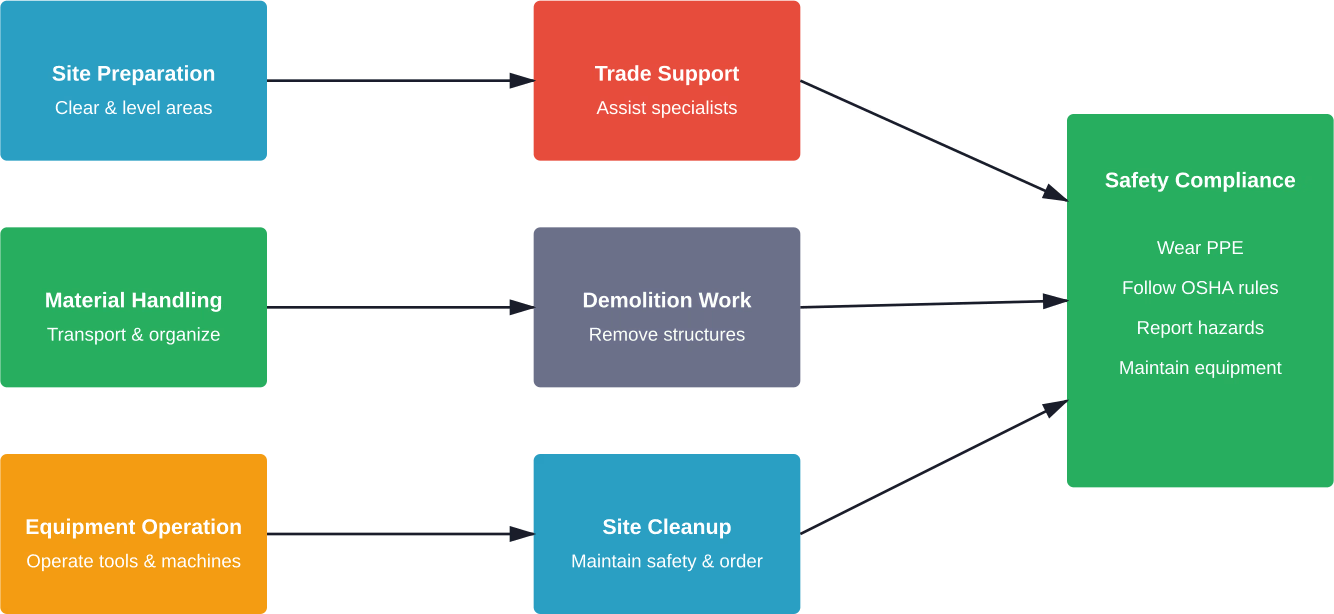
A construction laborer performs essential physical tasks on building sites, including material handling, site preparation, equipment operation, and cleanup work. According to the Bureau of Labor Statistics, these workers earn a median annual wage of $46,050 as of May 2024, with most positions requiring no formal education but offering on-the-job training. Construction laborers serve as the backbone of construction projects, supporting skilled tradespeople across residential, commercial, and infrastructure development.
Construction is all around us. The roads we drive on, the buildings where we work, and the homes where we live all started with the physical labor of construction workers. But what exactly does a construction laborer do?
Here’s the thing—construction laborers are the essential workforce that keeps building projects moving forward. They’re not necessarily the electricians or carpenters you might picture first. Instead, they’re the versatile workers who handle the physically demanding tasks that make specialized work possible.
This guide breaks down everything about construction laborers: their daily responsibilities, earning potential, how to enter the field, and what the future holds for this occupation.
Understanding the Construction Laborer Role
Construction laborers and helpers perform tasks involving physical labor at construction sites. According to the Bureau of Labor Statistics, these workers may operate hand and power tools of all types, including air hammers, earth tampers, cement mixers, small mechanical hoists, and surveying equipment.
The role differs from specialized construction trades in an important way. While carpenters, electricians, and plumbers focus on specific technical skills, construction laborers provide the foundational support that allows these specialists to work efficiently.
Core Responsibilities
Construction laborers handle a wide variety of tasks. The O*NET database identifies several key duties that define this occupation:
- Using, supplying, or holding materials and tools for other workers
- Cleaning work areas and equipment throughout construction sites
- Digging trenches and backfilling holes to prepare sites
- Setting braces to support the sides of excavations
- Operating equipment like concrete mixers and jackhammers
- Loading and unloading building materials
- Removing debris, hazardous materials, and waste
The specific tasks vary based on project type. Residential construction might involve preparing home foundations and assisting framers. Commercial projects could require more equipment operation and material coordination. Infrastructure work often means roadway preparation and utility installation support.
Who Construction Laborers Support
These workers don’t typically work in isolation. They’re part of construction teams that include:
- Carpenters who need materials positioned and waste removed
- Masons who require mortar mixed and bricks transported
- Concrete finishers who depend on site preparation and cleanup
- Equipment operators who need ground conditions assessed
- Project supervisors coordinating multiple trade activities
The Bureau of Labor Statistics notes that construction laborers perform duties requiring less specialized skill than trade workers, but their contributions remain absolutely critical to project success.
Add BIM Support to Construction Labor Planning

Construction labor depends on clear drawings, coordinated systems, and fewer mistakes in the field. باورخ provides BIM modeling, coordination, shop drawings, Scan to BIM, and detailing services that help project teams prepare better before work starts on site. That can make labor planning and execution easier, especially on more complex builds.
Need Better Models and Drawings for Field Work?
Talk with Powerkh to:
- prepare coordinated BIM models and documentation
- create shop drawings for fabrication and installation
- use Scan to BIM for existing conditions and as-built work
👉 Contact Powerkh to review your drawings, scope, and BIM needs.
Daily Work Activities and Environment
What does a typical workday look like? That actually varies considerably based on project phase and type.
Morning often starts with site setup—unloading materials from delivery trucks, organizing tools, and preparing work areas for the day’s activities. Mid-day tasks might include assisting trade workers, operating machinery, or performing demolition work. Afternoons typically involve cleanup, securing the site, and preparing for the next day.
Physical Demands
Real talk: this work is physically challenging. Construction laborers spend most of their time on their feet, frequently lifting materials weighing 50 pounds or more. The O*NET work context data shows that 94% of these workers wear common protective or safety equipment daily.
Weather exposure is significant. Outdoor work continues in heat, cold, and various conditions. OSHA regulations govern construction site safety, but laborers still face exposure to:
- Extreme temperatures and weather conditions
- Loud noise from equipment and tools
- Dust, fumes, and airborne particles
- Physically demanding positions (bending, kneeling, crouching)
- Heights when working on scaffolding or elevated platforms
According to OSHA, construction remains a high-hazard industry. Workers engage in activities that may expose them to serious hazards including falls from heights, electrocution, caught-in or struck-by incidents, and repetitive motion injuries.
Work Schedule Patterns
Most construction laborers work full-time schedules. Projects with tight deadlines may require overtime, weekend work, or extended shifts. Conversely, weather delays or seasonal slowdowns can reduce available hours.
The construction industry experiences seasonal employment fluctuations in many regions. Bureau of Labor Statistics employment data shows construction activity typically peaks during warmer months in northern climates, affecting laborer work availability.
Education, Training, and Requirements
One of the most appealing aspects of construction laborer work? The barrier to entry remains relatively low compared to many occupations.
Educational Requirements
According to the Bureau of Labor Statistics, formal education is not typically required for construction laborer positions. However, some employers prefer candidates who have a high school diploma or equivalent.
That doesn’t mean preparation doesn’t matter. Successful construction laborers often have:
- Basic math skills for measurements and material calculations
- Reading comprehension for safety instructions and plans
- Physical stamina and strength for demanding tasks
- Mechanical aptitude for equipment operation
- Reliability and punctuality for team coordination
Some high school vocational programs and community colleges offer construction-related courses that provide helpful foundational knowledge, but these aren’t mandatory for entry-level positions.
On-the-Job Training
Most construction laborers learn their skills through on-the-job training. New workers typically start with basic tasks under experienced worker supervision, gradually taking on more complex responsibilities.
Training duration varies but commonly lasts several weeks to months. During this period, laborers learn:
- Proper tool and equipment operation techniques
- Construction site safety protocols and OSHA requirements
- Material handling and storage procedures
- Basic construction terminology and processes
- Company-specific policies and expectations
Some construction companies and unions offer formal apprenticeship programs that combine paid work with structured training. These programs provide more comprehensive skill development and can lead to advancement opportunities.
Certifications and Licenses
While not universally required, certain certifications enhance employability and earning potential:
- OSHA 10-hour or 30-hour construction safety certification
- Forklift operation certification
- Scaffold user or erector certification
- First aid and CPR certification
- Flagging certification for traffic control
Equipment operation may require specific licenses depending on machinery type and local regulations. Commercial driver’s licenses become necessary for positions involving vehicle operation.
Compensation and Benefits
Let’s talk numbers. What do construction laborers actually earn?
Wage Data
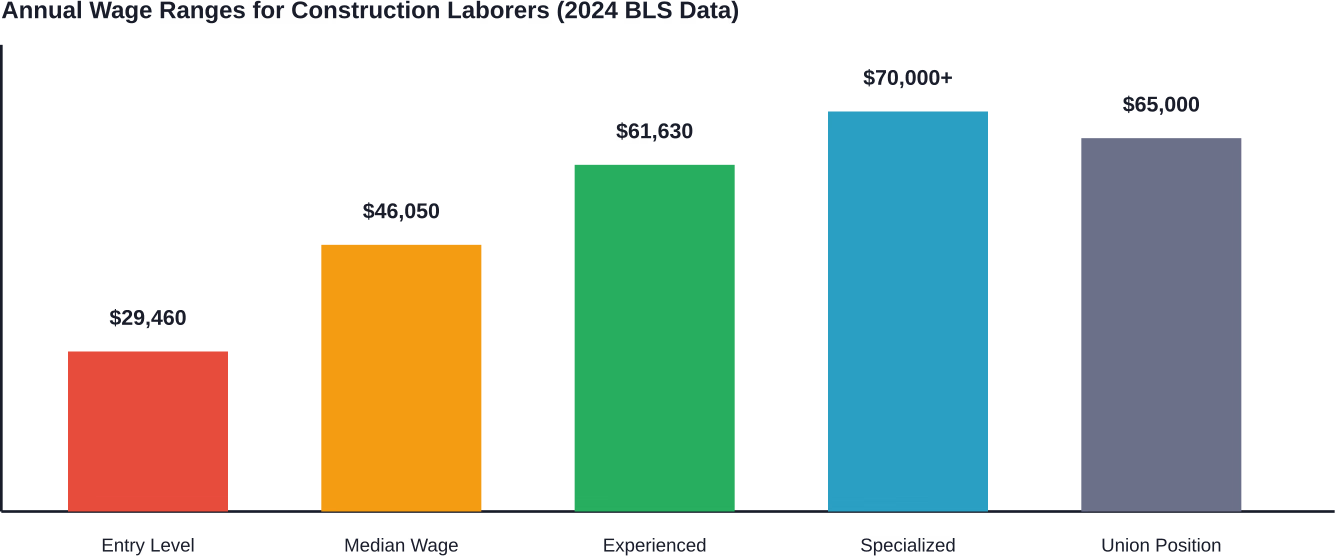
The Bureau of Labor Statistics reports that the median annual wage for construction laborers and helpers was $46,050 in May 2024. That breaks down to approximately the median hourly wage of $22.14 for construction laborers and helpers as of May 2024.
But that’s the median—meaning half of workers earn more and half earn less. Wage ranges vary considerably based on several factors:
| Factor | Impact on Wages |
|---|---|
| الموقع الجغرافي | Urban areas and regions with higher costs of living typically offer higher wages |
| Experience level | Entry-level workers earn less; experienced laborers command premium rates |
| Union membership | Union positions often provide higher wages and better benefits |
| Specialization | Laborers with equipment operation or technical skills earn more |
| Project type | Commercial and industrial projects may pay more than residential work |
| Employer size | Larger construction firms often offer more competitive compensation |
According to Bureau of Labor Statistics data for May 2024, construction laborers and helpers showed wage variation. Geographic differences matter significantly—the same laborer position might pay $35,000 annually in one region and $55,000 in another.
Benefits and Additional Compensation
Beyond base wages, many construction laborers receive:
- Health insurance coverage (medical, dental, vision)
- Retirement plans and pension contributions
- Paid time off and holidays
- Overtime pay for hours beyond 40 per week
- Tool allowances or provided equipment
- Training and certification reimbursement
Union positions typically offer more comprehensive benefits packages. The trade-off often involves union dues and adherence to collective bargaining agreements.
Career Outlook and Growth Potential
What does the future hold for construction laborers?
Job Market Projections
The Bureau of Labor Statistics projects that overall employment in construction and extraction occupations will grow faster than the average for all occupations from 2024 to 2034. About 649,300 openings are projected each year on average over the decade.
Several factors drive this positive outlook:
- Infrastructure development and repair needs across aging systems
- Residential construction responding to housing demand
- Commercial building projects in growing metropolitan areas
- Retirement of current construction workers creating openings
- Economic growth spurring construction activity
According to Bureau of Labor Statistics data, construction employment reached 10.8 million in 2020 despite pandemic impacts. The industry has shown resilience and recovery capacity even during economic challenges.
Advancement Opportunities
Construction laborer positions often serve as entry points to construction careers. Advancement paths include:
- Specialized laborer roles requiring specific equipment expertise
- Lead laborer or crew chief positions supervising other workers
- Apprenticeships in skilled trades (carpentry, electrical, plumbing)
- Equipment operator positions for heavy machinery
- Construction supervisor and foreman roles
- Project coordination and management positions
Many successful contractors, project managers, and construction business owners started as laborers. The hands-on experience provides invaluable understanding of construction processes, safety requirements, and industry operations.
Industry Trends Affecting Laborers
Several developments are shaping construction laborer work:
- Technology integration: Power tools, GPS surveying equipment, and digital project management systems require basic technical literacy.
- Safety emphasis: OSHA regulations continue evolving, requiring ongoing safety training and compliance awareness.
- Green building practices: Sustainable construction methods introduce new materials and techniques that laborers must learn.
- Labor shortages: Many regions face construction worker shortages, creating opportunities but also increasing workload pressures.
Similar and Related Occupations
Construction laborers share similarities with several other occupations. Understanding these relationships helps clarify the role and potential career transitions.
| Occupation | Relationship to Construction Laborers | 2024 Median Pay |
|---|---|---|
| Carpenters | Skilled trade that laborers often support and may advance into | Higher than laborers |
| Equipment Operators | Operate heavy machinery that laborers may learn to use | Comparable to higher-paid laborers |
| Cement Masons | Specialized concrete work that laborers assist with | Similar to experienced laborers |
| Painters and Paperhangers | Finishing trades supported by helpers and laborers | Comparable wages |
| Roofers | Specialized construction work with similar physical demands | Similar wage range |
The Bureau of Labor Statistics Occupational Outlook Handbook provides detailed comparisons across construction and extraction occupations, helping workers understand career options and transitions.
Who Thrives as a Construction Laborer?
Not everyone finds construction laborer work fulfilling. Certain characteristics and preferences align better with the role’s demands.
Physical Attributes
Successful construction laborers typically have:
- Good overall physical fitness and stamina
- Ability to lift 50+ pounds repeatedly throughout shifts
- Comfort working in various weather conditions
- Tolerance for physically demanding positions
- No significant height or confined space limitations
Personal Qualities
Beyond physical capability, effective laborers demonstrate:
- Strong work ethic and reliability
- Ability to follow instructions and safety protocols
- Team-oriented mindset for collaborative work
- Problem-solving skills for unexpected challenges
- Attention to detail for quality and safety
- Willingness to learn and adapt to new tasks
Community discussions among construction workers frequently emphasize that attitude matters as much as ability. Showing up on time, working hard, and maintaining a positive approach creates opportunities for advancement and better positions.
Getting Started in Construction Labor
Ready to pursue construction laborer work? Here’s how to begin.
Finding Opportunities
Construction laborer positions appear through multiple channels:
- Construction company websites and direct applications
- General job boards and employment websites
- Union hiring halls and apprenticeship programs
- Staffing agencies specializing in construction trades
- Local workforce development centers
- Networking with current construction workers
Entry-level positions typically don’t require extensive application materials. A completed application, basic resume, and willingness to start immediately often suffice.
Preparing for Success
Before starting construction work:
- Obtain appropriate work clothing and boots (steel-toed)
- Consider completing OSHA 10-hour safety training
- Ensure reliable transportation to job sites
- Prepare for early morning start times
- Understand the physical demands and prepare accordingly
Some employers provide tools and safety equipment, while others expect workers to supply their own. Clarify these expectations during the hiring process.
First-Day Expectations
New construction laborers should anticipate:
- Safety orientation and site-specific hazard briefings
- Assignment to an experienced worker or crew for training
- Basic tasks like material organization and cleanup initially
- Emphasis on safety compliance and proper procedures
- Physical exhaustion—the work becomes easier as fitness improves
The first few weeks test commitment and capability. Workers who demonstrate reliability and willingness to learn typically find increasing responsibilities and opportunities.
Industry Demographics and Diversity
Understanding who currently works in construction provides context for the field’s culture and opportunities.
According to Bureau of Labor Statistics data, in 2020, women accounted for 1.2 million of those employed in the construction industry—about 1 in 10 workers. This represents a minority but growing presence in traditionally male-dominated construction work.
The construction industry has made efforts to diversify its workforce, recognizing that broader recruitment expands the available talent pool. Programs targeting underrepresented groups aim to create more inclusive construction environments.
Age distribution spans widely. Young workers often enter construction as first careers, while others transition into the field after other work experiences. The physical demands can favor younger workers, but experience and knowledge remain valuable across age ranges.
The Bottom Line on Construction Laborers
Construction laborers form the essential workforce that transforms architectural plans into physical reality. They perform the demanding physical tasks that support specialized tradespeople, operate equipment, prepare sites, and maintain safety across construction projects.
The occupation offers accessible entry for workers without college degrees, with median wages around $46,050 in May 2024 according to Bureau of Labor Statistics data. On-the-job training provides necessary skills, and advancement opportunities exist for motivated workers willing to learn and demonstrate reliability.
The work is physically demanding and involves exposure to weather and safety hazards. But for those who enjoy active work, appreciate visible results, and value hands-on contribution to building communities, construction laborer positions provide meaningful employment with solid earning potential.
With positive job growth projections through 2034 and ongoing infrastructure investment, construction laborers will remain in demand across residential, commercial, and public works projects. The field offers entry points to construction careers and pathways to advancement for workers who bring strong work ethic and commitment to safety.
Interested in starting a construction career? Research local construction companies, check union opportunities in your area, and consider completing OSHA safety training to strengthen your candidacy. The construction industry needs dedicated workers—and this could be your opportunity to build something more than structures: a solid career foundation.
الأسئلة الشائعة
Do construction laborers need a college degree?
No. Most construction laborer roles do not require formal education, and skills are typically learned through on-the-job training.
How much do construction laborers make per hour?
Wages vary by location and experience, with average hourly pay ranging from entry-level rates to higher earnings in experienced roles and major cities.
Is construction laborer work dangerous?
Construction work involves risks, but proper training, safety regulations, and protective equipment significantly reduce the chance of injury.
Can construction laborers advance to better positions?
Yes. Many laborers move into skilled trades, equipment operation, supervision, or management roles with experience and training.
What’s the difference between construction laborers and helpers?
Helpers usually assist specific trades, while laborers perform more general tasks, though the roles often overlap.
Do construction laborers work year-round?
Work availability depends on climate and employer. Some regions have year-round work, while others slow down during certain seasons.
What physical requirements do construction laborers need to meet?
Laborers must handle physically demanding tasks, including lifting, standing for long periods, and working in different weather conditions.

دراسات الحالة لدينا
لقد تعاملنا مع أكثر من 200 مشروع من مشاريع نمذجة معلومات المباني ونمذجة معلومات المباني للقطاعات التجارية والصناعية والسكنية.
يشمل عملنا ما يلي:
أتمتة تصميم القوالب
Our client from
California, USA
أتمتة تصميم السقف المعلق
Our client from
New York, USA
أتمتة تصميم إطارات الحائط
Our client from
California, USA