هل لديك أي أسئلة؟ اتصل بنا!
انضم إلى فريقنا!
اطلب عرض أسعار أو استشارة مجانية

Quick Summary: A change order in construction is an official written document that modifies the original contract between the owner, contractor, and architect. It formally adjusts the scope of work, project timeline, or contract price after all parties agree to the changes. Change orders become legally binding once signed and are essential for documenting any deviations from the initial construction agreement.
Construction projects rarely go exactly as planned. Materials become unavailable, owners change their minds, site conditions surprise everyone, and design errors surface during building. That’s where change orders come in—formal mechanisms that keep projects moving when reality diverges from blueprints.
Understanding change orders isn’t just about paperwork. It’s about protecting everyone involved, maintaining budget control, and ensuring the finished building actually serves its purpose.
Let’s break down everything contractors, owners, and architects need to know about construction change orders.
What Is a Change Order?
According to the Associated General Contractors of America (AGC), a change order refers to an official change of any kind in the original scope of work or terms of a construction contract agreed to by the owner, contractor, and project designer. The key word here is “agreed”—change orders require mutual consent.
Change orders include work that must be added or removed from the original contract. Depending on the magnitude of change needed, the original contract amount and terms may be significantly altered.
Here’s the critical part: change orders are legally binding modifications. Once signed by all parties, they become part of the contract documents with the same weight as the original agreement.
Change Orders vs. Other Contract Modifications
Not all contract modifications are change orders. The construction industry recognizes several distinct types:
| Modification Type | When Used | Who Signs | Cost/Time Impact |
|---|---|---|---|
| Change Order | When all parties agree to the change | Owner, Contractor, Architect | Can affect both budget and schedule |
| Construction Change Directive (CCD) | Work must proceed before agreement on cost/time | Owner and Architect only | Price negotiated later |
| Unilateral Modification | Administrative changes not affecting terms materially | One party (typically owner/government) | Usually no cost impact |
| Bilateral Modification | Material changes requiring agreement | All affected parties | Negotiated impact |
The U.S. General Services Administration (GSA) defines change orders under FAR 52.243 as changes to contract work pursuant to the changes clause. For federal projects, specific procedures govern how these modifications get processed and definitized.
Why Change Orders Happen
Change orders aren’t necessarily anyone’s fault. Construction involves thousands of decisions, complex coordination, and external factors nobody controls.
Common reasons include:
Design Changes and Owner Requests
Owners frequently request modifications after seeing the building take shape. A conference room layout doesn’t work. The lobby needs more visual impact. Equipment specifications change because technology evolved since the design phase.
These changes are legitimate—buildings should serve their users’ needs. But they require formal documentation through change orders.
Unforeseen Site Conditions
Hidden conditions are among the most common change order triggers. Contractors discover contaminated soil, unexpected utilities, or structural issues that weren’t visible during design.
When reality underground or behind walls differs from contract documents, work scope must adjust. That adjustment happens through change orders.
Design Errors and Omissions
Even experienced architects produce documents with errors. According to AIA research on contingency management, most errors and omissions amount to less than 5 percent of a project’s budget.
The AIA defines construction documents as instruments of service—representations, in any medium of expression now known or later developed, of the tangible and intangible creative work performed by the Architect and the Architect’s consultants under their respective professional services agreements.
Code and Regulatory Changes
Building codes evolve. Permits reveal requirements not anticipated during design. Inspectors interpret regulations differently than designers expected.
Regulatory compliance isn’t optional, so these changes must be incorporated through the change order process.
Market Conditions and Material Availability
Supply chain disruptions, material shortages, and product discontinuations force substitutions. When specified materials become unavailable or prohibitively expensive, the contract scope must be modified.
These modifications often involve value engineering—finding alternative solutions that maintain quality while managing costs.
What Every Change Order Should Include
Proper change order documentation protects all parties and creates a clear record. Every change order should contain specific elements to be enforceable and useful.
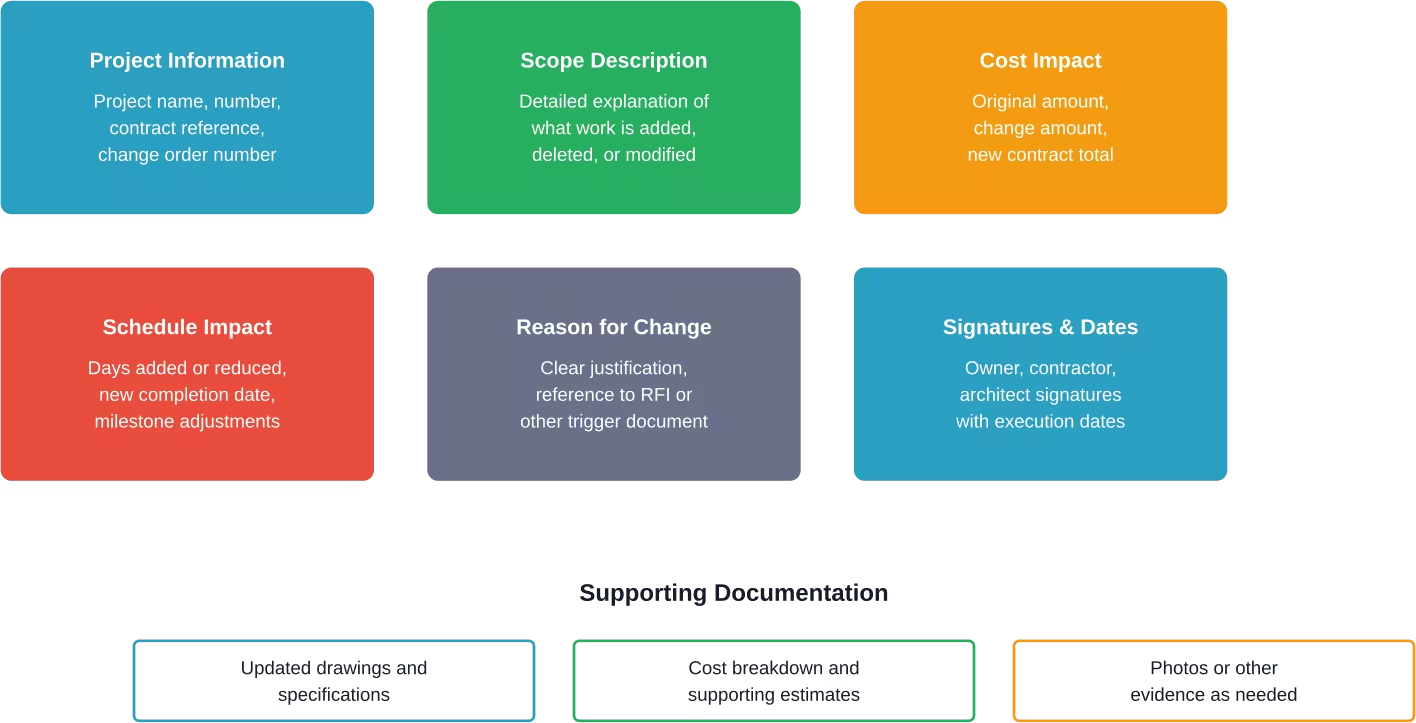
Sequential Numbering and Reference
Each change order needs a unique number that references the original contract. This creates an audit trail showing how the project evolved from initial agreement to final completion.
Detailed Scope Description
Vague descriptions create disputes. The change order must specify exactly what work is being added, deleted, or modified. Reference specific drawing details, specification sections, or locations.
Complete Cost Breakdown
Show the math. Include material costs, labor hours, equipment, and any markup for overhead and profit. Transparency here prevents payment disputes later.
The total change order value may end up being positive, negative, or neutral depending on the net change. If new work costs seven thousand dollars but deleted work was originally priced at five thousand dollars, the change order adds two thousand dollars to the contract.
Time Impact Analysis
Does this change affect the completion date? Even if it doesn’t, document that fact. Time extensions are often more contentious than cost increases.
Authorization Signatures
The AIA standard documents and most construction contracts require signatures from the owner, contractor, and architect. Without all required signatures, the change order isn’t enforceable.
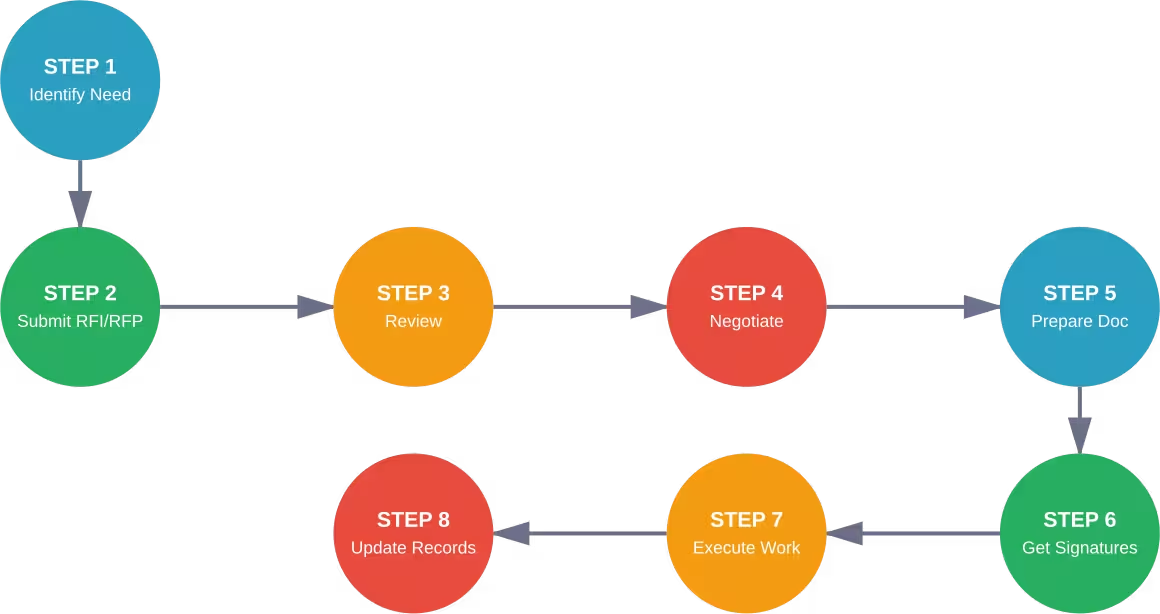
The Change Order Process Step-by-Step
Effective change order management follows a structured workflow. Here’s how it typically unfolds:
Step 1: Identify the Need for Change
Someone recognizes that the contract scope must be modified. This might be the contractor encountering unforeseen conditions, the architect correcting a design issue, or the owner requesting an upgrade.
Step 2: Submit a Request for Information or Proposal Request
The party identifying the change formally documents it. Contractors often submit a Request for Information asking how to proceed, or a Proposal Request outlining the change and its estimated impact.
This initial documentation starts the paper trail and puts all parties on notice.
Step 3: Review and Evaluation
The architect reviews the request for technical implications. The owner evaluates whether the change is necessary or desired. The contractor refines cost and schedule estimates.
This phase involves collaboration. Design adjustments might reduce costs. Value engineering might achieve the same goal differently.
Step 4: Negotiate Terms
Cost and schedule impacts get negotiated. Contractors typically include markup percentages in the construction contract up front. Markup for overhead and profit on change order work commonly ranges from 10-15% on average, though this varies by project and contractor.
Contractors may charge higher markups on change orders—typically ranging from 15-25% for overhead and profit combined—particularly for disruptive changes that affect workflow efficiency.
Step 5: Prepare the Change Order Document
Once terms are agreed, someone prepares the formal change order document. Many projects use standard forms like the AIA G701 Change Order form, which the AIA Contract Documents system recognizes as an industry standard.
Step 6: Obtain Signatures
The document circulates for signatures. All required parties must sign before the change order becomes effective.
Step 7: Execute the Work
With the signed change order in hand, the contractor proceeds with the modified scope. The change order becomes part of the contract documents for future reference.
Step 8: Update Project Records
Update the contract sum, adjust the schedule, and modify affected drawings and specifications. These updated documents guide the remaining work.
Get Change Orders Approved Faster

Change orders stall when there’s no clear proof – what changed, where it changed, and why it affects scope. باورخ makes that visible by comparing the design with what’s actually built on site, so changes are backed by facts, not explanations. Instead of long back-and-forth, teams see the difference between planned and installed work. That makes it easier to justify changes and agree on impact.
Make Every Change Order Clear
Powerkh shows what changed on site, no assumptions:
- Design vs actual, side by side
- Exact location of the change
- Clear impact on scope
- Site-based proof
- Easy to review format
Contact Powerkh to get change orders approved faster.
Change Order Costs and Markup Practices
Cost is where change orders often create tension. Understanding typical pricing practices helps set realistic expectations.
Direct Costs vs. Markup
Change orders include both direct costs and markup. Direct costs cover materials, labor, equipment, and subcontractor charges for the actual work. Markup covers the contractor’s overhead and profit.
Overhead includes administrative time processing the change order, project management, insurance allocation, and general conditions that extend due to schedule impact. Profit compensates the contractor for taking on the work and associated risk.
Typical Markup Percentages
Most construction contracts specify allowable markup on change orders up front. Typical contractor markup ranges from 10-25% total, with 15% commonly cited for combined overhead and profit on change order work.
Larger changes might carry lower percentage markups because fixed administrative costs spread across bigger numbers. Small changes often justify higher percentages because processing overhead remains constant regardless of change size.
Premium Pricing for Disruptive Changes
Changes that disrupt workflow, require remobilization, or force inefficient sequencing legitimately cost more per unit than the same work included in original plans. Contractors price this inefficiency into change order proposals.
When Change Orders Reduce Contract Price
Not all change orders increase costs. Deleting scope, substituting less expensive materials, or simplifying details can reduce the contract price.
The change order process works the same way—it just shows a negative number for the change amount and a reduced total contract sum.
Common Change Order Examples
Real-world examples illustrate how change orders work in practice:
Material Substitution
The specified flooring manufacturer discontinued the product line. The change order documents substituting an equivalent product from a different manufacturer, along with any cost difference.
Additional Electrical Outlets
After seeing the space framed, the owner requests six additional electrical outlets in the conference room. The change order adds the outlets, includes material and labor costs, and may or may not extend the schedule depending on construction phase.
Structural Reinforcement
The contractor discovers existing structural conditions that require additional reinforcement not shown in plans. The change order adds steel reinforcement, engineering fees for revised calculations, and potentially extends the schedule for design and approval time.
Scope Deletion
Budget constraints force the owner to delete the planned outdoor patio. The change order removes that scope, deducts the contractor’s cost for that work, and potentially accelerates the completion date.
Best Practices for Managing Change Orders
Effective change order management protects all parties and keeps projects running smoothly.
Document Everything Immediately
Don’t wait. When conditions arise that might require a change, document them immediately with photos, measurements, and written descriptions. Memory fades and evidence disappears.
Establish Clear Approval Authority
Who can approve change orders? What dollar thresholds require different levels of authorization? Define this in the contract and communicate it to all project participants.
Use Standard Forms
AIA Contract Documents and other industry-standard forms provide tested language and structure. They’re recognized by courts and familiar to construction professionals.
Maintain a Change Order Log
Track all change orders in a master log showing number, description, date submitted, date approved, cost impact, and schedule impact. This creates accountability and makes reporting straightforward.
Process Change Orders Promptly
Delays in processing change orders create uncertainty that affects scheduling and can lead to disputes. The GSA requires specific procedures and timelines for definitizing equitable adjustments to prevent indefinite limbo.
Separate Scope Agreement from Price Agreement
Sometimes work must proceed before costs can be fully negotiated. Construction Change Directives allow work to start while pricing gets resolved. This prevents stoppages but requires clear documentation of the interim arrangement.
Build in Contingency
According to AIA guidance on managing contingency allowances, a properly managed contingency provides a safeguard for the designer, contractor, and owner to complete the project on budget despite inevitable changes.
A predetermined contingency amount or percentage held for unpredictable changes mitigates risk for all parties.
Legal and Contractual Considerations
Change orders have legal implications that deserve attention.
Contract Modification Requirements
Most construction contracts specify exactly how modifications must be executed. Some require written change orders signed by all parties before any changed work begins. Others allow verbal authorization followed by written confirmation.
Know what the contract requires and follow it precisely. Performing work without proper authorization creates payment risk.
Document Retention
Change orders are contract documents that must be retained according to applicable laws and contract terms. Some document retention requirements extend 12 years depending on jurisdiction and project type.
Create a document retention policy and follow it consistently.
Dispute Resolution
Despite best efforts, change order disputes happen. Contracts typically specify dispute resolution procedures—mediation, arbitration, or litigation.
The order of precedence for contract documents matters when provisions conflict. AIA contracts establish specific hierarchies determining which documents govern when conflicts arise.
Claims vs. Change Orders
When parties can’t agree on a change, it may escalate to a claim. Claims are formal demands for additional compensation or time that proceed through dispute resolution rather than mutual agreement.
Change orders represent cooperation. Claims represent conflict. The goal is always to resolve issues through change orders before they become claims.
Technology and Change Order Management
Modern construction increasingly relies on software to manage change orders efficiently. Digital platforms track requests, route approvals, maintain logs, and integrate with project schedules and budgets.
These systems create transparency, reduce processing time, and provide audit trails that prevent disputes. They’re particularly valuable on large projects with numerous change orders.
But technology doesn’t replace good processes. Even with sophisticated software, the fundamentals remain: clear documentation, prompt processing, fair negotiation, and proper authorization.
الأسئلة الشائعة
What’s the difference between a change order and a construction change directive?
A change order requires agreement from all parties—owner, contractor, and architect—before work begins. A construction change directive allows work to proceed immediately when agreement on cost or schedule is not yet reached, with details finalized afterward.
Can a contractor refuse a change order?
Contractors generally must accept valid change orders within the contract scope, though they can negotiate terms. If the change is outside scope or unreasonable, refusal may be justified depending on contract conditions.
How long does the change order process typically take?
Approval timelines range from a few days for simple changes to several weeks for complex ones. The duration depends on project size, required approvals, and organizational processes.
Are change orders always more expensive than original contract work?
Not always. Some change orders reduce costs if scope is removed or simplified. However, many changes increase costs due to disruptions, additional work, and reduced efficiency.
What happens if work proceeds without a signed change order?
Proceeding without formal approval creates financial and legal risks. Contractors may not get paid, and owners may face disputes. Written authorization is strongly recommended before starting changes.
Do all contracts allow change orders?
Yes. Nearly all construction contracts include provisions for modifications. The exact process depends on the contract type and governing regulations.
How can owners minimize the need for change orders?
Thorough planning, complete design development, early stakeholder input, and proper site investigation help reduce change orders. However, some changes are inevitable, so contingency planning is important.
الخاتمة
Change orders are fundamental to construction project management. They provide the formal mechanism for adapting contracts when reality diverges from plans—and reality always diverges at least somewhat.
Understanding change orders protects contractors seeking fair compensation for additional work, owners managing budgets and ensuring quality, and architects coordinating design intent with built reality.
The keys to effective change order management are straightforward: document thoroughly, process promptly, negotiate fairly, and formalize properly. Follow the established process, use standard forms, and maintain clear communication.
When managed well, change orders keep projects moving forward despite inevitable surprises. When managed poorly, they create disputes, delays, and cost overruns.
Whether dealing with your first change order or your thousandth, the principles remain constant. Treat change orders as essential tools rather than unwelcome complications, and projects benefit from the flexibility they provide.
Ready to implement better change order processes on your projects? Start by reviewing your contract’s modification provisions, establishing clear approval workflows, and creating documentation standards that will hold up under scrutiny. Effective change order management isn’t just about paperwork—it’s about maintaining the relationships and trust that successful construction requires.

دراسات الحالة لدينا
لقد تعاملنا مع أكثر من 200 مشروع من مشاريع نمذجة معلومات المباني ونمذجة معلومات المباني للقطاعات التجارية والصناعية والسكنية.
يشمل عملنا ما يلي:
أتمتة تصميم القوالب
Our client from
California, USA
أتمتة تصميم السقف المعلق
Our client from
New York, USA
أتمتة تصميم إطارات الحائط
Our client from
California, USA


