هل لديك أي أسئلة؟ اتصل بنا!
انضم إلى فريقنا!
اطلب عرض أسعار أو استشارة مجانية

Starting a construction company requires careful planning, proper licensing, adequate insurance, and solid financial preparation. According to the U.S. Small Business Administration, most construction businesses need to complete market research, write a business plan, register their business structure (LLC or corporation), obtain federal and state licenses, secure a contractor’s bond (typically $25,000), and arrange general liability insurance before launching operations.
The construction industry represents one of the most significant economic sectors in the United States, with an estimated approximately $2.2 trillion worth of construction completed annually. More than 700,000 construction businesses currently operate across the country, employing approximately 7 million workers.
But here’s the reality: while construction is among the top industries for startups, it also experiences one of the highest failure rates. About two-thirds of construction startup companies close within the first five years.
The difference between success and failure? Proper planning, understanding regulatory requirements, and building a solid foundation before breaking ground on your first project.
This guide walks through the essential steps to launch a construction company that’s built to last, covering everything from market research and business planning to licensing, bonding, insurance, and growth strategies.
Understanding the Construction Industry Landscape
Before diving into the mechanics of starting a construction company, understanding the market is essential. The U.S. residential construction market is estimated at USD 1.41 trillion in 2026, with projected growth at around 4.59% CAGR through 2030.
Non-residential construction has also shown steady growth. In 2019, non-residential construction grew by 4.4% from the previous year. The demand for both residential and commercial construction continues to increase, driven by population growth, infrastructure needs, and ongoing development.
Different construction niches offer varying opportunities:
- Residential construction: Single-family homes, multi-family developments, renovations, and remodeling
- الإنشاءات التجارية: Office buildings, retail spaces, restaurants, and mixed-use developments
- Industrial construction: Warehouses, manufacturing facilities, and distribution centers
- Specialized trades: Electrical, plumbing, HVAC, concrete, roofing, and other specialty contractors
Data from surveys shows that residential builders starting out tend to maintain lean budgets, operating with small teams, subcontractors, and minimal overhead. This approach has proven to be a consistent strategy for long-term success.
Step 1: Conduct Thorough Market Research
According to the U.S. Small Business Administration, market research is the critical first step in determining whether there’s an opportunity to turn a construction business idea into reality. Market research gathers information about potential customers and businesses already operating in the target area.
Effective market research for a construction company includes:
Analyzing Local Competition
Identify existing construction companies in the target market. What services do they offer? What’s their pricing structure? How long have they been in business? What’s their reputation?
Look for gaps in the market. Perhaps local contractors focus primarily on new construction but neglect renovation work. Maybe there’s demand for a specific trade that’s underserved.
Understanding Customer Demand
Who needs construction services in the area? Homeowners seeking renovations? Real estate developers? Commercial property owners? Understanding the customer base helps shape service offerings and marketing strategies.
Community discussions often reveal that successful construction businesses start by identifying a specific niche rather than trying to be everything to everyone.
Evaluating Economic Factors
Research local economic indicators. Is the area growing or declining? What’s the housing market doing? Are businesses expanding or contracting? These factors directly impact construction demand.
Population growth, median income levels, and development plans all provide valuable insights into future opportunities.
Step 2: Develop a Comprehensive Business Plan
The U.S. Small Business Administration emphasizes that a business plan serves as the foundation of any business. It’s a roadmap for structuring, running, and growing the new company.
A construction business plan should address:
Executive Summary
This section provides a high-level overview of the business concept, target market, competitive advantages, and financial projections. Though it appears first, it’s often written last.
Company Description
Describe the construction company’s structure, services offered, and unique value proposition. Will the focus be on residential or commercial? General contracting or specialized trades? What makes this company different from competitors?
Market Analysis
Present the findings from market research. Include data on target customers, market size, growth projections, and competitive landscape. This section demonstrates that there’s genuine demand for the services.
Organization and Management
Outline the business structure (covered in detail in the next section) and management team. Who will handle estimating? Project management? Field supervision? Administrative tasks?
Services and Pricing
Detail the specific construction services offered and pricing strategy. Will the company charge cost-plus, fixed-price, or time-and-materials? What’s the target profit margin?
Marketing and Sales Strategy
Explain how the company will attract and retain customers. Marketing efforts might include a professional website, business cards, vehicle signage, online advertising, networking, and referral programs.
Financial Projections
Provide realistic financial forecasts including startup costs, operating expenses, revenue projections, and cash flow analysis. Be conservative in estimates—construction projects often take longer and cost more than initially anticipated.
Step 3: Choose the Right Business Structure
Business structure determines legal protections, tax obligations, and administrative requirements. According to the U.S. Small Business Administration, selecting the right structure requires balancing legal protections with tax benefits.
The most common structures for construction companies include:
| Entity Type | Liability Protection | Taxation | التعقيد
|
|---|---|---|---|
| Sole Proprietorship | No separation between personal and business assets | Pass-through to personal income | Simplest to form and maintain |
| Limited Liability Company (LLC) | Separates personal assets from business liabilities | Pass-through by default, can elect S-Corp status | Moderate formation and ongoing compliance |
| S Corporation | Separates personal and business assets | Pass-through with potential self-employment tax savings | More complex, formal requirements |
| C Corporation | Complete separation of personal and business assets | Double taxation (corporate and dividend) | Most complex, extensive requirements |
Limited Liability Company (LLC)
Most construction startups choose LLC structure because it combines liability protection with tax flexibility. An LLC protects personal assets if the business faces lawsuits or debts.
In most cases, the total cost to register your business will be less than $300, though fees vary depending on your state and business structure. However, construction LLCs often have additional requirements. For example, California requires a $100,000 surety bond (employee/worker bond) for LLC contractor licenses, in addition to California’s standard $25,000 contractor bond.
S Corporation Election
LLCs can elect S Corporation tax status, which may provide tax advantages for construction companies expecting significant profit. This structure is generally better for companies projecting $80,000 or more in annual profit.
S-Corp status allows owners to split income between salary and distributions, potentially reducing self-employment taxes. But it requires running payroll and maintaining stricter formalities.
Registration Process
According to the U.S. Small Business Administration, registration requirements depend on business structure and location. For most small businesses, registration is as simple as registering the business name with state offices.
The process typically involves:
- Choosing and reserving a business name
- Filing formation documents with the state (Articles of Organization for LLCs)
- Obtaining an Employer Identification Number (EIN) from the IRS
- Registering with state tax authorities
- Filing for any required local business permits
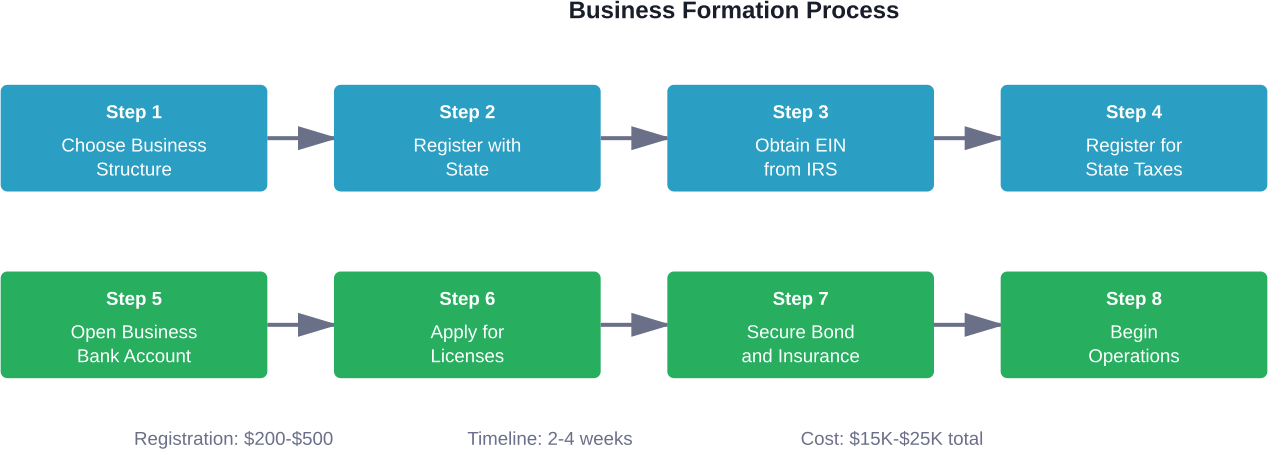
Step 4: Obtain Licenses and Permits
Licensing requirements for construction companies vary significantly by state, municipality, and the type of work performed. According to the U.S. Small Business Administration, most small businesses need a combination of licenses and permits from both federal and state agencies.
State Contractor Licenses
Most states require general contractors and specialty trade contractors to hold valid licenses. Requirements typically include:
- Proof of experience (often 2-4 years in the trade)
- Passing a trade exam and business/law exam
- Proof of insurance
- A surety bond
- Application and licensing fees
License classifications vary by state. Some states have a single general contractor license, while others offer dozens of specialty classifications for different trades and project types.
Local Business Permits
Cities and counties often require separate business licenses or permits to operate within their jurisdiction. These are typically annual registrations with modest fees.
Building Permits
While not a business license, understanding the permit process is crucial. Most construction projects require building permits from local building departments. Contractors must know how to pull permits properly and ensure work complies with local building codes.
Federal Licenses
The U.S. Small Business Administration notes that business activities regulated by federal agencies require federal licenses or permits. For construction companies, this might include environmental permits for certain types of work or certifications for government contracting.
Step 5: Secure Bonding and Insurance
Bonding and insurance are non-negotiable requirements for construction companies. They protect both the business and its clients.
Contractor Bonds
Most states require contractor bonds as part of licensing. According to California’s Contractors State License Board, contractor license bonds increased to $25,000 effective January 1, 2023, as a result of Senate Bill 607.
A contractor bond must be:
- Written by a surety company licensed through the state Department of Insurance
- In the amount specified by state law (commonly $25,000)
- Listed with the correct business name and license number
For LLC construction companies in some states, additional bonding is required. California, for example, requires a $100,000 surety bond (employee/worker bond) for LLCs in addition to the standard contractor bond.
Contractor bond costs vary depending on credit score and financial history.
General Liability Insurance
General liability insurance protects against claims of property damage or bodily injury caused by business operations. Industry standards typically require minimum coverage of $1 million per occurrence and $2 million aggregate.
When working with government entities, insurance requirements may be more stringent. Counties and municipalities often require contractors to carry:
- General liability with the government entity named as additional insured
- Automobile liability coverage
- Workers’ compensation insurance
- Environmental pollution liability for certain projects
Workers’ Compensation Insurance
Most states require workers’ compensation insurance once a construction company hires employees. This coverage pays for medical expenses and lost wages if workers are injured on the job.
Requirements vary by state. Some states require coverage from the first employee, while others allow exemptions for very small businesses or sole proprietors.
Commercial Auto Insurance
If the company owns vehicles or employees drive personal vehicles for work, commercial auto insurance is essential. This covers accidents, property damage, and injuries involving company vehicles.
Umbrella/Excess Liability
As the business grows and takes on larger projects, umbrella policies provide additional liability coverage beyond the limits of general liability and auto policies.
| Insurance Type | Typical Coverage | Estimated Annual Cost | Required By
|
|---|---|---|---|
| General Liability | $1M per occurrence / $2M aggregate | $1,000-$3,000 | Most clients and contracts |
| Workers’ Compensation | Varies by state law | $2,000-$10,000+ | State law when hiring employees |
| Commercial Auto | $1M combined single limit | $1,200-$2,500 | When operating company vehicles |
| Contractor Bond | $25,000 typical | $100-$500 | State licensing boards |
Step 6: Establish Financial Systems
Solid financial management separates successful construction companies from those that fail. Many construction businesses fail not because they lack work, but because they lack financial discipline.
Separate Business Banking
Open a dedicated business bank account immediately after obtaining an EIN. Never mix personal and business finances. This separation is crucial for:
- Maintaining liability protection
- Accurate bookkeeping and tax preparation
- Professional credibility
- Qualifying for business financing
Accounting Software
Construction accounting has unique requirements including job costing, progress billing, retainage tracking, and equipment depreciation. Invest in accounting software designed for construction or work with a bookkeeper familiar with construction accounting.
Proper job costing is essential. Track costs by project to understand which jobs are profitable and which aren’t. This information guides pricing decisions and identifies areas for improvement.
Estimating Systems
Accurate estimating determines profitability. Develop a systematic approach to estimating that accounts for:
- Direct materials costs
- Direct labor costs (including burden)
- Subcontractor costs
- Equipment costs
- Overhead allocation
- Profit margin
- Contingency for unknowns
Data from construction industry surveys shows that shares of cost breakdowns in single-family construction typically include significant portions for materials, labor, and overhead. Understanding these proportions helps develop competitive yet profitable pricing.
Cash Flow Management
Construction companies face unique cash flow challenges. Projects often require upfront material purchases before receiving payment. Progress payments may lag work completion. Retainage is withheld until final completion.
Strategies for managing cash flow include:
- Requiring deposits before starting work
- Structuring progress payments to align with cash needs
- Negotiating favorable payment terms with suppliers
- Maintaining a cash reserve for slow periods
- Establishing a line of credit before it’s needed
Step 7: Secure Startup Funding
Starting a construction company requires capital. Overall, you can expect to set aside $15,000–$20,000 to start your construction business, though this can vary significantly based on business model and location.
Startup Cost Breakdown
Typical startup expenses include:
- Business registration and licensing: $500-$2,000 depending on state and license type
- Bonding: $100-$500 annually
- Insurance: $4,000-$15,000 for the first year depending on coverage levels
- Tools and equipment: $2,000-$10,000+ depending on trade and whether buying new or used
- Vehicle or vehicle signage: $500-$5,000 if already owning a suitable vehicle
- Marketing materials: Website, business cards, signage typically $1,000-$3,000
- Office setup: Computer, phone, software, supplies $1,000-$3,000
- Initial operating capital: $5,000-$15,000 to cover expenses until cash flow stabilizes
Funding Sources
Common funding sources for construction startups include:
- Personal savings: Many construction entrepreneurs bootstrap their companies using personal funds. This avoids debt and maintains full ownership but requires sufficient savings.
- Small business loans: The U.S. Small Business Administration offers loan programs that can help construction businesses access funding. SBA 7(a) loans and microloans are popular options for startups.
- Equipment financing: Rather than purchasing equipment outright, equipment loans or leases spread the cost over time while preserving working capital.
- Business lines of credit: A line of credit provides flexible access to funds for managing cash flow gaps between project expenses and payments.
- Investors or partners: Bringing on a partner with capital can accelerate growth but requires sharing ownership and decision-making.
Step 8: Build Supplier Relationships
Strong relationships with material suppliers and subcontractors are fundamental to construction business success.
Material Suppliers
Establish accounts with lumber yards, building supply stores, and specialty suppliers. Benefits include:
- Trade pricing rather than retail pricing
- Net-30 or net-60 payment terms to manage cash flow
- Access to delivery services
- Priority service during busy periods
- Technical support and product expertise
Building these relationships takes time. Start by making small purchases and paying promptly. As trust develops, suppliers become more willing to extend credit and provide favorable terms.
Subcontractor Network
Few construction companies perform all work in-house. Most rely on subcontractors for specialized trades. Develop a reliable network of:
- Electricians
- Plumbers
- HVAC technicians
- Concrete contractors
- Roofers
- Specialty trades
Vet subcontractors carefully. Verify they carry proper licensing, insurance, and workers’ compensation coverage. Check references and review past work quality. A subcontractor’s poor performance reflects on the general contractor.
Step 9: Develop Marketing and Sales Strategy
Even the most skilled contractors need customers. A focused marketing strategy helps attract and retain clients.
Professional Branding
Invest in professional branding including:
- A memorable business name and logo
- Professional website showcasing services and past projects
- Business cards and letterhead
- Vehicle signage and wraps
- Consistent visual identity across all materials
Digital Marketing
Most customers search online for contractors. A strong digital presence is essential:
- Website: Create a professional website with clear service descriptions, project galleries, customer testimonials, and contact information. Optimize for local search terms.
- Online directories: Claim and optimize listings on Google Business Profile, Yelp, Houzz, Angie’s List, and industry-specific directories.
- Social media: Share project photos, tips, and updates on platforms where target customers spend time. Facebook and Instagram work well for residential contractors.
Traditional Marketing
Don’t overlook traditional marketing methods:
- Job site signage on active projects
- Door hangers in neighborhoods where working
- Local newspaper or community publication advertising
- Sponsoring local events or sports teams
- Joining local business organizations
Referral Programs
Word-of-mouth referrals are powerful in construction. Encourage referrals by:
- Delivering exceptional service that exceeds expectations
- Asking satisfied customers for referrals and reviews
- Offering referral incentives
- Building relationships with real estate agents, architects, and designers who can refer clients
- Following up after project completion
Step 10: Understand Safety and Compliance Requirements
Construction is inherently dangerous work. The Occupational Safety and Health Administration (OSHA) sets and enforces safety standards for the construction industry.
OSHA Construction Standards
OSHA’s construction standards (29 CFR 1926) address leading hazards at construction sites including:
- Fall protection
- Scaffolding safety
- Ladder safety
- Electrical hazards
- Excavation and trenching
- Personal protective equipment
- Hazard communication
Construction employers must survey worksites for hazards, implement safety programs, and provide safety training to workers.
Reporting Requirements
According to OSHA, all employers regardless of size or industry must report all work-related fatalities within 8 hours. Employers must also report all work-related inpatient hospitalizations, amputations, and eye losses within 24 hours.
Safety Culture
Beyond regulatory compliance, building a strong safety culture protects workers and reduces insurance costs. Safety programs should include:
- Regular safety meetings and toolbox talks
- Job hazard analyses before starting new tasks
- Proper training on tools and equipment
- Enforcement of safety rules
- Incident investigation and corrective action
The construction industry has implemented successful safety measures that federal regulations increasingly reinforce. Prioritizing safety from day one sets the standard for company culture.
Step 11: Invest in the Right Tools and Equipment
The tools and equipment needed depend on the type of construction work performed. Starting lean and expanding as the business grows is a prudent approach.
Essential Hand Tools
Basic hand tools represent a relatively modest investment but are essential for most construction work. Quality tools last longer and perform better than cheap alternatives.
Power Tools
Invest in quality power tools for the specific trade. Cordless tool systems offer convenience and increasingly match the performance of corded tools.
Vehicles
A reliable work vehicle is essential. Options range from pickup trucks to cargo vans to larger trucks for equipment hauling. Consider whether purchasing or leasing makes more sense.
Heavy Equipment
Excavators, skid steers, and other heavy equipment represent significant investments. For occasional use, renting equipment makes more sense than purchasing. As equipment needs increase, consider purchasing used equipment or financing new equipment.
التكنولوجيا
Construction management software, estimating tools, and project management platforms improve efficiency and professionalism. While not as visible as hammers and saws, technology tools increasingly separate successful contractors from struggling ones.
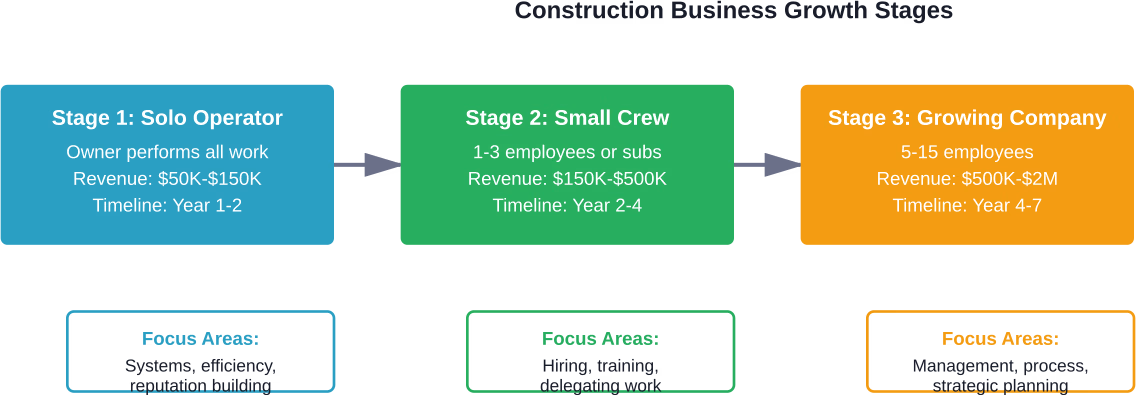
Step 12: Plan for Growth and Scaling
Starting a construction company is just the beginning. Planning for sustainable growth ensures long-term success.
Hiring Employees
As project volume increases, hiring becomes necessary. The transition from solo operator to employer involves:
- Recruiting skilled workers
- Setting up payroll systems
- Obtaining workers’ compensation insurance
- Implementing safety training programs
- Managing and supervising employees
- Handling employee-related paperwork and compliance
Hire slowly and carefully. One excellent employee is better than three mediocre ones.
Apprenticeship Programs
Construction apprenticeships lead to industry-recognized credentials and competitive wages starting at 40–60% of journey-level rates. These programs, often supported by government incentives and partnerships, are positioned to remain vital for developing the construction workforce.
Participating in apprenticeship programs helps construction companies access skilled talent while contributing to industry development.
Expanding Services
Once core services are profitable and running smoothly, consider strategic expansion. This might mean:
- Adding complementary services
- Expanding into new geographic markets
- Taking on larger or more complex projects
- Pursuing commercial work after establishing residential success
Expand deliberately. Ensure each new service or market is truly profitable before expanding further.
Systems and Processes
Growth requires documented systems and processes. Create standard operating procedures for:
- Customer intake and estimating
- Contracts and agreements
- Project scheduling and management
- Quality control and inspections
- Customer communication and follow-up
Systems allow delegation and consistency as the company grows beyond what one person can personally manage.
Build Your First Projects Without Losing Control Early

Starting a construction company is not just about getting work – it is about setting up projects so they don’t fall apart once different teams get involved. باورخ supports that setup from the beginning, helping keep design, coordination, and construction aligned as the project moves forward.
Set Up Your First Projects The Right Way
They typically help teams avoid early-stage issues by focusing on a few key areas:
- Clear, coordination-ready models that teams can actually build from
- Better alignment between structure, MEP, and layout decisions
- Early visibility into clashes and buildability issues
- A smoother transition from design into construction
👉 Contact باورخ to set up your first projects in a way that stays consistent from design through construction.
Common Mistakes to Avoid When Starting a Construction Company
Learning from others’ mistakes helps avoid costly errors.
Underbidding Projects
The fastest way to fail is winning lots of work at unprofitable prices. Accurately estimate costs and ensure pricing includes adequate profit margin. Winning work that loses money just accelerates failure.
Poor Cash Flow Management
Many profitable construction companies fail due to cash flow problems. Buying materials, paying workers, and covering expenses before receiving payment creates constant cash pressure. Plan for this reality and maintain adequate reserves.
Inadequate Insurance
Trying to save money by skimping on insurance can prove catastrophic. One serious accident or lawsuit can destroy an underinsured business. Maintain proper coverage from day one.
Ignoring Legal Requirements
Operating without proper licenses, permits, or insurance not only risks penalties but also limits business opportunities. Most reputable clients require proof of licensing and insurance before hiring contractors.
Failure to Document
Verbal agreements, unclear scope definitions, and poor documentation lead to disputes. Use written contracts for every job. Document changes. Keep detailed records. This protects both the company and its clients.
Growing Too Fast
Rapid growth strains resources, dilutes quality, and increases risk. Grow deliberately at a pace that maintains quality and profitability.
Neglecting Marketing
Relying entirely on word-of-mouth or a single customer source creates vulnerability. Consistent marketing efforts build a steady pipeline of opportunities and reduce dependence on any single source.
Industry Resources and Continuing Education
Construction industry associations offer valuable resources for new business owners.
National Associations
Organizations like the Associated General Contractors of America offer education programs specifically designed for emerging contractors. These programs help small contractors overcome the challenges all emerging businesses face.
Trade-specific associations provide networking opportunities, educational resources, and advocacy for their particular specialties.
Local Builder Associations
Home Builders Associations and local construction associations offer networking, education, and connections to local suppliers and subcontractors. Membership often provides credibility and access to group insurance programs.
Government Resources
The U.S. Small Business Administration provides free counseling, training, and resources for small businesses. SCORE mentors offer guidance from experienced business professionals. Small Business Development Centers provide consulting and training.
Workforce Development
Workforce development centers at universities and colleges offer training programs in construction skills and business management. Some programs provide free training to underserved populations seeking construction careers.
Conclusion: Building a Foundation for Long-Term Success
Starting a construction company offers significant opportunities in a growing industry. The U.S. construction market continues expanding, creating demand for skilled contractors across residential, commercial, and industrial sectors.
But success requires more than construction skills. It demands careful planning, understanding of regulatory requirements, financial discipline, and commitment to quality and safety.
The steps outlined in this guide—conducting market research, developing a business plan, choosing the right business structure, obtaining proper licensing and insurance, establishing financial systems, building supplier relationships, and implementing marketing strategies—create a solid foundation for a construction business built to last.
The difference between the construction companies that thrive and those that become part of the two-thirds failure statistic comes down to preparation and execution. Taking time to properly establish the business, understanding costs, pricing profitably, managing cash flow, and delivering quality work consistently separates successful contractors from those who struggle.
Resources are available to help navigate the process. The U.S. Small Business Administration provides guidance on business planning, financing, and regulatory compliance. Industry associations offer education programs designed specifically for emerging contractors. Local networking groups connect new business owners with experienced mentors.
The construction industry needs skilled, professional contractors committed to quality and safety. With proper planning, adequate capitalization, and dedication to excellence, starting a construction company can lead to a rewarding and profitable career.
The foundation is laid. Now it’s time to start building.
الأسئلة الشائعة
Do I need a contractor’s license to start a construction company?
Most states require contractor licenses for construction work beyond minor repairs. Requirements vary by location and specialty, so check with the local licensing authority before starting.
How much does it cost to start a construction company?
Startup costs typically range from $15,000 to $25,000 depending on location, equipment, insurance, and business structure. Expenses include licensing, tools, marketing, and initial working capital.
What type of business entity is best for a construction company?
Many construction companies choose an LLC because it offers liability protection and tax flexibility. The best structure depends on long-term goals and should be discussed with a financial advisor.
What insurance does a construction company need?
Common requirements include general liability insurance, workers’ compensation, commercial auto coverage, and contractor bonding. Additional policies may be needed depending on project type.
How do I find my first construction clients?
Start with personal connections, build an online presence, use job site signage, and ask for referrals. Early projects often come from network relationships and local visibility.
Can I start a construction company with no money?
Starting with no money is difficult, but it is possible to begin with minimal capital by reducing equipment costs and focusing on essential services. Licensing and insurance still require upfront investment.
How long does it take to become profitable in construction?
Some companies reach profitability within the first year, but building a stable business typically takes 2 to 4 years depending on market conditions and project management.

دراسات الحالة لدينا
لقد تعاملنا مع أكثر من 200 مشروع من مشاريع نمذجة معلومات المباني ونمذجة معلومات المباني للقطاعات التجارية والصناعية والسكنية.
يشمل عملنا ما يلي:
أتمتة تصميم القوالب
Our client from
California, USA
أتمتة تصميم السقف المعلق
Our client from
New York, USA
أتمتة تصميم إطارات الحائط
Our client from
California, USA


