هل لديك أي أسئلة؟ اتصل بنا!
انضم إلى فريقنا!
اطلب عرض أسعار أو استشارة مجانية

Quick Summary: A digital twin is a virtual representation of a physical object, system, or process that uses real-time data to accurately mirror its real-world counterpart’s behavior and performance. Born from NASA’s Apollo missions in the 1960s, digital twins now span manufacturing, healthcare, smart cities, and aerospace, offering simulation, testing, and optimization capabilities. According to NIST, digital twins could deliver $37.9 billion in annual benefits to manufacturing alone.
Imagine having a living, breathing digital copy of a jet engine, a hospital patient’s cardiovascular system, or an entire city’s infrastructure—one that updates in real-time as conditions change. That’s the promise of digital twin technology.
What started as a desperate innovation during NASA’s Apollo 13 crisis has evolved into one of the most transformative technologies across industries. But what exactly does “digital twin” mean? And why are organizations from aerospace giants to healthcare providers betting billions on virtual replicas?
Here’s the thing though—digital twins aren’t just fancy 3D models or simulations. They’re dynamic, data-driven representations that bridge the physical and digital worlds in ways that fundamentally change how we design, test, optimize, and maintain everything from aircraft to urban environments.
Let’s break down what digital twins actually are, how they work, and why they matter.
What Is a Digital Twin? The Core Definition
A digital twin is a virtual representation of a physical object, system, or process that uses real-time data to accurately reflect its real-world counterpart’s behavior and performance.
Think of it as a digital replica that doesn’t just look like the physical version—it acts like it, responds like it, and evolves alongside it. The connection works both ways: sensors on the physical asset feed data to the digital twin, while insights from the virtual model can inform decisions about the physical one.
According to Stanford’s Center for Integrated Facility Engineering (CIFE), a digital twin is a digital replica of living or non-living physical entities that bridges the physical and virtual world, allowing data to transmit seamlessly so the virtual entity exists simultaneously with the physical entity. This isn’t a static snapshot—it’s a living model that updates continuously.
The Key Characteristics That Define Digital Twins
Not every digital model qualifies as a digital twin. Real digital twins share several critical features:
- Real-time data integration: Sensors and IoT devices continuously feed information from the physical asset to its digital counterpart
- Bidirectional communication: Data flows both ways, enabling the digital model to influence physical operations
- Simulation capabilities: The virtual model can run scenarios, test changes, and predict outcomes before implementation
- Lifecycle persistence: Digital twins evolve throughout the entire lifecycle of their physical counterpart, from design through decommissioning
- Fidelity to reality: The digital version accurately mirrors the physical asset’s behavior, performance, and characteristics
By 2026, market data indicates that over 92% of large-scale enterprises have integrated digital twins into their core operational or supply chain strategies. That’s a massive shift from just a decade ago when the concept remained largely confined to aerospace and advanced manufacturing.
Work With a BIM and VDC Services Team

باورخ is a BIM and VDC services provider that supports construction and design projects with BIM modeling, BIM coordination, Scan to BIM, BIM automation, prefabrication and fabrication workflows, and structural detailing. The company works on project delivery side – building models, producing drawings, resolving clashes, processing point cloud data, and supporting fabrication-oriented workflows. For teams that need outside BIM support, Powerkh offers both technical execution and ongoing coordination through the project.
Need BIM Support for a Project?
Talk with Powerkh to:
- build BIM models and project documentation
- convert point cloud data into BIM and as-built drawings
- handle coordination, detailing, automation, and fabrication workflows
👉 Contact Powerkh for a project review and consultation.
The Origin Story: From Apollo 13 to Modern Applications
The digital twin concept has deeper roots than most people realize. According to NASA’s Technical Reports Server, the idea of a “digital twin” was born at NASA in the 1960s as a “living model” of the Apollo mission.
When Apollo 13’s oxygen tank exploded in 1970, NASA employed multiple simulators to evaluate the failure and extended a physical model of the vehicle to include digital components. This digital twin was the first of its kind, allowing continuous ingestion of data to model the events leading to the accident for forensic analysis and exploration of next steps.
Real talk: Without that digital twin, the Apollo 13 crew might not have made it home.
Fast forward half a century, and NASA continues developing high-fidelity digital models of physical systems and components as well as the extreme environments in which they operate. As NASA explains, digital twins show significant potential to transform life on Earth and in space by using data to simulate and forecast future behaviors based on what we already know.
The Modern Evolution
While NASA pioneered the concept, the term “digital twin” wasn’t formally coined until the early 2000s. The technology remained niche until advances in IoT sensors, cloud computing, artificial intelligence, and data analytics made real-time bidirectional communication practical and affordable.
Now, digital twins drive everything from personalized medicine to autonomous operations in space. The technology has matured from theoretical concept to practical business tool across dozens of industries.
How Digital Twins Actually Work
Understanding what digital twins are is one thing. Grasping how they function is another.
The process typically involves five core components working together:
1. Physical Assets with Sensors
The physical object—whether it’s a wind turbine, manufacturing robot, or human heart—gets equipped with sensors that capture relevant data. Temperature, pressure, vibration, performance metrics, environmental conditions—whatever matters for that specific asset.
2. Data Transmission Infrastructure
IoT connectivity transmits sensor data from the physical asset to the digital twin platform. This might happen through wireless networks, edge computing devices, or direct connections depending on the application and data requirements.
3. The Digital Model
Software creates and maintains a virtual representation of the physical asset. This isn’t just a 3D rendering—it’s a computational model that incorporates physics, material properties, operational parameters, and behavioral characteristics.
4. Analytics and Intelligence Layer
Artificial intelligence, machine learning algorithms, and analytics tools process incoming data, identify patterns, detect anomalies, and generate insights. This layer enables predictive capabilities and optimization recommendations.
5. Human Interface and Decision Support
Dashboards, visualization tools, and interfaces allow humans to interact with the digital twin, run simulations, test scenarios, and make informed decisions about the physical asset.
Here’s where it gets interesting: the digital twin doesn’t just passively mirror the physical object. It actively analyzes performance, predicts future states, and can even suggest or implement changes to optimize operations.
Digital Twins vs. Simulations vs. 3D Models
Confusion often arises because people conflate digital twins with related but distinct technologies. The differences matter.
| الميزة | Digital Twin | Simulation | 3D Model |
|---|---|---|---|
| Real-time data | Yes, continuous feed | No, uses hypothetical inputs | No data connection |
| Bidirectional flow | Yes, influences physical asset | One-way analysis | Static representation only |
| Lifecycle integration | Entire asset lifecycle | Specific scenarios/phases | Design phase primarily |
| Updates dynamically | Yes, as physical changes | Manual updates required | Manual recreation needed |
| Predictive capability | Yes, based on actual data | Yes, based on assumptions | No predictive function |
A simulation runs “what-if” scenarios based on theoretical inputs. A digital twin runs those same scenarios but grounds them in real-time data from an actual physical counterpart.
A 3D model provides visual representation. A digital twin provides functional representation that mirrors behavior, not just appearance.
According to research published in IEEE Xplore, this distinction proves critical for proper implementation and ROI expectations. Organizations that treat digital twins as mere simulations miss the continuous feedback loop that delivers the most value.
Types of Digital Twins
Digital twins exist at different scales and serve different purposes. Understanding these categories helps clarify how the technology applies across contexts.
Component Twins (Parts)
The most granular level focuses on individual components—a valve, a sensor, a circuit board. Component twins model the smallest functional units within larger systems.
Asset Twins (Products)
When multiple components work together, they form an asset. Asset twins might represent a complete engine, a robot, or a piece of manufacturing equipment. This level captures how components interact within a functional product.
System Twins (Units)
System twins model how multiple assets work together. A production line, a power grid, or a building’s HVAC network would operate at the system level. These twins reveal how different assets influence each other.
Process Twins
Process twins focus on workflows and procedures rather than physical objects. Manufacturing processes, supply chain operations, or treatment protocols fall into this category. The twin models the sequence, timing, and interdependencies of activities.
Digital Twin Aggregates
The highest level combines multiple systems or processes to model entire operations, facilities, or even cities. Virtual Singapore, which creates digital representations of the entire city-state, exemplifies this category.
Key Benefits and Applications of Digital Twins
The business case for digital twins extends far beyond technological novelty. Organizations deploy them because they deliver measurable value.
Predictive Maintenance and Reduced Downtime
Digital twins excel at predicting when equipment will fail before it actually does. By monitoring performance patterns and detecting early warning signs, maintenance teams can intervene proactively rather than reactively.
According to NIST, the benefit includes identifying more optimal design and settings for a particular system, such as when to conduct maintenance or where to place machinery. This prevents costly unplanned downtime and extends asset lifecycles.
Design Optimization and Testing
Engineers can test design variations virtually before manufacturing physical prototypes. This dramatically reduces development costs and time-to-market while improving final product performance.
In aerospace, manufacturers create digital twins of aircraft components to simulate stress conditions, material fatigue, and performance under extreme environments—all without risking expensive physical assets.
Operational Efficiency and Process Improvement
By modeling entire production processes or operational workflows, organizations identify bottlenecks, inefficiencies, and optimization opportunities that would be invisible without the holistic view a digital twin provides.
Manufacturing facilities use process twins to test production line reconfigurations virtually, determining the optimal layout before moving a single piece of equipment.
Performance Monitoring and Quality Control
Real-time monitoring through digital twins enables continuous quality assurance. Deviations from expected performance trigger immediate alerts, allowing rapid response before defects propagate through production.
Training and Scenario Planning
Digital twins provide safe environments for training personnel on complex systems. Operators can practice emergency procedures, test new protocols, or explore system capabilities without risk to physical assets or people.
According to NIST research, the potential aggregated manufacturing industry benefits of digital twins approximate $37.9 billion annually if the technology achieves widespread adoption across the sector.
Real-World Digital Twin Examples Across Industries
The technology has moved far beyond theoretical applications. Here’s how different sectors deploy digital twins today.
Manufacturing and Industrial Operations
General Electric pioneered industrial digital twins for their jet engines and power generation equipment. Each physical engine has a virtual counterpart that monitors performance, predicts maintenance needs, and optimizes fuel efficiency throughout its operational life.
NIST’s Advanced Manufacturing Systems program provides measurement science and open standards to help manufacturers better define, measure, analyze, and control advanced manufacturing systems using digital twins and enable a marketplace for digital twin users and technology providers.
Smart Cities and Urban Planning
Virtual Singapore represents one of the most ambitious digital twin projects globally. This 3D digital platform lets users from different sectors create tools to solve the city’s complex challenges, from improving parks to developing evacuation routes.
In India, Amaravati—a $6.5-billion smart city—uses digital twin technology to plan infrastructure, optimize resource allocation, and model urban development before physical construction begins.
Healthcare and Personalized Medicine
According to Stanford Medicine, medical digital twins—AI-powered virtual patient models—are transforming healthcare with personalized care, prediction, and prevention. These virtual replicas model individual patient physiology, enabling doctors to test treatment approaches virtually before applying them to real patients.
Digital twins of cardiovascular systems help surgeons plan complex procedures by simulating surgical approaches and predicting outcomes specific to individual patient anatomy.
Aerospace and Aviation
NASA continues advancing digital twin technology for space exploration. As the agency explains, autonomous operations in deep space require digital twins because constant connectivity with assets won’t be possible, and humans won’t be in-the-loop for on-demand intervention during anomalies.
In 2019, Sheremetyevo International Airport started developing and implementing a digital twin model aimed at forecasting and planning all airport operations. Even at pilot level, it allowed better resource allocation and improved operational efficiency.
الطاقة والمرافق العامة
Power companies create digital twins of electrical grids to optimize energy distribution, predict equipment failures, and integrate renewable energy sources more effectively. Wind farm operators model individual turbines to maximize energy generation while minimizing maintenance costs.
Construction and Built Environment
Digital twins in construction serve as dynamic, ‘living’ digital models of physical assets or environments. These enable construction teams to coordinate activities, identify conflicts before they occur on site, and maintain comprehensive as-built records for facility management.
Technologies Enabling Digital Twin Implementation
Digital twins don’t exist in isolation. They depend on a convergent technology stack that has matured dramatically over the past decade.
Internet of Things (IoT) and Sensors
IoT sensors capture the physical data that feeds digital twins. Temperature, pressure, vibration, position, speed, chemical composition—modern sensors can measure virtually any physical property continuously and affordably.
Cloud Computing and Edge Processing
The massive data volumes generated by IoT sensors require substantial computational resources. Cloud platforms provide the processing power, storage capacity, and scalability that make digital twins practical at enterprise scale.
Edge computing complements cloud infrastructure by processing time-sensitive data locally, reducing latency for applications requiring immediate response.
Artificial Intelligence and Machine Learning
AI algorithms analyze patterns in operational data, identify anomalies, predict future states, and generate optimization recommendations. Machine learning models improve continuously as they process more data from the physical twin.
5G and Network Connectivity
High-bandwidth, low-latency 5G networks enable the real-time data transmission that digital twins require, particularly for mobile or distributed assets that can’t rely on wired connections.
Building Information Modeling (BIM) and CAD
For physical structures and products, BIM and computer-aided design tools provide the geometric and spatial foundation upon which functional digital twins build. These systems capture design intent that digital twins extend throughout the operational lifecycle.
Challenges and Considerations for Digital Twin Adoption
Despite the benefits, implementing digital twins isn’t trivial. Organizations face several hurdles.
Data Quality and Integration
Digital twins are only as accurate as the data feeding them. Poor sensor calibration, data transmission errors, or incomplete information degrade twin fidelity and undermine decision-making.
Integrating data from disparate sources, legacy systems, and multiple vendors creates technical complexity that requires careful architecture and standardization.
Security and Privacy Concerns
According to NIST’s cybersecurity research on digital twin technology, the bidirectional data flow and operational integration create potential attack vectors. Compromised digital twins could provide adversaries with detailed system knowledge or enable manipulation of physical assets.
For medical digital twins containing patient data, privacy regulations add compliance requirements that complicate implementation.
Standardization and Interoperability
NIST’s work on manufacturing digital twin standards addresses the lack of common frameworks that currently fragments the technology landscape. Without standards, digital twins from different vendors struggle to share data or integrate into unified systems.
Cost and Resource Requirements
Implementing comprehensive digital twin systems requires significant upfront investment in sensors, connectivity infrastructure, software platforms, and expertise. Smaller organizations may struggle to justify the capital outlay, particularly if benefits accrue gradually.
Skill Gaps and Organizational Change
Digital twin technology demands skills that bridge multiple domains—operational technology, information technology, data science, and domain expertise. Finding or developing talent with this combination proves challenging.
Organizations must also adapt processes and culture to leverage digital twin insights effectively, which can encounter resistance from established workflows.
The Future of Digital Twin Technology
As we move deeper into 2026, several trends shape digital twin evolution.
AI-Powered Autonomous Digital Twins
Next-generation digital twins will move beyond advisory roles to autonomous operation. Rather than simply recommending optimizations, they’ll implement changes directly, continuously tuning physical systems for optimal performance within defined safety parameters.
NASA’s vision for deep space operations exemplifies this trajectory—digital twins that operate independently when real-time human oversight isn’t possible.
Digital Twin Networks and Ecosystems
Individual digital twins will increasingly interconnect, creating networks that model complex interdependencies. A manufacturing digital twin might connect with supplier twins, logistics twins, and customer twins to optimize entire value chains.
Human Digital Twins
Medical applications will advance toward comprehensive human digital twins that model individual patient physiology at systemic levels. Stanford researchers are working toward this goal, though recent studies suggest challenges remain in capturing individual variability accurately.
Research at Stanford found that correlations between digital twin responses and actual human responses vary across different applications, indicating that accurately modeling human complexity remains an ongoing challenge.
Integration with Extended Reality
Virtual and augmented reality interfaces will provide more intuitive ways to interact with digital twins. Engineers might “walk through” virtual factories, surgeons could manipulate 3D organ models with gesture controls, and facility managers could visualize building systems overlaid on physical spaces.
Sustainability and Climate Applications
Digital twins of environmental systems, ecosystems, and climate patterns will support sustainability initiatives. Cities will model carbon footprints, optimize resource consumption, and test climate adaptation strategies virtually before implementation.
Getting Started with Digital Twin Technology
Organizations considering digital twin adoption should approach implementation strategically.
Start Small and Focused
Rather than attempting enterprise-wide deployment immediately, begin with a specific asset, process, or system where digital twin benefits are clearest and success can be demonstrated. Proof of concept builds organizational understanding and support for broader adoption.
Assess Data Readiness
Evaluate existing data infrastructure, sensor coverage, and data quality. Identify gaps that need addressing before digital twin implementation can succeed.
Define Clear Business Objectives
Articulate specific, measurable goals for digital twin deployment. Cost reduction? Downtime prevention? Design optimization? Clear objectives focus implementation efforts and enable ROI measurement.
Prioritize Interoperability
Select platforms and technologies that support open standards and integration capabilities. Avoid proprietary solutions that create vendor lock-in or limit future expansion.
Build Cross-Functional Teams
Digital twin success requires collaboration between operational staff who understand physical assets, IT professionals who manage data infrastructure, data scientists who build analytics models, and business leaders who define strategic priorities.
Plan for Evolution
Digital twins should evolve continuously as physical assets change, new data sources become available, and analytical capabilities advance. Design implementation roadmaps that accommodate iterative improvement rather than treating deployment as a one-time project.
Frequently Asked Questions About Digital Twins
What’s the difference between a digital twin and a digital thread?
A digital thread is the continuous data flow connecting an asset across its entire lifecycle—from design to decommissioning. A digital twin is a virtual representation of that asset at a specific point in time. The digital thread ensures data continuity, while the digital twin provides real-time or simulated insight into performance.
Do digital twins require artificial intelligence?
No, digital twins can operate with basic analytics and rule-based logic. However, AI enhances capabilities such as prediction, pattern recognition, and autonomous optimization, making the system significantly more powerful.
Can small and medium businesses benefit from digital twins?
Yes. SMBs can implement digital twins at a smaller scale, focusing on key assets or processes. Cloud-based solutions have lowered entry barriers, making adoption more accessible and cost-effective.
How accurate do digital twins need to be?
Accuracy depends on the use case. High-risk industries like aerospace require extremely precise models, while operational optimization scenarios may work effectively with lower fidelity models focused on key performance variables.
Are digital twins only for physical products?
No. Digital twins can represent physical assets, processes, systems, or even customer journeys. Any system with measurable data and behavior can potentially be modeled as a digital twin.
What industries use digital twins most extensively?
Manufacturing, aerospace, automotive, energy, and healthcare lead adoption. However, digital twins are expanding into sectors like construction, smart cities, logistics, agriculture, and retail.
How do digital twins handle cybersecurity risks?
Security requires a multi-layered approach including sensor protection, encrypted data transmission, strict access controls, and continuous monitoring. Best practices include zero-trust architecture, network segmentation, and regular security assessments.
Conclusion: Digital Twins as Business Transformation Tools
Digital twins represent far more than incremental technological improvement. They fundamentally change how organizations design, build, operate, and optimize physical assets and processes.
From NASA’s Apollo-era origins to today’s AI-powered implementations spanning industries, digital twins have evolved from emergency problem-solving tools to strategic business assets. The technology bridges physical and digital worlds in ways that enable prediction, optimization, and innovation impossible through traditional approaches.
The potential economic impact is substantial—NIST research estimates $37.9 billion in annual manufacturing benefits alone. But the broader implications extend beyond individual industries to transform healthcare, urban planning, environmental sustainability, and space exploration.
Challenges remain around standardization, security, cost, and skill requirements. Yet as enabling technologies mature and best practices emerge, digital twin adoption will accelerate across organizations of all sizes.
For businesses evaluating digital transformation strategies, digital twins deserve serious consideration. The question isn’t whether virtual representations of physical reality have value—decades of evidence confirm they do. The question is how to implement digital twins strategically to deliver maximum benefit for specific organizational contexts.
The organizations that master digital twin technology now will have competitive advantages as the physical and digital worlds continue converging. Those that wait risk playing catch-up as competitors leverage virtual replicas to optimize operations, reduce costs, accelerate innovation, and deliver superior products and services.
The digital revolution continues. Digital twins are writing the next chapter.

دراسات الحالة لدينا
لقد تعاملنا مع أكثر من 200 مشروع من مشاريع نمذجة معلومات المباني ونمذجة معلومات المباني للقطاعات التجارية والصناعية والسكنية.
يشمل عملنا ما يلي:
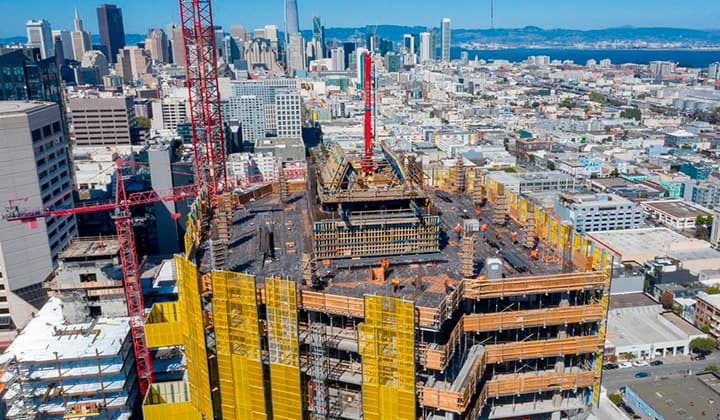
أتمتة تصميم القوالب
Our client from
California, USA
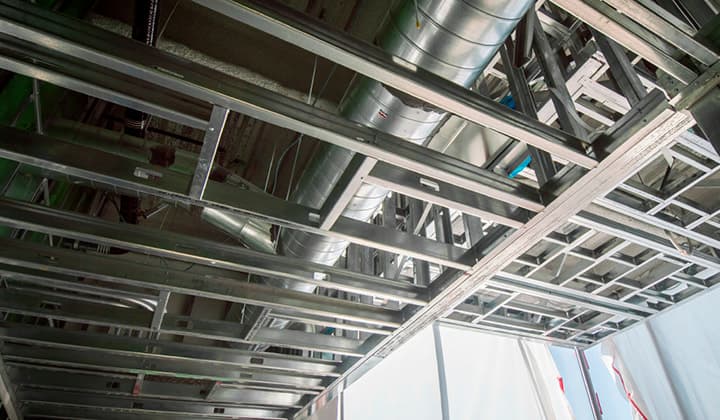
أتمتة تصميم السقف المعلق
Our client from
New York, USA
أتمتة تصميم إطارات الحائط
Our client from
California, USA