هل لديك أي أسئلة؟ اتصل بنا!
انضم إلى فريقنا!
اطلب عرض أسعار أو استشارة مجانية

Value engineering in construction is a systematic methodology focused on improving project value by analyzing functions, evaluating alternatives, and optimizing the balance between cost, quality, and performance. It’s not about cutting corners—it’s about finding smarter solutions that maintain or enhance design intent while reducing unnecessary expenses. The process typically involves a multi-disciplinary team working through structured phases to identify opportunities for cost savings and performance improvements.
Construction projects rarely go exactly as planned. Materials spike in cost. Bids come back higher than expected. Suddenly, that carefully designed building seems impossible to build within budget.
But here’s the thing—this doesn’t mean the project is doomed. Value engineering offers a structured approach to salvage budgets without compromising the core design vision. It’s become essential in an industry where uncertainty has become the norm.
So what exactly is value engineering, and how does it work? Let’s break it down.
Understanding Value Engineering in Construction
Value engineering is a systematic, organized approach to providing necessary functions in a project at the lowest cost. It promotes the substitution of materials and methods with less expensive alternatives, without sacrificing functionality or quality.
The key word here? Functionality. This isn’t about slashing the budget by removing features or downgrading quality. Rather, it’s about finding smarter ways to achieve the same objectives.
The Origin and Purpose
The methodology was developed at General Electric after World War II, specifically starting in 1947, by Lawrence Miles when material shortages forced engineers to find substitute materials that performed equally well or better. That crisis-born innovation evolved into a formal process applicable across industries, particularly construction.
According to AIA resources, the goal is to provide abundance while living within means—designing robust projects that enhance resources rather than deplete them.
What “Value” Actually Means
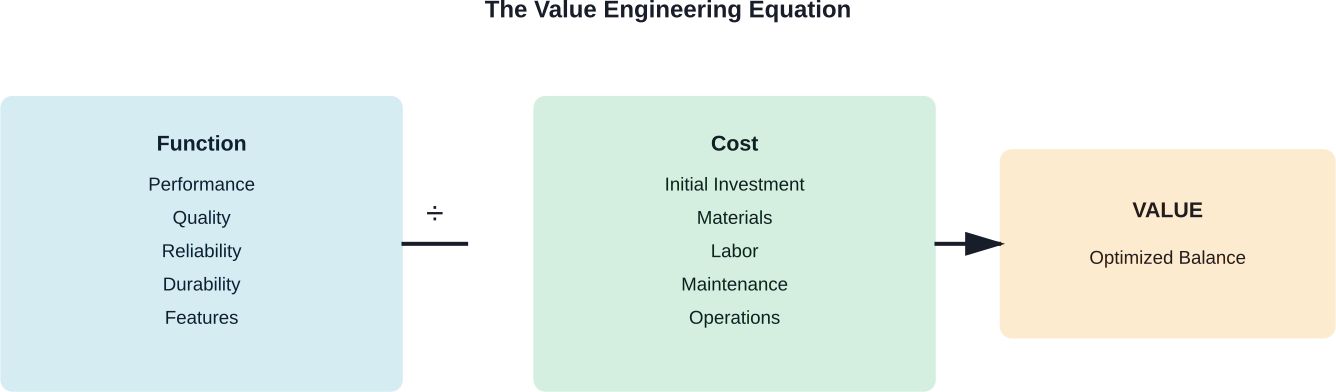
In construction, value isn’t just about price tags. It’s the relationship between function and cost. A higher-quality material that lasts twice as long at 50% more cost delivers better value than a cheap alternative requiring frequent replacement.
The value equation considers multiple factors working together:
When Should Value Engineering Take Place?
Timing matters enormously. Apply value engineering too late and options become limited. Too early and there’s not enough detail to work with.
The sweet spot? Design development phase, after conceptual design but before construction documents are finalized. At this stage, roughly 80% of project costs get locked in, but changes remain relatively easy to implement.
That said, value engineering can happen at multiple stages:
- During early design when major systems are being selected
- When initial bids exceed budget
- When market conditions shift dramatically
- During construction if unforeseen issues arise
According to community discussions, many contractors encounter value engineering when bids come back over budget and owners need to cut costs quickly. This reactive approach works, but proactive value engineering during design yields better results.
The Six-Step Value Engineering Methodology
Value engineering follows a systematic process refined over decades. While variations exist, the core methodology typically involves six distinct phases. They are defined by the Value Methodology Standard as a 6-phase Work Plan.
Phase 1: Information Gathering
The team collects all relevant project data—drawings, specifications, budget details, schedule constraints, and performance requirements. Understanding the full context prevents solutions that solve one problem while creating others.
Phase 2: Function Analysis
Here’s where the team asks: What does this component actually need to do? Strip away assumptions about how it should be done and focus purely on the required function. A wall needs to provide structural support, thermal insulation, and weather protection. How it accomplishes these functions remains open for discussion.
Phase 3: Creative Phase
With functions clearly defined, the team brainstorms alternatives. No idea is too wild at this stage. The goal is quantity over quality—generate as many options as possible without judgment or immediate evaluation.
Phase 4: Evaluation
Now comes the critical analysis. Each alternative gets assessed against criteria like cost, performance, schedule impact, maintainability, and alignment with project goals. Unrealistic options get eliminated while promising solutions advance.
Phase 5: Development
Selected alternatives get refined into detailed proposals with specifications, cost estimates, and implementation plans. This phase transforms creative concepts into actionable recommendations.
Phase 6: Presentation
The team presents findings to stakeholders with supporting documentation. Recommendations include implementation strategies, expected savings, and any trade-offs involved. Approval leads to incorporation into project documents.
Get Your Value Engineering Changes Reviewed
Value engineering decisions move fast. If they’re not checked properly, problems show up later on site. باورخ reviews proposed changes before approval and shows what will actually work, what will clash, and what will fail during construction.
Approve Only What Will Work
What you get with Powerkh:
- Clear answer if a change is buildable or not
- Immediate visibility into coordination impact
- Early detection of risks hidden behind “efficient” options
- Confidence that approved changes won’t create site issues
Contact Powerkh before you approve changes and avoid fixing them during construction.
Real-World Value Engineering Examples
Abstract methodology makes sense only when seeing it applied. Here are concrete examples of value engineering in action.
HVAC System Optimization
Project plans specified fan-powered boxes at $2,600 each. Through value engineering, the general contractor identified an alternative system meeting identical performance specifications at $1,400 per unit. The function remained unchanged—proper ventilation and climate control—but the cost dropped nearly 50%.
Cruise Terminal Parking Structure
A cruise terminal parking garage underwent value engineering that produced $4.70 million in cost reductions. The process revised structural systems, refined construction sequencing, and optimized material specifications—all while maintaining the design’s functional requirements and aesthetic intent.
Wood Canopy Substitution
According to AIA documentation, one project replaced a requested wood batten canopy with a wood-finished aluminum system. While initial costs increased slightly, the aluminum system dramatically reduced long-term maintenance expenses, delivering superior lifecycle value for the owner.
| Project Element | Original Specification | Value Engineering Solution | Result |
|---|---|---|---|
| HVAC Distribution | Fan-powered boxes ($2,600/unit) | Alternative system ($1,400/unit) | 46% cost reduction, same performance |
| Parking Structure | Conventional design | Optimized systems and sequencing | $4.7M savings maintained |
| Building Canopy | Wood batten system | Wood-finished aluminum | Lower lifecycle costs, less maintenance |
Key Factors Analyzed During Value Engineering
Effective value engineering examines multiple dimensions simultaneously. Cost alone never tells the complete story.
| Factor | Key Questions | Example Consideration |
|---|---|---|
| التكلفة | What’s the price? Are cheaper alternatives available? | Engineered quartz countertop matching color and durability at lower cost |
| Quality | Does it meet performance standards? Will it last? | Material durability under expected usage conditions |
| الوظيفة | What must it accomplish? Can simpler solutions work? | Structural requirements, thermal performance, aesthetic goals |
| Schedule | How does this affect the timeline? Are materials readily available? | Lead times, installation complexity, supply chain reliability |
| Maintenance | What are long-term operational costs? | Replacement frequency, cleaning requirements, repair costs |
| الاستدامة | What’s the environmental impact? | Embodied carbon, energy efficiency, material reuse potential |
According to AIA resources on design economy, building reuse projects typically show a 60% labor to 40% materials cost breakdown, compared to typical new builds at 55% labor/45% materials. This shift reduces embodied carbon through reuse of carbon-intensive structural materials like aluminum, steel, and concrete.
Who's Involved in Value Engineering?
Value engineering works best with diverse perspectives. Different disciplines spot different opportunities.
A typical value engineering team includes:
- Project Owner or Representative: Provides final decision-making authority and clarifies priorities
- Architect: Ensures alternatives align with design intent and code requirements
- المهندسون: Evaluate structural, mechanical, electrical, and other technical implications
- General Contractor: Assesses constructability, schedule impacts, and subcontractor coordination
- Cost Estimator: Provides accurate cost comparisons between alternatives
- Specialty Consultants: Offer expertise in specific areas like sustainability or acoustics
The team functions most effectively when all stakeholders participate from the start. Late involvement limits options and creates resistance to change.
Benefits Beyond Cost Savings
While cost reduction drives most value engineering initiatives, the benefits extend further.
Improved functionality often emerges. Questioning assumptions about how things should be done reveals better approaches overlooked in conventional design. A simpler mechanical system might deliver superior maintenance access alongside cost savings.
Enhanced sustainability frequently results. Value engineering encourages examination of lifecycle costs, which naturally favors energy-efficient, durable solutions over cheap short-term fixes.
Schedule compression sometimes becomes possible. Alternative construction methods or readily available materials can accelerate timelines when original specifications face long lead times.
Risk mitigation occurs when teams identify potential problems during analysis. Catching issues during value engineering beats discovering them mid-construction.
Common Misconceptions and Challenges
Value engineering suffers from perception problems. Many architects hear “value engineering” and think “budget slashing that ruins my design.” This reputation stems from misapplication—using the term to justify arbitrary cost-cutting rather than systematic analysis.
Real value engineering respects design intent. It asks whether the same goals can be achieved differently, not which goals to abandon.
Timing challenges persist. Emergency value engineering during construction limits options. Proactive application during design yields far better results but requires buy-in before crises emerge.
Team dynamics matter enormously. Value engineering fails when it becomes adversarial—designers versus contractors, or owners versus architects. Success requires collaborative problem-solving where all parties seek optimal solutions.
Value Engineering Best Practices
Certain approaches consistently produce better outcomes:
- Start early: Begin value engineering conversations during schematic design when flexibility remains high. Waiting until construction documents are complete drastically limits possibilities.
- Focus on high-impact areas: Not every project element deserves deep analysis. Identify components representing significant cost portions and examine those first.
- Maintain open communication: Document decisions clearly so everyone understands why alternatives were selected or rejected. This prevents rehashing settled issues.
- Consider lifecycle costs: According to AIA guidance, high-performance design features don’t always add costs, and expensive high-performance elements can be offset by lowering costs elsewhere. The integrated design process helps identify these tradeoffs early.
- Preserve design intent: Alternatives should achieve original project goals through different means, not compromise the vision to hit arbitrary budget targets.
The Future of Value Engineering
Technology is reshaping how value engineering gets performed. Building Information Modeling (BIM) enables rapid comparison of alternatives with automatic cost and performance calculations. What once required weeks of manual analysis now happens in days or hours.
Data analytics helps identify patterns across projects. Teams can quickly reference how similar decisions performed elsewhere, reducing guesswork about long-term outcomes.
Sustainability pressures are elevating value engineering’s importance. With building performance standards emerging in major cities, according to AIA resources, architects are leveraging value engineering expertise to help clients meet emissions requirements cost-effectively.
Supply chain volatility makes value engineering skills more valuable. When materials become scarce or prices spike unexpectedly, teams skilled in systematic alternatives analysis can pivot quickly.
الخاتمة
Value engineering represents one of construction’s most powerful tools for optimizing project outcomes. It’s not about compromising vision or accepting less—it’s about systematically finding smarter solutions that deliver required functions more efficiently.
The construction industry faces persistent challenges: volatile material costs, supply chain disruptions, labor shortages, and increasing sustainability requirements. Value engineering provides a structured methodology for navigating these constraints while preserving project quality and intent.
Success requires the right timing, collaborative teamwork, and commitment to systematic analysis over arbitrary cost-cutting. When applied properly, value engineering transforms budget constraints from project-killers into opportunities for innovation.
Whether facing an over-budget estimate or seeking ways to enhance project value proactively, the value engineering methodology offers proven frameworks for better decision-making. The question isn’t whether value engineering applies to a construction project—it’s whether the team has the discipline and expertise to apply it effectively.
الأسئلة الشائعة
What’s the difference between value engineering and cost-cutting?
Cost-cutting typically means reducing expenses by eliminating features, downgrading materials, or accepting lower quality. Value engineering is a systematic process that maintains or improves function while finding more cost-effective solutions. It’s about working smarter, not cheaper. A value-engineered project should perform as well or better than the original design while costing less.
When is the best time to start value engineering?
The optimal time is during the design development phase, after conceptual design establishes the project vision but before construction documents are finalized. At this stage, roughly 80% of costs are determined but changes remain relatively easy to implement. That said, value engineering can occur at any stage—early design, during bidding, or even construction—though earlier application provides more flexibility and better results.
Does value engineering always reduce costs?
Not necessarily. Sometimes value engineering identifies opportunities to improve quality or performance at the same cost, or to spend slightly more upfront for significant lifecycle savings. The goal is optimizing value (the relationship between function and cost), which may mean different things depending on project priorities. Some value engineering efforts focus on schedule acceleration, risk reduction, or sustainability improvements rather than pure cost reduction.
Who pays for value engineering studies?
This varies by contract structure. On design-bid-build projects, owners typically pay for formal value engineering studies conducted during design. On design-build or construction management projects, the contractor may include value engineering in their services. Some contracts include incentive clauses where contractors receive a percentage of savings generated through value engineering proposals, creating motivation to identify opportunities.
Can value engineering be applied to existing buildings?
Absolutely. Value engineering works well for renovation, retrofit, and building reuse projects. The methodology applies equally to analyzing repair alternatives, system upgrades, or historic preservation approaches. Building reuse projects often benefit significantly from value engineering since they involve complex decisions about what to preserve, what to replace, and how to integrate new systems with existing conditions.
How much can value engineering typically save?
Savings vary enormously based on project type, timing, and how thoroughly value engineering is applied. Well-executed studies during design commonly identify opportunities representing 5-15% of construction costs, though not all recommendations get implemented. The parking garage example mentioned earlier achieved $4.7 million in savings. Results depend on project specifics—there’s no universal percentage.
Will value engineering delay my project?
Formal value engineering studies require time—typically one to three weeks depending on project complexity. However, this investment during design often accelerates overall delivery by identifying constructability issues early and specifying readily available materials. Emergency value engineering during construction definitely causes delays, which is why proactive application during design proves more efficient despite the upfront time requirement.

دراسات الحالة لدينا
لقد تعاملنا مع أكثر من 200 مشروع من مشاريع نمذجة معلومات المباني ونمذجة معلومات المباني للقطاعات التجارية والصناعية والسكنية.
يشمل عملنا ما يلي:
أتمتة تصميم القوالب
Our client from
California, USA
أتمتة تصميم السقف المعلق
Our client from
New York, USA
أتمتة تصميم إطارات الحائط
Our client from
California, USA