هل لديك أي أسئلة؟ اتصل بنا!
انضم إلى فريقنا!
اطلب عرض أسعار أو استشارة مجانية

A construction safety checklist is a systematic tool used to identify and control workplace hazards on construction sites. It helps ensure compliance with OSHA regulations, prevents accidents, and creates a documented record of safety inspections. These checklists cover critical areas like fall protection, equipment operation, personal protective equipment, and site-specific hazards.
Construction sites are inherently dangerous environments. Heavy machinery, elevated work platforms, power tools, and multiple crews working simultaneously create countless opportunities for accidents. That’s where construction safety checklists come in.
These documents aren’t just bureaucratic paperwork. They’re proven tools that save lives and prevent injuries every single day.
Understanding Construction Safety Checklists
A construction safety checklist is a structured document that guides systematic workplace inspections. It helps identify hazards, verify compliance with safety standards, and ensure proper safety protocols are followed before, during, and after construction activities.
According to OSHA, construction is a high hazard industry that comprises a wide range of activities involving construction, alteration, and repair. Workers engage in many activities that may expose them to serious hazards, such as falling from rooftops, unguarded machinery, and electrical hazards.
The checklist serves multiple critical functions. It creates accountability by documenting who inspected what and when. It standardizes safety procedures across different sites and crews. And it provides legal documentation that demonstrates due diligence in maintaining safe working conditions.
Types of Construction Safety Checklists
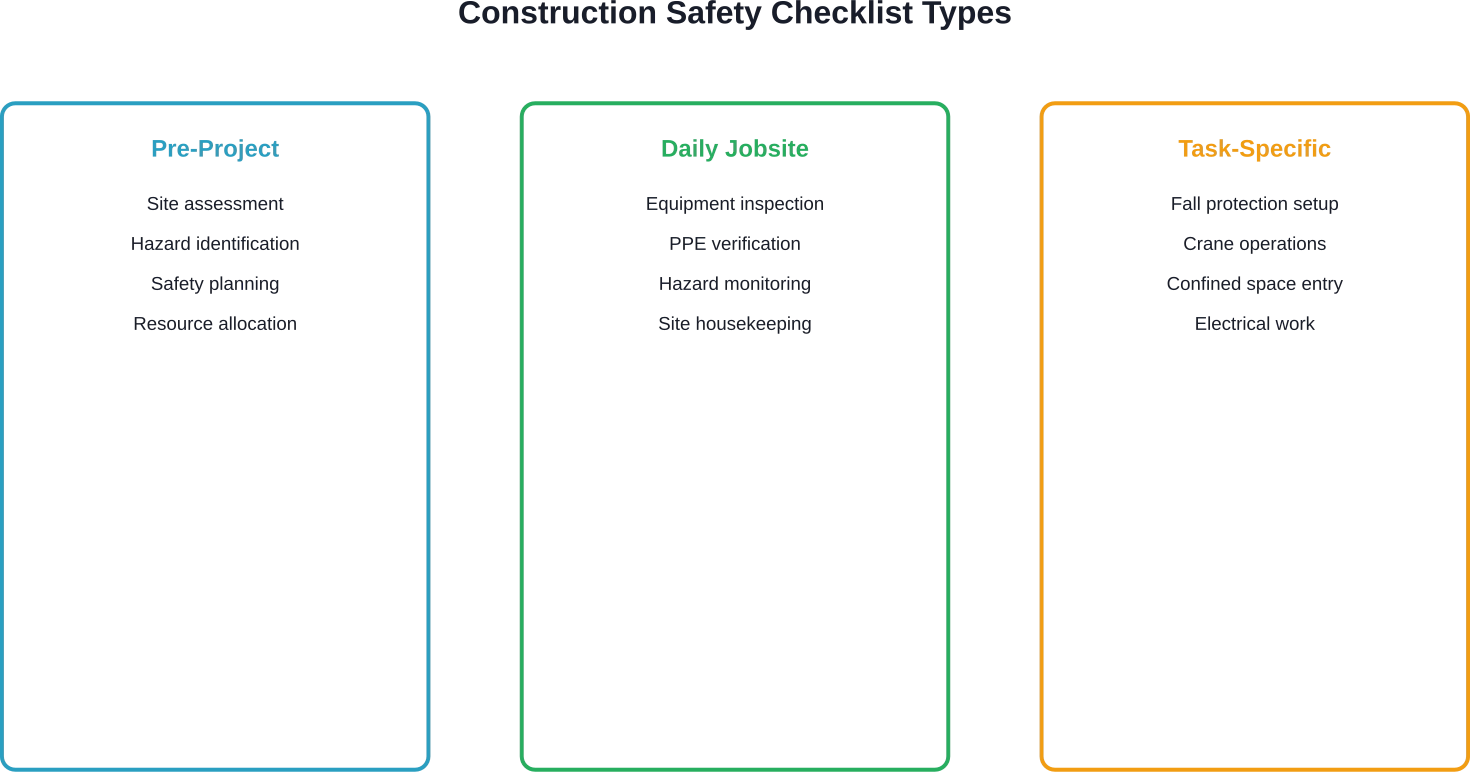
Different projects and phases require different checklists. Pre-project checklists assess site conditions before work begins. Daily jobsite safety checklists verify ongoing compliance throughout active construction. Task-specific checklists address particular hazards like confined space entry or crane operations.
ANSI/ASSP A10.1-2011 establishes the elements and activities for pre-project and pre-task safety and health planning in construction. This standard emphasizes that pre-planning is one of the most powerful safety tools available.
Bring in Powerkh for BIM and Construction Drawings

Some projects need more than general planning support. They need a team that can produce the models, drawings, and detailed documentation used during delivery. باورخ provides BIM and VDC services for that part of the work, including BIM modeling, scan to BIM, BIM coordination, structural detailing, prefabrication support, and BIM automation.
Need a Team to Build the BIM Files and Drawings?
Talk with Powerkh to:
- convert drawings or scans into usable BIM models
- prepare shop drawings and construction documentation
- improve coordination before field issues grow
👉 Contact Powerkh to review your project and BIM needs.
Key Components of an Effective Safety Checklist
The most effective construction safety checklists address the leading causes of construction injuries and fatalities. OSHA identifies falls, struck-by incidents, electrocutions, and caught-in/between hazards as the primary risks.
Falls are the leading cause of death among construction workers. Each year, roughly 300–400 construction workers fall to their deaths, most often while working at heights on roofs, ladders, and scaffolds. That’s why fall protection consistently appears at the top of safety checklists.
Essential Checklist Categories
Personal protective equipment verification ensures workers have and properly use required safety gear. Equipment and machinery inspection confirms tools and vehicles operate safely. Hazard communication checks verify proper labeling and worker awareness of dangerous materials.
The CDC’s Construction Ergonomics Checklist covers materials handling, tools, repetitive work, awkward postures, and musculoskeletal symptoms. This addresses the often-overlooked issue of chronic injuries that develop over time.
| Checklist Category | Key Items Covered | OSHA Standard |
|---|---|---|
| Fall Protection | Guardrails, safety nets, harnesses, anchor points | 29 CFR 1926.501-503 |
| Scaffolding | Platform stability, access, capacity, inspection | 29 CFR 1926.451 |
| Electrical Safety | Ground fault protection, lockout/tagout, clearances | 29 CFR 1926 Subpart K |
| Equipment Operation | Operator certification, pre-use inspection, maintenance | 29 CFR 1926.1400-1442 |
| Excavation | Soil classification, protective systems, access/egress | 29 CFR 1926 Subpart P |
OSHA Compliance and Reporting Requirements
All employers, regardless of size or industry, must report to OSHA all work-related fatalities within 8 hours. All employers must also report to OSHA all work-related inpatient hospitalizations, all amputations, and all losses of an eye within 24 hours.
These reporting requirements underscore why documentation matters. Safety checklists create the paper trail that demonstrates compliance efforts and helps investigate incidents when they occur.
OSHA’s construction regulations under 29 CFR 1926 establish the baseline requirements. But smart construction companies go beyond minimum compliance. They use checklists to build a culture of safety where hazard identification becomes second nature.
Inspection Frequency and Documentation
How often should inspections happen? That depends on the work being performed. OSHA requires daily inspections for scaffolds before each work shift. Equipment modifications affecting safe operation require inspection before use. Cranes need regular inspections at intervals specified in the manufacturer’s documentation.
The key is creating a systematic approach. Community discussions among construction professionals emphasize that consistency matters more than perfection. A simple checklist used daily outperforms an elaborate system that gets ignored.
Best Practices for Implementation
Creating a checklist is the easy part. Getting crews to actually use it consistently? That’s where many companies struggle.
Training makes the difference. Workers need to understand not just what to check, but why it matters. When crews see safety checklists as protective tools rather than administrative burdens, compliance improves dramatically.
Digital tools are changing the game. Mobile apps allow on-site inspection with photo documentation, automatic flagging of issues, and real-time reporting to project managers. The OSHA-NIOSH Small Business Checklist App is a free tool designed for general industry (manufacturing, retail, services, etc.) that features checklists and other workplace safety and health resources for small businesses.
Common Implementation Challenges
Time pressure remains the biggest obstacle. When projects run behind schedule, safety shortcuts become tempting. But here’s the thing: accidents cause far greater delays than checklist completion ever will.
Language barriers can complicate safety communication on multilingual job sites. Visual checklists with photos and icons help overcome this challenge. North Carolina Department of Labor provides construction inspection checklists (referenced as NC DOL – Labor.nc.gov).
| Implementation Strategy | المزايا | Considerations |
|---|---|---|
| Paper Checklists | No technology barriers, easy to customize | Difficult to track, easily lost, no real-time visibility |
| Digital/Mobile Apps | Real-time reporting, photo documentation, analytics | Requires devices, training, internet connectivity |
| Hybrid Approach | Flexibility for different situations and crews | May create inconsistent documentation standards |
Protecting the Public Near Construction Sites
Safety checklists aren’t just for workers. ANSI/ASSP A10.34-2021 addresses protection of the public on or adjacent to construction sites. Pedestrians face significant hazards from construction activities.
Effective checklists include items like perimeter fencing integrity, signage visibility, overhead protection where required, and safe pedestrian routing. Construction companies have a responsibility to protect not just their workers but everyone who comes near the job site.
Building a Safety-First Culture
Construction safety checklists are tools, not magic solutions. They work when they’re part of a broader commitment to worker protection and safety culture.
The most successful construction companies treat safety as a core value, not a compliance checkbox. They invest in training, empower workers to speak up about hazards, and recognize crews that consistently follow safety protocols.
Safety checklists support this culture by making hazard identification systematic and routine. They ensure nothing gets overlooked in the rush to complete projects. And they create accountability at every level of the organization.
Ready to improve safety on construction sites? Start with a comprehensive checklist that addresses the specific hazards workers face. Train competent persons to conduct thorough inspections. Document everything. And most importantly, act on what those checklists reveal. That’s how construction safety checklists save lives.
الأسئلة الشائعة
What should be included in a basic construction safety checklist?
A basic checklist should include fall protection, scaffolding, ladder safety, PPE use, electrical safety, equipment checks, hazard communication, emergency procedures, and site housekeeping.
How often should construction site safety inspections be conducted?
Daily inspections should be performed before each shift, while equipment should be checked before use and after any event that may affect safety. Periodic full inspections add extra oversight.
Who is responsible for completing construction safety checklists?
Qualified or competent persons with proper training and authority should complete safety checklists. This may include safety managers, foremen, or project supervisors.
Are construction safety checklists legally required?
While not always required in a specific format, regular inspections are mandated. Checklists help document compliance and are often required by contractors and insurers.
Can construction safety checklists be customized?
Yes. Effective checklists should be tailored to the specific project, site conditions, and hazards rather than relying only on generic templates.
What happens if a safety checklist reveals violations?
Hazards must be addressed before work continues in the affected area. Actions should be documented and verified to ensure the issue is resolved.
How long should completed safety checklists be retained?
Checklists are typically retained for the duration of the project and several years after. Many organizations keep them for five to seven years for compliance and liability protection.

هل لديك مشروع BIM؟ تحدث إلينا.
اتصل بنادراسات الحالة لدينا
لقد تعاملنا مع أكثر من 200 مشروع من مشاريع نمذجة معلومات المباني ونمذجة معلومات المباني للقطاعات التجارية والصناعية والسكنية.
يشمل عملنا ما يلي:
أتمتة تصميم القوالب
Our client from
California, USA
أتمتة تصميم السقف المعلق
Our client from
New York, USA
أتمتة تصميم إطارات الحائط
Our client from
California, USA