هل لديك أي أسئلة؟ اتصل بنا!
انضم إلى فريقنا!
اطلب عرض أسعار أو استشارة مجانية

Quick Summary: General conditions in construction refer to the indirect costs and administrative requirements needed to manage and support a construction project. These include project management, site supervision, temporary facilities, utilities, insurance, permits, safety measures, and communication systems. General conditions are distinct from direct construction costs and general requirements, forming a critical part of accurate project budgeting and successful execution.
Construction projects fail quietly. Not because of dramatic structural issues or obvious material failures, but through forgotten line items, mispriced supervision time, and indirect costs that slip through estimation cracks.
These hidden expenses fall under what the industry calls general conditions.
For contractors and project managers, understanding general conditions isn’t optional anymore. According to the AIA Contract Documents organization, which produces industry-standard agreements, these conditions form the foundation of fair, balanced agreements between owners, contractors, and all project stakeholders.
But what exactly are the general conditions? How do they differ from general requirements? And why do they so often become the line items that kill profitability?
Let’s break it down.
What Are General Conditions in Construction?
General conditions represent the indirect costs and administrative framework required to manage and support a construction project from start to finish.
Think of them as the operational backbone. While direct costs cover materials and labor that physically build the structure, general conditions cover everything needed to coordinate, supervise, and facilitate that work.
The term also appears in contract documents. The AIA A201 General Conditions of the Contract for Construction, recognized as an industry standard document, establishes the rights, responsibilities, and relationships among owners, contractors, and architects throughout a project’s lifecycle.
Here’s where confusion often starts: general conditions serve two purposes.
First, as a contract document section that defines project administration, communication protocols, dispute resolution, payment procedures, and stakeholder responsibilities. This contractual framework provides the legal and procedural structure for how parties interact.
Second, as a cost category in project budgets covering the indirect expenses needed to manage operations and maintain site functionality.
Both meanings matter. Ignoring either one creates problems.
General Conditions vs. General Requirements
These terms get mixed up constantly, even among experienced professionals.
General conditions focus on management, administration, and supervisory activities. They cover the people and processes that keep the project organized and running smoothly.
General requirements, on the other hand, refer to site-specific physical provisions and temporary installations needed to support construction work. These often appear in Division 01 of project specifications.
| General Conditions | General Requirements |
|---|---|
| Project management and supervision | Temporary fencing and barricades |
| Insurance and bonding costs | Temporary utilities hookups |
| Permits and regulatory fees | Dumpsters and waste removal |
| Office trailers and administrative space | Scaffolding and equipment |
| Communication systems | Site signage |
| Safety programs and compliance | Temporary roads and access |
The distinction matters for accurate estimation. Lumping these categories together creates blind spots in cost tracking and makes it harder to identify where money actually goes.
Some overlap exists. Office trailers, for instance, serve administrative functions but also represent physical temporary facilities. The key is consistent categorization within your estimation system.
What Costs Are Included in General Conditions?
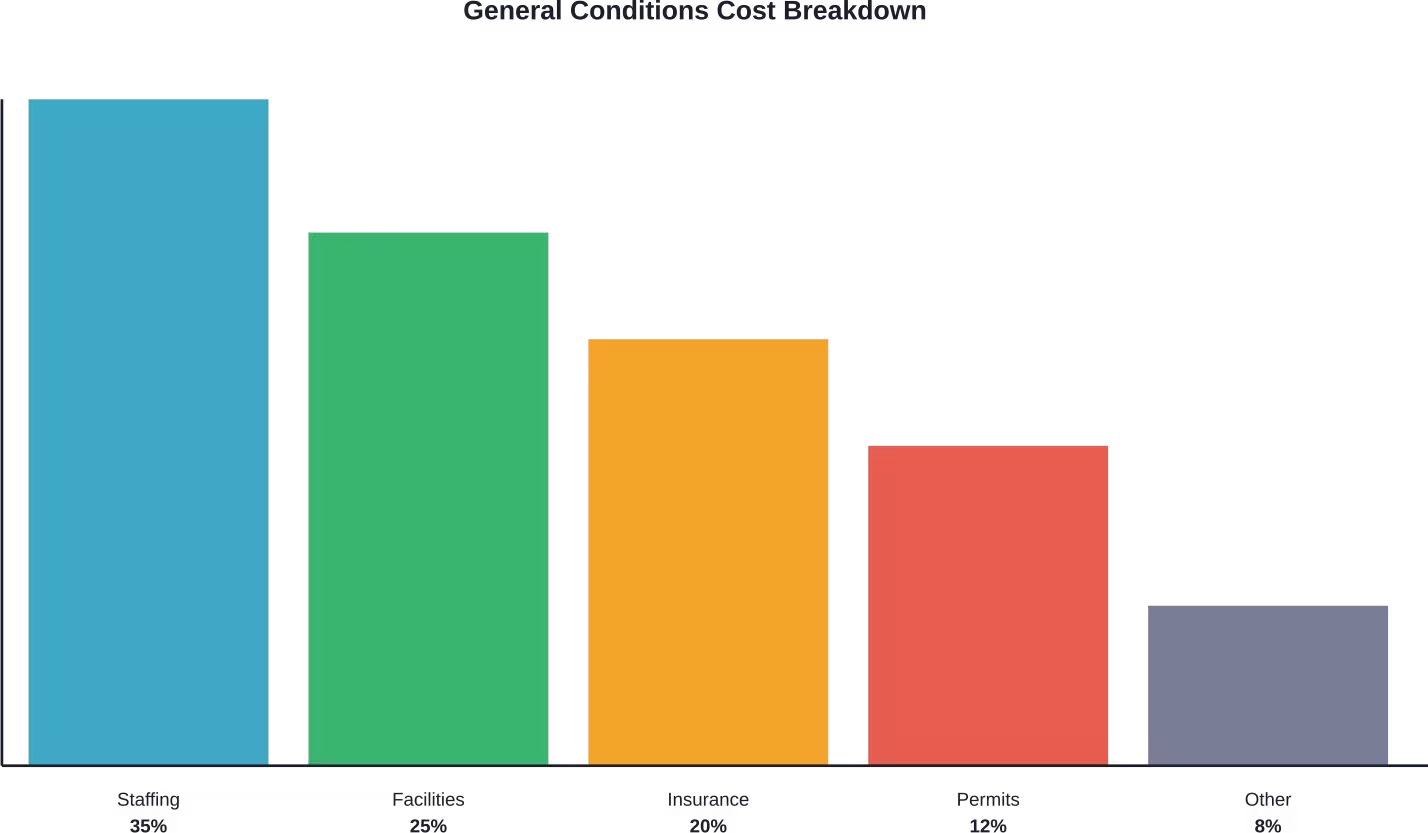
General conditions encompass a wide range of indirect project costs. These vary by project size, duration, complexity, and location, but several core categories appear consistently.
Staffing and Management
Project superintendents, project managers, safety coordinators, schedulers, and administrative assistants all fall under general conditions. Their time is dedicated to overseeing work rather than performing direct construction tasks.
If a superintendent costs $2,500 per week and the project runs 20 weeks, that’s $50,000 in general conditions just for that role. Getting the duration wrong or underestimating required supervision hours creates immediate budget shortfalls.
Temporary Facilities and Office Operations
Construction sites need operational infrastructure. Job site trailers, temporary office setup, furniture, computers, internet connectivity, phones, printers, and office supplies all represent general conditions expenses.
These costs scale with project duration. A six-month project needs these facilities twice as long as a three-month project, doubling those line items.
Utilities and Site Services
Temporary power, water, heating, and cooling for site offices create ongoing operational expenses. These utility costs continue throughout the entire construction timeline.
Insurance and Bonding
General liability insurance, builder’s risk insurance, workers’ compensation insurance (for administrative staff), and performance bonds represent significant general conditions costs that contractors must account for upfront.
Permits, Fees, and Regulatory Compliance
Building permits, inspection fees, plan review fees, special permits, and regulatory compliance costs fall under general conditions. According to OSHA regulations under 29 CFR 1926.20, contractors must maintain specific safety and health provisions, which generate both direct safety equipment costs and indirect compliance administration expenses.
Communication and Documentation
Project communication tools, plan printing and reproduction, submittal processing, RFI management systems, meeting expenses, and document control systems all support project coordination.
Safety and Site Security
Safety program administration, safety training, PPE for supervisory staff, first aid supplies, site security systems, and security personnel represent general conditions investments in protecting people and property.
Mobilization and Demobilization
Getting equipment and facilities to the site at project start and removing them at completion generates costs separate from the construction work itself.
Quality Control and Testing Coordination
While specialized testing might be a direct cost, coordinating inspections, managing quality control programs, and administering testing schedules falls under general conditions.
How Contractors Estimate General Conditions
Estimation methods for general conditions vary, but the most common approaches include percentage-based estimating, detailed line-item estimating, and hybrid methods.
The Percentage Method (And Why It’s Risky)
Many contractors apply a flat percentage to direct costs—typically 8-12%—to cover general conditions.
This approach is fast and simple. It’s also frequently wrong.
A flat percentage markup may be insufficient for complex or extended projects with minimal coordination needs. But that same percentage applied to a complex, multi-phase project with extensive regulatory requirements and coordination challenges will leave money on the table.
Project duration matters more than project size for many general conditions costs. A $500,000 project taking nine months generates higher general conditions expenses than a $1 million project completed in four months, even though the direct costs differ significantly.
Detailed Line-Item Estimating
The more accurate approach involves building general conditions from the ground up, estimating each component separately based on project-specific requirements.
This method requires more effort upfront but produces estimates that reflect actual project conditions rather than generic industry averages.
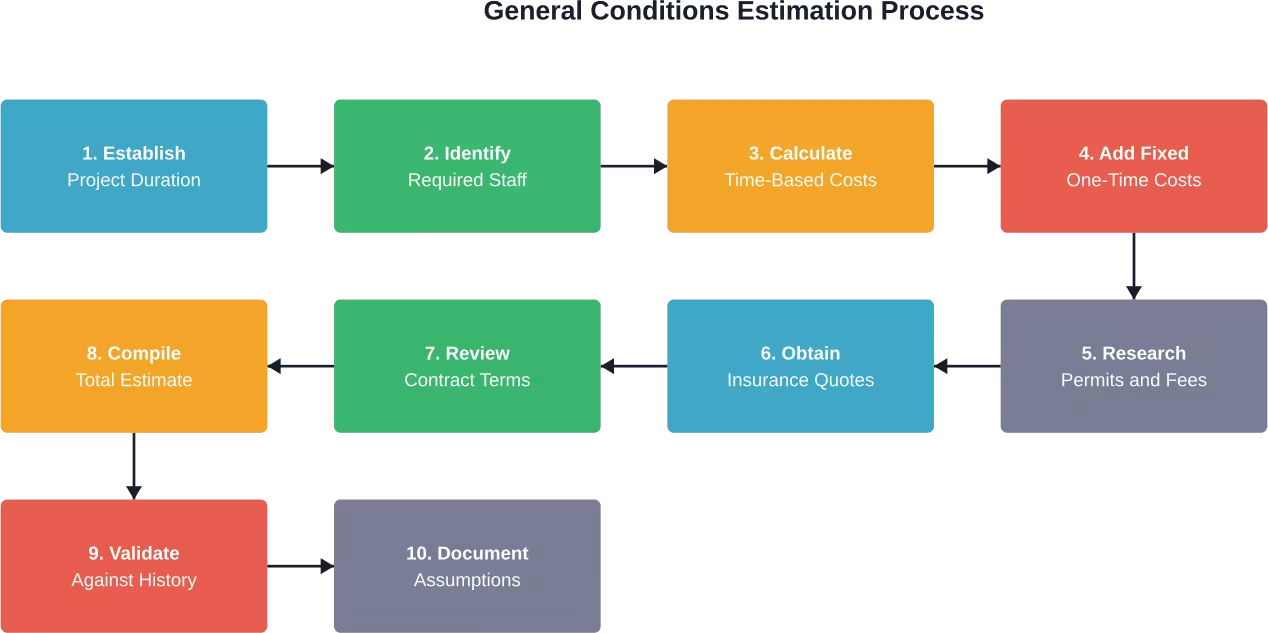
Here’s the process:
- Start with project duration: How many weeks will the project require? This timeline drives time-based costs for staffing, facilities, utilities, and insurance.
- Assign specific costs to each staffing position: Calculate weekly rates and multiply by project duration. Don’t forget to account for partial staffing—a project manager might be allocated at 50% time while managing multiple projects simultaneously.
- Estimate temporary facility needs: How many trailers? What size? For how long? Contact suppliers for actual rental rates rather than guessing.
- Research permit and fee costs: Call the local building department. Get actual numbers for the specific jurisdiction and project type.
- Calculate insurance costs based on project value and duration: Contact insurance providers for project-specific quotes rather than using outdated rates.
- Review contract requirements: Some owner contracts specify particular insurance levels, bonding requirements, or reporting systems that generate additional costs.
Time-Based vs. Fixed Costs
Categorizing general conditions items as time-based or fixed helps with estimation accuracy and schedule impact analysis.
Time-based costs scale with project duration: superintendents, project managers, office trailers, utilities, and temporary services. If the schedule extends, these costs increase proportionally.
Fixed costs remain constant regardless of duration: permits, bonds, mobilization, demobilization, and initial setup expenses. A two-week schedule delay doesn’t change permit fees, but it does add two weeks of superintendent time and trailer rental.
Understanding this distinction helps evaluate the cost impact of schedule changes and supports more informed decision-making about acceleration, delays, and resource allocation.
The Role of General Conditions in Construction Contracts
Beyond cost estimation, general conditions define the contractual framework governing project relationships and procedures.
The AIA A201 document, widely recognized as the industry standard for construction contracts, establishes general conditions covering administration, responsibilities, dispute resolution, and project procedures. According to the AIA Contract Documents organization, these agreements create fair and balanced provisions that reduce conflict and litigation.
What Contract General Conditions Cover
Contract general conditions typically address several key areas:
- Roles and responsibilities: Defining the authority and obligations of the owner, contractor, architect, and other parties. This includes decision-making authority, approval processes, and communication protocols.
- Payment procedures: Establishing how payment applications are submitted, reviewed, and processed. This includes retainage, progress payments, and final payment conditions.
- Change order procedures: Defining how scope changes are proposed, evaluated, priced, and approved. Clear change order procedures prevent disputes over additional work.
- Schedule requirements: Specifying schedule submittal requirements, update frequency, and delay notification procedures.
- Dispute resolution: Establishing mechanisms for resolving disagreements, including mediation, arbitration, or litigation procedures.
- Insurance and indemnification: Defining required insurance coverage, certificate requirements, and liability allocation among parties.
- Termination conditions: Specifying conditions under which the owner or contractor can terminate the contract and the procedures that follow termination.
The Engineers Joint Contract Documents Committee (EJCDC), another authoritative source recognized by ASCE, produces similar contract documents for engineering and construction projects. According to EJCDC materials, these contracts are prepared by experienced industry experts and construction lawyers to provide balanced provisions that reduce conflict.
Order of Precedence
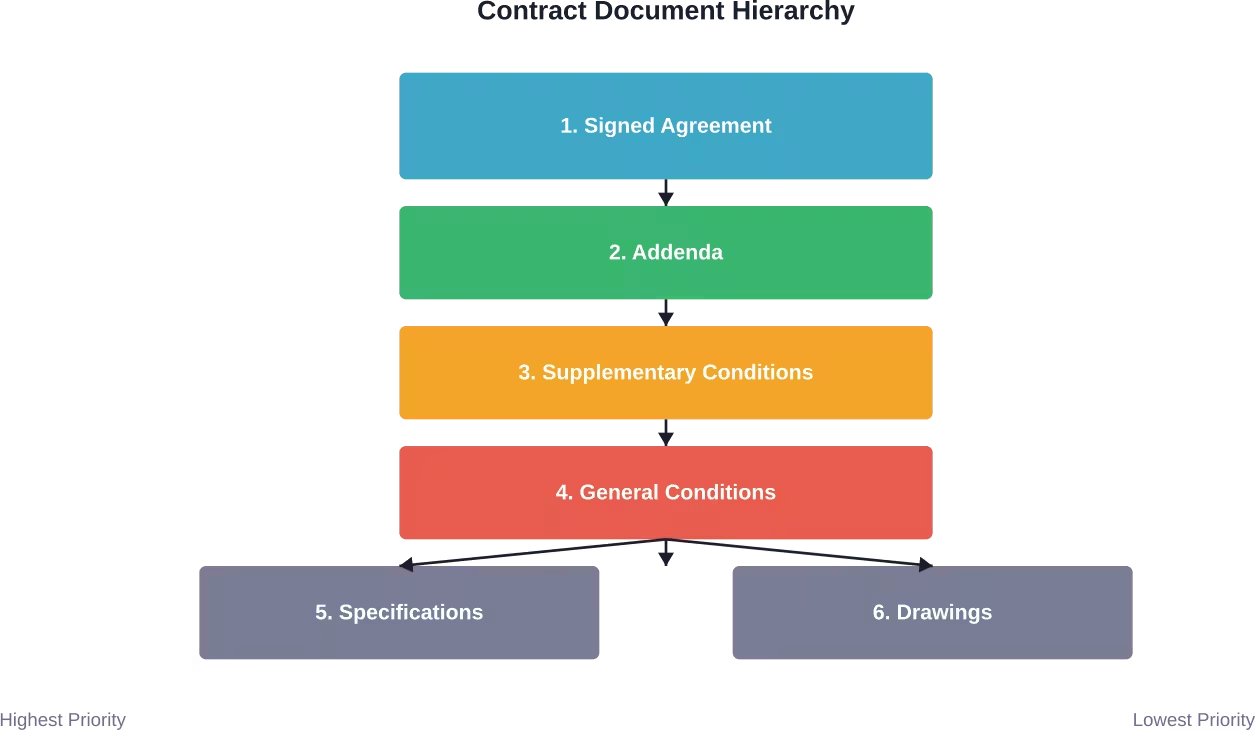
Construction contracts typically contain multiple documents: agreements, general conditions, supplementary conditions, specifications, drawings, and addenda. When conflicts arise between these documents, the contract establishes an order of precedence determining which document governs.
Common precedence orders place the signed agreement first, followed by addenda, supplementary conditions, general conditions, specifications, and drawings. However, this order varies by contract type and should be explicitly stated in contract documents.
Community discussions among construction professionals, such as those found on the AIA Community Hub, indicate that order of precedence questions arise frequently, particularly when specifications conflict with drawings or when supplementary conditions modify general conditions.
Common Mistakes in Managing General Conditions
Several recurring errors undermine general conditions estimation and management.
Using Outdated Percentage Rates
Applying historical percentages without validating them against current project conditions creates systematic estimation errors. Insurance rates change. Permit fees increase. Labor rates climb. Yesterday’s 10% might need to be 13% today.
Ignoring Project Duration Impact
Estimators sometimes focus on project size while overlooking duration. A compact schedule with intensive activity might require more supervisory staff per week but fewer total weeks. An extended schedule with lower activity levels still generates months of ongoing facility and utility costs.
Underestimating Administrative Time
Project documentation, submittal processing, RFI responses, meeting attendance, and owner communication consume significant time. Allocating insufficient administrative resources creates bottlenecks that delay decision-making and cascade into schedule impacts.
Failing to Track Costs Separately
Lumping general conditions into overhead or mixing them with direct costs makes it impossible to analyze actual performance against estimates. Separate cost codes for each general conditions category enable meaningful analysis.
Not Adjusting for Contract Requirements
Different contracts impose different administrative burdens. Public sector contracts often require additional reporting, certified payroll, prevailing wage compliance, and enhanced documentation. Private contracts might specify particular insurance levels or quality control procedures. Read the contract and estimate accordingly.
Overlooking Supplementary Conditions
Supplementary conditions modify general conditions for project-specific requirements. They might add insurance requirements, change payment procedures, or impose additional reporting obligations. These modifications often generate costs that generic estimates miss.
Best Practices for Estimating and Managing General Conditions
Accurate general conditions management starts with systematic estimation and continues through careful cost tracking.
Build Detailed Estimates
Create line-item estimates for each general conditions component. Use actual quotes for insurance, bonds, and rentals. Calculate staffing based on realistic time allocations.
Validate Project Duration
Schedule drives general conditions costs. Work with scheduling teams to establish realistic durations. Conduct sensitivity analysis: how do general conditions change if the schedule extends by 20%?
Document Assumptions
Record the assumptions behind each estimate: staffing levels, allocation percentages, rental rates, insurance quotes. When conditions change or estimates need revision, documented assumptions show what changed and why.
Use Historical Data
Track actual general conditions costs on completed projects. Build databases showing costs by project type, size, duration, and location. Historical data grounds future estimates in reality rather than guesswork.
Review Contract Requirements Early
Don’t estimate general conditions before reading the contract. Special requirements for insurance, reporting, quality control, or safety programs generate real costs that must be captured.
Implement Separate Cost Codes
Establish distinct cost codes for each general conditions category. Track expenses separately from direct costs and overhead. This visibility enables analysis and continuous improvement.
Monitor Time-Based Costs
Time-based general conditions items create ongoing burn rates. When schedules slip, these costs continue accumulating. Monitor schedule performance and evaluate general conditions impacts when delays occur.
Update Estimates During Preconstruction
Initial estimates contain assumptions that may prove incorrect as design develops and project scope clarifies. Update general conditions estimates during preconstruction as better information becomes available.
Cut Site Time Costs Now

General conditions grow with every extra day on site – more supervision, more temporary work, more overhead. باورخ steps in before and during construction to keep work moving without pauses, checking where design and coordination will slow crews down and extend site time. Instead of stretching the programme and absorbing higher site costs, you see where progress will stall and what needs to be fixed to keep the project moving.
Keep Your Site Running
Here’s how Powerkh helps reduce general conditions:
- Shows where crews will be blocked by unresolved design
- Spots coordination conflicts before they stop installation
- Highlights areas that will cause rework and extend site time
- Confirms what is actually ready to build, not just scheduled
- Helps avoid downtime that increases supervision and site overhead
If site time is starting to stretch, reach out to Powerkh and cut the delays that drive general conditions up.
How General Conditions Affect Project Success
Accurate general conditions estimation influences project outcomes in several ways.
Profitability depends on capturing all costs. Underestimated general conditions erode margins silently. A 5% estimation error on a $2 million project means $100,000 in unrecovered costs.
Competitive bidding requires accurate pricing. Underpricing wins jobs that lose money. Overpricing loses work to competitors. Detailed general conditions estimates support competitive yet profitable bids.
Cash flow management requires predicting when expenses occur. General conditions create front-loaded costs: mobilization, bonds, insurance premiums, and facility setup happen early. Understanding this timing supports better cash flow planning.
Contract administration depends on clear general conditions clauses. Ambiguous contract language creates disputes. Well-drafted general conditions documents establish clear expectations and procedures that prevent conflicts.
Project communication improves when contracts define roles, responsibilities, and protocols clearly. General conditions establish who makes decisions, how information flows, and when responses are required.
Technology and General Conditions Management
Construction technology increasingly supports better general conditions management.
Estimating software enables detailed line-item estimates with built-in databases of historical costs, labor rates, and equipment prices. These tools reduce estimation time while improving accuracy.
Project management platforms track costs in real-time, comparing actual expenses against budgeted amounts. This visibility highlights overruns early when corrective action is still possible.
According to industry analysis, integrating technology and data into construction management streamlines operations and enhances transparency. This transparency aids in dispute resolution and fosters stronger relationships among stakeholders.
Document management systems organize contracts, submittals, RFIs, change orders, and correspondence. Efficient document control reduces administrative burden and ensures teams can find critical information quickly.
Time tracking systems capture supervisory and administrative time accurately. Instead of reconstructing hours from memory at week’s end, real-time tracking provides reliable data for cost allocation and billing.
General Conditions in Different Contract Types
General conditions treatment varies across contract delivery methods.
Design-Bid-Build Projects
Traditional design-bid-build projects use standard general conditions documents like the AIA A201. The contractor manages construction according to completed designs, with the architect administering the contract.
General conditions costs are typically estimated during bidding and included in the contract sum as a distinct line item or embedded in overhead and profit.
Design-Build Projects
Design-build delivery combines design and construction under a single contract. General conditions cover both design administration and construction management, creating different cost structures than traditional delivery.
Design-build contracts may use modified general conditions documents addressing the integrated delivery approach and the design-builder’s dual responsibilities.
Construction Manager at Risk
CM-at-risk delivery involves a construction manager providing preconstruction services and then contracting to deliver the project for a guaranteed maximum price. General conditions must account for both preconstruction and construction phase activities.
Organizations like EJCDC produce specialized contract series for CMAR delivery, recognizing the unique requirements of this approach.
Multiple Prime Contracts
Some owners contract separately with multiple prime contractors for different work scopes—general trades, mechanical, electrical. According to community discussions among construction professionals, the AIA A201 provides for both single prime and multiple prime contract arrangements.
Multiple prime delivery complicates general conditions because coordination responsibilities must be clearly allocated. Who provides site facilities? Who manages scheduling? Who coordinates utility shutdowns? Ambiguous general conditions create gaps and conflicts.
الأسئلة الشائعة
What’s the difference between general conditions and overhead?
General conditions are project-specific indirect costs such as site supervision, temporary facilities, and permits. Overhead refers to company-wide expenses like office rent, executive salaries, and administrative costs. General conditions are tied to a specific project, while overhead supports the overall business.
How much should general conditions cost as a percentage of total project cost?
General conditions typically range from 8% to 15% depending on project complexity, duration, and location. Detailed line-item estimates provide more accuracy than percentage-based methods.
Who pays for general conditions in a construction project?
The owner ultimately pays for general conditions. In lump-sum contracts, they are included in the total price. In cost-plus contracts, they may be reimbursed separately as incurred.
Are general conditions the same as the AIA A201 document?
No. AIA A201 General Conditions is a legal contract document defining roles and responsibilities. General conditions as a cost category refer to project-related indirect expenses.
What happens if general conditions are underestimated?
Underestimation reduces profitability because these costs still occur. In fixed-price contracts, the contractor absorbs the loss, which can impact project and company finances.
Can general conditions costs be recovered through change orders?
Yes, if project scope or duration changes. Extended schedules often justify additional general conditions costs, but original estimation errors usually cannot be recovered.
How do you track general conditions costs during construction?
Use separate cost codes for tracking expenses such as supervision, site facilities, and utilities. Regularly compare actual costs to the budget to identify overruns early.
الخاتمة
General conditions represent the operational foundation of construction projects—the management, administration, facilities, and services that enable productive work.
Understanding these costs means recognizing both their contractual dimension as the framework governing project relationships and their financial dimension as indirect expenses that must be accurately estimated and carefully managed.
The difference between profitable projects and money-losers often comes down to how well contractors estimate and control these indirect costs. A detailed, project-specific approach beats generic percentage markups. Time-based thinking beats size-based thinking. Careful tracking enables continuous improvement.
For anyone involved in construction—contractors, owners, project managers, estimators—mastering general conditions isn’t optional. It’s fundamental to delivering successful projects and running sustainable businesses.
Take time to build detailed estimates. Read contracts carefully. Track costs separately. Learn from historical data. The attention to these often-overlooked details separates professionals who consistently deliver profitable projects from those who wonder where their margins went.

دراسات الحالة لدينا
لقد تعاملنا مع أكثر من 200 مشروع من مشاريع نمذجة معلومات المباني ونمذجة معلومات المباني للقطاعات التجارية والصناعية والسكنية.
يشمل عملنا ما يلي:
أتمتة تصميم القوالب
Our client from
California, USA
أتمتة تصميم السقف المعلق
Our client from
New York, USA
أتمتة تصميم إطارات الحائط
Our client from
California, USA